In a significant development, the General Brotherhood of American Apparel Workers (GBWAA), a union for garment workers at American Apparel’s southern California manufacturing facilities has called for a boycott of the brand’s merchandise, pointing to mass layoffs and reduced compensation and benefits that have intensified since new management in January 2015 began a process of post-bankruptcy restructuring throughout the corporation.
Currently, GBWAA is awaiting a certification election date from the National Labor Relations Board, and workers with the union say they are calling for the boycott because American Apparel consumers must know corporation is not the high-wage, sweatshop-free company once marketed itself to be, especially since Paula Schneider replaced American Apparel founder Dov Charney as chief executive officer of the corporation.
According to the Union president Stephanie Padilha dos Santos, if people are used to buying American Apparel and think that the company is great and that the whole concept of paying fair wages in industry was what made the company a huge success, then we invite you now to boycott the brand because it is no longer sweatshop-free.
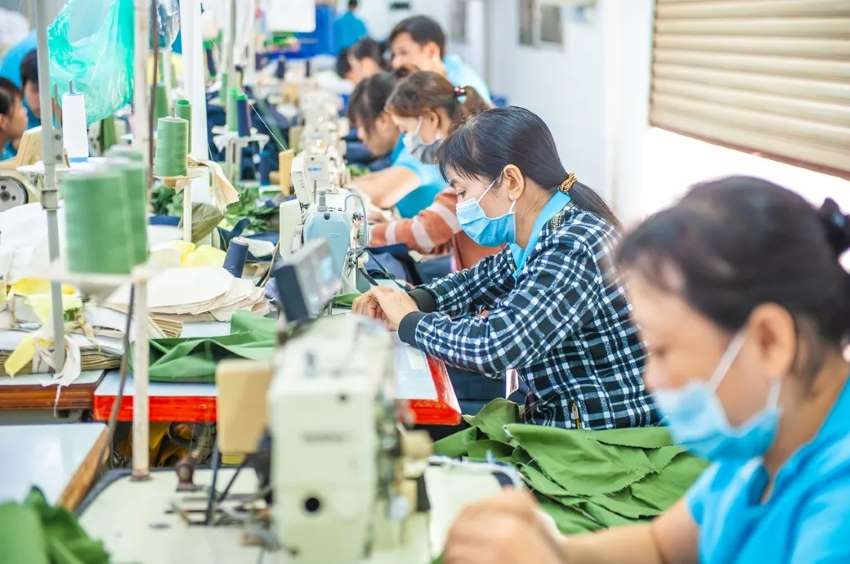
Padilha alleges that the company has been outsourcing production to other ‘sweatshops’ around Los Angeles, while reducing the once relatively high wages earned by production workers at the company, which were the highest in the world, according to the company.
Meanwhile, in another round of layoffs, over 500 workers are reported to have been laid off this April as part of what Schneider has called a ‘redesign of production process.’
- 1
- 2
- 3
- 4
- 5
- 6
- 7
- 8
- 9
- 10
The £7 Billion Question: Who pays for fashion’s ‘free rental’ habit?
The global fashion industry is facing an uncomfortable paradox: its most valuable customers may also be its most destructive. A... Read more
India, China Bangladesh face fresh headwinds as global apparel markets rebalance
Global apparel trade is entering a more uneven recovery phase, with demand growth persisting but losing uniform momentum across major... Read more
Global cotton enters a deficit year in 2026 as supply drop meets logistics risk
The global cotton economy has entered a fragile and sensitive phase. Early projections for the 2026-27 season suggest that world... Read more
India’s textile trade gets a Pacific push as New Zealand FTA removes tariff barr…
India and New Zealand have inked a ‘once-in-a-generation’ Free Trade Agreement (FTA), one that will have a profound impact on... Read more
Lululemon’s world-first nylon circularity push signals a new apparel arms race
The global apparel industry’s circularity narrative is entering a more technically demanding phase. Polyester recycling once the flagship of sustainable... Read more
Beyond the DTC Rush: Levi’s hybrid channel strategy sets a new retail benchmark
The global apparel sector is entering a phase where channel strategy is no longer a tactical lever but a core... Read more
The New Rules of Resale: EPR turning secondhand into fashion’s strategic growth …
The global fashion industry is facing a decisive regulatory and commercial reset. What began as a sustainability narrative around reuse... Read more
The 2027 Mandate: Why denim’s future hinges on verifiable data
For decades, the global denim industry has relied on a narrative of durability, heritage, and authenticity. That narrative is now... Read more
Europe’s textile core unravels as costs, imports and policy pressure bite
Europe’s textile and apparel sector, long seen as a benchmark for craftsmanship and industrial depth, is slipping into a prolonged... Read more
Automation, innovation, regulation are the forces shaping textiles in 2026
The global textile sector has entered a new era. Early 2026 saw the industry breach a $1.06 trillion valuation, reflecting... Read more