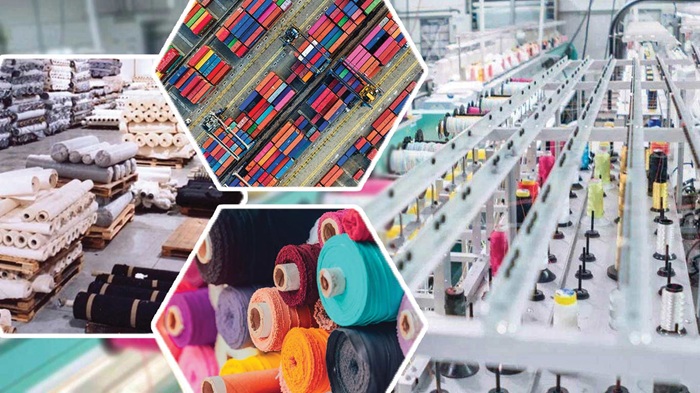
The European Union region as a whole remains a leading producer of both textile and apparel. Production is almost equally divided between textile manufacturing and apparel manufacturing. Southern and western EU where most developed EU members are located such as Germany, France, and Italy account for nearly 80 per cent of EU’s textile manufacturing. Of the EU’s total textile output, the share of non-woven and other technical textile products increased from 20.2 per cent in 2011 to 23.2 per cent in 2016.
Apparel manufacturing in the EU includes two primary categories: one is the medium-priced products for consumption in the mass market, which are produced primarily by developing countries in eastern and southern Europe, such as Poland, Hungary, and Romania, where cheap labor is relatively abundant. The other category is the high-end luxury apparel produced by developed western EU countries such as Italy, UK, France, and Germany.
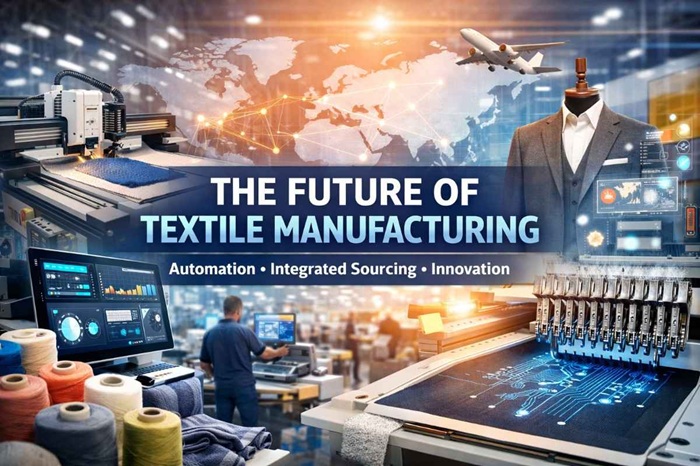
In western EU countries, labor only accounted for 21.1 per cent of the total apparel production cost in 2016, which is substantially lower than 30.1 per cent back in 2006. This change suggests that apparel manufacturing is becoming capital and technology-intensive in some developed western EU countries, which could be the result of increased investment in automation technology.
- 1
- 2
- 3
- 4
- 5
- 6
- 7
- 8
- 9
- 10
Bharat Tex 2026: Redefining the global textile value chain
Union Minister of Textiles, Giriraj Singh, has officially unveiled Bharat Tex 2026, signaling a significant leap in India’s influence over... Read more
Intertextile Shanghai Spring 2026: A hub for global textile innovation
The textile industry’s pulse is quickening as Intertextile Shanghai Apparel Fabrics – Spring Edition prepares to open its doors from... Read more
Moscow Fashion Week 2026: Blending sustainable innovation with timeless glamour
Scheduled to run from March 14-19, 2026 in Moscow, Russia, the Moscow Fashion Week (MFW) is cementing its status as... Read more
The Store as Stage: How fashion is crafting immersive consumer worlds
The North American fashion retail sector in 2026 is shedding its product-first identity and shifting towards a model that values... Read more
Turning the supply chain upside down, on-demand production reshapes apparel
The global fashion industry, long celebrated for its creativity and scale, is facing a structural reckoning. For decades, retailers and... Read more
Intertex Milano 2026 - A global nexus for textile innovation
Intertex Milano is set to return this summer, confirming its status as a premier international destination for the textile and... Read more
Primark at crossroads as AB Foods weighs spin-off amid digital and Lefties press…
The long-standing supremacy of Europe’s budget fashion champion, Primark, is facing a test. As of February 2026, Associated British Foods... Read more
Vietnam, Bangladesh, Cambodia drive US apparel imports in 2025
The 2025 year-end data for the US apparel sector reveals an industry in structural flux. Despite aggressive tariff measures and... Read more
The New Dress Code: Sportswear’s takeover of modern wardrobes
For much of the last decade, fashion retail has been defined by volatility. Trends have shortened, discount cycles have intensified... Read more
Hemp finds its moment in India’s $500 billion American trade calculus
In the grand arithmetic of India’s expanding trade engagement with the US, the headlines usually gravitate toward oil cargoes, aircraft... Read more