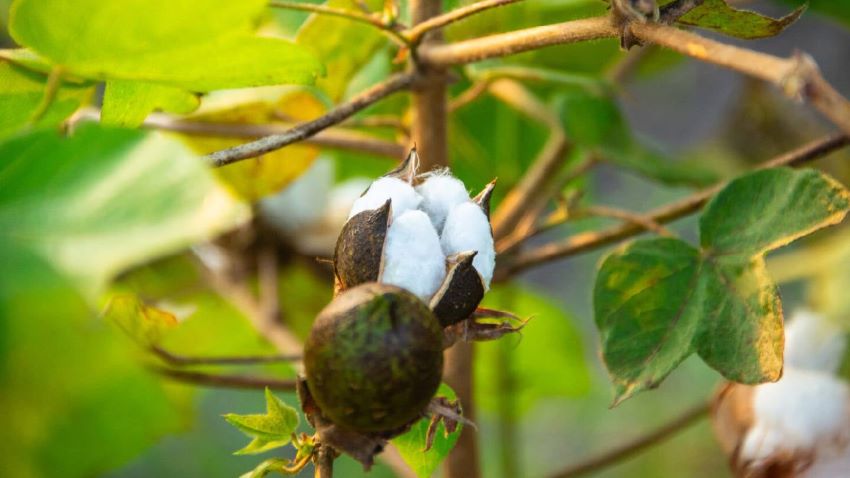
Egypt will no longer subsidise cotton farmers. Reason: many Egyptian spinning factories have stopped buying Egyptian cotton. Local and international manufacturers have abandoned Egyptian long staple cotton as new technology enables them to extract large quantities of yarn from short-staple varieties as well.
Farmers who still want to grow cotton, particularly the long staple variety, will be on their own when it comes to finding buyers. Many farmers have turned to more lucrative crops and local textile firms have shifted their focus to creating low quality products with cheap raw cotton imports. Removing subsidies effectively means the end of Egyptian cotton. Market prices of cotton are currently low; without the subsidy, farmers will not be able to sustain the cost of planting cotton.
Cutting cotton subsidies is the latest measure taken by the government to reduce public expenses. Egypt’s long staple cotton, the finest in the world, is used in high quality clothing for its softness and strength. Cotton is cultivated on four per cent of the country’s arable land.
Egypt exported $83.8 million worth of raw cotton in 2013-14, down from $120.3 million the year before. Imports of raw cotton, however, grew to $117.8 million in the same year, up from $51.3 million.

- 1
- 2
- 3
- 4
- 5
- 6
- 7
- 8
- 9
- 10
AI goes invisible as fashion brands rewire design studios
The fashion industry's digital transformation is entering a new phase. After investing heavily in sophisticated 3D computer-aided design (CAD) platforms... Read more
Natural fibers gain ground as global retail pushes back against polyester
A change is underway across the global textile industry as consumer preferences begin to alter sourcing decisions that have long... Read more
From exclusivity to engagement, luxury retail rewrites its growth strategy for 2…
The global luxury industry is entering a different growth cycle. After years of post-pandemic spending riding on affluent consumers and... Read more
Shaping the future of fashion at BRICS+ 2026
The upcoming BRICS+ Fashion Summit in Moscow promises to be a pivotal international gathering, offering a dedicated platform for fast-growing... Read more
The 10.3 mn-tonne cotton trade boom will be driven by scarcity, not surplus
The global cotton trade is entering an unusual expansion phase. Trade volumes are expected to rise steadily over the next... Read more
From Volume to Value: How fashion supply chains are defending margins through 20…
For decades, the global textile and apparel industry measured success through factory utilisation. Full order books, high machine occupancy and... Read more
The new retail math, smaller footprint, faster returns, sharper focus
The US retail industry is passing through one of its most impactful change in decades. What appears on the surface... Read more
The Operator Economy: China is rewriting the rules of global brand ownership
For decades, Western brands relied on centralized control over design, distribution, merchandising, and retail expansion in China market. That model... Read more
US cotton blacklist reshapes global textile supply chains
The US’ latest expansion of the Uyghur Forced Labor Prevention Act (UFLPA) Entity List is more than another trade sanction.... Read more
Lean stores, stronger margins, H&M's strategy reflects global retail reset
Profits are taking precedence over physical expansion in global apparel retail today. Years of building extensive store networks are giving... Read more