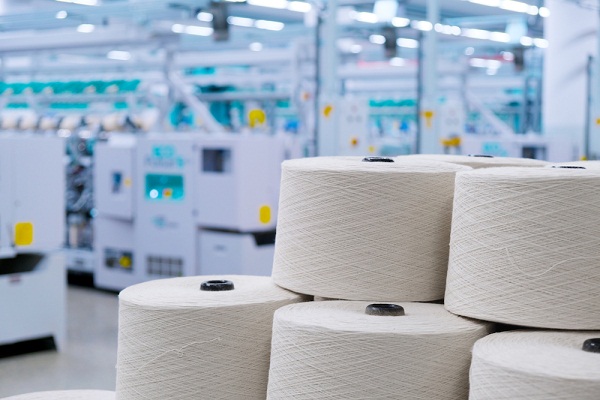
The denim industry has a long way to go before it becomes fully traceable despite tremendous progress achieved in this area. The industry provides information only on the operations of garment manufacturers, fabric weavers, yarn spinners and cotton farmers, says a Sourcing Journal report. Another report titled #WhoMadeMyCotton by denim consultant Anne Oudard, Founder, Simply Suzette and Abu Wells, Sustainable Denim Specialist and Marzia Lantranchi, Founder, Cotton Diaries surveyed 10 global mills and spinners to understand the reasons for difficulties in obtaining this data. The reason the report gives is the unwillingness of brands and suppliers to ask for this data. This report highlights the traceability initiatives of companies like Artistic Milliners, Bossa, Soorty Enterprises, Interloop, Pure Denim, Global Denim, Orta Anadolu, AGI Denim, Candiani Denim and Cone Denim.
Finding traceability solutions
Different countries have achieved different levels of traceability. The US and Brazil are helping denim mills trace the fiber back to the gin or farm through Permanent Bale Identification (PBI) numbers. Other regions like West Africa and Tanzania offer little to no traceability information. Denim made with different fiber types are more difficult to trace. Often, mills withhold information from brands on fiber origins as this may lead to consumers questioning the quality of the garment.
Middlemen such as cotton brokers, agents and merchants make the supply chain more opaque by working with various mills at a time to secure the best rates. To improve traceability, mills are taking proactive steps to find solutions to this issue. Some of these initiatives being introduced include:
Promoting visibility across supply chain
Artistic Milliners has launched the Milliner Organic Project to promote visibility and workers’ rights across the entire cotton supply chain. The direct-to-farm sourcing model adopted by the company makes tracing supply chain easier and creates safe markets for farmers. Working with over 2,000 farmers across 9,300 acre, the project supports the transition of farmers to organic cotton.
Farmers involved in the project have already benefitted with their crop being awarded the third-party certificates, higher yield and reliable support. The crop will be first used by Bestseller’s apparel brand Jack & Jones in its new denim collection scheduled to be launched in December.
Introducing organic farming practices
Meanwhile Soorty has launched the Soorty Organic Cotton Initiative (SOCI developed in partnership with WWF-Pakistan, the Department of Agriculture Extension, Balochistan, and Laudes Foundation. The initiative enables Soorty to introduce organic farming practices to farmers in Balochistan and enhance their standard of living. Others denim mills such as Bossa Denim, Candiani Denim and Interloop, have also launched projects to ensure the well-being of farmers and enhance transparency across the supply chain.
Identifying natural elements in cotton
In 2020, Cone Denim partnered a product and supply-chain traceability specialist Oritain to identify ‘origin footprints’ through forensic science and statistics. The company detected naturally occurring elements in cotton by merging forensic science with statistics. It achieved an inherent footprint specific to each through soil composition and other environmental factors.
Candiani has developed a patented hybrid seed known as the Blue Seed, to produce an extra-long tailor-made fiber produced with less water. The brand aims to develop more such seeds in future.