The Madras High Court has declined to direct the authorities to permit Binny, declared as a sick unit, to re-export some textile machinery which has been lying in the warehouse for 15 years. The court was of the view that the company had no intention to clear the goods, but had been attempting to stall the disposal of the un-cleared time-expired goods.
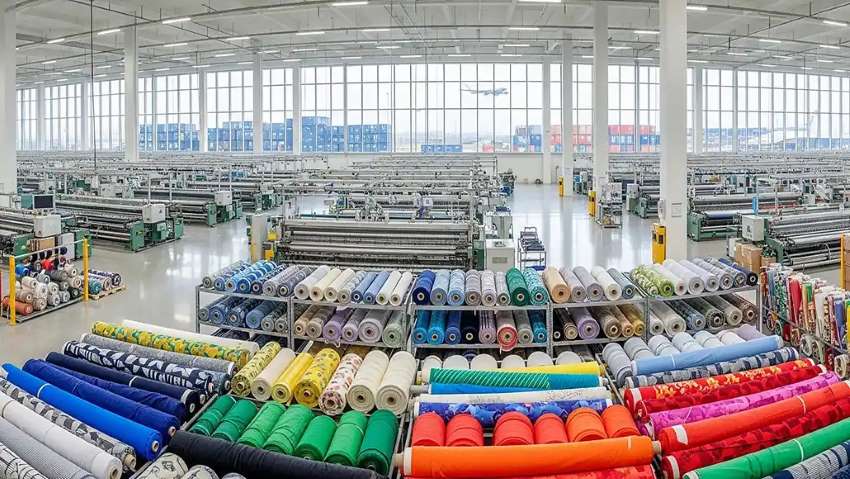
The court passed the order on a petition by the company for quashing the proceedings of the Superintendent of Customs of January 2012 and to direct the agency to grant permission to re-export the machinery. The company had imported the machinery with auxiliary equipment and spares from Germany in 1996. Due to financial crunch, it could not clear the goods. It was kept in the customs warehouse without payment of duty . Meanwhile, the company was declared sick.
Even after several years, the goods were not cleared and a notice was issued demanding customs duty with interest, followed by detention notice. The company did not pay the duty. The machinery was sold through auction for Rs.2.26 crores, but it was cancelled as the bidder had not fulfilled the terms.
Dismissing the plea, the court said the company had been seeking extension of warehousing period from time to time by citing reasons that it had been declared sick but that there was no genuineness in its attempt in clearing the goods. Repeated requests for extending the warehousing period without sufficient reasons, it said, would only establish that the company had been dragging on the proceedings to frustrate the authorities’ attempt in recovering the duty.
- 1
- 2
- 3
- 4
- 5
- 6
- 7
- 8
- 9
- 10
Beyond the DTC Rush: Levi’s hybrid channel strategy sets a new retail benchmark
The global apparel sector is entering a phase where channel strategy is no longer a tactical lever but a core... Read more
The New Rules of Resale: EPR turning secondhand into fashion’s strategic growth …
The global fashion industry is facing a decisive regulatory and commercial reset. What began as a sustainability narrative around reuse... Read more
The 2027 Mandate: Why denim’s future hinges on verifiable data
For decades, the global denim industry has relied on a narrative of durability, heritage, and authenticity. That narrative is now... Read more
Europe’s textile core unravels as costs, imports and policy pressure bite
Europe’s textile and apparel sector, long seen as a benchmark for craftsmanship and industrial depth, is slipping into a prolonged... Read more
Automation, innovation, regulation are the forces shaping textiles in 2026
The global textile sector has entered a new era. Early 2026 saw the industry breach a $1.06 trillion valuation, reflecting... Read more
The new Brussels rulebook, every EU apparel order is now a balance-sheet risk
The humble export order sheet is undergoing a transformation. What was once a straightforward commercial instrument: SKU, volume, FOB price,... Read more
Why 2026-27 could be a defining cotton year for India’s farm-to-fashion economy
The global cotton economy is entering a more constrained phase, and for India, the implications run far beyond the farm... Read more
Luxury resale’s next big battle is no longer digital, it is about who controls s…
For nearly a decade, the luxury resale story was written in the language of platforms. Market leadership was measured by... Read more
Digital Arms Race: Indian apparel giants deploy AI to neutralize tariff crisis
The Indian textile and apparel sector is in a digital survival phase in 2026, shifting from traditional labor-intensive models to... Read more
Europe’s Textile Endgame: Why Project FAE is becoming fashion’s most critical in…
Europe’s apparel majors are no longer treating circularity as a branding layer. With Project FAE or Feedstock Activation Europe, the... Read more