Over the years, the outdoor market has become loaded with synthetic apparel, which shed tiny microfibers during laundering.
These tiny plastic fibers travel to waterways and end up in the fish people eat and the tap water they drink.
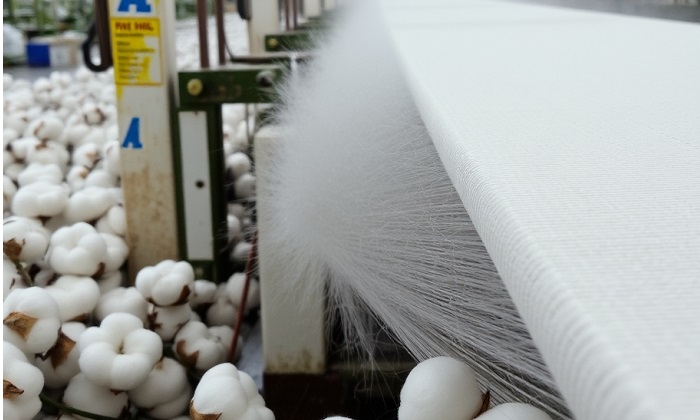
Companies are making eco-friendly apparel products made with natural fibers like cotton. While they are promoting sustainability they are also reducing the impacts of the industry’s products and processes.
Compared to synthetics like polyester and nylon, cotton active wear is considered to be more comfortable, versatile, sustainable, breathable and reliable.
Consumers love the natural feel of cotton. Most exercisers prefer cotton and cotton blended fibers. Trailing by a wide margin are polyester or recycled polyester, other synthetics like microfiber and rayon fibers, including viscose and Tencel.
Consumers like pulling on their active wear for things like hanging out at home, running errands, doing yard work, shopping or even sleeping. They are seeking out abrasion resistant technology in their active wear.
Consumers are also looking for active wear that is odor resistant, water repellent or has anti-microbial features. They seek out durability enhancement technology in their active wear. Those younger than 35 are significantly more likely than their older counterparts to do so.

- 1
- 2
- 3
- 4
- 5
- 6
- 7
- 8
- 9
- 10
From gym to boardroom performance fabrics are redefining apparel demand
The global apparel industry has entered a new phase of evolution as the distinction between sportswear and everyday fashion continues... Read more
Digital Dominance Redefined: Zara moves past H&M in $100 bn fast fashion bat…
The global fast-fashion sector has reached a inflection point in 2026 where the battleground is no longer only store shelves... Read more
Spykar accelerates offline expansion: plans 100 new stores across India
A titan of the Indian denim-first fashion scene, Spykar has officially unveiled an aggressive retail growth strategy. As consumer demand... Read more
The Inventory Illusion: Rethinking the Zara benchmark in a volatile retail era
For over a decade, the global fashion industry has treated the Zara playbook as the gold standard of inventory efficiency.... Read more
Retail Without Retail: How Walmart’s depot network is turning space into logisti…
Walmart is fundamentally rewriting the commercial real estate and retail logistics playbook with the rise of its ‘Walmart Depots’ a... Read more
Global textile regulation tightens, forcing realignment across fashion supply ch…
Global fashion and consumer goods supply chains are entering a decisive regulatory transition as Extended Producer Responsibility (EPR) frameworks for... Read more
Luxury’s new power axis, US dominance, China reset, Gulf surge
As the post-China luxury order takes shape, the US is emerging as the industry’s most dependable growth engine, while Japan,... Read more
India’s $9 Billion Landfill Blind Spot How trashed clothes hold the key to globa…
A massive economic windfall is sitting uncollected in India’s landfills, and the key to unlocking it lies in rethinking how... Read more
Red Sea crisis reshapes textile trade routes, challenges India’s export margins,…
Global apparel trade is now in a new operational phase where geopolitical stability and logistics reliability are as important as... Read more
EU’s textile waste rules enter enforcement phase, raising alarms across fashion …
Europe’s apparel and textile industry is approaching one of its most significant regulatory transitions in decades. As the European Union... Read more