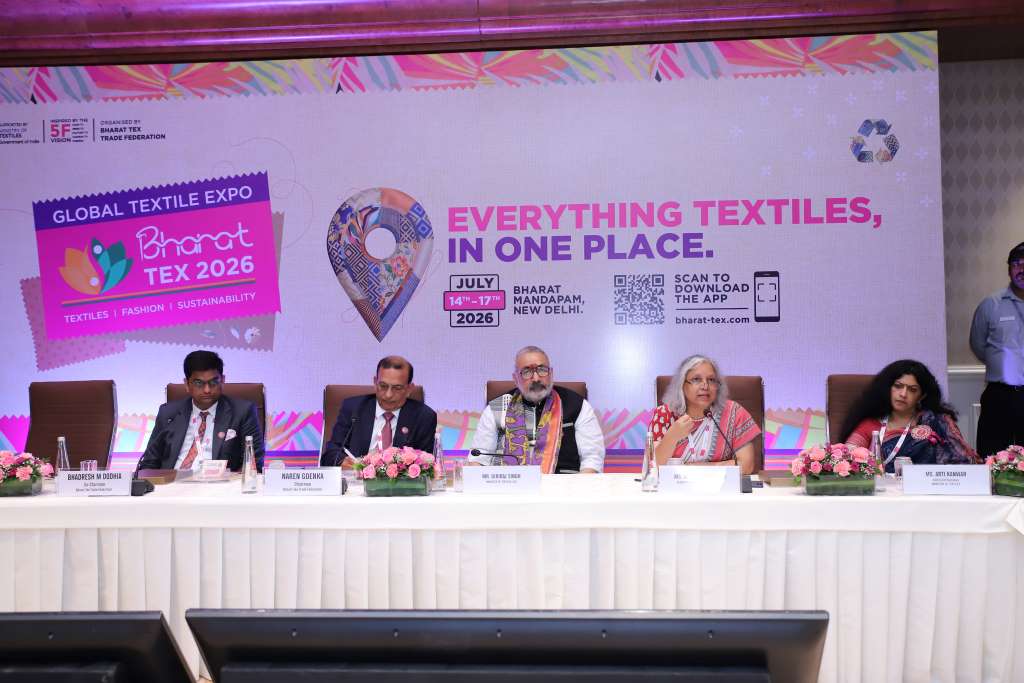
For decades, the global apparel sourcing playbook was deceptively simple: locate the cheapest labor pool, negotiate down raw material costs, and squeeze supplier margins to the penny. But inside the high-stakes deliberations at the Bharat Tex Roundtable, trade leaders, brand representatives, and policy architects delivered a stark verdict: the age of the lowest-cost bidder is officially dead.
Amid ongoing geopolitical conflicts, maritime bottlenecks, and stringent Western environmental mandates, compliance has ceased to be an ethical option or a corporate social responsibility line item. It has transformed into the primary entry ticket for international trade. In this new landscape, trust, transparency, and operational resiliency have replaced raw price as global fashion's ultimate currency.
The Death of the Pure Cost Model: Buying confidence over cut-price
During the roundtable’s core sessions, industry captains outlined how Western procurement strategies are undergoing a fundamental reset. Global fashion houses are no longer willing to risk catastrophic supply chain disruptions or regulatory bans in pursuit of cheap production.
With legislative frameworks like the EU’s Ecodesign for Sustainable Products Regulation (ESPR) and Corporate Sustainability Due Diligence Directive (CSDDD) actively reshaping market entry rules, global buyers are paying a premium for verifiable supply chain visibility, closed-loop recycling credentials, and Zero Liquid Discharge (ZLD) water processing setups.
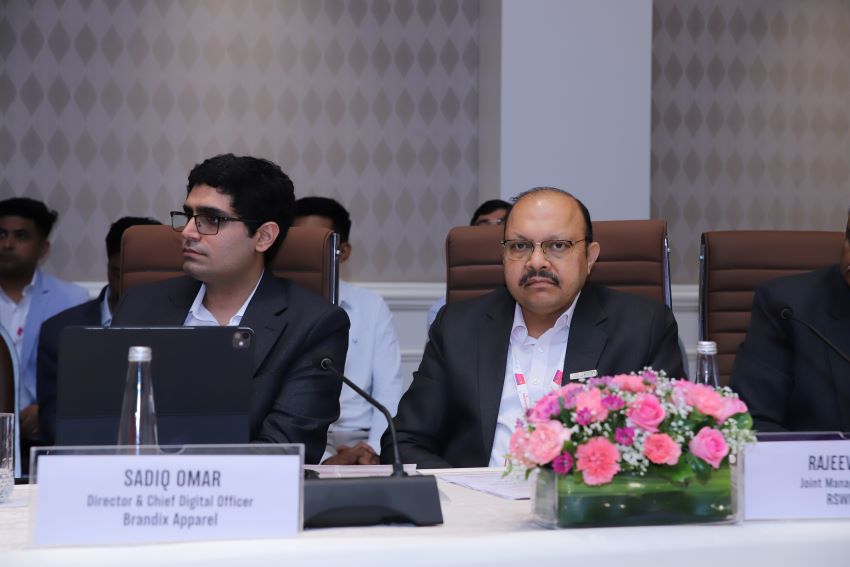
"Trust has become the most valuable currency in global trade... Conversations now are moving from where we can buy the lowest, to from where I can buy for confidence... Compliance is the competitiveness now" sharing the new trend, emphasized Rajeev Gupta, Joint Managing Director, RSWM Ltd.
Suppliers who rely solely on low-cost labor while operating in regulatory gray zones are rapidly finding themselves shut out of premium European and North American markets. Compliance is no longer a cost burden to be retrofitted after a plant is built; it must be engineered directly into the foundation of manufacturing facilities.
The Three-Question Buyer Test: The modern audit track
International brands are no longer satisfied with simple quality inspections or tier-1 factory audits. Instead, sourcing executives are applying a rigorous, end-to-end evaluation model across every level of the supply stack.
Today, every major export purchase order hinges on three fundamental questions regarding the product's origin, footprint, and lifecycle impact. First, buyers demand complete visibility into fiber origin and traceability to verify where raw material was harvested or synthesized and ensure an unalterable digital audit trail. Second, suppliers must prove their manufacturing footprint utilizes renewable energy, recycled water, and non-hazardous processing chemicals. Finally, modern procurement requires a low net environmental impact, measuring the precise carbon footprint per unit and verifying whether the garment can be chemically or mechanically recycled at the end of its life. "All my customers will ask three questions: Where did I source the fiber? Where does the fiber come from? Is it recycled?... Secondly, how do we produce? Am I using sustainable manufacturing? What are my carbon footprints?... And third, what is the impact of all my activity on the environment?", added Rajeev
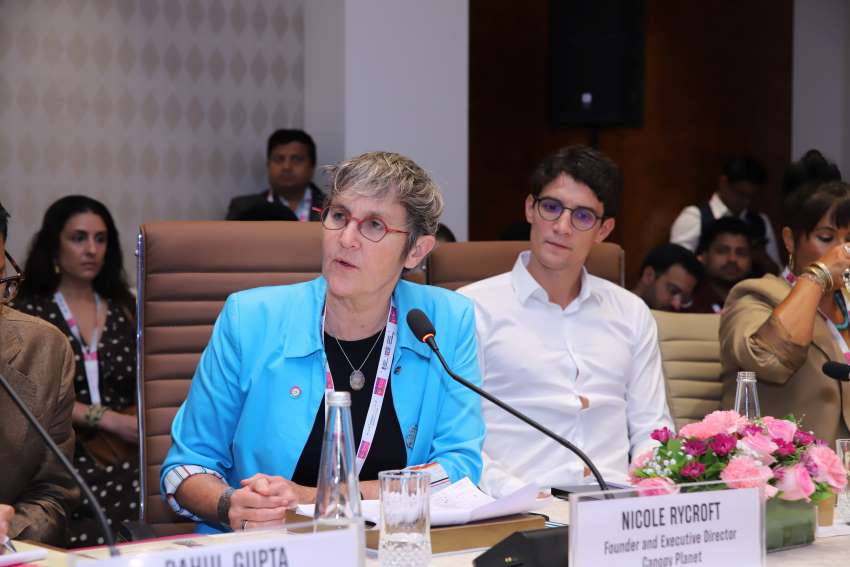
Global non-governmental organizations and brand advisors at the session emphasized that fashion houses are actively stress-testing their supply chains for these criteria today, rather than banking on regulatory extensions. Nicole Rycroft, Founder and Executive Director, Canopy Planet said adding further, "Brands are moving from a focus on compliance with regulations to actually looking at resiliency... They're not counting on a delay in any regulations... Circularity is no longer just a strategic edge. It's increasingly a market entry requirement."
The Geopolitical Resiliency Imperative: The case for integrated value chains
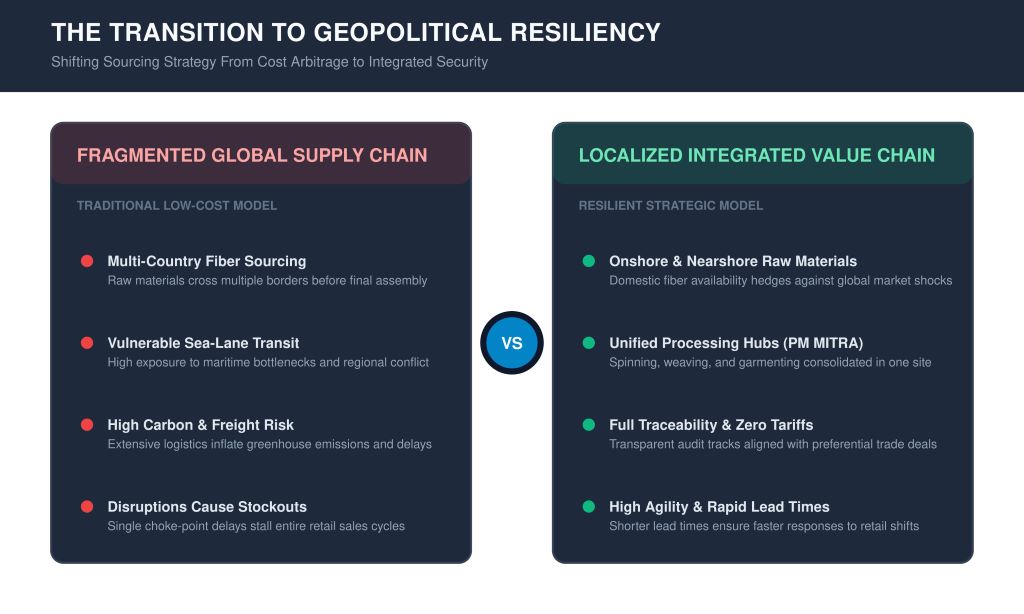
Beyond environmental legislation, geopolitical volatility has made long, fragmented supply chains liability-heavy. Ongoing maritime choke points; such as ongoing conflicts impacting crucial sea lanes like the Strait of Hormuz, have highlighted the extreme fragility of moving raw fibers across multiple international borders for intermediate processing.
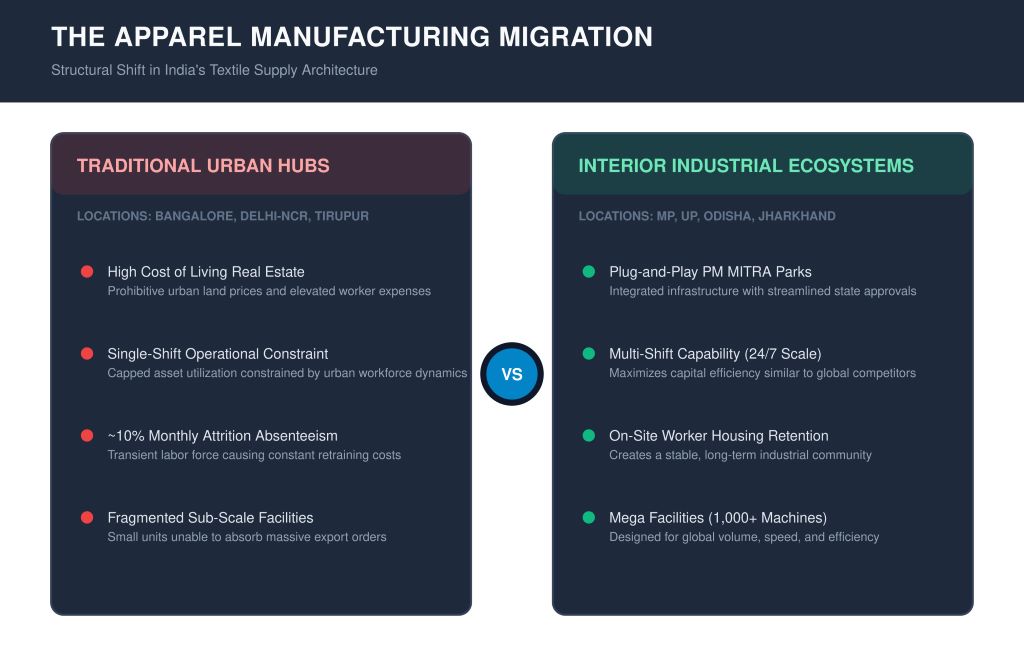
The industry is rapidly shifting away from fragmented global supply chains, where multi-country fiber sourcing and vulnerable sea-lane transit create high carbon emissions, freight risks, and frequent inventory stockouts. In response, brands are turning to localized, integrated value chains. These resilient setups rely on onshore or nearshore raw material availability and unified processing hubs such as India's PM MITRA parks, where spinning, weaving, dyeing, and garmenting are consolidated. This integrated structure offers full traceability, eliminates intermediate tariffs, drastically reduces transport-related carbon footprints, and ensures rapid lead times to adapt to volatile retail demand.
This dynamic positions India uniquely on the global stage. Unlike competitors who rely heavily on imported yarn, fabric, or synthetic feedstocks, India possesses a complete, end-to-end textile stack ranging from abundant natural fibers and growing man-made fiber (MMF) capacity to massive spinning and garmenting bases. "India has one of the biggest advantages, that we have fiber, we have yarn, we have fabric, we have garments... India will definitely become a trusted partner, but not because it is cheaper, but because it can deliver sustainable products at a scale and with reliability" opines Rajeev Gupta
Winning the next decade of global trade
As India targets $100 billion in textile exports, the message from the Bharat Tex Roundtable is clear: volume alone will not capture the market. By pairing industrial policy with trade policy and embedding total transparency into the manufacturing stack, Indian exporters can leverage their complete value chain to become the global fashion industry’s most trusted, resilient, and compliant partner.