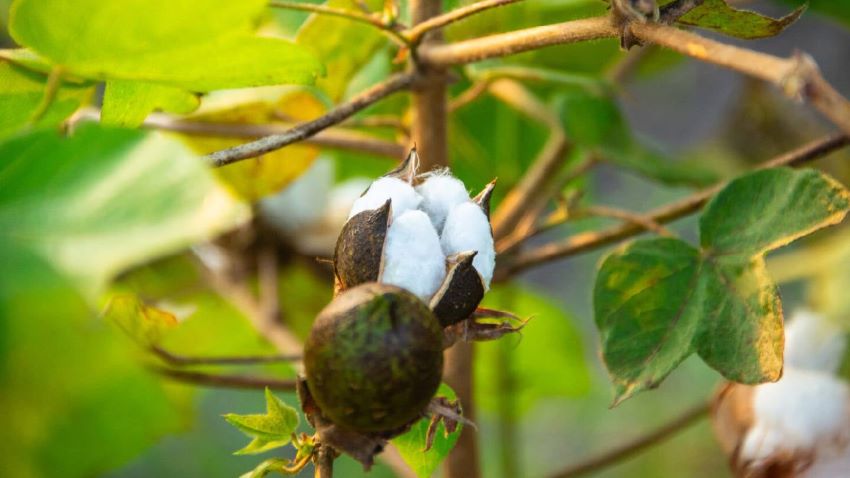
The Central Institute of Cotton Research (CICR) in Nagpur has introduced Bt genes into 21 cotton seed varieties, which scientists say can be provided to farmers at 10 per cent of the price of hybrid seeds. These also offer better pest resistance, they claim.
For the American agriculture behemoth Monsanto, this could turn out to be the biggest challenge yet in India. The Bt varieties are being provided this year to the state agricultural departments of Telangana and Maharashtra for multi-location testing to be carried out by the state agricultural universities.
The best Bt-varieties will be identified from the multi-location field trial results of 2016 and the seeds will be made available to farmers from 2017. According to K R Kranthi, Director of the Central Institute for Cotton Research (CICR), after the Ministry of Agriculture confirmed that there was no patent on genetically modified (GM) Bt Cotton (Bollgard-mon 531) brought by MonsantoBSE -0.60 per cent 14 years ago to India, CICR will now be introducing Bt genes to traditional Indian cotton varieties.
For the 2016 season, trials will be will be conducted by Dr Panjabrao Deshmukh Krishi Vidyapeeth, Akola; Maharashtra Krishi Vidyapeeth, Rahuri; Vasantrao Naik Marathwada Agricultural University, Parbhani; and Professor Jayashankar Telangana State Agricultural University, Telangana.
According to an official, the agriculture ministry is closely watching the progress of research by the universities on cotton seed with an aim to protect farmers' interest. The seeds of Bt varieties can be priced at Rs 150 to Rs 200 per kg and reused every year, compared with the Bt-cotton hybrid seeds, which cost Rs 2,000 a kg and can be used only once. Moreover, scientists say that unlike a majority of the Bt hybrids available in the market that are susceptible to sap-sucking insect pests and diseases, almost all the public sector non-Bt cotton varieties have a broad range of natural tolerance.

- 1
- 2
- 3
- 4
- 5
- 6
- 7
- 8
- 9
- 10
The new fashion equation, quality, agility and value replace speed and discounts
The traditional order that once separated low-cost fast fashion from premium luxury is steadily breaking down as consumers become more... Read more
AI goes invisible as fashion brands rewire design studios
The fashion industry's digital transformation is entering a new phase. After investing heavily in sophisticated 3D computer-aided design (CAD) platforms... Read more
Natural fibers gain ground as global retail pushes back against polyester
A change is underway across the global textile industry as consumer preferences begin to alter sourcing decisions that have long... Read more
From exclusivity to engagement, luxury retail rewrites its growth strategy for 2…
The global luxury industry is entering a different growth cycle. After years of post-pandemic spending riding on affluent consumers and... Read more
Shaping the future of fashion at BRICS+ 2026
The upcoming BRICS+ Fashion Summit in Moscow promises to be a pivotal international gathering, offering a dedicated platform for fast-growing... Read more
The 10.3 mn-tonne cotton trade boom will be driven by scarcity, not surplus
The global cotton trade is entering an unusual expansion phase. Trade volumes are expected to rise steadily over the next... Read more
From Volume to Value: How fashion supply chains are defending margins through 20…
For decades, the global textile and apparel industry measured success through factory utilisation. Full order books, high machine occupancy and... Read more
The new retail math, smaller footprint, faster returns, sharper focus
The US retail industry is passing through one of its most impactful change in decades. What appears on the surface... Read more
The Operator Economy: China is rewriting the rules of global brand ownership
For decades, Western brands relied on centralized control over design, distribution, merchandising, and retail expansion in China market. That model... Read more
US cotton blacklist reshapes global textile supply chains
The US’ latest expansion of the Uyghur Forced Labor Prevention Act (UFLPA) Entity List is more than another trade sanction.... Read more