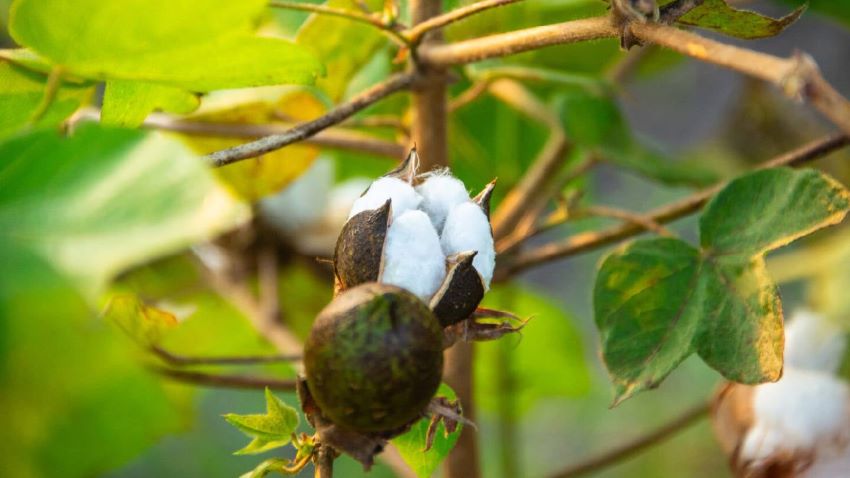
The Central Institute of Cotton Research (CICR) in Nagpur has introduced Bt genes into 21 cotton seed varieties, which scientists say can be provided to farmers at 10 per cent of the price of hybrid seeds. These also offer better pest resistance, they claim.
For the American agriculture behemoth Monsanto, this could turn out to be the biggest challenge yet in India. The Bt varieties are being provided this year to the state agricultural departments of Telangana and Maharashtra for multi-location testing to be carried out by the state agricultural universities.
The best Bt-varieties will be identified from the multi-location field trial results of 2016 and the seeds will be made available to farmers from 2017. According to K R Kranthi, Director of the Central Institute for Cotton Research (CICR), after the Ministry of Agriculture confirmed that there was no patent on genetically modified (GM) Bt Cotton (Bollgard-mon 531) brought by MonsantoBSE -0.60 per cent 14 years ago to India, CICR will now be introducing Bt genes to traditional Indian cotton varieties.
For the 2016 season, trials will be will be conducted by Dr Panjabrao Deshmukh Krishi Vidyapeeth, Akola; Maharashtra Krishi Vidyapeeth, Rahuri; Vasantrao Naik Marathwada Agricultural University, Parbhani; and Professor Jayashankar Telangana State Agricultural University, Telangana.
According to an official, the agriculture ministry is closely watching the progress of research by the universities on cotton seed with an aim to protect farmers' interest. The seeds of Bt varieties can be priced at Rs 150 to Rs 200 per kg and reused every year, compared with the Bt-cotton hybrid seeds, which cost Rs 2,000 a kg and can be used only once. Moreover, scientists say that unlike a majority of the Bt hybrids available in the market that are susceptible to sap-sucking insect pests and diseases, almost all the public sector non-Bt cotton varieties have a broad range of natural tolerance.

- 1
- 2
- 3
- 4
- 5
- 6
- 7
- 8
- 9
- 10
Spykar accelerates offline expansion: plans 100 new stores across India
A titan of the Indian denim-first fashion scene, Spykar has officially unveiled an aggressive retail growth strategy. As consumer demand... Read more
The Inventory Illusion: Rethinking the Zara benchmark in a volatile retail era
For over a decade, the global fashion industry has treated the Zara playbook as the gold standard of inventory efficiency.... Read more
Retail Without Retail: How Walmart’s depot network is turning space into logisti…
Walmart is fundamentally rewriting the commercial real estate and retail logistics playbook with the rise of its ‘Walmart Depots’ a... Read more
Global textile regulation tightens, forcing realignment across fashion supply ch…
Global fashion and consumer goods supply chains are entering a decisive regulatory transition as Extended Producer Responsibility (EPR) frameworks for... Read more
Luxury’s new power axis, US dominance, China reset, Gulf surge
As the post-China luxury order takes shape, the US is emerging as the industry’s most dependable growth engine, while Japan,... Read more
India’s $9 Billion Landfill Blind Spot How trashed clothes hold the key to globa…
A massive economic windfall is sitting uncollected in India’s landfills, and the key to unlocking it lies in rethinking how... Read more
Red Sea crisis reshapes textile trade routes, challenges India’s export margins,…
Global apparel trade is now in a new operational phase where geopolitical stability and logistics reliability are as important as... Read more
EU’s textile waste rules enter enforcement phase, raising alarms across fashion …
Europe’s apparel and textile industry is approaching one of its most significant regulatory transitions in decades. As the European Union... Read more
Corporate fashion adopts reverse logistics to unlock the $367 bn resale market
Global fashion retailers are rapidly changing their business models around resale, repair, and textile recovery as the secondhand apparel market... Read more
Tariff Shock 2026: Forced-labor enforcement is repricing global fashion trade
Washington’s latest trade intervention signals a break in the global apparel sourcing patterns. The Office of the United States Trade... Read more