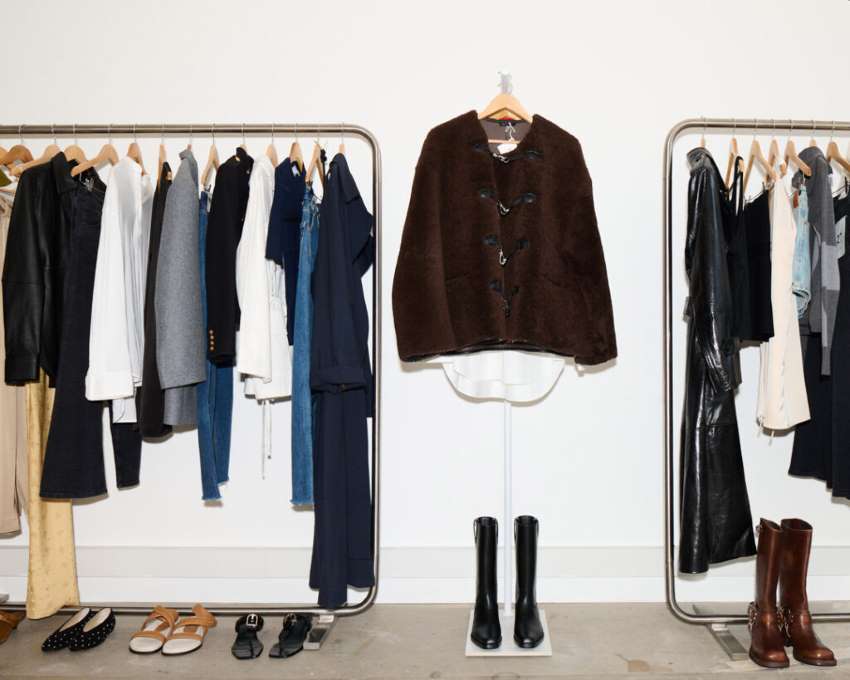
Pitti Immagine’s main strategy will be to continue to enhance Pitti Umo’s influence in Asia. It hopes the Chinese media and more high quality buyers understand Pitti Umo, so that they know they can find what they want at Pitti Uomo. The intention is to let Italian men’s brands be recognized by Chinese consumers and contacts.
The belief is that overseas buyers are playing a big role in the fashion industry and their proportion is continuing to increase in Pitti Umo, which is the world's most important men's fashion event. It includes not only fashion but lifestyle in terms of new clothing, accessories, as well as a variety of products. Asian markets are increasingly being compared to Western markets and more and more attention is being focused on the future course of business in Asia as in terms of future prospects profits in Asian markets could be bigger.
The Pitti Uomo menswear show will be held June 14 to 17, in Florence, Italy. At last year's show, 41 per cent of buyers were from overseas, from countries such as Japan, China and South Korea. This year is the 90th anniversary of Pitti Uomo.
Pitti Immagine sees great potential in Chinese designers and feel they should cater to Chinese tastes instead of turning to western inspired designs. The idea is to narrow the distance between consumers and fashion as not all of the pioneer designs and not all of the avant-garde designs are accepted.
So while young Chinese designers are educated, they also need to know what works and never forget their roots. So while they may be open to outside influences, they need to pay attention to consumer needs, cut out what’s fancy or outlandish, and attempt to blend China’s local culture and fashion together.
This year Pitti Immagine is trying a new technology called ready-to-order APP. This involves many small-scale garment manufacturers who may have a great design or quality or some young designer with promise. They can participate in the show. It is expected to help in smoother communication between visitors and vendors and more convenient business contacts.
- 1
- 2
- 3
- 4
- 5
- 6
- 7
- 8
- 9
- 10
The £7 Billion Question: Who pays for fashion’s ‘free rental’ habit?
The global fashion industry is facing an uncomfortable paradox: its most valuable customers may also be its most destructive. A... Read more
India, China Bangladesh face fresh headwinds as global apparel markets rebalance
Global apparel trade is entering a more uneven recovery phase, with demand growth persisting but losing uniform momentum across major... Read more
Global cotton enters a deficit year in 2026 as supply drop meets logistics risk
The global cotton economy has entered a fragile and sensitive phase. Early projections for the 2026-27 season suggest that world... Read more
India’s textile trade gets a Pacific push as New Zealand FTA removes tariff barr…
India and New Zealand have inked a ‘once-in-a-generation’ Free Trade Agreement (FTA), one that will have a profound impact on... Read more
Lululemon’s world-first nylon circularity push signals a new apparel arms race
The global apparel industry’s circularity narrative is entering a more technically demanding phase. Polyester recycling once the flagship of sustainable... Read more
Beyond the DTC Rush: Levi’s hybrid channel strategy sets a new retail benchmark
The global apparel sector is entering a phase where channel strategy is no longer a tactical lever but a core... Read more
The New Rules of Resale: EPR turning secondhand into fashion’s strategic growth …
The global fashion industry is facing a decisive regulatory and commercial reset. What began as a sustainability narrative around reuse... Read more
The 2027 Mandate: Why denim’s future hinges on verifiable data
For decades, the global denim industry has relied on a narrative of durability, heritage, and authenticity. That narrative is now... Read more
Europe’s textile core unravels as costs, imports and policy pressure bite
Europe’s textile and apparel sector, long seen as a benchmark for craftsmanship and industrial depth, is slipping into a prolonged... Read more
Automation, innovation, regulation are the forces shaping textiles in 2026
The global textile sector has entered a new era. Early 2026 saw the industry breach a $1.06 trillion valuation, reflecting... Read more