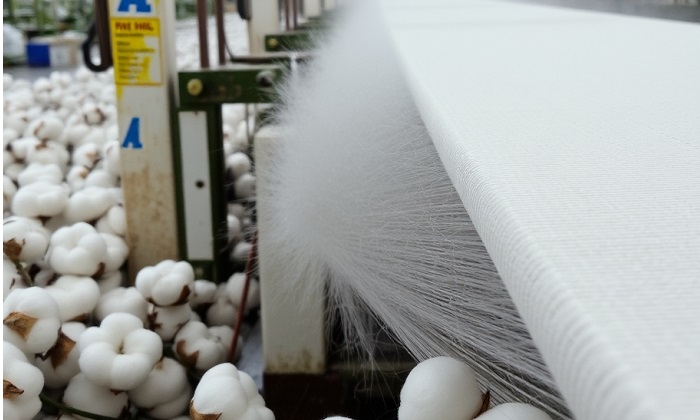
For nearly two months China has been having daily auctions of its huge cotton reserves. But only a fraction of the stocks have been sold. The reason: high pricing and a slowing of economy. With sufficient inventory still available in the market and state auction prices relatively high, mills largely stayed away. Discounts would have risked pushing down market prices and led to increased costs for the government under a new subsidy scheme that has replaced stockpiling.
The poor auction results raise questions about how the government will get rid of the rest of its stock. Both yields and quality of China’s new crop, expected to start harvesting soon, are better than last year and prices are likely to be lower than the sales price set in the latest auctions. If prices remain relatively low, reserves would be under pressure to reduce their selling price in any future sales, increasing already substantial losses on the fiber that was bought at prices well above the market.
Beijing had been under pressure to release stocks to recover part of the cost accrued while building a stockpile of around 11 million tons of cotton under a now-abandoned state buying scheme to support farmers.

- 1
- 2
- 3
- 4
- 5
- 6
- 7
- 8
- 9
- 10
Global textile regulation tightens, forcing realignment across fashion supply ch…
Global fashion and consumer goods supply chains are entering a decisive regulatory transition as Extended Producer Responsibility (EPR) frameworks for... Read more
Luxury’s new power axis, US dominance, China reset, Gulf surge
As the post-China luxury order takes shape, the US is emerging as the industry’s most dependable growth engine, while Japan,... Read more
India’s $9 Billion Landfill Blind Spot How trashed clothes hold the key to globa…
A massive economic windfall is sitting uncollected in India’s landfills, and the key to unlocking it lies in rethinking how... Read more
Red Sea crisis reshapes textile trade routes, challenges India’s export margins,…
Global apparel trade is now in a new operational phase where geopolitical stability and logistics reliability are as important as... Read more
EU’s textile waste rules enter enforcement phase, raising alarms across fashion …
Europe’s apparel and textile industry is approaching one of its most significant regulatory transitions in decades. As the European Union... Read more
Corporate fashion adopts reverse logistics to unlock the $367 bn resale market
Global fashion retailers are rapidly changing their business models around resale, repair, and textile recovery as the secondhand apparel market... Read more
Tariff Shock 2026: Forced-labor enforcement is repricing global fashion trade
Washington’s latest trade intervention signals a break in the global apparel sourcing patterns. The Office of the United States Trade... Read more
Circular Samvaad 2.0 aims to transform Indian textiles from linear waste to glob…
On the occasion of World Environment Day, industry leaders, policymakers, and international experts gathered in the capital yesterday for Circular... Read more
From Sentiment to Sustainability: How Mumbai’s ‘Mega Post Textile Waste Initiat…
Walk into almost any Indian household, and you will find wardrobes harboring clothes that haven’t been worn in years. They... Read more
Trends-Fabrics (Denim-Kidswear) trends for Spring/Summer 2026-27 by Drapers
For the Spring/Summer 2026-27 season, the kidswear denim market is defined by a shift toward lightweight comfort, playful aesthetics, and... Read more