The Green Supply Chain Map has top notch brands as its members. This is an online transparency tool that ties companies to their suppliers’ environmental performance in China. It collates data from the Chinese government and member brands to map out and monitor the individual performance of supplier factories based around China.
The online tool, launched at the start of the year, details the names, addresses and geo locations of supplier facilities and provides real-time emissions data, feedback about corrective actions and resource use information.
Among the members of Green Supply Chain Map are Levi’s, Tesco, Target, Esprit, New Balance, Puma, Adidas, Gap and Inditex. These are leaders in supply chain transparency and environmental management.
So 70 of Levi’s’ suppliers and 145 of Tesco’s suppliers will have their supply chains made publicly available on the Green Supply Chain Map. Users of the online tool are then able to filter information by brand and assess details relating to air emissions and wastewater discharge from individual supply chains.
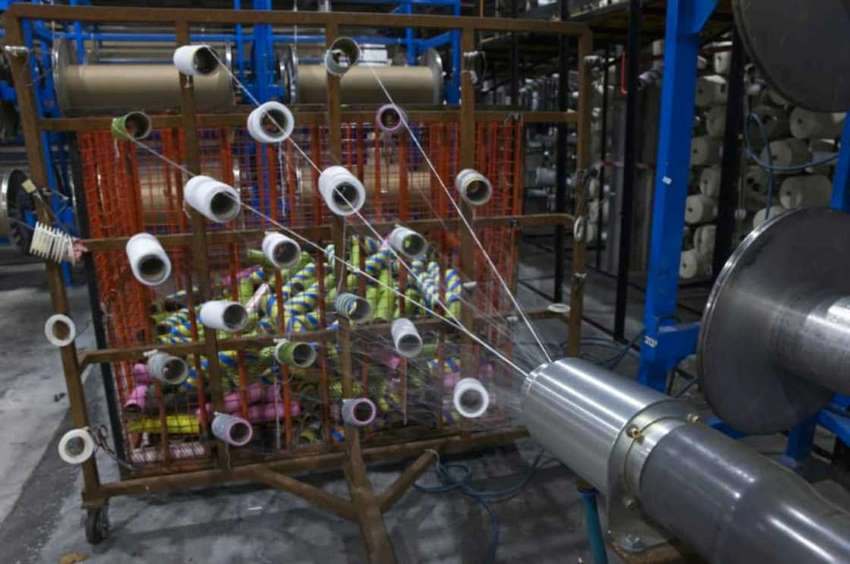
These suppliers primarily conduct wet processing operations, such as dyeing and finishing of fiber and leather. The tool gives companies the real-time information they need to ensure environmentally responsible operations from afar. It also allows customers and other concerned members of the public to gain greater transparency around companies’ environmental impact.
- 1
- 2
- 3
- 4
- 5
- 6
- 7
- 8
- 9
- 10
Compliance drives India’s $176 bn textile shift
India’s textile economy is no longer selling fabric alone; it is selling proof. As compliance rules harden across export markets,... Read more
The second life economy gets a boost as resale outgrows traditional apparel reta…
For decades, resale existed in the margins of the apparel economy, thrift stores, peer-to-peer marketplaces, and charity bins quietly absorbing... Read more
Rising polyester costs shake India’s textile manufacturing hubs
India’s synthetic textile industry is confronting a sudden and destabilizing price shock that is reverberating across its vast manufacturing ecosystem.... Read more
Cotton markets hold firm as tariffs, higher supply reshape global fiber economic…
In a year marked by tariff escalations, geopolitical brinkmanship and a recalibration of global trade flows, the international cotton market... Read more
Beyond Cotton How Kapok could redefine sustainable insulation in textiles
In the lush, humid heart of Southeast Asian rainforests stands a giant, a silent sentinel of the forest canopy. Growing... Read more
Bharat Tex 2026: Redefining the global textile value chain
Union Minister of Textiles, Giriraj Singh, has officially unveiled Bharat Tex 2026, signaling a significant leap in India’s influence over... Read more
Intertextile Shanghai Spring 2026: A hub for global textile innovation
The textile industry’s pulse is quickening as Intertextile Shanghai Apparel Fabrics – Spring Edition prepares to open its doors from... Read more
Moscow Fashion Week 2026: Blending sustainable innovation with timeless glamour
Scheduled to run from March 14-19, 2026 in Moscow, Russia, the Moscow Fashion Week (MFW) is cementing its status as... Read more
The Store as Stage: How fashion is crafting immersive consumer worlds
The North American fashion retail sector in 2026 is shedding its product-first identity and shifting towards a model that values... Read more
Turning the supply chain upside down, on-demand production reshapes apparel
The global fashion industry, long celebrated for its creativity and scale, is facing a structural reckoning. For decades, retailers and... Read more