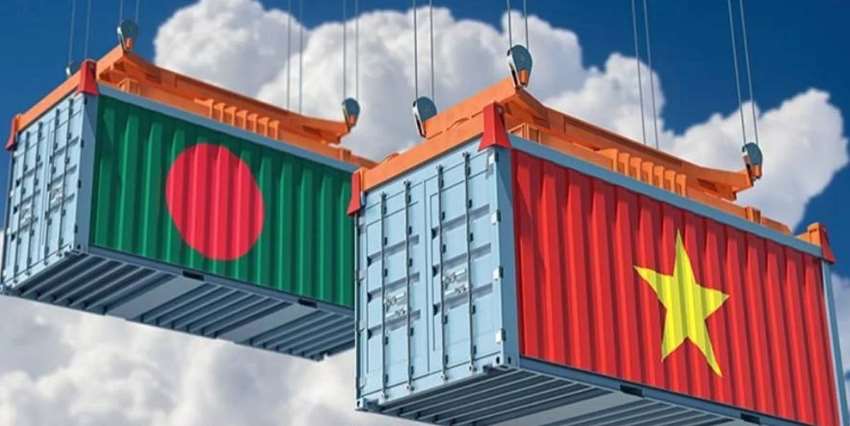
Bangladesh’s apparel sector wants funds to become socially, environmentally and economically sustainable. To make a factory safe for working, make it socially and environmentally compliant, huge investments are needed. But entrepreneurs need financing to do so at a competitive cost.
As of now, the country leads the list of green industries around the world with 101 LEED certified factories and more than 500 in the pipeline. But continuity of this success will depend on the commitment of stakeholders in finding ways to make the industry more sustainable. Despite Bangladesh’s progress in many aspects, buyers and customers want to see more improvement in the readymade garment sector especially in the areas of factory inspection, workers’ safety and fairness of labor practices.
The contemporary textile and readymade garment sector has been going through major changes with the emergence of technologies linked to the fourth industrial revolution, changing many conventional models of business in the sector. Meaningful exchange of knowledge can make sustainability easier to attain for manufacturing processes across the garment industry. Bangladesh is the second largest apparel exporter in the world. Though climate change is one impediment in the growth of the country’s apparel industry and its future sustainability, Bangladesh has one of the lowest per capita carbon emissions in the world.
- 1
- 2
- 3
- 4
- 5
- 6
- 7
- 8
- 9
- 10
Cotton markets hold firm as tariffs, higher supply reshape global fiber economic…
In a year marked by tariff escalations, geopolitical brinkmanship and a recalibration of global trade flows, the international cotton market... Read more
Beyond Cotton How Kapok could redefine sustainable insulation in textiles
In the lush, humid heart of Southeast Asian rainforests stands a giant, a silent sentinel of the forest canopy. Growing... Read more
Bharat Tex 2026: Redefining the global textile value chain
Union Minister of Textiles, Giriraj Singh, has officially unveiled Bharat Tex 2026, signaling a significant leap in India’s influence over... Read more
Intertextile Shanghai Spring 2026: A hub for global textile innovation
The textile industry’s pulse is quickening as Intertextile Shanghai Apparel Fabrics – Spring Edition prepares to open its doors from... Read more
Moscow Fashion Week 2026: Blending sustainable innovation with timeless glamour
Scheduled to run from March 14-19, 2026 in Moscow, Russia, the Moscow Fashion Week (MFW) is cementing its status as... Read more
The Store as Stage: How fashion is crafting immersive consumer worlds
The North American fashion retail sector in 2026 is shedding its product-first identity and shifting towards a model that values... Read more
Turning the supply chain upside down, on-demand production reshapes apparel
The global fashion industry, long celebrated for its creativity and scale, is facing a structural reckoning. For decades, retailers and... Read more
Intertex Milano 2026 - A global nexus for textile innovation
Intertex Milano is set to return this summer, confirming its status as a premier international destination for the textile and... Read more
Primark at crossroads as AB Foods weighs spin-off amid digital and Lefties press…
The long-standing supremacy of Europe’s budget fashion champion, Primark, is facing a test. As of February 2026, Associated British Foods... Read more
Vietnam, Bangladesh, Cambodia drive US apparel imports in 2025
The 2025 year-end data for the US apparel sector reveals an industry in structural flux. Despite aggressive tariff measures and... Read more