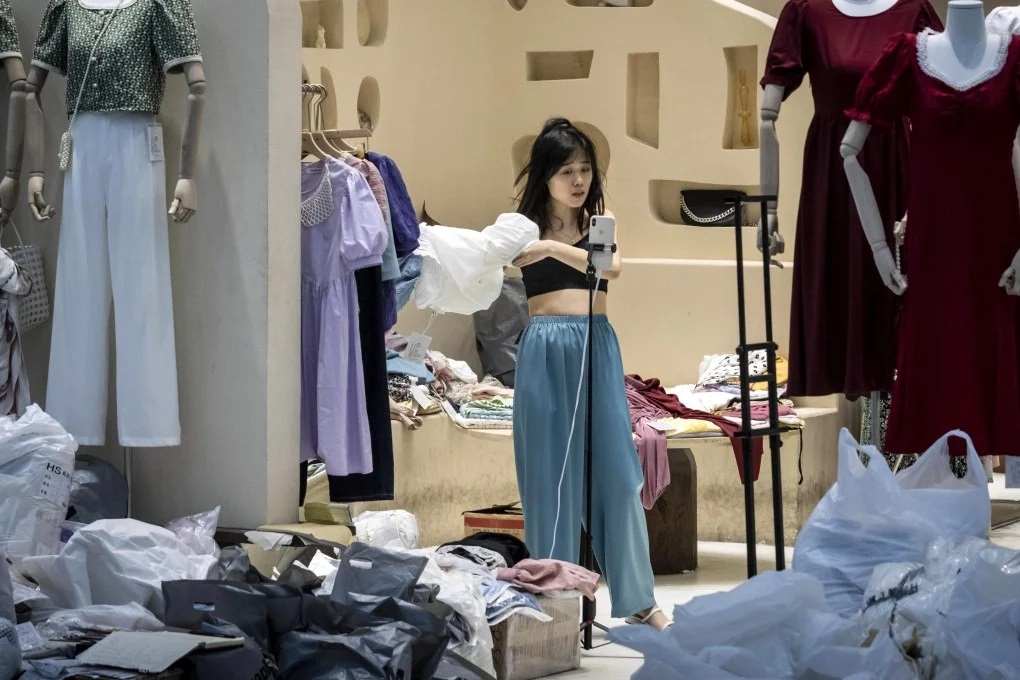
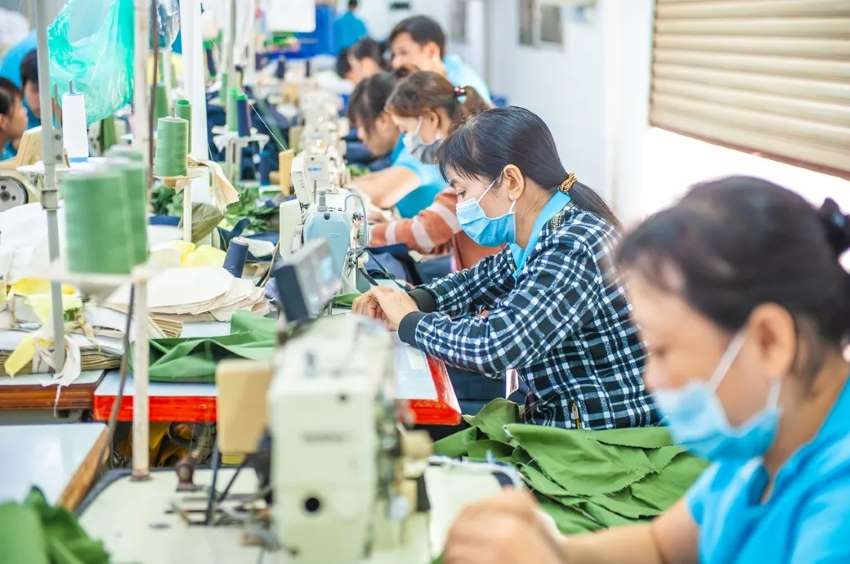
No new garment units have opened in Tirupur in the past year. In fact, many garment units have shut in recent months. Reason: cash crunch following demonetization last November. The textile industry used to directly employ around 5,00,000 workers and log yearly sales of around Rs 40,000 crores. The cash crunch brought the industry, mainly comprising micro, small and medium enterprises, to a grinding halt. There was no business for three to four months.
A worker earning Rs 500 to Rs 600 a day had to lose a day’s salary to stand in the queue to exchange a sum of Rs 2000. The textile industry of Tirupur was expected to earn Rs 30,000 crores from exports alone in the year that ended on March 31. It ended with Rs 26,000 crores in exports, besides Rs 16,000 crores from domestic sales.
Even as the textile industry struggled on, it was hit by another disruptive event: GST. The Tirupur cluster has been facing a slow decline over the years. In 2004, India was a global leader in knitwear, just next to China. With the growing global market in Bangladesh, Cambodia, Vietnam, Sri Lanka, Myanmar and Ethiopia, it is no longer in the top position.
- 1
- 2
- 3
- 4
- 5
- 6
- 7
- 8
- 9
- 10
Beyond the DTC Rush: Levi’s hybrid channel strategy sets a new retail benchmark
The global apparel sector is entering a phase where channel strategy is no longer a tactical lever but a core... Read more
The New Rules of Resale: EPR turning secondhand into fashion’s strategic growth …
The global fashion industry is facing a decisive regulatory and commercial reset. What began as a sustainability narrative around reuse... Read more
The 2027 Mandate: Why denim’s future hinges on verifiable data
For decades, the global denim industry has relied on a narrative of durability, heritage, and authenticity. That narrative is now... Read more
Europe’s textile core unravels as costs, imports and policy pressure bite
Europe’s textile and apparel sector, long seen as a benchmark for craftsmanship and industrial depth, is slipping into a prolonged... Read more
Automation, innovation, regulation are the forces shaping textiles in 2026
The global textile sector has entered a new era. Early 2026 saw the industry breach a $1.06 trillion valuation, reflecting... Read more
The new Brussels rulebook, every EU apparel order is now a balance-sheet risk
The humble export order sheet is undergoing a transformation. What was once a straightforward commercial instrument: SKU, volume, FOB price,... Read more
Why 2026-27 could be a defining cotton year for India’s farm-to-fashion economy
The global cotton economy is entering a more constrained phase, and for India, the implications run far beyond the farm... Read more
Luxury resale’s next big battle is no longer digital, it is about who controls s…
For nearly a decade, the luxury resale story was written in the language of platforms. Market leadership was measured by... Read more
Digital Arms Race: Indian apparel giants deploy AI to neutralize tariff crisis
The Indian textile and apparel sector is in a digital survival phase in 2026, shifting from traditional labor-intensive models to... Read more
Europe’s Textile Endgame: Why Project FAE is becoming fashion’s most critical in…
Europe’s apparel majors are no longer treating circularity as a branding layer. With Project FAE or Feedstock Activation Europe, the... Read more