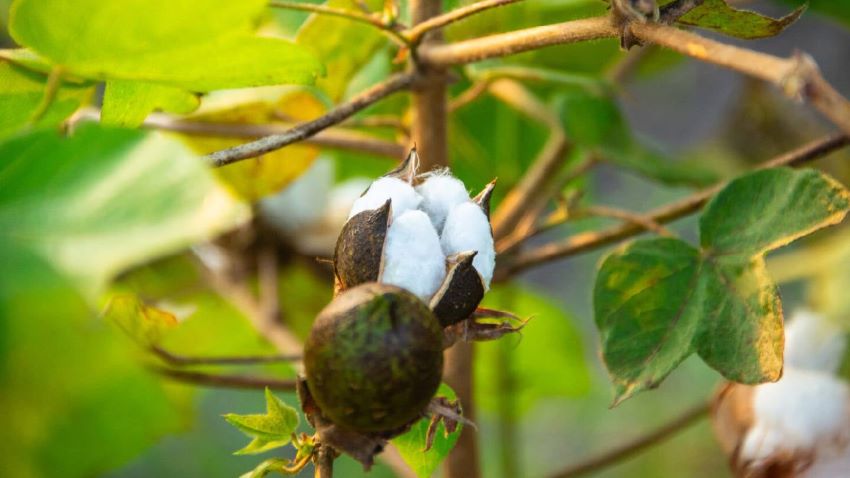
Most companies using cotton are failing to deliver on sustainability when there is no excuse for companies not to offer more responsible products to customers. While around 10 to 13 per cent of the global cotton supply can be classed as more sustainable, less than a fifth of this amount is actually being used as more sustainable cotton in products with the rest being sold as conventional due to lack of demand from top brands and companies.
Lack of uptake of more sustainable cotton is a massive missed opportunity. Conventional cotton production often suffers from serious social and environmental impacts such as excessive water and hazardous pesticide use.
Growing sustainable cotton market is seen as the best chance of cleaning up cotton and protecting worker health. Just a few leading companies are doing the heavy lifting on sourcing sustainable cotton. For the cotton sector as a whole to become sustainable, all major companies will need to get on board. Sourcing more sustainable cotton has never been easier.
Organisations like Better Cotton, Cotton made in Africa, Organic, and Fairtrade are calling on all companies using large volumes of cotton to set, report and deliver on time-bound targets for cotton sustainability. They say companies serious about sustainability should be sourcing 100 per cent more sustainable cotton by 2020 at the latest.

- 1
- 2
- 3
- 4
- 5
- 6
- 7
- 8
- 9
- 10
From gym to boardroom performance fabrics are redefining apparel demand
The global apparel industry has entered a new phase of evolution as the distinction between sportswear and everyday fashion continues... Read more
Digital Dominance Redefined: Zara moves past H&M in $100 bn fast fashion bat…
The global fast-fashion sector has reached a inflection point in 2026 where the battleground is no longer only store shelves... Read more
Spykar accelerates offline expansion: plans 100 new stores across India
A titan of the Indian denim-first fashion scene, Spykar has officially unveiled an aggressive retail growth strategy. As consumer demand... Read more
The Inventory Illusion: Rethinking the Zara benchmark in a volatile retail era
For over a decade, the global fashion industry has treated the Zara playbook as the gold standard of inventory efficiency.... Read more
Retail Without Retail: How Walmart’s depot network is turning space into logisti…
Walmart is fundamentally rewriting the commercial real estate and retail logistics playbook with the rise of its ‘Walmart Depots’ a... Read more
Global textile regulation tightens, forcing realignment across fashion supply ch…
Global fashion and consumer goods supply chains are entering a decisive regulatory transition as Extended Producer Responsibility (EPR) frameworks for... Read more
Luxury’s new power axis, US dominance, China reset, Gulf surge
As the post-China luxury order takes shape, the US is emerging as the industry’s most dependable growth engine, while Japan,... Read more
India’s $9 Billion Landfill Blind Spot How trashed clothes hold the key to globa…
A massive economic windfall is sitting uncollected in India’s landfills, and the key to unlocking it lies in rethinking how... Read more
Red Sea crisis reshapes textile trade routes, challenges India’s export margins,…
Global apparel trade is now in a new operational phase where geopolitical stability and logistics reliability are as important as... Read more
EU’s textile waste rules enter enforcement phase, raising alarms across fashion …
Europe’s apparel and textile industry is approaching one of its most significant regulatory transitions in decades. As the European Union... Read more