When ChatGPT unveiled its Instant Checkout capability allowing users to discover, evaluate, and purchase products within a single conversational interface it was more than a feature release. It was a signal that the very foundations of digital commerce are shifting. Retail’s long-standing search-and-scroll paradigm is giving way to a fluid, AI-driven shopping continuum where discovery, decision-making, and transaction collapse into a single stream of dialogue.
For decades, e-commerce was built on keywords, filters, catalogues, and comparison tabs. The consumer journey was logical but laborious. Now, with conversational AI transforming into a transactional layer, the retail experience is being reimagined as something far more human, intuitive, and anticipatory. What we are witnessing is the emergence of the world’s first ‘AI shopping mall’ a place where the storefront, the salesperson, the stylist, the cashier, and the supply chain all merge into a single generative system.
From chatbots to commerce engines
The idea of talking to a computer to shop is not new. Retailers experimented with simple chatbots almost a decade ago, but these early tools were rigid and easily confused. Today’s systems, however, are built on multimodal models that parse language, visual cues, sentiment, and context simultaneously. What was once a novelty is now an operational pillar for global retailers.
Amazon’s AI-driven recommendation engine remains one of the most sophisticated examples in the industry, contributing an estimated 35 per cent of its sales. Meanwhile, fast-fashion platform Shein has quietly built a predictive engine that analyses browsing behavior, social sentiment, and even image preferences to forecast what a customer will want weeks before they articulate it. This is personalization in its most dynamic form, where the system becomes a stylist, merchandiser, and trend predictor all at once.
What distinguishes generative AI from previous generations is its capacity to synthesize, not just retrieve answers. It doesn’t simply show what others bought; it understands the customer’s intent and constructs entirely new recommendations, outfits, or shopping journeys in real time.
The virtual fitting room goes mainstream
One of the most stubborn hurdles in online retail has been the absence of tactile experience. You cannot feel fabric, test lipstick shades, or check the drape of a dress. Yet, AI is dissolving even these barriers.
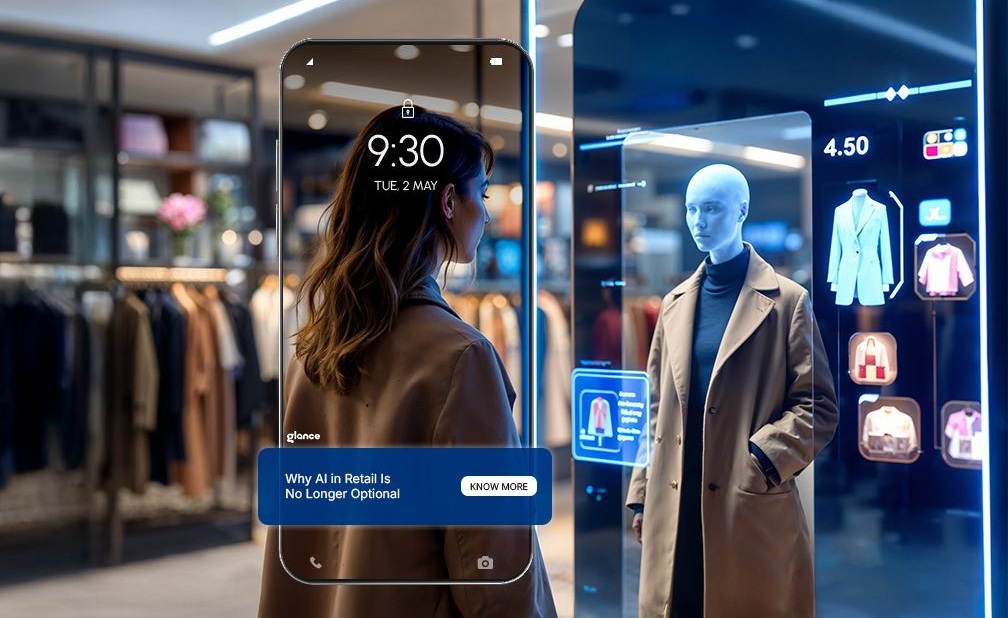
Sephora’s Virtual Artist, Google’s AI try-ons for apparel, and Amazon’s visual search tools are reshaping how consumers bridge physical imagination with digital reality. By layering facial recognition, digital draping, and real-time rendering, these tools allow shoppers to preview makeup, experiment with hair colors, or test apparel silhouettes with surprising accuracy. For retailers, the payoff is substantial: higher conversion, lower product returns, and stronger consumer confidence.
Platforms like Zalando, Myntra, and Shopify-powered brands are increasingly integrating generative visual engines that adjust product imagery to diverse body types or skin tones. This is not merely a technical upgrade; it is a cultural shift toward more inclusive commerce, where consumers finally see themselves accurately reflected online.
Content that writes itself
The retail world publishes millions of product descriptions, advertisements, and SEO assets each year. Traditionally, producing such content was a slow and expensive process. Generative AI has collapsed that cycle dramatically. Brands now use AI to spin up hundreds of product descriptions that adapt to tone, language, and context. A single piece of creative can generate countless micro-variations of ads optimized for different platforms or demographic groups. For global brands, it ensures coherence. For smaller brands, it levels the playing field by eliminating a previously costly barrier to scale.
Some retailers are already using generative models to design entire campaigns from storyboard concepts to captioned videos reducing time-to-market by weeks. In a sector defined by fast-changing trends, speed is not just an advantage; it is survival.
AI in supply chains and operations
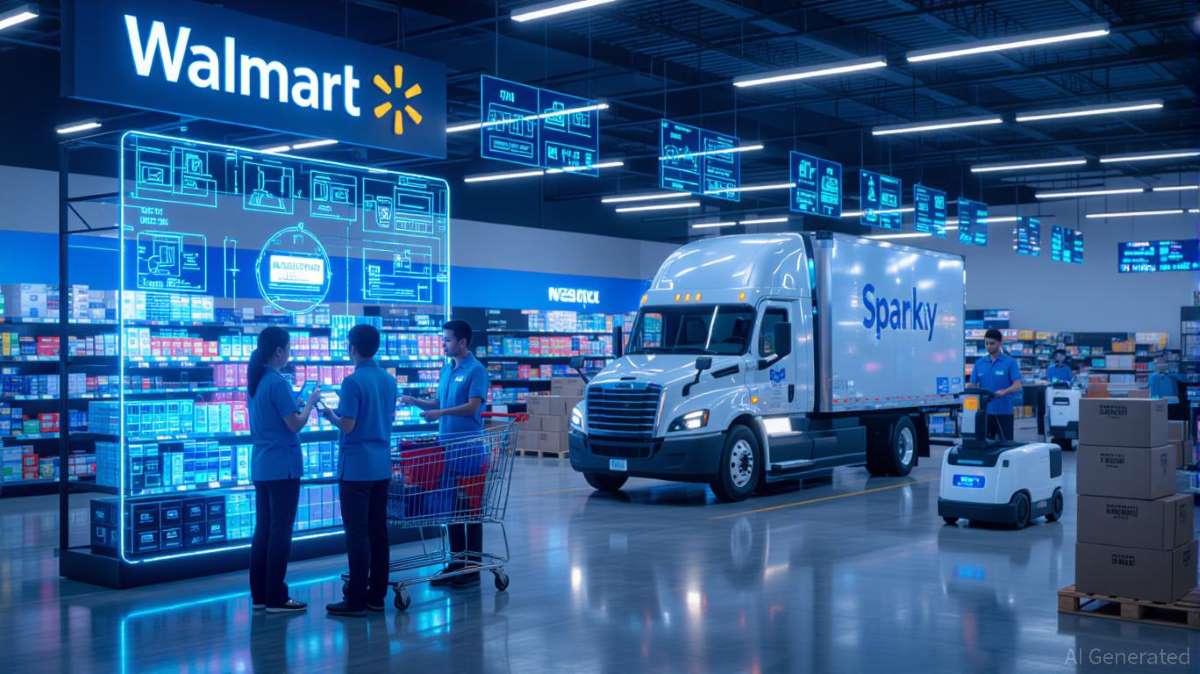
Beyond the glossy front-end experiences lies an equally transformative story in retail’s back rooms. AI-driven demand forecasting has become the quiet backbone of inventory management. Walmart’s sophisticated models process historical sales data, local events, weather fluctuations, and economic indicators to predict what will sell and when. This helps avoid stockouts and reduces wastage critical for perishable categories but increasingly important in fashion, where overproduction has long been a structural problem.
ChatGPT-like negotiation bots now assist with supplier conversations, turning what was once a lengthy, human-led process into a streamlined, data-driven exchange. Carrefour’s digital assistant, for example, not only recommends recipes to consumers but also helps the retailer plan procurement more efficiently. Walmart’s in-store AI assistant ‘Ask Sam’ is proving how a single tool can enhance productivity for both shoppers and floor staff.
The result is a retail ecosystem where operational intelligence becomes continuous, adaptive, and increasingly autonomous.
Dawn of a new shopping paradigm
The speed at which consumers have embraced conversational search is perhaps the clearest indicator of the shift ahead. Major retailers report that customers using AI interfaces convert faster, browse longer, and purchase more items on average. Conversational commerce, once dismissed as a niche, is becoming a mainstream shopping behavior.
But the next leap will come from agentic AI, systems that don’t wait for instructions but proactively act on behalf of the user. An agentic retail AI could track a customer’s wardrobe, remind them when staples need replacing, suggest additions to maintain a capsule collection, or automatically compare prices to secure the best deal. For retailers, agentic AI can dynamically adjust pricing, personalize homepage layouts, and optimize marketing spend in real time based on user behavior. The borderlines between a search engine, a personal stylist, and a marketplace are dissolving. Retail is no longer a destination you visit; it is a service that accompanies you everywhere.
The future of retail is no longer store-led
As generative AI weaves itself deeper into every layer of the retail value chain, the industry is quietly undergoing its most significant reinvention since the rise of e-commerce. The mall is no longer a physical space or even a website. It is an intelligent, conversational network of algorithms designed to understand consumer intent and deliver solutions instantly. Retailers who embrace this shift will find themselves operating in a world where personalization is real-time, operations are self-optimizing, and the customer journey is no longer linear but continuous. Those who resist risk becoming relics of the search-and-scroll era.
The new shopping mall is already here. It is everywhere, accessible through a single conversation, and built not with glass and concrete but with generative intelligence. The question for the industry is no longer whether AI will reshape retail it is how quickly retailers can redesign themselves to thrive in an agentic, conversational, AI-first world.