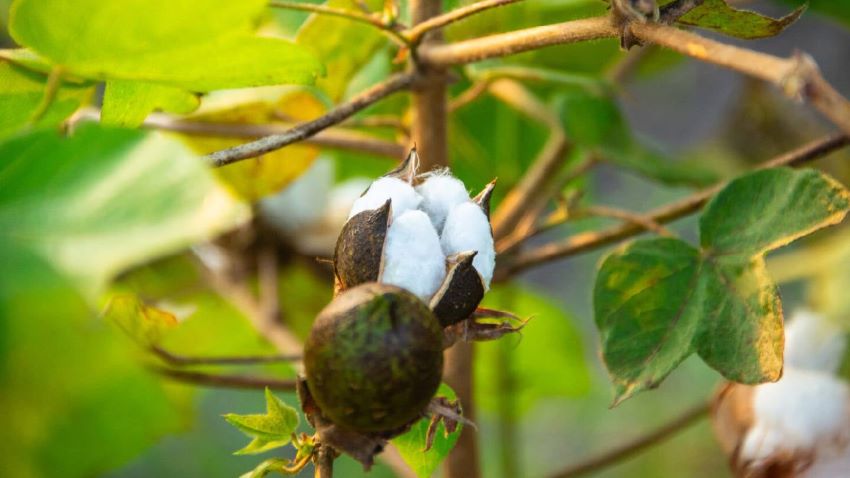
Japan has given a grant to help the cotton industry in Belize. The grant would be used to purchase high clearance tractors and planters. Japan will share its extensive knowledge of processing methods by providing machinery to harvest high quality cotton.
Japan hopes to rejuvenate and expand the production of sea island cotton in Belize. The demand for sea island cotton in Japan is far greater than the world can supply. Because of ideal weather conditions and soil quality, Belize has the potential to become a leading cotton producer in the world. Expanding the industry would be beneficial to the local economy, not just in terms of contributing to the country’s exports, but also because the harvesting of cotton must be done by hand so as not to damage the fibers.
This will create more employment opportunities for local communities. A typical cotton field would need between 150 to 200 cotton pickers and workers can flexibly choose the days they wish to work. Over the past year since the start of the project the harvesters have been primarily women.
Since last year more than 1000 pounds of dried cotton have been received and this year local producers are hoping to produce more than 30,000 pounds of dried cotton worth some 1,60,000 dollars.
- 1
- 2
- 3
- 4
- 5
- 6
- 7
- 8
- 9
- 10
Global cotton enters a deficit year in 2026 as supply drop meets logistics risk
The global cotton economy has entered a fragile and sensitive phase. Early projections for the 2026-27 season suggest that world... Read more
India’s textile trade gets a Pacific push as New Zealand FTA removes tariff barr…
India and New Zealand have inked a ‘once-in-a-generation’ Free Trade Agreement (FTA), one that will have a profound impact on... Read more
Lululemon’s world-first nylon circularity push signals a new apparel arms race
The global apparel industry’s circularity narrative is entering a more technically demanding phase. Polyester recycling once the flagship of sustainable... Read more
Beyond the DTC Rush: Levi’s hybrid channel strategy sets a new retail benchmark
The global apparel sector is entering a phase where channel strategy is no longer a tactical lever but a core... Read more
The New Rules of Resale: EPR turning secondhand into fashion’s strategic growth …
The global fashion industry is facing a decisive regulatory and commercial reset. What began as a sustainability narrative around reuse... Read more
The 2027 Mandate: Why denim’s future hinges on verifiable data
For decades, the global denim industry has relied on a narrative of durability, heritage, and authenticity. That narrative is now... Read more
Europe’s textile core unravels as costs, imports and policy pressure bite
Europe’s textile and apparel sector, long seen as a benchmark for craftsmanship and industrial depth, is slipping into a prolonged... Read more
Automation, innovation, regulation are the forces shaping textiles in 2026
The global textile sector has entered a new era. Early 2026 saw the industry breach a $1.06 trillion valuation, reflecting... Read more
The new Brussels rulebook, every EU apparel order is now a balance-sheet risk
The humble export order sheet is undergoing a transformation. What was once a straightforward commercial instrument: SKU, volume, FOB price,... Read more
Why 2026-27 could be a defining cotton year for India’s farm-to-fashion economy
The global cotton economy is entering a more constrained phase, and for India, the implications run far beyond the farm... Read more