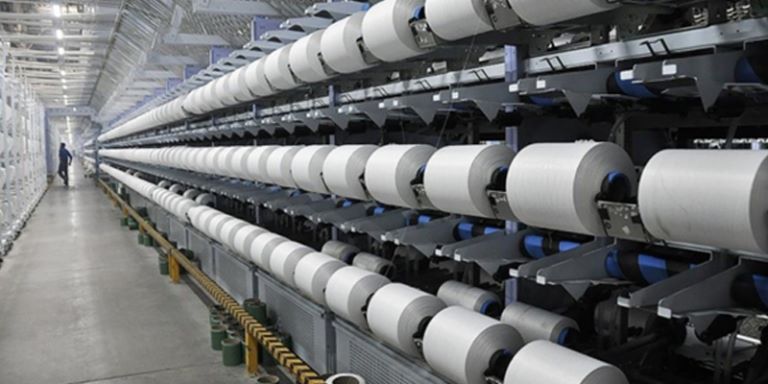
Local spinning mills in Bangladesh are expanding their production capacities and setting up new units as the demand for raw materials is rising. Usually, local spinners process 13.43 million bales of cotton each year. But due to various drawbacks, they are unable to run at full steam. As a result, mills are currently processing only 8.5 million bales of cotton annually, shows data from the Bangladesh Textile Mills Association (BTMA). They will be able to process 16 million bales of cotton within the next two years, says Monsoor Ahmed, CEO. The addition of the new spinning capacity will raise investment in the primary textile sector to nearly $11 billion from $10 billion.
Of the investment, 75 per cent is in the spinning segment, and the remaining 25 per cent is divided amongst the weaving, dyeing, finishing and sizing segments. Shorter lead-time, improved quality, and private consumption are pushing the domestic demand for yarn and fabrics higher. Hence, import of yarn and other fabrics is also increasing to meet the demand, adds Ahmed. In 2020, Bangladesh imported $1.32 billion worth of knitted fabrics, $2.76 billion worth of woven fabrics, and $0.10 billion worth of yarn for the local garment industry.
Currently, local spinners can supply 80 per cent of the raw materials required by the knitwear sector and 40 per cent of the woven sector. So, local spinners are trying to expand their footprint in the market. Jinnat Spinning Mills (JTML), a concern of DBL Group, is set to receive an investment of $83 million from its parent company. The company will be operational by January 2023 with new mills at Sherpur in Moulvibazzar, says MA Jabbar, Managing Director, DBL Group.
Bangladesh can install an additional two million spindle capacity even in the next one year, adds Mohammad Ali Khokon, President, BTMA. Mahin Group is investing nearly Tk 500 crore to produce 60 tonne of yarn per day by 2023. The factory's spindle capacity is expected to reach 55,000 by then, adds Abdullah Al Mahmud Mahin, Chairman and Managing Director.