FW
Growing awareness, need to be in trend drives up fashion rental market: Studies
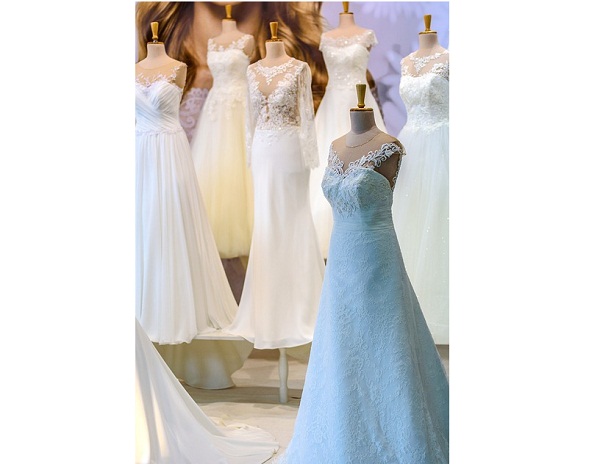
The new kid on the block in the apparel market is the growing segment of rental fashion garments as the need to wear newest fashion trends on a budget by social influencers and Gen Z keeps growing. As fashion brands' rental market for specific occasions fuel growth few top luxury brands are now jumping into the rental and resale bandwagon. With industry forecast expectations of the global online market for clothing rentals expanding at a strong CAGR of 11 per cent between 2021 to 2031 many brands are now eyeing the icing on the fashion market cake.
Garments on rent were earlier considered to be inferior hand-me-downs and out-of-date, many customers kept their fashion seconds a secret as it came with a social stigma. However, it’s a changed situation now with social media taking over and people recognizing the practicality of hiring expensive garments for a one-time use instead of splurging on buying one. Renting designer clothing, wedding and graduation outfits and many other occasion-specific clothes costs just a fraction of the original cost and is just as glam.
“Growing sustainability awareness and the technologically sophisticated Indian youth are driving the industry's expansion. Rental fashion offers various solutions, including tackling the waste problems of fast fashion and promoting a circular economy by extending the lifespan of clothing. Rentals are a mindset change business and since transparency and brand values are important to Generation Z and millennials, they appreciate brands that are digitally focused and environmentally friendly,” explains Aanchal Saini, CEO, Flyrobe, a wedding dress rental service.
Social media penetration revamps market
Technological advancements, internet penetration, growing popularity of fashion vlogs and film industry and increasing popularity of online retail over the last few years are the strong factors driving market. Subscription model is a new style that the clothing rental market is beginning to adopt. It appeals to retailers that must quickly adjust to shifting consumer tastes before particular styles become unpopular.
The size of the online clothing rental market is expected to significantly grow between 2021 and 2031 and is projected to produce $1.8 billion. Future Markets Insights in its study has forecasted the US has emerged as a highly lucrative market, accounting for nearly 95 per cent of the North American rental market. The UK is performing well within the Europe market with an 11.8 per cent Y-o-Y growth in 2021. Germany and France are strong contenders while demand in China and South Korea is expected to be higher than in Japan. Manufacturers are showing increased attention to children's segments as kids have become more style and brand conscious and yet outgrow their clothes quickly. However, due to the plethora of unorganized manufacturers selling low-cost, non-branded goods, hampering the branded segment, this is a tricky segment indeed.
Diversifying its product offering, experimenting with various business strategies, and taking into account customer input, the industry has evolved. Some major players dominating the market are: Rent the Runway, Rotaro, GlamCorner, Gwynnie Bee Company, Mine for Nine, among others.
With the environmentally friendly option of recycling clothes having become the new normal, today’s consumers are sharing outfits with practicality and versatility going hand in hand. The new cool of luxury garments is a revamped and pre-loved one and it is here to stay.
2023 is the year of luxury leather
The luxury leather industry is set to grow in 2023. Leather accessories are the most desirable and fashionable objects to look out for in 2023.
Rendering a touch of sophistication to minimalist outfits, leather bags, wallets and shoes have historically accentuated looks and the luxury market for these goods will only boom in 2023. As the traditional consumer becomes more modern, new colorways are being desired for leather accessories in the coming year. Box bags with minimal embellishments and simplistic designs are making a great comeback to achieve that perfect elegant look.
After the pandemic, brands which offered luxurious travel leather goods are still on the recovering spiel and this is expected to scale positively as the world opens up faster. As physical appearances for occasions are also increasing, gifting leather accessories as a token of appreciation exudes both elegance and class. All of these contributing factors will only help snowball the fashion frenzy, and increase the revenue of significant market vendors. Luxury leather accessories are adorned by an eclectic mix of people, from business tycoons to the youth, from high-class women to travelers seeking durable and spacious bags, therefore demonstrating its significant and growing impact on the fashion industry.
As the key players continue to drive high revenues, it will be interesting to see new players capitalize on this growing taste for leather accessories and give traditional brands a run for their money in 2023.
India: Good Fashion Funds help Pratibha upgrade
Good Fashion Fund has helped Pratibha Syntex upgrade its spinning, processing, and garment divisions. There has been a positive, compounded effects along Pratibha’s value chain.
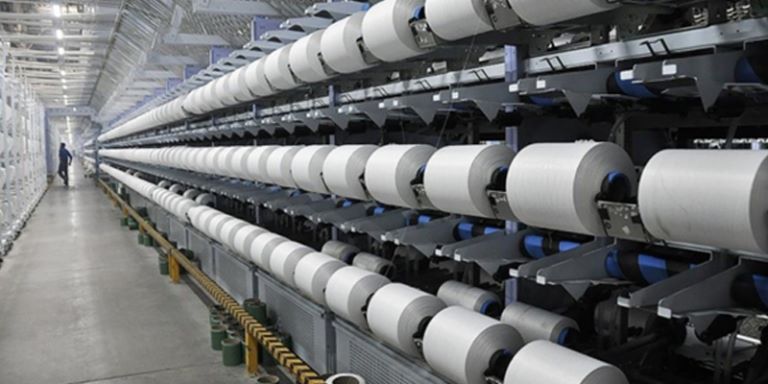
Pratibha Syntex has installed new spinning equipment, solar panels, a continuous tumble dryer, and made enhancements to effluent treatment. The new spinning equipment (card chute, comber, ringrame, autoconer) operates significantly more efficiently than the legacy machinery, both in terms of energy use and waste generated.
Investment in solar panels is ongoing but already more than 30 per cent of use is met by renewable energy and additional installations are planned aimed at increasing that share to 50 per cent.
The continuous tumble dryer has replaced several pieces of equipment used for treating fabrics and has fully eliminated the need for water and has significantly reduced power use in this process.
In order to achieve complete circularity and reduce the need for freshwater, Pratibha is setting up a process whereby neighboring wastewater is treated in addition to their own, using the resulting clean water in their process.
Good Fashion Fund is a funding drive to increase sustainable manufacturing practices launched by Fashion for Good, a global platform for fashion and textile innovation. Pratibha Syntex is into cotton, fibers, fabrics and apparel.
Nudie Jeans and Centra develop solution for customers
Nudie Jeans has partnered with Centra to develop a solution that enables customers to receive their orders from the nearest store as quickly and sustainably as possible.
Nudie Jeans is a sustainable denim brand and Centra is a headless e-commerce platform. Centra and Nudie have begun by rolling out a workable version, starting with wholly owned stores before connecting wholesale partners and franchisees.
The solution enables Nudie to provide a service that will give manufacturers/brands and their bricks-and-mortar retailers a competitive advantage over Amazon and other giant e-commerce marketplaces.The partnership will also build an e-commerce business for Nudie Jeans that integrates all sales channels, ultimately creating a new kind of fulfillment ecosystem, where a customer can order online, but have it picked, packed and delivered from a local bricks-and-mortar store and returned there, if needed. As backup, the product is reserved from the main warehouse if no local stores can fulfill the order – so the customer gets what he/she wants far more quickly and delivered in a far more sustainable way.
E-commerce is built for online multi-brand retailers shipping from a few huge warehouses. It is not designed for brands with an existing and complex retail network of wholly owned stores, franchises and wholesale partners.
Bold Metrics helps brands reduce returns
Bold Metrics’ smart size chart helps apparel brands drive down returns and boost conversion.
The smart size chart puts shoppers at the center of the experience. Drawing on shopper feedback, the US company conducted tests across all age groups and e-commerce experience levels to ensure that even inexperienced online shoppers could find their best fit intuitively. Word, image, and formatting choices were all tested in-depth to determine the best possible customer experience, combining ease of use with accuracy and speed.
Testing was carried out on existing client sites and via a generic user flow to actualize accurate results and determine preferred user experiences. The goal was to build confidence and trust with customers interacting with the smart size chart solution by providing fast and accurate results aligned with or exceeding customer expectations.
By listening to and integrating shoppers' feedback as an integral part of the redesign process, Bold Metrics has created an intuitive online shopping experience to elevate the fit experience at brands like Canada Goose, Men's Wearhouse, and UpWest. Bold Metrics is the only AI body modeling company focusing on helping brands use body data to drive conversion while reducing returns and keeping them down.
It is the first sizing solution to directly address fit preference, providing shoppers tangible guidance on how a given style will fit across points of measure critical to that garment.
CPI up five per cent in South Korea
In November 2022, the consumer price index for clothing and shoes in South Korea was up five percent from the same month last year.
Apparel prices surged by the largest margin in more than a decade in November 2022. Children's clothing saw a nine percent increase while women’s clothing and casual fashion saw rises of five per cent and six percent. Costs for laundry and repairing of clothing rose by ten percent while prices for shoes also rose by four percent.The increase in apparel prices follows disruptions in global supply chains and the consequent rise in costs related to releasing textile products. Cost of raw materials, including cotton, has risen, and, consequently, costs for cut-make-trim process in China have also risen. Such factors led to this year’s record-breaking increase in prices for clothing.
The consumer price growth rate is expected to stay in the five percent range until early next year. The country’s consumer price index had risen by five percent to 109.10 in November compared to last November, marking the largest margin of increase in 24 years since 1998. However, this year’s November figure was a 0.7 percent decrease compared to the previous month of October.
Brazil hikes cotton supply to Indonesia
Brazil will supply cotton to Indonesia. Asian countries like Indonesia need imported cotton to make up for the shortfall in domestic supply.
Indonesia is the sixth largest importer of Brazilian cotton in the world. The surge in demand for imported high-quality cotton has paved the way for a resurgent Brazil’s cementing its position as the world’s fourth largest producer and second largest exporter of cotton.In the last four years, Brazil’s cotton production has more than doubled. This has been mainly achieved by the use of advanced agricultural technologies and the adoption of non-irrigated agricultural practices in over 90 per cent of Brazil’s cotton farms.
During the 2021-2022 harvest season, Brazilian farms have supplied 1,55,000 tons of cotton to Indonesia.In the world’s textile industry, Brazilian cotton has a 28 per cent market share. Brazilian cotton supply is expected to grow again this year. This year's harvest area is expected to increase 15 per cent compared to last year. Production is expected to reach nearly 2.5 million tonnes, making this the second best harvest season in the history of Brazilian cotton.
Globally, Brazil exported 1.519 million tons of cotton between August 2021 and April 2022, generating US$2.87 billion in revenue. Brazil estimates that total exports will reach 1.8 million tons in the next cycle, with an estimated 2.2 million tons for the period 2023 to 2024.
Bangladesh exports to new markets up 24 per cent
Bangladesh’s readymade garment exports to non-traditional markets grew by 24 per centfrom July 2022 to October 2022. Of the total amount, export revenue from woven products grew by 29 per cent.
Earnings from knitwear goods were up by 19 per cent. From July 2022 to October 2022 apparel exports to Japan rose by 26 per cent. Exports to India rose by 55 per cent.
Garment exports to Australia grew by eight per cent. Apparel exports to South Korea saw a 40 per cent growth. Apparel export earnings to Mexico grew by 46 per cent. Bangladesh is exploring new destinations to make the garment sector sustainable. Exports to non-traditional markets have grown from less than a billion dollars to five billion dollars in the last 12 years.
Fashion buyers have increased confidence in Bangladesh due to quality products and timely delivery. In the last few years, the country has made huge progress in the areas of responsible and sustainable manufacturing. But several initiatives are needed to fully utilize the potential of the markets. There is a need to look beyond the conventional pattern of business and growth, and prioritize investments in technologies, modernization, skills, efficiency, and diversification in the product range, which will add more value to the country’s business and competitiveness.
Nepal finds winter clothing prices beyond reach
Winter clothes have become costlier in Nepal due to a strong dollar, higher transportation costs and slowed deliveries from China. Prices of winter clothes have become exorbitant this season.
It is normal for prices to go up every year, but this year business has gone haywire.Jacket prices have gone up by Rs600 to Rs1000 depending upon the design and quality of the material. Sales have declined.
A shortage of raw materials has prevented Nepal’s clothing makers from ramping up production. After inflation slowed imports and China also slashed shipments, Nepal’s apparel manufacturers had hoped to cash in on the lack of competition but were held back by a shortage of raw materials.
Prices of yarn and fabric are 20 per cent to 30 percent higher than they were last year. Zippers have become 40 percent dearer. On top of that, apparel makers pay a18 per cent to 30 percent tax. All these added costs have made goods expensive in the domestic market. Import of raw materials from China was halted after the Covid pandemic and Nepal then announced a 100 percent margin amount requirement to open a letter of credit, which made things more difficult for importers.A scarcity of skilled manpower, caused by mass departures to greener pastures abroad, is another problem troubling apparel manufacturers in Nepal.
Indian cotton prices continue to be higher than global rates
Indian cotton prices are ruling firm above Rs 65,000 a candy. In view of the firm trend in prices, which are 20 per cent higher than global rates, the natural fiber consumption will likely be lower.
Indian cotton consumption is expected to decline by nearly 27 lakh bales. Arrivals are low as farmers are holding back the produce. Over 125 lakh bales of cotton have been harvested. But hardly 50 per cent of the harvested crop has arrived in the markets. Farmers want prices like last year.
Cotton arrivals till now from October 1 are 57.98 lakh bales compared with 98.31 lakh bales a year ago.Arrivals are lower in all cotton-growing states this year.The high prices for cotton are deterring the textile industry. Spinning mills are working at 50 per cent to 70 per cent capacity. Since domestic prices are ruling over 15 per cent higher than global rates, the industry wants 11 per cent import duty on cotton to be scrapped.
Import duty removal is expected to play a crucial role in determining the competitiveness of the value chain in immediate future order bookings for apparel exports. This is one of the primary reasons for the decrease in the export of cotton yarn, cotton, and cotton fabric.