FW
India’s textile industry navigates headwinds with slow exports and stable domestic demand
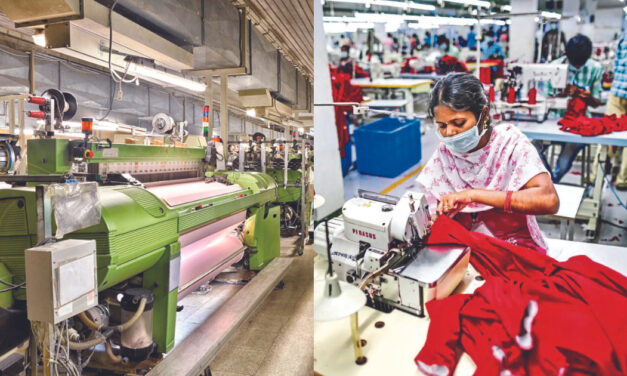
The textile industry, a key pillar of the Indian economy, witnessed a mixed bag of results in Q3 of the 2023-24 financial year. While some companies like Arvind saw profits grow, others like Century Textiles struggled with revenue dips. This indicates differing responses to market pressures within the industry. Rising input costs, particularly cotton, impacted margins across segments. Manufacturers are navigating this by exploring alternative materials and operational efficiencies. A slowdown in global demand, especially from key export markets like the US and Europe is putting pressure on export-oriented companies.
Sectoral analysis
A look at various sectors in the textile industry throws up an interesting pattern.
Fibres: The fibre segment witnessed moderate growth, driven by rising demand for man-made fibres like polyester and viscose. Cotton prices remained high, impacting yarn and fabric costs. However, some players are exploring man-made fibers and value-added products for better margins. For example, RSWM reported a decline in revenue and profit, highlighting the challenges
Yarns: Yarn exports saw positive growth due to increased global demand, but domestic demand remained sluggish due to rising input costs and competition from cheaper imports. Yarn producers like Vardhman Textiles witnessed modest growth, indicating a cautious recovery in demand
Fabrics: Fabric exports showed signs of weakness, due to global economic slowdown and rising raw material prices. Domestic demand, however, showed signs of improvement, particularly in the premium segment. Fabric manufacturers like Siyaram Silk Mills saw stable performance, suggesting resilience in the segment.
Home textiles: This segment witnessed positive growth, driven by rising domestic consumption and increasing exports to non-traditional markets. Home textile companies like Welspun India experienced positive growth, driven by rising domestic demand and exports.
Export performance
Export volume and value witnessed a decline in Q3 due to global slowdown and rising costs. Key export markets like the US and Europe remained subdued due to economic uncertainties. However, export value witnessed a slight increase in some segments like home textiles, thanks to rising product prices. Diversification into newer markets like Africa and Southeast Asia shows promise for future growth.
At the same time domestic demand remained relatively stable across segments, driven by rising disposable incomes and festive season spending. Particularly the home textiles and apparel segments saw demand growth. Focus on value-added products and online channels gave a boost to domestic sales.
Expansions and future investments
Despite challenges, some companies are strategically expanding capacities and diversifying product portfolios. Companies like Arvind and Raymond are focusing on expanding their brand presence and product portfolio. Similarly, companies, including RSWM, Siyaram, and Sutlej Textiles, announced capacity expansion plans to cater to rising domestic and export demand. Investments in technology and sustainability initiatives are also gaining traction. Sustainability initiatives are gaining traction, with companies investing in eco-friendly practices and recycled materials.
The bottomline is the future of the Indian textile industry remains uncertain, with several factors impacting its growth. Rising cotton prices, global economic slowdown, and trade tensions pose challenges. However, increasing domestic demand, government initiatives, and focus on value-added products offer opportunities. Companies that adapt to changing market dynamics, invest in innovation, and focus on sustainability are likely to thrive in the long run.
H&M Group, Arvind Ltd, collaborate to test Suprauno dyeing technology
H&M Group and Arvind Ltd have joined forces to revolutionise the fashion industry with a groundbreaking partnership focused on sustainability.
Together these two companies plan to test the Suprauno dyeing technology, crafted by Deven Supercriticals, which employs supercritical CO2 to color fabrics, eliminating water usage and toxic chemical discharge. This innovative approach signals a significant shift towards eco-friendly manufacturing, addressing pressing concerns such as water scarcity and pollution.
H&M's dedication to reducing its environmental impact is evident in its ambitious goals, including a 56 per cent cut in greenhouse gas emissions and a 30 per cent reduction in freshwater extraction within its supply chain by 2030. Through its alliance with Arvind Ltd, H&M not only strives for a greener supply chain but also sets a new standard for the entire fashion industry.
The collaboration between H&M and Arvind Ltd is a testament to their enduring partnership and shared commitment to sustainability. By investing in Suprauno technology, they aim to inspire other industry players to embrace eco-friendly practices. The potential benefits are substantial, from minimising water and energy consumption to mitigating the harmful effects of conventional dyeing processes.
The success of this pilot program could catalyse a transformative shift in the textile industry, ushering in an era where sustainable practices are the norm. In the face of climate change, the urgency for such innovations has never been greater.
Istanbul to host ITM 2024 and Texhibtion Istanbul in March 2024
In early March, Istanbul will host two major textile industry events: the textile machinery trade show ITM 2024 and the yarns and fabrics show, Texhibition Istanbul featuring 1,200 and 400 exhibitors respectively.
An international showcase for textile machinery, yarns, knitting, dyeing, printing, garment finishing, and hosiery, ITM is organised by Tüyap Fairs & Exhibition and Teknik Faire. At its last edition in 2022, ITM drew 64,500 visitors and 1,280 exhibitors.
To be held from March 04-08 at the Tüyap Fair and Congress Centre, the 2024 edition will host 1,200 exhibitors from Turkey and abroad. Delegations from Pakistan, Bangladesh, Uzbekistan, India, and Egypt will also attend.
Texhibition Istanbul, a trade show focusing on fabrics, yarns, components, and accessories for the fashion industry, will be held at the Istanbul Expo Centre.
With a spotlight on Spring/Summer 2025 collections, the event will feature 400 Turkish manufacturers and suppliers. Backed by the Turkish Exporters’ Assembly and ITHIB, Texhibition aims to attract visitors from Europe, the Middle East, and the USA.
These events follow IFCO, the Istanbul Fashion Connection, which unfolded from February 07-10 at the Istanbul Expo Centre. The fifth edition of IFCO, organised by ITKIB, welcomed 30,000 visitors and 600 exhibitors.
Enjoying tax-free access to the European market, Turkey's textile and apparel industry encompasses around 45,000 producers, providing 2 million jobs. Exports constitute 60 per cent of the industry's revenue. In the previous year, Turkey ranked as the third-largest textiles and apparel supplier to the European Union and the 12th largest to the US.
With its strategic location bridging Europe and Asia, Istanbul serves as a hub for the global textile trade. The city's textile events not only showcase cutting-edge technology and trends but also foster crucial business connections and partnerships.
Epson, HKRITA team up to explore Dry Fiber Technology for textile recycling
A global technology specialist, Epson and the Hong Kong Research Institute of Textile and Apparel Limited (HKRITA) have signed a joint development agreement to revolutionise textile recycling through innovative Dry Fiber Technology.
This collaboration targets the recycling of challenging textile products that have traditionally been difficult to process, thereby extending their lifespan and meeting the escalating global demand for recycled fibers.
This innovative solution promises to significantly expedite the adoption of recycled fibers by enabling the extraction of fibers from various challenging sources, including functional garments, linens, dress shirts, factory mill ends, unsold clothing pieces, and unwanted fabrics.
Epson is committed to implementing this technology expeditiously to drive positive change in textile recycling practices.
A proprietary development by Epson, the Dry Fiber Technology facilitates the creation of new value from post-consumer paper, wood, clothing, and other fibrous waste and used products.
In addition to offering recycled fiber production solutions, Epson endeavors to produce new paper and packaging materials from recycled paper and other raw materials. Furthermore, the company is actively engaged in developing stronger, more durable recycled plastics and bio-based plastics, underscoring its commitment to sustainability and environmental stewardship.
Through this collaboration and the innovative application of Dry Fiber Technology, Epson and HKRITA aim to pioneer a more sustainable and efficient approach to textile recycling, contributing to the global effort to reduce waste and promote a circular economy.
Inditex expands low-cost brand Lefties to counter competition from Shein
Parent company of Zara, Inditex is strategically expanding its low-cost brand, Lefties, in response to the growing competition from Shein, a Chinese-founded online marketplace. The emergence of Shein, known for its budget-friendly prices, has pressured retailers like Inditex and H&M to adapt to changing market dynamics.
Once known for its affordability, Zara has faced challenges in maintaining its competitive edge on pricing due to inflation and a shift towards a more upscale clientele. In response, Inditex is bolstering its budget-friendly offerings, with Lefties at the forefront of this strategy.
Originally conceived as an outlet for Zara's excess inventory, Lefties now operates in 17 countries, including emerging markets like Egypt, Mexico, and Saudi Arabia. Its growth underscores Inditex's commitment to catering to value-conscious consumers, even as it continues to strengthen its flagship Zara brand.
Lefties' expansion is particularly notable in Spain and Portugal, where it has seen significant customer growth, positioning itself as a viable alternative to Shein's ultra-low prices. In Spain alone, Lefties has experienced a surge in customers, trailing closely behind Shein in terms of market reach.
The brand's presence in emerging markets aligns with Inditex's strategy to capture diverse consumer segments, especially those inclined towards budget-friendly options. This approach reflects Inditex's acknowledgment of Shein's influence in the fast-fashion market and the need to stay competitive.
On social media platforms like Instagram and TikTok, Lefties adopts strategies similar to Shein, leveraging micro-influencers to promote its products and connect with younger demographics. This contrasts with Zara's more traditional high-fashion aesthetic in its marketing approach.
India records 11% surge in RMG exports in January 2023
In January, India witnessed an 11 per cent surge in its RMG exports to $11.57 billion from $10.13 billion in December 2023, as per data from the Ministry of Commerce. This surge is attributed to shipments circumventing the Red Sea crisis by navigating the longer route around the Cape of Good Hope in Africa.
Exports to European nations, spearheaded by Germany, the Netherlands, Italy, Poland, and Denmark, grew by 19 per cent M-o-M to $4.30 billion in January.
However, from April 2023-January 2024 of the ongoing fiscal year, India’s textile exports dipped to $27.69 billion from $29.41 billion in the corresponding period of 2022-23.
Rahul Mehta, President of the Clothing Manufacturers Association of India (CMAI), foresees increased expenses and operational challenges not only for India but also for countries like Bangladesh and China.
Despite the growth in RMG exports, Mehta anticipates a subdued outlook for the sector, with no significant upswing in global trade sentiment. The Red Sea crisis is expected to persist, impacting shipping costs and timelines, he emphasises.
The world's sixth-largest textiles and apparel exporter, India’s T&A sector contributes 2.3 per cent to the nation's GDP, 13 per cent to industrial production, and 12 per cent to exports. Second only to agriculture in employment, the industry directly engages 45 million people and supports an additional 100 million in allied sectors.
As per the Indian Brand Equity Foundation (IBEF), the textile and apparel market is on a trajectory to expand from $172.3 billion in 2022 to $387.3 billion by 2028, reflecting a commendable CAGR of 14.59 per cent.
JAAF applauds signing of ECTA between India-Sri Lanka
Foreseeing new export opportunities for the Sri Lankan apparel sector, Yohan Lawrence, Secretary General, Joint Apparel Association Forum Sri Lanka (JAAF), has hailed the proposed Economic Cooperation and Trade Agreement (ECTA) with India. He noted, the current Free Trade Agreement (FTA) only allows Sri Lanka to export 8 million pieces of ready-made apparel to India without duties.
Emphasising on the growing demand for ‘Made in Sri Lanka’apparel from the middle class, Lawerence said the agreement would prove to be an opportunity for Sri Lanka to boost forex earnings by increasing apparel exports.
He spoke at the launch of the Textile/Garment Machinery, Dyes & Chemicals, Yarn & Fabric, Power & Energy, and Shipping & Logistics exhibitions, organised by `CEMS Lanka',
Scheduled to take place from February 29 to March 2 at the SLECC hall in Colombo Fort, the event is being held by CEMS in collaboration with JAAF, the Sri Lanka Apparel Exporters Association, the Industrial Development Board, the Ministry of Power & Energy, and the Sri Lanka Ports Authority.
Dr. Kingsley Bernard, Chairman/CEO, Sri Lanka Export Development Board (EDB), acknowledged that global geopolitics and other factors had hampered Sri Lanka's apparel exports in the previous year. However, he expressed optimism about the industry's rebound in the near future.
SS Sarwar, Group CEO, CEMS-Global USA, reflected on CEMS's initiatives in Sri Lanka, commencing after the cessation of LTTE hostilities. CEMS-Global, through its Sri Lankan office, has been organising impactful B2B Trade Shows for the Textile & Apparel Industry, Logistics & Shipping, and Power & Energy sectors. Sarwar highlighted the significance of their Textile Series of Exhibitions across Bangladesh, Brazil, Morocco, Sri Lanka, and Thailand, serving as crucial platforms for global textile and apparel manufacturers to access potential markets and showcase their latest products and technologies.
Accessorize London and Unicommerce join hands to revolutionise online retail in India
In a swiftly evolving e-commerce landscape, Accessorize London and Unicommerce have joined forces to revolutionise online retail in India.
Transcending mere operational scaling, this collaboration aims to automate and optimise the e-commerce supply chain, ensuring that every customer of Accessorise London enjoys a post-purchase journey as delightful as the shopping process itself.
With Unicommerce's expertise in e-commerce enablement complementing Accessorize London's diverse product range, this partnership aims to automate order processing and warehouse operations, setting a new standard for swift deliveries.
Renowned for its women's fashion accessories, Accessorize London has expanded its offerings to include kids' products, sunglasses, and scarves. Through the integration of Unicommerce's advanced multi-channel order and warehouse management system, the brand anticipates streamlined operations and a reduction in return orders through enhanced returns management.
Processing over 20,000 orders monthly through Unicommerce, Accessorize London is poised to establish a significant presence in the Indian market, catering to its discerning clientele. Embracing Unicommerce's omnichannel retail management system facilitates seamless order processing across all touchpoints.
Beyond being a service provider, Unicommerce boasts a robust Annual Recurring Revenue (ARR) and manages orders from over 1,900 stores, signaling its intention to go public with an IPO. This collaboration with Accessorize London exemplifies Unicommerce's global expansion and its commitment to enhancing the efficiency and reach of its partner brands.
Maximizing India's exports with Inviya Spandex in knits
India is poised for a significant leap forward in the global apparel export arena, driven by a strategic embrace of spandex-infused knit fabrics. Spearheading this transformation is Inviya Spandex, leading the charge in innovation and sustainability within India's textile industry. This article explores the pivotal role of spandex in India's export strategy, emphasizing its impact on product diversity, aesthetics, and environmental responsibility.
Spandex, renowned for its elasticity and strength, revolutionizes knitwear by offering unparalleled comfort and flexibility. Inviya spandex empowers Indian mills to craft high-quality garments that cater to the evolving demands of global consumers. In today's fashion landscape, where both style and functionality reign supreme, spandex emerges as a fundamental component, ensuring garments meet the highest standards of wearability and appeal.
The versatility of spandex spans across a multitude of apparel segments, enabling Indian exporters to tap into lucrative global markets. From form-fitting leggings to resilient activewear, spandex-infused fabrics enhance both the form and function of garments, meeting diverse consumer preferences with precision. Notably, black spandex from Inviya elevates garment aesthetics while promoting durability, offering Indian exporters a competitive edge in premium knitwear markets.
Inviya's ECOModa100 represents a leap forward in sustainability, offering a 100 per cent recycled spandex solution crafted from pre-consumer waste. By reducing reliance on virgin resources and minimizing carbon footprint, ECOModa100 aligns with the growing demand for eco-conscious textiles. Its integration into knit fabrics presents a compelling proposition for environmentally aware consumers, positioning Indian exporters at the forefront of sustainable fashion.
The seamless integration of spandex into knit fabrics necessitates a collaborative approach across India's textile value chain. Through investments in research, infrastructure, and product development, India's textile ecosystem is primed for accelerated growth on the global stage. Inviya's partnership with India's textile industry underscores a commitment to innovation and sustainability, driving India's textile exports to new heights of excellence.
In conclusion, the integration of spandex, particularly Inviya spandex, underscores India's emergence as a global apparel powerhouse. With a focus on quality, aesthetics, and sustainability, India's textile industry is poised to capture international acclaim, solidifying its position as a leader in the global fashion landscape.
Turkey’s nonwoven fabric exports decline by 84.1% in December 2023
In December 2023, Turkey’s exports of nonwoven fabrics decreased by 84.1 per cent to approximately 3.8000 tons. This abrupt decline reflects a challenging period for exports.
According to the estimates by IndexBox, the value of nonwoven fabric exports from Turkey fell sharply to an estimated $12 million in December 2023. Overall, exports continue to show a considerable contraction, with the most rapid growth also observed in March 2023, at a 47 per cent increase month-to-month.
Egypt with imports of 271 tons, the United States with 262 tons of imports, and Germany with 219 tons emerged as the primary destinations for Turkey's nonwoven fabric exports, comprising a combined 20 per cent share of total exports.
From December 2022 to December 2023, Egypt experienced the most notable growth rate among the main destinations, with a Compound Annual Growth Rate (CAGR) of -11.1 per cent, while other leading destinations witnessed declines.
In terms of value, the United States with exports worth $773,000, Egypt with exports of $726,000, and Germany with exports worth $660,000 emerged as the largest markets for Turkish nonwoven fabric exports worldwide, accounting for a combined 19 per cent share of total exports. Germany showed the highest growth rate in export value, with a CAGR of -11.7 per cent, while other leading markets saw declines over the review period.