


FW
Levi Strauss & Co joins Organic Cotton Accelerator for secure cotton supplies
Levi Strauss & Co. (LS&Co) has joined a multi-stakeholder organization - the Organic Cotton Accelerator (OCA) to make supplies more secure and measure social and environmental impact on organic cotton farming. As an OCA member, Levis Straus will help increase the global organic cotton supply besides helping the program empower organic cotton farmers. Jeffrey Hogue, Chief Sustainability Officer, LS&Co says, the program will bring measurable improvements to farmers’ livelihoods and local communities, creating conditions for change. It will enable the company to source more sustainable cotton for its products besides providing new opportunities to resolve industry challenges.
LS&Co.’s participation enables the company to source more responsible fibers. In a sustainability report published in September, the company pledged to reach 100 percent more sustainable cotton by the end of 2025.
Earlier this month, OCA launched Textile in Transition, a multi-year project targeting transparency and fairness across the organic cotton sector. The project has attracted brand partners Bestseller, G-Star Raw and Essenza Home. Funded by the Netherlands Enterprise Agency Fund for Responsible Business, it leverages OCA’s established Farm Program in India to support the participating companies in achieving transparency while improving farmer livelihoods, worker rights and environmental impact.
Century Textiles to explore new products and markets in coming year
Century Textiles plans to focus on offering new products after considering retail price points. It also plans to focus on blending manmade fibers and expanding into new markets such as Australia, Saudi Arabia and Russia. In Q4 FY22 Century Textiles & Industries’ consolidated net profit increased to Rs 84.43 crore as against a net loss of Rs 4.89 crore in Q4 FY21. Net sales was up 44.62 per cent to Rs 1,186.22 crore during the quarter over Rs 820.21 crore in Q4 FY21. Consolidated EBITDA grew 66.25 per cent to Rs 133 crore in Q4 FY22 as against Rs 80 crore in Q4 FY21.
Century Textiles and Industries’ textiles annual turnover grew 54 per cent Y-o-Y during Q4 FY22 backed by strong sales growth and improved operational efficiencies. The company’s capacity utilization reached 97 per cent during the quarter as compared to 92 per cent in Q4 FY21. The company also launched home textile product for domestic market under the brand name 'Hill & Glade'.
Southern Gujarat Chamber of Commerce and Industry plans textile fairs in US
The Southern Gujarat Chamber of Commerce and Industry (SGCCI) will hold a four-day-long ‘Global Textile Trade Fair’ in three states of the United States -- Atlanta, New Jersey, and Los Angeles from June 9. This first-of-its-kind Global Textile Trade Fair will endorse the official logo of the Ministry of Textile, Government of India. It will be supported by the Consulate General of India in Atlanta and various American institutions and organizations.
To begin from Atllanta, Georgia, the three-day textile show will showcase a wide range of products including polyester, nylon viscose, Indoethnic wear, home textile, medical textile, clothing and garments, handicraft and handloom, and Khadi. The exhibition will depict fabrics and styles from Surat and across the country.
It will be attended by buyers sellers and textile manufacturers from across the globe, the Atlanta exhibition will be followed by a B2B and B2C exhibition in New Jersey on June 17 and the B2C Table Top Buyer-Seller meeting n Los Angeles on June 19. Featuring home textiles, the exhibition will also be attended by hotel owners and associated agents.
AAFA reiterates support to Sri Lanka’s garment industry
In a letter sent to the Joint Apparel Association Forum (JAAF), American Apparel & Footwear Association (AAFA) has reiterated the US apparel and footwear industry’s strong support for the Sri Lankan garment industry during this time of crisis and transition.
Steve Lamar, President, says, AAFA recognizes any significant changes in sourcing during this time could have a major impact on Sri Lanka’s garment industry, the hundreds of thousands of workers the industry employs, their families, and the Sri Lankan economy. Therefore, he says the organization commits to being cognisant and mindful of the current situation, and the industry’s ongoing commitment to consider the impact on workers, in any sourcing decisions.
Meanwhile, the Ethical Trading Initiative (ETI), Fair Wear Foundation, Fair Labor Association and British Retail Consortium have signed a joint call to action, encouraging companies sourcing from Sri Lanka to take specific steps to support workers, suppliers, and the sector at large, during this difficult period.
The ETI says it has been engaging with economists, industry associations, worker representatives, and member companies operating in Sri Lanka, to better understand implications on workers and the industry at large. These meetings have helped to present a clearer picture of the current crisis and steps stakeholders are taking to alleviate risks to workers and suppliers, it says.
Bluesign partners with Higg
Bluesign is developing a partnership with Higg. They partnership is aimed at developing stronger data and service offerings for their customers to eliminate redundancies and accelerate environmental performance in the supply chain.
The parties aim at more advanced integration of data for their customers in order to help textile manufacturers improve chemical management, reduce the risk of water toxicity, better understand and address human health impacts, and eliminate chemicals of concern from upstream production processes.
Through their new collaboration, Higg and Bluesign intend to develop stronger data and services offerings for their customers to eliminate redundancies and support Bluesign’s impact services. The companies will explore how mutual customers can share data between the platforms, with Bluesign facilities gaining access to Higg’s facility tools.
Launched in 2019, Higg delivers software and services for measuring, managing, and sharing supply chain performance data. From materials to products, from facilities to stores, from emission to working conditions, Higg unlocks a complete view of a business’s social and environmental impact.
Bluesign, founded in 2000, is the solution for sustainable textile production. It eliminates harmful substances right from the start of the manufacturing process and sets and controls standards for environmentally friendly and safe production and ensures that the final textile product meets stringent consumer safety requirements worldwide.
Indonesia targets textile and garment exports worth $14 billion this year
Indonesia aims to achieve textile and garment exports worth $13-14 billion this year, according to the country’s Industry Minister AgusGumiwang Kartasasmita.
The existence of Making Indonesia 4.0 will encourage the transformation of the textile industry to make it more competitive and innovate in an effort to compete and answer global market demands.
To accelerate the implementation of the Fourth Industry Revolution, the textile industry will utilize several key technologies to beat the global competition, including artificial intelligence, novel fabrics, Internet of Things (IoT), rapid data analysis for quick adaptation, mobile commerce, virtual and augmented reality (VR), online vector editors, 3D printing, blockchain technology, and sustainable practices.
The Industry Ministry has initiated a strategic step in the form of a 35% import substitution program in 2022 to encourage the increased utilisation of existing industries, as well as boost investment in Indonesia. It is also carrying out a machine and equipment restructuring programme in the fabric refinement and fabric printing industries.
According to Kartasasmita, this effort has been proven to increase production capacity, production realization and energy efficiency by 21.75 per cent, 21.22 per cent and 11.86 per cent respectively, as well as raise sales volume, both domestically and via export, by 6.65 per cent.
Demand spurt sees sports bras evolving with new styles, materials, features
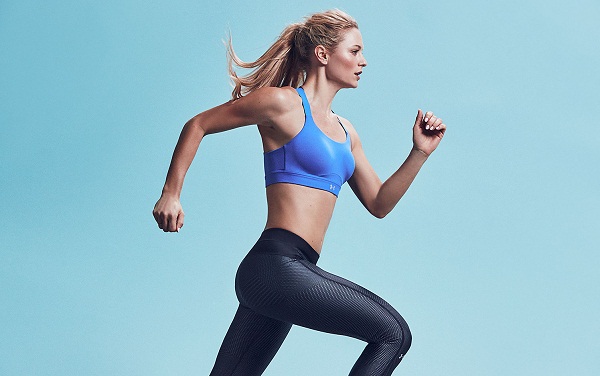
Largely ignored till now, sports bras are getting the attention they deserve from activewear companies. Adidas for example has launched its most robust sports bra collection offering 42 new styles in 72 sizes, says a Business of Fashion report. Last Fall, brand ThirdLove launched a sports bra collection with half-cup sizing and adjustable hook-and-eye closures. Launched in October, Under Armor’s collection-SmartForm Rush bra, incorporates infrared technology that enhances performance. The bras in this collection have adaptive cups that mould to the body. Another brand Gymshark is launching a new sports bras collection with improved sizes and materials.
Global sports bra sales grew 54 per cent to hit $3 billion in 2021, says a NPD Group report. Overall sportswear market reached $325 billion during the year. McKinsey & Co projects, the market will grow 8 to 10 per cent annually. This encourages sportswear brands to develop new sports bras styles. Adidas for example is attracting female shoppers with new product assortment, says Amy Charlton, Senior Director and Head-Global Product, Adidas.
Evolution of sports bras
Earlier, made from mundane materials in typical small, medium and large sizes, sports bras are now being developed more scientifically. Brands are teaming up with biomechanical scientists to launch bras that withstand various durability tests. Adidas has joined hands with Joanna Wakefield Scurr, Professor, University of Portsmouth and a pioneer in breast health research.
In fact, brands are offering a variety of sports bras for different activities. Adidas has launched different bras for running, yoga or high-intensity training. Brands are also focusing on consumers’ movement, function and durability while launching products. Some leading brands in this space are: Lululemon, Athleta, Nike, Under Armor, Victoria’s Secret and American Eagle’s Aerie. Emerging direct-to-consumer brands like Girlfriend Collective, Alo Yoga, Vuori, Gymshark and Oner Active are also responding to demands with new fits and materials, says Nina Marston, Senior Analyst, Euromonitor. And larger lingerie brands are positioning sports bras as a part of their loungewear collection.
Adopting size-inclusivity
Feedback from social media is making sports bra product development easier for brands. Last summer, Brand Brooks Running added mesh to the back of sports bras besides strategically placing a perforation around cleavage. Meanwhile, brands are also focusing on the needs of plus-size women and launching different types of bras for activities like boxing or horseback riding.
Minute product details like seams and closures are being paid attention to while designing. Brands like Under Armor and Lululemon are laminating their bra seams to make them more comfortable. However, brands need to focus on making their bras more functional and easier to wear.
With rising demand, local brands now make a mark in global activewear market
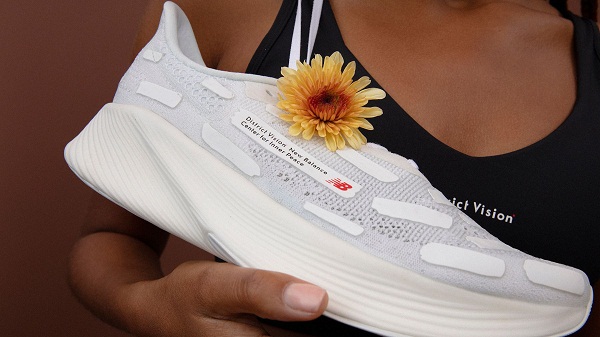
The pandemic has created new opportunities for activewear brands like Vuori and Gymshark. Demand for sportswear is expected to increase from €295 billion ($384 billion) in 2021 to €395 billion by 2025, says a McKinsey & Company report However, foraying in this market can be challenging as newcomers have to compete with global distribution and high-budget marketing campaigns of Nike and Adidas. They have to also convince lifelong customers of these established retailers of offering better quality products, indicates a Business of Fashion report.
From a local niche retailer selling men’s yoga clothes in 2015, Vuori has grown an average of 250 per cent every year. The company launched new categories and expanding into womenwer too. Last year, the Joe Kudla-led brand also received funds worth $400 mllion from Softbank’s Vision Fund, which valued it at $4 billion. Like other activewear labels like Alo Yoga, Gymshark and Fabletics, Vuori has been successfully grabbing market share from top players. The brand created specialized, fashion-forward products and built communities around underserved interests.
Tapping into special interest community
Gymshark, too made a name for itself by tapping into the humble local gym, one trainer or amateur bodybuilder at a time, relying on them to be ambassadors for the brand on social media. On its social channels, Gymshark posts relatable memes and catchy hashtags. In gyms around the world, the company has held open workout sessions, building its base of die-hard fans.
Tapping into a special-interest community in order scale a brand isn’t a new idea for sportswear brand. The same approach was deployed by Nike with runners in its hometown Portland, Ore. in the 1970s and Lululemon with yoga — back then, a hot new trend — in the ’90s. Creating a product that’s tailored to a specific need also enables brands to tap into that initial community of “super fans” and stand out among generic sportswear makers, says Richard Kestenbaum, a retail and consumer investment banker and co-founder of Triangle Capital.
Providing appropriate eyewear
Entrepreneurs Tom Daly and Max Vallot often lamented the lack of appropriate eyewear in the US market. The pair was unable to find specialized sunglasses for running. Hence, in 2015 it launched District Vision, a range of comfortable, stylish and oil and water resistant sunglasses. The company also sells apparels now. It works with a few luxury retailers including Ssense, Dover Street Market and Browns. Last year, the brand doubled its shares.
Brands are also differentiating themselves with social messaging. Gymshark promotes a message of belonging to that tribe of fellow gym junkies, rather than needing to be the best, the strongest or the fastest, says Nick Geoghegan, Strategy Director, Eatbigfish, a consultancy specializing in challenger brands. District Vision, also highlights the importance of mental health by offering customers courses on mindfulness.
NPD Group’s list of top selling jeans brands in America shows denim continues scale new heights
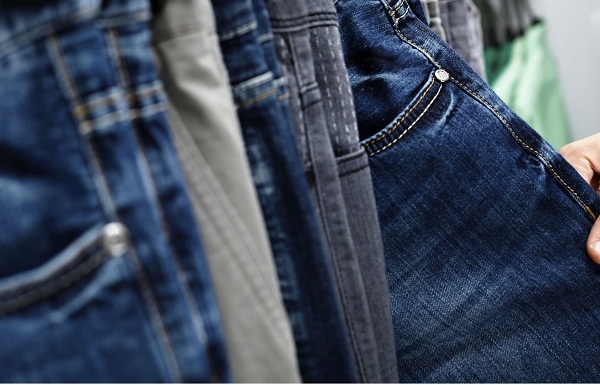
Recent data from the NPD Group ranks Levi’s, AG, Amiri, Burnello Cuccinelli and Goria Vanderbilt as some of the top-selling denim brands of 2021. As per a Sourcing Journal report, these brands were ranked on the basis of their performance in respective categories. For instance, AG was awarded for launching best jeans priced $100 and above while Gloria Vanderbilt was honored for best women’s plus size jeans and Amiri was awarded for being the best men’s luxury jeans brand.
Innovations hailed by NPD Group
Ranked for earning its highest revenues since 1998, Levi’s was also awarded for launching the ‘best fitting jeans’ by IT technology company True Fit in 2020. It also ranked in 2021 Global RepTrak 100’s list of most reputable companies.
On its 20th anniversary in 2021, premium denim brand AG’ announced the launch of unique washes and environmentally conscious design. Gloria Vanderbilt collaborated with Christian Siriano, Designer, CFDA, to launch a jeans collection that would be presented at New York Fashion Week in September.
Luxury fashion brand Amiri adopted a Tulip-powered cloud-based mobile retail solution to expand its brick-and-mortar network. Its parent company, the OTB Group launched a new business unit -- Brave Virtual Xperience (BVX), in December to launch metaverse-inspired products to help create new business opportunities for the company. Brunello Cuccinelli’s revenue increased 19.6 per cent in Q1 2022. The company expects revenues of the entire year to rise 12 per cent and another 10 per cent in 2023.
Scaling new heights
Growing trend of casualization post pandemic has penetrated the global denim market. More consumers chose to shop for jeans in 2021, reports NPD Group as seen from the 36 per cent rise in US jeans sales in 2021. Sales of men’s denim went up 12 per cent during the year while women’s denim increased 9 per cent, says the report.
Denim manufacturers continue to be leaders of innovation as seen from the variety of styles and options offered to consumers in 2021, says Susan Merrill, President-Fashion Apparel, NPD Group.
The denim market will continue to scale new heights and reach $76.1 billion by 2026 from $57.3 billion in 2020, indicates data from Research and Markets. The market analyst names US as the biggest consumer of denim jeans across the world, and also one of the wealthiest.
Turkiye’s apparel exports surge by 14.71%
Turkiye’s apparel exports increased by 14.71 per cent year-on-year in January-February 2022, according to the data from the Turkish Statistical Institute and the country’s Ministry of Trade. During the first two months of the current year, Turkiye exported apparel worth $3.074 billion, compared to exports of $2.680 billion during the same period of 2021.
Exports of knitted and crocheted clothing and accessories (HS chapter 61) grew by 15,9 per cent to $1.738 billion in January-February 2022 as against $1.5 billion registered during the same months of the previous year.
Exports of non-knitted apparel and accessories (HS chapter 62) increased by 13.2 per cent to $1.335 billion compared to $1.179 billion exports made in January-February 2021.
Exports of old clothing and other textile articles and rags (HS chapter 63) also grew by 10.3 per cent year-on-year to $512.822 million during the period under discussion.
However, exports of carpets, mats matting and tapestries (HS chapter 57) fell by 6,2 per cent to $459.120 million during the two-month period.
Meanwhile, Turkiye’s imports of cotton, cotton yarn and cotton textiles (HS chapter 52) increased by a sharp 110.4 per cent to $831.355 million, over $395.214 million in the first two months of 2021.
Likewise, man-made filament imports too shot up by 89.0 per cent year-on-year to $535.601 million, the data showed.











