FW
Prada, Zegna Invest in Fedeli's Knitwear
Prada and Ermenegildo Zegna have announced their acquisition of a 15% stake each in Luigi Fedeli e Figlio, underscoring the significance of high-quality knitwear in the luxury market. Luigi Fedeli, the current CEO, will retain majority ownership of 70% and remain in his role. The transaction's financial details were not disclosed.
Italy, renowned for its artisanal craftsmanship, houses numerous small manufacturers that dominate the global luxury clothing and leather goods production. Fedeli, established in 1934 in Monza, Italy, has been a family-owned business for three generations and has garnered acclaim for its premium yarns and knitwear.
Prada Group Chairman, Patrizio Bertelli, described the agreement as a strategic investment to uphold the excellence and tradition of Italian craftsmanship. Gildo Zegna, the head of Zegna, and Bertelli will join the board of Fedeli, according to the joint statement by the companies.
Inditex's Spring-Summer Sales Skyrocket
Despite wage costs and the loss of its Russian business, Inditex, the owner of Zara, reports a remarkable 16% increase in sales for its spring-summer collection. The world's largest fast fashion company continues its strong momentum, exceeding expectations with a 54% rise in first-quarter profit. The impressive net profit of 1.2 billion euros ($1.24 billion) showcases Inditex's ability to maintain competitiveness amid rising costs and the ongoing cost of living crisis.
With a market capitalization surpassing 100 billion euros ($107 billion), Inditex proves its resilience in adapting to challenges while keeping prices competitive. The company's strategic approach includes higher pricing outside the Eurozone, resulting in steady margins. Despite divesting its profitable Russian division, Inditex reports solid sales of 7.56 billion euros, indicating successfully navigating labor cost pressures.
In contrast, rival H&M struggles to compete amidst the cost of living crisis and adverse weather conditions in its home market. Inditex's in-store and online sales increased by 13% to 7.6 billion euros, aligning with earlier reports for the 2023 financial year.
Inditex's focus on enhancing the customer experience includes innovative measures like self-scanning checkouts and embedded garment chips to replace traditional anti-theft tags, reducing queues. Additionally, the company plans to open 30 more stores in the United States within two years, emphasizing its global expansion strategy.
As consumers become more discerning, Inditex's ability to gain market share underscores its position as one of the most vital global fashion retailers. With steady margins and an optimistic outlook for 2023, Inditex continues to thrive in the fast-paced fashion industry.
ASEAN pushing its way into global textile manufacturing leadership

Global textile manufacturing has traditionally been associated with China, US, the EU collective of France, Germany, Italy, Spain and Portugal, India, Bangladesh, Vietnam. Now a bunch of countries that come under the ASEAN group are emerging as strong bases for textile manufacturing – China’s predicament over rising labour costs, a sluggish demand cycle from the West and the niggling annoyance of the US trying to impede its financial journey, the ASEAN nations are making the most of it.
The case is almost the same with India. Inflation has become rampant in the country. This has increased input costs as a result finished goods have become costlier. Studies show 40 per cent of manufacturers have re-shored their units back from India and China to US. If not re-shored, they have found other cheaper destinations for manufacturing. India is no longer a favored destination for outsourcing.
Currently, the nations of the Association of Southeast Asian Nations (ASEAN) are harnessing the power of trade, migratory labour and transferable capital to create prosperity in South-East Asia. In particular, the international garment industry within ASEAN is helping to integrate regional investment, transfer skills, create jobs and boost economic growth.
ASEAN region steadily captures market share
ASEAN countries are making steady inroads in the global textile market. Countries like Cambodia, Thailand, Vietnam, Myanmar, and the Philippines have a potentially strong textile market and they are developing the sector well. Exports of textile products are continuously increasing. These countries have started giving a tough competition to India and China.
They have fair chances of ruling the global textile market in the distant future. As deputy chairman of Cambodian AFTEX member Textile, Apparel, Footwear and Travel Goods Association in Cambodia (TAFTAC), Alfred Tan recently stated the textile-linked industries are a linchpin of many ASEAN economies and operate in highly competitive markets. He claimed the region had performed well in terms of capturing more global market share, serving as an alternative source of supply to China and some other key supplying countries. Tan also highlighted that over the past decade, overall gap between production costs, which primarily include raw materials, labour, logistics and compliance, and FOB (free-on-board) and retail pricing has narrowed. He expects this trend to continue into the next decade. ASEAN governments were quick to pick up the future potential of the sector in their respective countries in terms of domestic job opportunities and generation of foreign exchange. In fact, most of these governments are providing tax holidays to manufacturing units and working with the sector to attract local, regional and international direct investments.
The ASEAN cooperation on environment is guided by ASCC Vision 2025 that strives to promote and ensure balanced social development and sustainable environment that meet the needs of the peoples at all times through coordinated efforts on key priority areas as outlined in the ASCC Blueprint 2025. This has helped in establishing their credibility in moving towards greener methods of manufacturing that has gone down well, particularly with the EU.
Towards stronger vertical integration
The ASEAN Federation of Textile Industries (AFTEX), a group of textile and garment associations of the 10 ASEAN member countries, has launched the Source ASEAN Full Service Alliance (SAFSA). SAFSA works on linking ASEAN apparel factories to create a virtual vertical supply chain between buyers, textile mills, and apparel factories, enabling businesses to offer a complete service package to international buyers. SAFSA has 45 members trading among themselves including 27 buyers with over US$ 50 billion in annual apparel sales. Some of the major brands that are SAFSA customers are the Benetton Group, Colombia Sportswear Company, Debenhams, Guess, Marks & Spencer, Polo Ralph Lauren, and Hermes-OTTO.
Spurt in orders injects optimism among Indian garment exporters
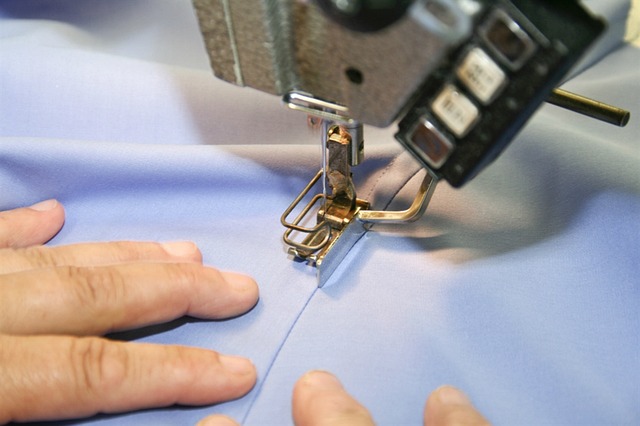
The readymade garment export situation in India has been a trending discussion in media and for good reason. While a lot was being talked about the Ministry of Textile laying out behemoth plans for seven textile and garment manufacturing hubs spread across the county, truth be told the RMG exporters weren’t a joyful bunch. Needless to say, the global economic slowdown, mainly in the EU, has impacted consumer spending, and demand for textile products, irrespective of the brand, has declined. Indian businesses seem to think that this is a passing phase as the West has grappled with recession and inflation and might soon stabilise.
Additionally, businessmen have realised as the anti-China stance grows in the West, India then becomes an obvious choice for sourcing. Minister of State for Textiles Darshana Jardosh has been an encouraging voice for the beleaguered sector. She appealed to the apparel manufacturers and exporters to emphasize innovation and quality by matching the latest fashion trends and assured all sorts of support from the government for the development and expansion of the apparel industry. She points out, India’s annual textile and apparel exports closed 2022 at $44 billion, up 41 per cent. RMG made of cotton accounted for the largest value in Indian textile exports in fiscal year 2023. On average that year, textiles from cotton and man-made fibers had a higher export value compared to jute and silk, as well as raw materials from the country.
What lies ahead
While the 41 per cent increase is an outstanding performance, it is mainly in the textile and its auxiliaries that accounted for the growth. In 2022-23, India’s RMG exports were $16 billion, an increase of 1.09 per cent over the previous year. A decline in orders was being faced by garment manufacturers but things are improving. Experts point out, even though volume is not as huge as expected, the flow of orders means the apparel and garments should hit stores in markets such as the US and Europe for Christmas and New Year. And of course, these orders have come in May, unusually late for the end of year sales in Western markets.
Many manufacturers have taken this as cue to feel upbeat about an incoming surge in orders in 2024 and 2025. KM Subramanian, President, Tirupur Exporters Association (TEA) is one such optimist. He says, it would be prudent to wait and watch as there is no clarity on orders among global customers in the present climate.
International high street and luxury brands such as Tommy Hilfiger, Nautica, Ross, Decathlon, Suburbia, Polo Ralph Lauren, and GAP are major customers for Indian garment exporters and seem to be returning with orders for Winter 2023/24. After a bad April 2023 that saw exports of readymade garments dip as low as 17 per cent, recovery albeit slow started from May. The industry saw a fall in orders compared with the previous year. Large companies are expected to see a decline in turnover of the order of 10-30 per cent. Smaller companies have faced even greater difficulties.
A case in point is Tirupur-based Eastman Exports, supplier of knitwear and high-end apparel for international fashion labels. The Managing Director, N Chandran declared that orders are now back again, much to his relief. Some exporters are holding their breath for the finalization of India’s FTAs with Canada and the UK, which will bring in a substantial scope and opportunity.
Walmart opens up a lot more possibilities
When chief executive officer Doug McMillon of Arkansas-based Walmart announced in May that his firm will meet the sourcing target of $10 billion from India each year by 2027, it did feel that India’s readymade garment exporters finally had a shining star to look up to. TEA announced that the hub had already started receiving orders for textiles from Walmart, Target, H&M and Tommy Hilfiger.
ASEAN pushing its way into global textile manufacturing leadership
Global textile manufacturing has traditionally been associated with China, US, the EU collective of France, Germany, Italy, Spain and Portugal, India, Bangladesh, Vietnam. Now a bunch of countries that come under the ASEAN group are emerging as strong bases for textile manufacturing – China’s predicament over rising labour costs, a sluggish demand cycle from the West and the niggling annoyance of the US trying to impede its financial journey, the ASEAN nations are making the most of it.
The case is almost the same with India. Inflation has become rampant in the country. This has increased input costs as a result finished goods have become costlier. Studies show 40 per cent of manufacturers have re-shored their units back from India and China to US. If not re-shored, they have found other cheaper destinations for manufacturing. India is no longer a favored destination for outsourcing.
Currently, the nations of the Association of Southeast Asian Nations (ASEAN) are harnessing the power of trade, migratory labour and transferable capital to create prosperity in South-East Asia. In particular, the international garment industry within ASEAN is helping to integrate regional investment, transfer skills, create jobs and boost economic growth.
ASEAN region steadily captures market share
ASEAN countries are making steady inroads in the global textile market. Countries like Cambodia, Thailand, Vietnam, Myanmar, and the Philippines have a potentially strong textile market and they are developing the sector well. Exports of textile products are continuously increasing. These countries have started giving a tough competition to India and China.
They have fair chances of ruling the global textile market in the distant future. As deputy chairman of Cambodian AFTEX member Textile, Apparel, Footwear and Travel Goods Association in Cambodia (TAFTAC), Alfred Tan recently stated the textile-linked industries are a linchpin of many ASEAN economies and operate in highly competitive markets. He claimed the region had performed well in terms of capturing more global market share, serving as an alternative source of supply to China and some other key supplying countries. Tan also highlighted that over the past decade, overall gap between production costs, which primarily include raw materials, labour, logistics and compliance, and FOB (free-on-board) and retail pricing has narrowed. He expects this trend to continue into the next decade. ASEAN governments were quick to pick up the future potential of the sector in their respective countries in terms of domestic job opportunities and generation of foreign exchange. In fact, most of these governments are providing tax holidays to manufacturing units and working with the sector to attract local, regional and international direct investments.
The ASEAN cooperation on environment is guided by ASCC Vision 2025 that strives to promote and ensure balanced social development and sustainable environment that meet the needs of the peoples at all times through coordinated efforts on key priority areas as outlined in the ASCC Blueprint 2025. This has helped in establishing their credibility in moving towards greener methods of manufacturing that has gone down well, particularly with the EU.
Towards stronger vertical integration
The ASEAN Federation of Textile Industries (AFTEX), a group of textile and garment associations of the 10 ASEAN member countries, has launched the Source ASEAN Full Service Alliance (SAFSA). SAFSA works on linking ASEAN apparel factories to create a virtual vertical supply chain between buyers, textile mills, and apparel factories, enabling businesses to offer a complete service package to international buyers. SAFSA has 45 members trading among themselves including 27 buyers with over US$ 50 billion in annual apparel sales. Some of the major brands that are SAFSA customers are the Benetton Group, Colombia Sportswear Company, Debenhams, Guess, Marks & Spencer, Polo Ralph Lauren, and Hermes-OTTO.
Bangladesh's RMG Exports Break Record
Bangladesh's readymade garment (RMG) exports witnessed remarkable growth during the first 11 months of fiscal 2023, surpassing the target and reaching a record-breaking $42.63 billion. The provisional data released by the Export Promotion Bureau (EPB) reveals a substantial increase of 10.67% compared to the previous fiscal year.
The growth in RMG exports can be attributed to the exceptional performance of knitwear and woven apparel sectors. Knitwear exports displayed a faster pace of growth, expanding by 10.92% to $23.278 billion. Similarly, woven apparel exports increased by 10.36% to $19.352 billion during the same period.
On the other hand, there was a decline in home textile exports, which fell by 30.14% to $1,024.98 million, reflecting a shift in consumer demand.
Together, the combined exports of woven and knitted apparel, clothing accessories, and home textiles constituted a significant portion, accounting for 87.29% of Bangladesh's total exports during July-May of the fiscal year 2023, amounting to $50.527 billion.
Despite the global economic slowdown, Bangladesh has achieved remarkable growth in its RMG exports, experiencing a remarkable increase of 35.47% compared to the previous fiscal year. This success highlights Bangladesh's resilience and competitiveness in the global garment market.
Fespa Expo 2023: Innovations & Excellence
Fespa Global Print Expo 2023, held in Munich, Germany from May 23rd to 26th, provided a platform for more than 540 exhibitors to showcase their latest technologies and innovations to industry professionals. The event attracted thousands of visitors from over 120 countries, fostering valuable interactions and knowledge exchange.
In addition to the exhibition, Fespa 2023 offered educational features and competitions, captivating attendees with its renowned "World Wrap Masters" European edition. This fast-paced international packaging competition involved participants competing locally and ultimately vying for the prestigious title of "World Wrap Master."
A highlight of the trade show was the VIP ceremony where the Fespa Awards 2023 were presented. With 210 entries from print service providers and sign makers, these awards recognized exceptional examples of print and signage. For a comprehensive list of all the winners, interested individuals can visit the Fespa website.
Fespa Global Print Expo 2023 proved to be an influential event, celebrating excellence in the industry and providing a platform for collaboration, inspiration, and the exploration of cutting-edge advancements in printing technology.
Victoria's Secret, Amazon Enhance Shopping Collaboration
Victoria’s Secret & Co. (VSCO) and Amazon Fashion have further strengthened their partnership by introducing a cross-category shopping experience tailored to meet customers' needs.
Building upon the success of Victoria's Secret beauty products in Amazon stores, the brand is expanding its product range to include fashion items. Customers can now browse and shop over 4,000 items across Victoria’s Secret and PINK, encompassing popular products like bras, panties, sleepwear, swimwear, and loungewear. The official Victoria’s Secret Amazon Fashion storefront provides a seamless shopping experience with fast and free Prime delivery. Additionally, select bra and apparel styles will be eligible for Amazon's Prime Try Before You Buy program, allowing customers to try items at home before making a purchase.
This collaboration marks the first time Victoria's Secret lingerie and apparel styles are available through a retail partner in North America, offering broader accessibility and providing customers with a new way to explore and engage with the brand.
The partnership aims to expand the selection and introduce innovative ways for customers to shop. Customers can now shop the core fashion styles of Victoria's Secret and PINK on the Victoria's Secret Amazon storefront.
Armani's Sustainable Cotton Experiment Begins
Luxury fashion house Armani Group has embarked on an innovative venture by establishing an experimental agroforestry plantation in southern Italy, aimed at exploring new methods for sustainable cotton production. The initiative involves the cultivation of cotton on one hectare of land in the Apulia region, with plans to expand it to five hectares.
Agroforestry, a land-use system integrating trees within and around crop and pasture areas, serves as the foundation for this project. Armani intends to conduct field experiments for five years, utilizing alternative tree species and regenerative practices, making it one of Europe's pioneering endeavors in agroforestry cotton production.
The endeavor is a collaborative effort involving the Sustainable Markets Initiative's Fashion Task Force and the Circular Bioeconomy Alliance, both established by Britain's King Charles during his tenure as the Prince of Wales, according to Armani Group.
Sustainability has gained significant traction within the fashion industry this year. Armani, along with brands like Gucci and Yves Saint Laurent under Kering, has committed to reducing greenhouse gas emissions, while EU governments have agreed upon a ban on the disposal of unsold textiles.
China’s instability shaking global luxury markets

Although the greatest glory lies in never falling, but in rising every time we fall, it seems that China’s chips are finally down with slow economic recovery and deflation fears that has driven down stock prices and yuan value in the apparel segment to their lowest levels post-Covid. For the luxury apparel industry to maintain strong growth in given scenario, China has to quickly get its act together. However, even though the market is recovering, growth needs to be cautious.
Over lingering Covid lockdowns in China which deflated the economy, the US markets had taken over the luxury segment with Gucci sneakers, Rolex watches and Louis Vuitton handbags in the shopping bags of affluent shoppers. However, with post-Covid buying sprees almost over and recession setting in, the US markets are also slowing down and all eyes are back on China.
US sales of luxury brands slow down
When China finally reopened post lockdown, long after the rest of the world was back to normal, many European luxury goods groups, including LVMH Moet Hennessy Louis Vuitton SE, Kering SA, Hermes International, and Cie Financiere Richemont reported better than usual sales in their physical stores. Even a few months ago, Chinese shares were among the best-performing globally as investors from all industries bet on China’s economic recovery after the lifting of the pandemic restrictions after the new Covid wave in 2022.
However, recent economic data out of China looks unreliable as manufacturing and production output is even slower than in April, while services expansion eased. China is still a big question mark for the global luxury apparel segment as although there has been a rebound in Q4. In 2022, when lockdowns were finally lifted, recovery was slower than expected with a lot of psychological denting.
A Washington Post report highlighted even well-heeled Chinese customers who usually buy luxury goods are being cautious and President Xi Jingping’s agenda to increase the common prosperity levels in the country has taken a backlash. Along with the global recession, another emerging Covid wave may just happen and although the Chinese government may not reintroduce restrictions and lockdowns of last year, luxury apparel sales will definitely be affected. Across South East Asia, there is cautious growth in all the major cities of Hainan, Macau, Hong Kong and Singapore where malls and premium shopping centers are recording slower growth.
However, there is still some post-Covid splurging demand among richer global consumers who are significant drivers of spending on premium products. Some top-of-mind luxury brands with big budgets such as LVMH, Hermes and Richemont are still doing reasonably well while profits of Kering, are looking more unpredictable. UK-based Burberry Group that accounts for about 30 per cent of sales from affluent Chinese and US shoppers now looks shaken and unpredictable.
Sarah Willersdorf, Global Head of Luxury, Boston Consulting Group points out, China was the big unknown for growth next year as it is seeing a strong recovery across most categories in the country. As China continues to open up, tourist traffic flows will be different. One needs to be able to serve a Chinese customer well in Australia, versus in US cities.
Luxury sales from the Chinese community are expected to remain strong for now, as Chinese tourism to Europe and the Western world has commenced again from this year and into 2024 increasing global sales of luxury apparel. As per Morgan Stanley by April this year, travel from China was back to 47 per cent of 2019 levels but flight shortages and European visa issues are a bug bear. Domestic demand may now be unreliable but there is hope that China will be back on its feet soon.