


FW
IFCO-Unrivaled fashion event in Istanbul
IFCO Istanbul Fashion Connection, the largest fashion fair in Europe, and this year it's going to be even bigger and better, to be held between August 9th to 11th, 2023, at the Istanbul Expo Center to showcase the latest trends and innovations in the industry.
Featuring an impressive lineup of 400 exhibitors representing every aspect of the fashion world, this event is a must-attend for anyone with a passion for style. Spanning across six halls, visitors will be treated to a diverse array of fashion products, including women's, men's, and children's fashion, denim, sportswear, bridal fashion, accessories, and much more.
The highlight of the event will be "THE CORE ISTANBUL," where top designers will showcase their exquisite creations. Market leaders like İpekyol, Damat, Kiğılı, and Lufian, among others, will also be present to present their renowned brands.
Moreover, attendees will have a unique opportunity to connect with leading Turkish manufacturing companies across various sectors. With an expected turnout of over 30,000 visitors from more than 100 countries, IFCO promises a global networking experience like no other. Buyers can look forward to a special invitation program exclusively tailored for them.
Through the successful speed-dating networking concept, both visitors and exhibitors will benefit from targeted and effective networking opportunities. Don't forget to mark your calendars and join us at IFCO Istanbul Fashion Connection for an unforgettable fashion extravaganza!
Foreign investors loyal amid Indonesia’s textile decline
Amidst a decline in investment in Indonesia's textile sector, foreign investors from South Korea and Taiwan continue to demonstrate their commitment to the industry. According to Ignatius Warsito, Director General of the Chemical, Pharmaceutical, and Textile Industry (IKFT) at the Ministry of Industry, foreign direct investment (FDI) dominated over domestic investment (PMDN) in the first quarter of 2023.
Warsito stated, "In the first quarter of 2023, FDI in textile investment will actually increase," adding further credibility to the industry's foreign appeal. Investment data obtained from the Investment Coordinating Board's National Single Window for Investment (NSWI) website reveals that textile FDI during this period amounted to US$74.34 million, equivalent to IDR 1.10 trillion.
This represents an 84.13 percent increase compared to the same period last year and an 81.49 percent increase from the previous quarter. Among the foreign investors, South Korea led the way, investing US$28.6 million in 125 textile projects, followed by Taiwan with US$13.96 million across 27 projects.
India also contributed significantly with five projects totaling US$11.28 million. Despite the challenges faced by the Indonesian textile sector, other nations such as Hong Kong, Japan, and China also demonstrated interest, further diversifying the investment landscape.
India: Yarn Bazaar raises funds for expansion
In a successful pre-Series A funding round, B2B managed marketplace, The Yarn Bazaar, has raised INR 15 crore. Led by the Rajiv Dadlani Group and Equanimity Ventures, the funding round attracted prominent investors such as ArihantPatni, EktaKapoor, Ritesh Malik, AakritVaish, SumeetSrivastava, and MitenSampat.
Renowned names from the textile industry, including Anil Mansingka, Dr.Amit Lath, Sharda Group of Companies, NikunjBagdia, and VineetGarg, also joined the round. The Yarn Bazaar plans to utilize the funding to strengthen its senior leadership team, expand operations, and leverage its strong inbound pipeline. As a B2B managed marketplace, The Yarn Bazaar provides real-time yarn prices, market trends, and valuable information, empowering sellers to expand their market reach and increase profits.
Similarly, buyers can reduce procurement costs and raw material expenses. With transaction value exceeding INR 370 crore and an average order value of INR 19 lakhs, The Yarn Bazaar aims to enhance its online presence and deliver an improved user experience, solidifying its position in the market.
Denim Global Fabric Market Soars
A recent research study delves into the global Denim Fabric market, revealing impressive growth projections. The market, which recorded a value of USD 19,021.04 million in 2022, is expected to reach USD 27,381.25 million by 2028, exhibiting a robust compound annual growth rate (CAGR) of 6.26% throughout the forecast period.
Denim fabric, known for its durability and commonly used in the apparel industry, finds application in jeans, jackets, shorts, and other clothing and accessories. By employing weft and warp weaving techniques, denim fabric acquires its distinctive diagonal ribbing. Reinforced by a twill weave, denim can withstand substantial friction before succumbing to wear and tear.
Occasionally, small amounts of polyester or spandex are incorporated to enhance specific attributes. However, the denim fabric market experienced setbacks due to the COVID-19 pandemic. Disruptions in the supply chain and increased raw material costs, particularly cotton and cotton yarn, hindered production.
As a result, the market witnessed shifts in fabric requirements, styles, and sales models. Industry players responded with innovations such as bio-antibacterial and environmentally friendly denim fabrics.
Online sales methods gained prominence, while offline sales faced challenges, particularly in China. Logistics restrictions further impacted delivery timelines. In this dynamic landscape, the report provides comprehensive insights into market trends, emerging technologies, industry drivers, challenges, and regulatory policies. It also profiles key players and outlines their strategies.
As the Denim Fabric market continues to evolve, advancements in technology and M&A activities contribute to its growth. Local and regional vendors are offering specialized application products to cater to diverse end-users. While international vendors dominate the market, new entrants face the challenge of competing on reliability, quality, and technological innovation.
European Parliament’s takes the lead with its new sustainability norms for garment industry
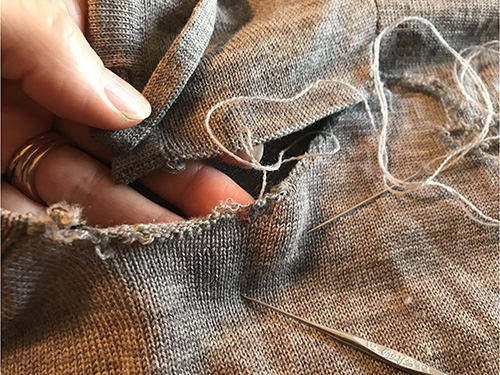
The Environment Committee of the European Parliament has made its stance clear – the time has arrived for the model of ‘take, make, dispose’ that harms our planet, our health and our economy -- to end it once and for all. Well over a year ago, the committee had put forward a proposal for a regulation to establish a general framework for setting eco-design requirements for sustainable products and repeal current rules that focus on energy-related products only.
Finally, Europe has taken the global lead in moving a step ahead and is fully engaged in its bid to make products in the EU more environment-friendly, circular and energy efficient throughout their lifecycle with a key committee of the European Parliament voting to make sustainable products the norm. The Environment Committee has voted in favour of revising the EU’s eco-design framework for sustainable products and has adopted its position on revising the eco-design framework with 68 votes in favour, 12 against and 8 abstentions.
The point of action is a part of circular economy package that also includes an EU strategy for sustainable textiles and a proposal on empowering consumers for the green transition by way of introducing a product passport with easy-to-repair facility and consumer access to repair guidelines.
Adoption of report in July 2023
The Environment Committee’s report will be officially adopted by the European Parliament at a plenary session next month. The report will provide guidelines to be undertaken by the European Parliament’s negotiation roadmap as it provides a platform for directives and dialogues with individual European nations to finally fulfill the legislation. Members of the European Parliament (MEPs) have insisted that consumers can easily access and compare product passports online. The report also recommends the European Parliament initializes a specific ban on the destruction of unsold textiles and footwear among other products, one year after the entry into force of the law.
Premature obsolescence is out
One main point is manufacturers cannot set product lifetime limits through design features and must make software updates, consumables, spare parts and accessories for an appropriate period of time to ensure product longevity that is best for the planet and the consumers’ finances. Every product should be easily repaired and come with easy access to these repair guidelines. Product passports to be made mandatory for sale of every product and the information within these product passports must be transparent, authentic and updated information as per requirements. The purpose of these product passports is clear - consumers and businesses can make informed choices when purchasing products, facilitate repairs and recycling, and increase transparency about the environmental impact of what they are buying.
MEPS play pivotal role in implementation
Apart from making product passports mandatory, the MEPS also want the Committee to prioritise a number of product groups in its first working plan to be adopted within three months after the entry into force. These priority products include: iron, steel, aluminium, textiles (notably garments and footwear), furniture, tyres, detergents, paints, lubricants and chemicals. They have stated that economic operators which destroy unsold goods would have to report the annual number and percentage of products they discarded as well as their reasons why. Based on this information, MEPs want the Commission to identify products for which a destruction ban should be introduced. Additionally, the report asks for a specific ban on the destruction of unsold textiles and footwear as well as electrical and electronic equipment, one year after the entry into force of the law.
Immersive Metaverse Unveiled at Milano Unica
The upcoming 37th edition of Milano Unica, the renowned high-end textiles and apparel accessories show, to be held at Fiera Milano Rho from July 11 to July 13, 2023, marks a significant milestone as Milano Unica presents an unprecedented immersive experience through the Metaverse—a specially created 3D space that enables individuals to interact as if physically present, without spatial limitations.
PwC Italia spearheaded the augmented reality project in collaboration with Milano Unica, allowing visitors to explore the Metaverse and experience a captivating journey. Within the Metaverse, the Milano Unica avatar serves as the guiding voice, inviting attendees to the trade show, providing updates on novelties, and offering tips on maximizing the Metaverse experience.
The immersive journey through the Metaverse showcases the creative cues for the Fall/Winter 2024/2025 season through three thematic communities: Night, Family, and Culture. Fabric and accessory collections representing each theme will play a central role in guiding visitors and creating an engaging environment.
By blurring the lines between reality and the Metaverse, Milano Unica aims to amplify its distinctive values and provide an enriched experience for attendees. Join us at Milano Unica and embark on an unforgettable journey in the Metaverse. Let our avatar be your guide through a world of innovation and creativity.
India’s T&A Exports Plummet 12.2% in May
India's textile and apparel industry faced a significant setback in May, with exports experiencing a year-on-year decline of 12.2%. The low demand in key overseas markets, particularly the United States, continued to plague the industry.
Textile exports contracted by 11.8%, while apparel exports witnessed a decline of 12.7%. Other sectors also suffered, with jute products slumping by 29.3%, and handicrafts and handmade carpets falling by 21.1%. The total value of India's textile and apparel exports for the month amounted to $2,816 million, compared to $3,206 million in May 2022.
The reason attributed the slump to sluggish demand in major importing countries, such as the United States, Germany, and the United Kingdom, influenced by inflation and inventory accumulation. However, there are positive signs of improvement as exporters gradually secure new orders.
The reopening of China after COVID-19 also presents opportunities for business growth, particularly in yarn and fabrics. Additionally, the moderation of domestic cotton prices offers hope for increased sales from July/August. Despite signs of recovery in the U.S. market, exports to the European Union have not met expectations.
Competing countries' duty-free access grants them an 11% cost advantage. Therefore, industry feels there is a pressing need to expedite the free trade agreement with the U.K.
US Retailers Anticipate Sharp Sales Decline
US retailers are preparing for a significant drop in apparel and footwear sales over the next few quarters, suggesting a potential downturn despite recent positive retail sales data. Commerce Department figures reveal a 0.3% increase in retail purchases, following a 0.4% gain in April.
However, the outlook for the remainder of this year and beyond appears gloomy. Factory owners report substantial declines in holiday orders, as companies grow cautious about consumer budgets. There are indications of plummeting demand for merchandise planned for the spring and summer of 2024.
The decline in apparel orders further supports the growing belief in an impending US economic recession, accentuated by the Federal Reserve's readiness to raise interest rates. Apparel imports have already dropped by 31% compared to the previous year.
Retailers are becoming increasingly concerned about waning consumer spending, leading to decreased imports and orders. This apprehension is evident across the apparel market, echoing anxiety, according to industry experts.
Retailers are also adjusting their revenue forecasts, cutting back on inventory purchases, and showing worry about existing stock levels in relation to customer demand.
Brazilian cotton export to China to overtake US cotton
The Cotton Growers Association stated that the cotton trade between China and Brazil may soon be conducted in yuan, as reported by the Global Times.
The association predicted that Brazilian cotton exports to China will surpass those of the US in the coming years. According to customs authorities, China imported 382,000 tonnes of cotton in the first four months, with US cotton accounting for 52.22 percent and Brazilian imports at 31.53 percent.
In a separate development, Russian President Vladimir Putin revealed at the St. Petersburg International Economic Forum that over 80 percent of trade settlement between Russia and China is carried out in Rubles and Yuan . The bilateral trade volume between the two countries exceeded $190 billion in 2022.
US’ apparel imports trend indicates shrinkage in first four months of 2023

The US’s Department of Commerce released data analysis from its Office of Textiles and Apparel (OTEXA) that indicate the world’s largest economy is slowing down its import volumes of textiles and apparel. The analysis, which was released in the second week of June 2023, revealed since the last quarter of 2022, there has been a high level of unease in the market and amongst consumers as it became apparent that all was not well with the world’s number one economy.
In following months, the fear was compounded with the financial institution crises and that the country’s national debt factor and signs show that this may continue as the economic and political battles have entwined and not making much headway to the election run up next year. The sharpest drop was in March when it fell by more than 40 per cent YOY, and by value a fall of 32.7 per cent YOY. Since then faltering improvement has been recorded.
Retailers want to diversify sources
As the Biden administration continues to curtail Chinese influence not only in the Indo-Pacific region but globally as well, American retailers are weary of further embargoes that could destroy supply sources and want to divest from their reliance on China as much and as fast as possible. In the first four months of 2023, the Herfindahl–Hirschman index (HHI) fell below 0.1.
Similarly, market shares of five largest suppliers (China, India, Bangladesh, Vietnam and Indonesia) fell below 60 per cent for the first time since 2018. This drop suggests US textile and garment exporters are indeed looking towards diversification of supply sources and this strategy may become prevalent in the US fashion industry for years to come in order to deal with market uncertainties and mitigate supply chain risk exposures.
Near-shoring the new strategy for the US
In a new development, about 17.3 per cent of US apparel imports came from countries in Western Hemisphere in the first four months of 2023, up from 15.6 per cent in 2022. This indicates that in a world of supply chain disruptions continuing to cause issues, near-shoring is being actively pursued by US retailers.
US fashion committed to lessen Chinese imports
Despite the Xinjiang cotton controversy over the ban of cotton sourced from this region, China remains the largest supplier of clothing to the US. However, the top supplier saw a drop of 17.9 per cent in value and 30.6 per cent in volume in US imports for the first four months of 2023. For the first time in decades, less than 10 per cent of US cotton apparel imports came from China in March-April 2023, revealing a significant impact of the Uyghur Forced Labor Prevention Act (UFLPA) on US fashion companies’ China sourcing strategies.
Vietnam has been affected in this scenario as it is perceived to be heavily reliant on Chinese cotton as its source for raw material and is therefore, exposed to the risk of buying banned cotton from the Xianjiang province. In value, Vietnam accounted for 17.3 per cent of US apparel imports in the first four months of 2023, down from 18.6 per cent a year ago.
India, a preferred alternative
India, alongside Bangladesh, Indonesia and Cambodia are gaining from US apparel importers turning away from China and seeking cost-effective alternate supply sources from Asia. While near-shoring is proving to be a safer option for US retailers, the cost factor of buying from European suppliers is only applicable for high-end clothing and cannot be exercised for mass retail. Leaving China aside, the top five Asian apparel exporting countries that includes India accounted for 44.7 per cent of US apparel imports in the first four months of 2023.











