


FW
Winners and losers countries in denims, jeanswear global trade of export, import in 2023
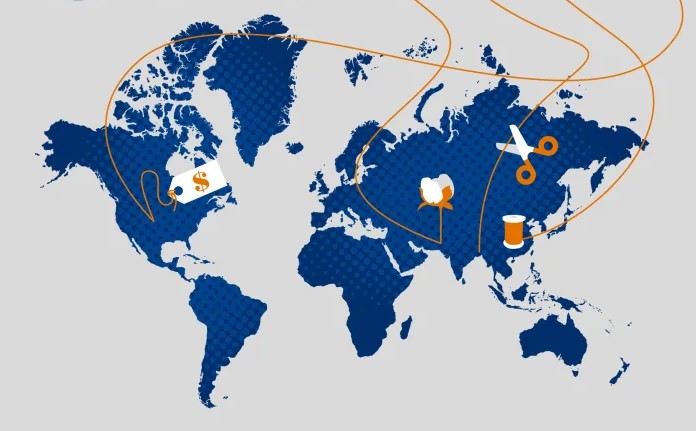
The world's love affair with denim took a fascinating turn in 2023, with some countries strutting in stylish new threads while others faced a wardrobe re-think. Let's unravel the tale of who soared and who slumped in the global denim trade, both exports and imports, and the reasons behind the sartorial shift.
Exports: Top Winning Countries
• Bangladesh: The undisputed denim king held his crown tight, weaving a 12% export surge. Skilled workers, robust infrastructure, and savvy trade deals kept the Bangladeshi looms humming.
• Vietnam: Making a powerful comeback, Vietnam saw a 9% rise. Government initiatives, automation investments, and a shift to high-end denim revitalized the Vietnamese jeanswear scene.
• Egypt: The surprise contender! Egypt's 8% jump was fueled by competitive prices, a focus on sustainable production, and strategic partnerships with European labels.
Top Losers
• China: The long-reigning king lost some shine, facing a 4% decline. Rising labor costs, environmental concerns, and Southeast Asian competition unraveled China's dominance.
• Turkey: Economic headwinds caused Turkey's exports to dip by 5%. Inflation, currency woes, and regional instability dampened the once-thriving Turkish denim industry.
• Mexico: Despite its US proximity, Mexico's exports shrunk by 6%. Domestic market saturation and increased competition chipped away at its export share.
Imports : Top Winning Countries
• United States: The denim-hungry US remained the import king, with a steady 5% rise. A diverse consumer base and competitive global prices kept the import engines running.
• Japan: Seeking quality and innovation, Japan's imports jumped 6%. High-performance jeans with unique washes and sustainable features from Turkey and Japan itself fueled this rise.
• Germany: Europe's fashion capital maintained its allure, with German imports increasing by 4%. Functional yet stylish jeans and strategic partnerships with countries like Bangladesh and Egypt boosted their denim game.
Top Losers
• China: Domestic production and a focus on homegrown brands led to a 3% decline in Chinese denim imports. Consumers embraced locally-made jeans.
• Brazil: Economic woes caused Brazil's imports to shrink by 4%. Currency fluctuations and rising domestic costs made foreign jeans less attractive.
• Russia: Geopolitical tensions and sanctions caused a 7% import plunge. Diversification towards alternative suppliers is underway, with a focus on practical and durable jeans.
The Change Drivers:
Sustainability, ethical practices, and innovative fabrics are the new currency in the global denim trade. Evolving fashion trends, trade dynamics, and online shopping will continue to reshape the denim export and import landscape. As the needle of change threads through the industry, new patterns will emerge, creating a captivating narrative to watch unfold in the years to come.
Global jeans market to grow at 6.31 % CAGR from 2023-29
Currently valued at $71.23 billion, the global jeans market is expected to grow at 6.31 per cent CAGR from 2023-29 to reach $109.32 billion by 2029.
By 2029, the online sales channel segment is anticipated to grow at the fastest rate of 11.2 per cent. The growth will be driven by the rise in participants and the popularity of e-commerce sites that offer a large selection of products, such Myntra, Amazon, Alibaba, and Flipkart.
Additionally, during the projected period, sales through online channels are anticipated to increase in tandem with the growth in internet and smartphone users.
With a share of 57.23 per cent in 2022, the men’s end-user segment dominates the market. However, the women's segment is also anticipated to expand at a CAGR of 3.61 per cent over the forecast period, as women’s demand for jeans over other clothing items increases.
Lenzing Conclave in Jaipur sparks sustainable fashion synergy
The Lenzing Group, a prominent player in wood-based specialty fibers, recently organized 'The Lenzing Conclave' in Jaipur in collaboration with the Garment Exporters Association of Rajasthan (GEAR).
The event served as a focal point for Jaipur's garment makers to explore sustainable practices and cutting-edge innovations. With a spotlight on sustainability, circularity, and traceability, manufacturers in Jaipur are actively seeking supply chain solutions aligned with progressive standards.
Lenzing showcased its flagship fiber brands, such as TENCEL and LENZING ECOVERO, including advanced options like LENZING ECOVERO black fibers. The conclave facilitated discussions on global consumption trends, emphasizing the need for supply chain solutions enabling Jaipur's garment exporters to seamlessly integrate Lenzing's innovations.
The event featured an extensive product display, spotlighting Lenzing's commitment to innovation and sustainability across diverse textile applications. GEAR's adaptation to international trends was also showcased. Zakir Hussain, President of GEAR, underscored the importance of collaboration and value-driven sustainable ingredients, aligning with Lenzing's ethos.
Avinash Mane, Senior Commercial Director of AMEA & NEA region, Textiles Business, Lenzing Group, expressed optimism about the successful convergence of innovation and sustainability at 'The Lenzing Conclave,' envisioning a transformative journey toward sustainable, value-driven textile solutions.
The event marked a pivotal moment for Lenzing and Jaipur's garment industry, fostering a continued partnership shaping the global textile landscape.
British Wool surges 20% in global markets
In a significant rebound from pandemic lows, British Wool reports a robust 20% surge in prices during recent auctions, signaling a remarkable recovery. The surge is attributed to escalating global demand for British wool, buoyed by the entry of three major buyers at the auctions.
Graham Clark, Director of Marketing, notes the overall improvement in demand and prices, emphasizing a 20% rise, with specific sought-after types gaining 15p to 20p per kilo. The auctions are experiencing heightened competitiveness, attracting new buyers in recent years.
Additionally, British Wool has strengthened its brand licensing scheme, collaborating with 130 global brands, amplifying the utilization of British wool in their products.
While challenges persist in the UK's retail sector, positive market shifts, particularly in contract carpets and Chinese exports, are seen as encouraging signs.
British Wool anticipates this upward trend to persist into 2024, offering optimism for member returns.
IGBC certifies Maral Overseas’ Noida unit as Green factory
The Indian Green Building Council (IGBC) has certified the Noida unit of Maral Overseas as an IGBC Green Factory Building. The unit has been granted Gold’ rating by the Council.
One of the leading apparel export units in India, Maral Overseas works with prestigious buyers like Adidas (India) and overseas clients.
The factory is spread across 1.5 lakh sq ft, and has a 225 KW solar plant, ETP with the capacity of 50 KLD. It operates on PNG completely and its
The factory operates completely on PNG and is equipped with a washing unit comprising machines with low liquor ratio. On the other hand the screen printing section uses label 3 chemicals.
The unit has automatic cutting machines and around 700 stitching machines producing knitted garments.
Abhay Pathak, AGM HR, Admin, Project & Sustainability, says, the award is a testament to the dedication and hard work of the team in creating a sustainable future for generations to come.
70th IIGF scheduled from Feb 26-29, 2024 in New Delhi
The 70th edition of the India International Garment Fair (IIGF) will be held from Feb 26- 29, 2024 in New Delhi. To be organised as a part of the global textile show, Bharat Tex 2024, the event will focus on sustainability in fashion, and will be supported by the government’s Ministry of Textiles.
To be held at Bharat Mandapam and Yashobhumi in New Delhi, IIGF will focus on product categories comprising menswear, womenswear, children’s wear, and fashion accessories. The trade show will be attended by both manufacturers and suppliers of traditional, ethnic, fusion, and western wear.
This year, IIGF has introduced a number of features including up to four night’s complimentary hotel stay, lunch at the trade show venue for four days, and airport and venue transfers. Over 300 exporters are scheduled to participate in the the trade show that will showcase a diverse array of India’s fashion offering to global wholesalers and retailers.
Latest innovations in textile processing at display in Techprocess 2024
Leading international trade fair for the processing textile and flexible materials, Texprocess will showcase the latest innovations and advancements in the segment.
The fair will hold its 2024 edition rom April 23-26 in Frankfurt, Germany. It will be attended by exhibitors from 40 countries who will present their latest machinery, equipment, technologies and services as well as IT and logistics solutions.
Along with the German Machinery and Equipment Manufacturers Association (VDMA), Texprocess will be co-sponsored by the VDMA Textile Care, Fabric and Leather Technology Association.
The trade show will be attended by participants from the apparel industry; wholesale/retail sector; processors of textile and flexible materials; manufacturers of functional apparel, sports goods and outdoor equipment; manufacturers from the automotive, aerospace and aviation industries; manufacturers of household and home textiles, filters and packaging; manufacturers from the leather industry; service sector and skilled trades; and science and education.
Various product groups to be presented at the fair include design, product development, automation technology; cutting, making, trimming section showcasing equipment, machinery and processes for cutting out, separating, straightening, die-cutting, inserting and pre-assembly; cutting room and automation technology, fusing, setting and manufacturing preparation; textile machinery, textile finishing, knitting technology, embroidery technology, stitching, joining and fastening technology, technical accessories for apparel; energy, air-conditioning, disposal and recycling; quality assurance, internal material flow, textile logistics, information technology, services, consultancy and training, research, development and education.
International trade fair for technical textiles and nonwovens, Techtextil will be held concurrently to Texprocess from April 23-26, 2024.
Italy’s fashion sales grow by 3.2% in 2023: Report
Data published by Confindustria Moda shows, sales in the Italian fashion sector grew by 3.2 per cent to €111.7 billion in 2023. Fashion sales grew in value terms during the year while their volumes contracted for the first time since the pandemic.
Profit margins in the sector also dwindled during the year as energy and raw material costs rose. Ongoing changes in terms of geopolitical balances affected the Italian fashion, textile and accessories sector during the year, says Ercole Botto Poala, President, Confindustria Moda.
Rising production costs triggered uncertainty in the sector that had shown great resilience in the past few years. The sector needs to collaborate and work as a system, to help industries having the same needs, Poala adds.
Italy’s apparel exports grew by 5.1 per cent in the first eight months of the year with international sales totaling €54.5 billion. Almost 47 per cent of Italy’s apparel exports are directed to the EU. China’s apparel imports from Italy increased by 5 per cent during the year.
Fashionista to organise winter editions in January
The winter themed editions of business to customer fashion and lifestyle exhibition Fashionista will be held in January this year in Raipur, Bilaspur, and Nagpur. Focusing on womenswear, the exhibitions will help desi brands connect with premium shoppers.
The first of these shopping fairs will be held from Jan 12 -14, 2024 at Hotel Sayaji in Raipur. Featuring both traditional and fusion wear, the event will also showcase fashion accessories, jewelry, handbags, gift items, and handicraft goods, etc
The second event will be held from Jan 16-17, 2024 at HoteL Marriott in Bilaspur. The products displayed at this shopping fair will be similar to those displayed in the Raipur edition and feature numerous local brands.
Fashionista will organise the third event from January 19 to 21 in Nagpur. The fair will focus on non-metro locations to link brands with shoppers to raise brand awareness and enable shoppers to experiment with new styles.
Launched in 2008, Fashionista Fashion and Lifestyle Exhibitions organises events across India. The business also holds Fashionavya fairs which focus on upmarket labels.
Top winners and losers of nations in 2023's global textile trade landscape
In the intricate world of global textiles, 2023 unfolded as a dynamic tapestry with both exports and imports undergoing significant shifts. This comprehensive overview explores the top gainers and losers in textile exports and imports, unveiling the forces that shaped this transformative year for the industry.
A global shift in textile exports in 2023
Top gainers
1. Vietnam: The undisputed champion, Vietnam, wove a 10% export increase in 2023. A skilled workforce, robust infrastructure, and strategic trade deals solidified its position as the textile titan.
2. India: Making a comeback, India witnessed a remarkable 7% surge in textile exports. Government initiatives, improved quality, and diversification into high-value products revitalized the Indian thread industry.
3. Indonesia: Stepping into the spotlight, Indonesia saw a delightful 9% export rise, propelled by competitive prices, technological investments, and sustainable production.
Top losers
1. China: The long-reigning textile king faced a 3% downfall in 2023 due to rising labor costs, environmental concerns, and fierce Southeast Asian competition.
2. Turkey: Economic headwinds caused Turkey's textile exports to dip by 5%, impacted by inflation, currency fluctuations, and regional instability.
3. Pakistan: Political uncertainty and supply chain disruptions led to a 7% drop in Pakistan's textile exports despite a skilled workforce and competitive prices.
The Fabric of Change: Several factors interlaced to reshape the global textile export landscape, including shifting consumer preferences, geopolitical tensions, and technological advancements. The future promises an intricate weave with sustainability, ethical production, and technological innovation determining success in the competitive fabric.
Global textile imports see surprises and stretches in 2023
Top winners
1. United States: The fashion-hungry US remained the textile import kingpin with a steady 3% increase in 2023, driven by a diverse consumer base and competitive global prices.
2. European Union: Europe's fashion capitals witnessed a surprising 8% import rise, emphasizing niche textiles, innovative materials, and strategic trade deals.
3. Japan: Seeking quality and functionality, Japan's textile imports jumped 6%, driven by a preference for high-performance fabrics and sustainable fibers.
Top Losers
1. China: The global manufacturing powerhouse saw a 5% dip in textile imports due to domestic production emphasis and self-sufficiency goals.
2. Brazil: Economic struggles led to a 7% shrinkage in Brazil's textile imports, influenced by currency fluctuations and rising domestic costs.
3. Russia: Geopolitical tensions and sanctions caused a 12% plummet in Russia's textile imports, triggering diversification towards alternative suppliers.
The Threads of Change: Shifting consumer habits, trade dynamics, and economic considerations played a role in reshaping global textile imports. The future promises an intricate tapestry, influenced by rising environmental concerns, technological advancements, and evolving consumer preferences.
As the needle of change threads through the global textile industry, the coming years will be a fascinating narrative to observe, with new patterns emerging, creating a dynamic and interconnected world of textiles.











