


FW
ACIMIT: Italian textile tech boosting trade ties in India
Italian textile technology is poised to fortify its partnership with India's textile industry through a new promotional initiative set to enhance trade relations. Scheduled from April 9 to 12 in New Delhi and Mumbai, 11 leading Italian textile machinery manufacturers will participate in technological symposia organized by the Italian Trade Agency and backed by the Ministry of Foreign Affairs and International Cooperation. This initiative aims to provide a platform for Italian companies to exhibit their cutting-edge technologies to a curated audience of Indian textile entrepreneurs.
India's textile sector holds significant economic weight, contributing over 2 per cent to the GDP and securing its position as one of the world's largest exporters of textile and apparel items. Notably, India stands as the third-largest foreign market for the Italian textile machinery industry.
Marco Salvade, president of Association of Italian Textile Machinery (ACIMIT), highlights India's evolving textile landscape, emphasizing the growing demand for technical and innovative textiles in sectors such as geotextiles and medical applications. Salvade underscores the role of these symposia in showcasing Italian manufacturers' expertise, particularly in sustainability and digitalization of production processes.
In 2022, India imported Italian textile machinery worth approximately €200 million. Although the value exhibited a slight decline in the first nine months of 2023 compared to the previous year, projections for the current year remain optimistic.
Salvade emphasizes that these technology symposia are integral to a longstanding promotional program by ITA and ACIMIT aimed at strengthening trade ties between Italy and India in the textile sector. He also acknowledges the pioneering role of the first Italian textile technology training center established at DKTE’S Textile & Engineering Institute Ichalkaranji.
Participating Italian companies, all members of ACIMIT, include Autefa, Cubotex, Danitech, Lafer, Mcs, Monti-Mac, Reggiani Macchine, Salvade, Savio, Sicam, and Testa.
Latest printing technologies by ColorJet on display at FESPA Global Print Expo 2024
A global leader in digital inkjet printing technology, ColorJet will unveil its newest advancements at FESPA Global Print Expo 2024, the premier European exhibition for printing technologies. The event runs from March 19-22, 2024, in Amsterdam, Netherlands.
ColorJet will showcase the upgraded Earth Series - Earth 32i, a revolutionary solution for sustainable textile printing. This advanced model eliminates the need for additional pre and post-treatment equipment, significantly reducing water and energy consumption. It boasts enhanced features like turbocharged functionality and nozzle pumping for peak performance, variable drop printing for customised ink droplet sizes, printing precision and improved safety standards for a secure printing experience.
ColorJet will also present its UV range of products including the Vulcan Hybrid X 2-in-1 powerhouse designed for diverse printing needs. This high-speed, 2-m printer functions seamlessly as both a flatbed and roll-to-roll printer, handling various substrates like ACP, foam, and vinyl.
Another of the products to be showcased by ColorJet includes the Verve Mini, a compact and affordable flatbed LED UV printer ideal for expanding businesses.
Besides, FESPA attendees can experience live demonstrations of ColorJet's printing solutions and gain valuable insights from the company’s jet team at Booth Number D20 in Hall 01. The team will address issues related to optimising printing processes, achieving vibrant colors, and staying ahead in the digital printing industry.
Introduce new textile policy on urgent basis, urges SGCCI
In a recent meeting with the state government officials, several representatives of the Southern Gujarat Chamber of Commerce and Industry (SGCCI), urged for a swift introduction of a new textile policy for the state.
Ashish Gujarati, Former President, SGCCI, and industry expert Ajoy Bhattacharya, emphasised on the need for proactive measures to maintain Gujarat's textile edge. They called for continued support through subsidies and incentives, including a 30 per cent capital subsidy, 7 per cent interest subsidy, and power subsidies.
A key concern was the lapse of the previous textile policy on December 31, 2023. Stakeholders requested a new policy with no gap, ideally starting from January 1, 2024.Surat, a major Man Made Fiber (MMF) hub, advocated for the inclusion of MMF development incentives in the new policy.
With Lok Sabha elections approaching, stakeholders urged a swift announcement of the new textile policy. Government officials reassured the industry of their commitment to a timely policy that recognises textiles' importance to Gujarat's economy.
India-Bangladesh Rupee Trade: Slow start amidst dollar dominance
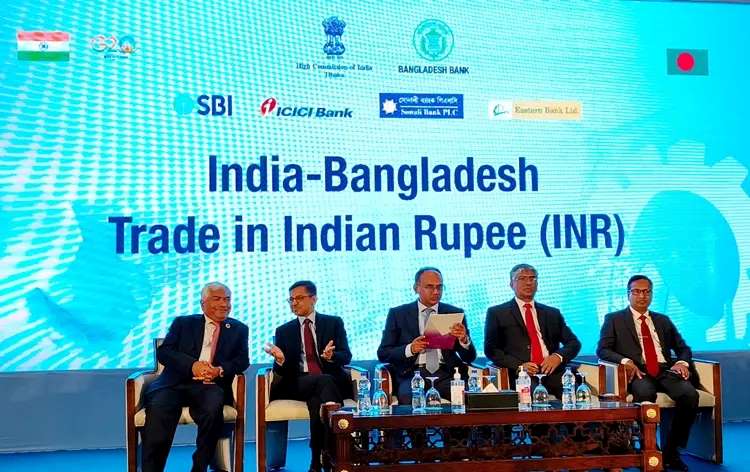
While India and Bangladesh launched rupee-based trade in June 2023 to reduce dependence on the US dollar, the initiative faces an uphill battle. With a turnover of just $0.46 million in nearly seven months, the program suffers from several challenges.
Current challenges
Dollar dominance: The global dominance of the US dollar for international trade settlements remains a major obstacle. Businesses are accustomed to dollar-denominated transactions, making them wary of the complexities and uncertainties associated with a new system.
LC complexities: The process of issuing and managing Letter of Credit (LC) for rupee-based transactions is still being established, leading to delays and complexities for businesses.
Exchange rate volatility: Fluctuations in the exchange rate between the rupee and taka introduce an element of risk for both exporters and importers, deterring them from adopting the new system. These factors, along with businesses' reluctance to embrace the new system due to initial hiccups with LCs, have contributed to the slow uptake.
Can rupee trade boost textile and apparel business?
Despite the current challenges, stakeholders believe in the initiative's potential, particularly for the crucial textile and apparel sector in both countries. However, India's perspective differs.
Bangladesh's dollar dilemma: Bangladesh struggles with dollar scarcity, making exploring alternatives like the rupee attractive from an import cost perspective. This could potentially lead to increased imports of raw materials like fibers, yarns, fabrics, and chemicals from India.
India's focus on raw material exports: For India, this initiative might hold greater significance for raw material exports to Bangladesh, which is more valuable than finished textile imports. It is important to note that India's primary interest in the rupee trade initiative lies in expanding its exports of raw materials like fibers, yarns, fabrics, and chemicals to Bangladesh. By settling payments in rupees, India can lessen its reliance on the US dollar, which is crucial for managing its foreign exchange reserves. Facilitating trade in local currencies can strengthen economic ties between India and Bangladesh, fostering a more integrated regional market.
Success can be achieved through reduced transaction costs to begin with. Eliminating the need for currency conversion can lead to cost savings for businesses, making them more competitive. Also, faster trade settlement as Rupee-based transactions can potentially streamline the settlement process compared to dollar-based transactions, leading to quicker access to funds.
The bottomline is despite the current challenges, stakeholders remain optimistic about the initiative's potential. Addressing operational hurdles, such as simplifying LC procedures and mitigating exchange rate volatility, is crucial for broader adoption. Additionally, exploring the possibility of using Bangladeshi Taka in bilateral trade, alongside the rupee, could help address the trade imbalance between the two nations. This initiative, while facing initial hurdles, holds promise for fostering regional economic integration and potentially benefiting the textile and apparel sector in the long run. However, overcoming existing challenges and exploring further development opportunities will be critical for its success.
Moscow Fashion Week 2024 concluded: United global fashion forces

This March, Moscow emerged as the epicenter of the fashion universe as it played host to the highly anticipated Moscow Fashion Week (MFW) 2024. The event, showcasing the creative brilliance of over 120 designers from around the world, proved to be more than just a display of style; it represented a convergence of global talents and emerging markets, solidifying Moscow's position as a burgeoning fashion capital.
A global stage for fashion innovation
With an eclectic lineup that transcended borders, MFW featured designers not only from Russia but also from diverse countries such as Brazil, Indonesia, China, India, Turkey, South Africa, Costa Rica, Ethiopia, and Egypt. This diverse amalgamation underscored Moscow's growing reputation as an international launchpad for rising designers. Moreover, the event provided a vital platform for international labels to unveil their latest creations and forge essential business connections across continents, with coverage extending to over 50 countries, including key markets in Europe and America.
Iconic venues and celebrity presence
The allure of MFW was amplified by its prestigious venues - the historic 'Manege' exhibition hall, nestled amidst landmarks like the Kremlin and Red Square, and the striking international Russia Expo at VDNH. The event commenced with a star-studded gathering, drawing media attention and the who's who of the fashion industry. Notable personalities such as Italian film icon Ornella Muti and Chinese actress Lily Ji graced the front rows, adding to the glamour of the occasion.
Innovative designs and cultural fusion
Russian designers showcased a blend of tradition and innovation, with brands like Ermi infusing ancient costume designs with modern textiles. Meanwhile, emerging labels like Bitte_Ruhe explored unique aesthetics, diving into the realm of mermaid-inspired fashion. The inclusivity of MFW was evident as the brand Kuzina received acclaim for featuring models with Down syndrome, reflecting the event's commitment to diversity. International contributions, such as the Indonesian brand Irmasari Joedawinata's collection inspired by mystic ocean shores, further enriched the cultural tapestry of the week.
A global phenomenon
Drawing over 70,000 attendees and garnering 5 million online viewers each season, MFW continues to serve as an unparalleled platform for designers aiming to captivate a global audience. Beyond the runway presentations, the event offered a professional showroom attracting numerous boutiques, a diverse program of lectures and masterclasses, and even a festival celebrating fashion in film.
A celebration of cultural diversity
Each year, Moscow Fashion Week not only strengthens its international stature but also celebrates the vibrant tapestry of Russian and global cultures. By embracing diversity and innovation, MFW cements its place as an essential fixture on the international fashion calendar, perpetuating the spirit of creativity and inclusivity in the ever-evolving world of fashion.
Indo Count launches new innovations for customers
Leading global bedding company, Indo Count has launched several new innovations for its customers.
The first innovation of the company includes Platinum Touch sheets that offer an unparalleled level of softness. Inspired by the craftsmanship of luxury Italian shirt makers, this breakthrough technology combines specially treated yarns with advanced finishing techniques to produce a stunning array of colors and irresistibly soft sheets. Available in luxurious sateen, soft twill, and crisp percale, the Platinum Touch line caters to diverse preferences.
Gautam Sareen, President-Marketing, Indo Count Industries, says, the exquisite experience offered by Platinum Touch will delight customers worldwide.
In alignment with its commitment to sustainability, Indo Count introduced the Pure Earth Collection, featuring exclusive agro-based dyes across its entire bedding range. Additionally, it launched the Rekoop range of fade-resistant sheets dyed using an innovative, water-efficient process, ensuring vibrant and durable colors along with 100 per cent plant-based origins.
Another product launched by Indo Count included Fiber Color, a unique sheeting collection derived from cotton textile waste, enhancing the company's circularity efforts. Besides, Indo Count made significant investments digitalisation to streamline business processes and enhance customer service. Furthermore, the company remains committed to green energy, investing in solar power to reduce its carbon footprint.
Another milestone achieved by Indo Count includes its inclusion in the Dow Jones Sustainability Indices (DJSI) of S&P Global, reinforcing its dedication to sustainability.
Primark to extend Click & Collect trial beyond UK
Popular clothing retailer, Primark is poised to extend its click & collect facility to more stores and markets outside of the UK, according to Paul Marchant, CEO. Unlike many competitors, Primark doesn't offer home delivery but has been experimenting with a click & collect service in 57 stores for kidswear and womenswear.
Satisfied with the trial's progress, Marchant notes that it aligns with their bricks-and-mortar strategy by driving more foot traffic to stores. He highlights the growing trend of customers filling their online baskets for collection, then adding to their purchases once in-store.
Marchant plans to expand the click & collect facility to more stores and potentially expand into new markets. However, the economics of home delivery remain unfavorable for Primark due to its low average selling price and fulfillment costs, he laments.
Owned by Associated British Foods, Primark currently operates over 400 stores across 16 countries in Europe and the United States, with a target of reaching 530 stores by 2026. Marchant plans to expand into additional continents, citing potential appeal in regions such as South East Asia, the Middle East, India, South America, and Central America.
India targets $10 billion technical textiles exports by 2030
The Indian government has set an ambitious target of achieving $10 billion in technical textiles exports by 2030.
According to recent statistics, India’s exports of technical textiles reached $2.5 billion in 2022-23, albeit experiencing a slight decline compared to the previous year. However, in the current year (April to October 2023), exports saw a modest growth of 0.5 per cent.
Despite this positive growth trajectory, the sector faces several challenges including lack of awareness and technical expertise, inadequate testing facilities, and limited availability of specialty fibers. To overcome these obstacles, the government plans to expand the number of Harmonised System (HS) codes for technical textiles and introduce more Standard Input Output Norms (SION) for these products.
Various government schemes have been implemented to bolster the industry, including the Production-Linked Incentive (PLI) scheme covering ten technical textiles products, and the National Technical Textiles Mission (NTTM) aimed at positioning India as a global leader in the field. Additionally, with 100 per cent FDI allowed through the automatic route and technical textiles products included in schemes like Duty Drawback and the Remission of Duties and Taxes on Exported Products (RODTEP), the government is actively supporting efforts to boost exports.
Indian designers make their mark at the Moscow Fashion Week
Following successful showcases in Paris, Milan and New York, Indian designers are making their mark in the Russian fashion scene. The recently-concluded Moscow Fashion Week (MFW) was attended by a diverse array of designers, including those from India.
Designer duo Shalini Jaikaria and Paras Bairoliya, along with Nitin Bal Chauhan, were among the Indian designers who presented their collections at MFW. This marks their second show in Russia in recent months, reflecting the growing interest in Indian fashion in the region.
Additionally, designers Ritesh Kumar, Naushad Ali, Gaurav Khanijo, and Shruti Sancheti showcased their handloom collections at the BRICS+Fashion Summit in Moscow.
Citing the shared appreciation for handcrafted products in both India and Russia, Bairoliya introduced his label to the Russian market. Chauhan shared his positive experience of showcasing in Moscow, highlighting the warm reception and expressing confidence in the potential for growth in the Russian market.
As India-Russia fashion exchanges gain momentum, designers are exploring collaborations with Russian brands and fashion labels. Bairoliya emphasised the active consumption of fashion in Moscow and Russia, envisioning reciprocal engagements between Indian and Russian designers.
On the other hand, Chauhan emphasised the role of fashion in strengthening India-Russia ties, foreseeing future showcases in major cities like Mumbai, Delhi, and Moscow, with collaborations likely to follow.
Sympatex showcases sustainable innovations at Performance Days
Sympatex, a leading membrane manufacturer, is poised to make waves in the textile industry with its innovations in sustainability and collaboration. From March 20-21, 2024, the company will take center stage at Performance Days Munich, showcasing its commitment to eco-conscious practices and strategic partnerships.
One of the key highlights of the event is Sympatex's collaboration with e.dye, a pioneer in solution dyeing technology. By unveiling three new products sourced from e.dye, Sympatex demonstrates its dedication to reducing environmental impact. Solution dyeing not only conserves water but also slashes chemical usage by up to 90 per cent and minimizes carbon dioxide emissions. Kim Scholze, CSO of Sympatex, hails this partnership as a "paradigm shift" in textile dyeing, emphasizing its role in fostering a more sustainable future.
In response to the impending quotas on recycled plastic components set by the European Commission, Sympatex introduces its Fiber2Fiber (F2F) technology as an alternative to conventional bottle recycling. The Tokyo Fiber2Fiber Spring AS laminate, composed entirely of F2F yarn made from recycled pre- and post-consumer waste, exemplifies the company's commitment to closing the textile loop. This innovation paves the way for high-quality, sustainable fabrics in the outdoor and sportswear industry.
Furthermore, Sympatex spearheads digital product development through its partnership with DMIx, a platform facilitating real-time collaboration between brands and suppliers. By leveraging technology and collaboration, Sympatex accelerates innovation while reducing costs and conserving resources, marking a significant step towards a more sustainable future.
Additionally, the company launches its "Sustainability Impact Program," aimed at empowering young designers to incorporate responsible design practices. Through knowledge exchange, workshops, and lectures, Sympatex aims to cultivate a new generation of designers committed to sustainability.
With its bold initiatives and strategic collaborations, Sympatex reaffirms its position as a trailblazer in sustainable textile innovation, driving positive change within the industry and beyond.











