


FW
BTMA spotlights advanced fibres at Techtextil 2024
In the pursuit of sustainability and innovation, the textile industry continues its relentless quest for new fibres and advanced technologies. The upcoming Techtextil 2024 exhibition, scheduled from April 23-26 in Frankfurt, Germany, promises to be a showcase of groundbreaking developments. Among the highlights are fibres derived from organic or recycled sources to meet sustainability goals and those boasting novel functional properties for high-performance applications.
Fibre Extrusion Technologies (FET), a specialist member of the British Textile Machinery Association (BTMA), stands at the forefront of this revolution. With its expanded Fibre Development Centre, FET has ramped up technical trials, catering to a diverse clientele from multinational corporations to startups. Managing Director Richard Slack emphasizes their focus on biopolymers, recycled fibres, and medical devices, highlighting the drive towards sustainable and functional solutions.
Moreover, Airbond unveils game-changing splicing technologies, offering efficient processing of costly fibres like UHMWPE, carbon, and aramids. Their innovative splicers, capable of handling yarns up to 16,000 tex, promise significant reductions in waste.
Techtextil 2024 also features sophisticated testing systems from BTMA members like James Heal and Verivide, ensuring quality control in technical fabric production. Additionally, Shelton Vision introduces WebSpector, a cutting-edge fabric inspection system with adaptive image processing techniques.
Amidst growing emphasis on sustainability, BTMA CEO Jason Kent underscores the industry's continual quest for new functionalities and processing technologies. Techtextil serves as a vital platform for industry players, facilitating growth and collaboration in an ever-evolving landscape.
Founded in 1940, BTMA plays a pivotal role in promoting British textile machinery globally, fostering collaboration and innovation within the sector. As the textile industry navigates towards a sustainable and technologically advanced future, exhibitions like Techtextil provide a crucial nexus for driving progress and seizing emerging opportunities.
Turkiye’s Uniteks boosts efficiency with Coats Digital's GSDCost solution
Uniteks, one of Turkiye’s premier ready-made clothing manufacturers, has taken a significant stride towards enhancing its operational efficiency and profitability. The company has announced the adoption of Coats Digital’s GSDCost solution, aimed at revolutionizing its production operations.
With a keen focus on optimizing efficiencies, streamlining line balancing, and improving capacity planning processes, Uniteks seeks to ensure seamless alignment with customer expectations. This strategic move is anticipated to bring substantial improvements, ultimately boosting profits and solidifying its position in the market.
Uniteks, founded in 1990 and based in Izmir, Turkiye, is renowned for its intricately designed knitwear products, catering to esteemed global brands such as H&M, Zara, and Primark. Boasting an annual production capacity exceeding 40 million units and an annual turnover of $185 million, Uniteks consistently maintains its leadership position in the industry.
The decision to embrace GSDCost stems from the company's challenges with varied costings, inaccurate historical data, and inconsistent time studies. Ayhan Vatansever, Uniteks’ Productivity & Investment Manager, highlighted the need for standardized methods to address these issues effectively.
Coats Digital’s GSDCost solution, recognized as the international standard in the sewn products industry, offers a scientific approach to method analysis and time determination. This not only facilitates transparent garment costing but also fosters a more collaborative and sustainable supply chain.
In the words of Nejat Erdogan, Uniteks’ General Manager, the adoption of GSDCost will streamline cost planning processes, leading to more realistic pricing and improved customer service. Furthermore, it is poised to optimize production efficiencies and support the company’s digital transformation journey.
Coats Digital expressed enthusiasm in supporting Uniteks through seamless implementation and comprehensive training programs. This partnership underscores a shared commitment to embracing digital solutions for enhanced competitiveness and sustainability in the global market landscape.
Levi Straus revises annual profit forecasts upwards
Denim maker Levi Strauss has revised its yearly profit forecasts upwards attributing the increase to the company’s recent cost-saving measures that included reducing its workforce and adopting more moderate approach to discounts on its denim products.
To achieve cost efficiencies, Levi's streamlined its global corporate workforce, including trimming senior leadership positions, and streamlined operations in Europe while discontinuing lower-margin ventures like its Denizen brand and European footwear business. The company incurred a restructuring charge of $116 million in the first quarter.
Despite the company reporting a loss of $10.6 million in the first quarter, compared to a profit of $114.7 million the previous year, Harmit Singh, Chief Financial Officer expressed optimism about the stability of the US consumer market.
Sales of Levi's products directly to consumers through its website and owned stores increased by 8 per cent on a constant-currency basis during the quarter. However, sales through wholesale channels, including department stores like Macy's and Kohl's, declined by 19 per cent on a constant-currency basis, a sharper decline than the 3 per cent drop in the fourth quarter.
Additionally, higher full-price sales and reduced product costs boosted Levi's gross margins by 240 basis points to 58.2 per cent in the first quarter. However, the company maintains its full-year revenue growth outlook in the range of 1 per cent to 3 per cent.
Although Levi's net revenue decreased by approximately 7.8 per cent to $1.56 billion in the quarter ending February 25, it slightly exceeded estimates of $1.55 billion, according to LSEG data.
Facing reduced orders from retailers amidst inflation concerns, Levi's plans to trim its product range by approximately 15 per cent and focus on expanding products favored with consumers, particularly baggy fits and loose styles.
Italian Textile Machinery dominates Techtextil Frankfurt
Frankfurt is set to host Techtextil, the premier global fair for technical and innovative textiles, from April 23 to 26, drawing attention to the dynamic landscape of the technical textile industry. Over 50 Italian textile machinery companies are poised to showcase their prowess in Germany, with 30 congregating at the Italian Pavilion, jointly organized by the Italian Trade Agency and ACIMIT (Association of Italian Textile Machinery Manufacturers).
The sector of technical and innovative textiles has witnessed a staggering growth trajectory, with global trade surging to €44.7 billion in 2023, boasting an average annual growth rate of 4.4 per cent since 2009. The European Union, contributing 35 per cent to this figure, solidifies its pivotal role in this domain. Leading the pack are Germany and Italy, accompanied by industry giants like China, the United States, and Japan.
This exponential growth has fueled an escalating demand for specialized machinery tailored to the unique needs of this sector. Italian manufacturers, with their renowned technological prowess, have adeptly risen to the challenge. With over 100 ACIMIT member companies catering to sector clients, their dominance is evident.
Marco Salvade, President of ACIMIT, underscores the significance of Techtextil as a linchpin for Italian manufacturers, reaffirming the adaptability and versatility of Made in Italy technologies. While the Italian contingent at Techtextil represents a significant portion of the nation's machinery producers for technical textiles and nonwovens, it also highlights their global prominence and unwavering commitment to innovation.
India’ textile ministry to revamp testing infrastructure to curb sub-standard exports
The Union Textiles Ministry plans to revamp testing infrastructure to tackle the issue of sub-standard textile exports and boost the country's reputation on the global stage. Industry leaders have been raising concerns regarding the impact of low-quality pashmina shawls and silk exports on India's image as a reliable supplier.
The ministry intends to establish cutting-edge laboratories besides upgrading existing facilities. Its primary goal is to rigorously test and authenticate the purity of various textile products, encompassing pashmina, silk, cotton, and coarse-wool items, prior to their shipment to international markets.
Expected to play a crucial role in elevating the quality standards of Indian textile exports, this comprehensive initiative will also instill greater confidence among global buyers concerning the authenticity of the products they procure from India. The initiative will help curb the export of sub-par products to the global market, thereby boosting India's position in the international textile industry.
Arvind appoints Lakshyaraj Singh Mewar of Udaipur brand ambassador for Primante
Arvind has appointed Lakshyaraj Singh Mewar of Udaipur the brand ambassador for its upscale suiting and shirting brand, Primanté. With a diverse range of achievements in philanthropy, education, sports patronage and business leadership, Mewar is also known for his captivating TED talks, and an impressive array of Guinness World Records. He has been devoted to public service since his younger days, advocating for noble causes with unwavering passion and selflessness.
On his partnership with Arvind, Mewar states, this association reflects the shared commitment to elevate the standards of luxury and sophistication in the fashion industry. Kulin Lalbhai, Executive Director, Arvind, adds, Mewar’s association with Primante reinforces the Arvind Ltd’s dedication to excellence and paves the way for exciting collaborations and innovations in luxury fashion.
Primanté offers fabrics such as Australian Merino wool blended with Italian design for exquisite suiting, along with Egyptian Giza and Supima Cotton for shirting. Spanning from Super 120s to Super 200s, Primanté's collection showcases a fusion of fine count fabrics with blends including Silk, Mohair, Lycra, Linen, and innovative Poly filaments.
In addition to suit fabrics, Primanté presents tweed jackets, business coats, and shirting, all meticulously crafted to the highest global standards of product development and quality control.
Nilit unveils circular innovation: Sensil Flow
Nilit, a global leader in Nylon 6.6 production, launches Sensil Flow, revolutionizing circularity in the apparel sector. Sensil Flow's innovative approach not only enhances sustainability but also tackles the environmental impact of apparel production by facilitating yarn, fabric, and apparel recycling, effectively reducing waste.
Ilan Melamed, Nilit General Manager, emphasizes the shift in mindset needed across the supply chain for sustainable textile practices. Sensil Flow serves as a catalyst for circularity, fostering deep partnerships and redefining industry norms.
Michelle Lea, Nilit’s Chief Marketing and Sustainability Officer, highlights the urgency, with over 90 million tons of apparel discarded annually, only a fraction recycled. Sensil Flow offers a solution by streamlining production processes and enabling longer-lasting apparel that can be easily recycled at the end of its lifecycle.
Current apparel recycling faces challenges in sorting and separating materials, particularly blends. Sensil Flow addresses these hurdles by providing mono-component fabrics with inherent stretch properties, reducing reliance on elastane and simplifying recycling.
Moreover, Nilit collaborates with recycling experts to efficiently recover and recycle fabric waste and post-consumer textiles. By reintroducing high-quality recycled Nylon chips into its production, Nilit ensures a closed-loop system, minimizing environmental impact.
Certificates validate circularity commitments, ensuring transparency and accountability among partners, driving the transition towards a circular textile economy. Sensil Flow emerges as a transformative solution, heralding a new era of sustainability in the apparel industry.
Nilit celebrates 50 years with a premium Nylon collection driving sustainability. Introducing Sensil ByNature, utilizing bio-gas from landfill waste. Sensil BioCare reduces textile waste persistence in sea and landfills. Sensil EcoCare, made from recycled Nylon, enhances circularity. Sensil WaterCare saves up to 100 per cent water in dyeing. All products adhere to Nilit’s Total Product Sustainability standards, offering designers eco-friendly performance fabrics.
Paris retains fashion week crown but social media shifts the landscape

Paris Fashion Week (PFW) solidified its dominance once again, generating a whopping $425.5 million in Media Impact Value (MIV), revals Launchmetrics, a data analysis firm. MIV is a metric that assigns a monetary value to media coverage, essentially gauging the buzz and hype surrounding an event. While direct comparisons to previous seasons are unavailable due to methodology changes, PFW dwarfs Milan ($273.4 million), New York ($181.5 million), and London ($78.1 million).
Social media’s impact
This season highlights the growing influence of social media. Social networks captured a staggering 76 per cent of MIV, showcasing the power of online conversations. Instagram takes the lead with 49 per cent share, but traditional online media (websites, news articles) surprisingly holds a strong second at 21 per cent. Interestingly, while TikTok boasts of a smaller share (21 per cent) compared to Instagram, it delivers the highest average value per placement, indicating impactful content.
The breakdown of "voices" contributing to MIV reveals a shift. Traditional media still holds top spot at 67 per cent but influencers (13 per cent ) and celebrities (sought after for their social media reach) are gaining ground.
Global fashion week standings
• Paris: $425.5 million
• Milan: $273.4 million
• New York: $181.5 million
• London: $78.1 million
Can MIV be the sole popularity meter?
The report raises a critical question: can MIV be the sole measure of a fashion week's significance? While MIV offers valuable insights into audience reach and online buzz, it doesn't necessarily reflect the artistic merit or long-term impact of collections. PFW might reign supreme in MIV, but other weeks might foster innovation or cater to specific aesthetics.
It's important to critically analyze MIV’s limitations as a measure of true popularity or significance. Here's why:
• Focus on buzz, not substance: MIV prioritizes quantity over quality. A viral but fleeting social media trend can inflate MIV without reflecting lasting impact or industry influence.
• Pay-to-play potential: Social media influencers can be swayed by brand sponsorships, potentially inflating MIV without reflecting genuine audience interest.
• The power of legacy: MIV might not fully capture the historical and cultural significance of established fashion weeks like Paris.
The bottomline is indeed MIV provides a valuable new data point for understanding fashion week impact. However, a holistic view requires considering factors beyond just social media buzz. Legacy, cultural influence, and the quality of design collections all contribute to a fashion week's true significance.
New Cotton Project: Creating a circular future for fashion
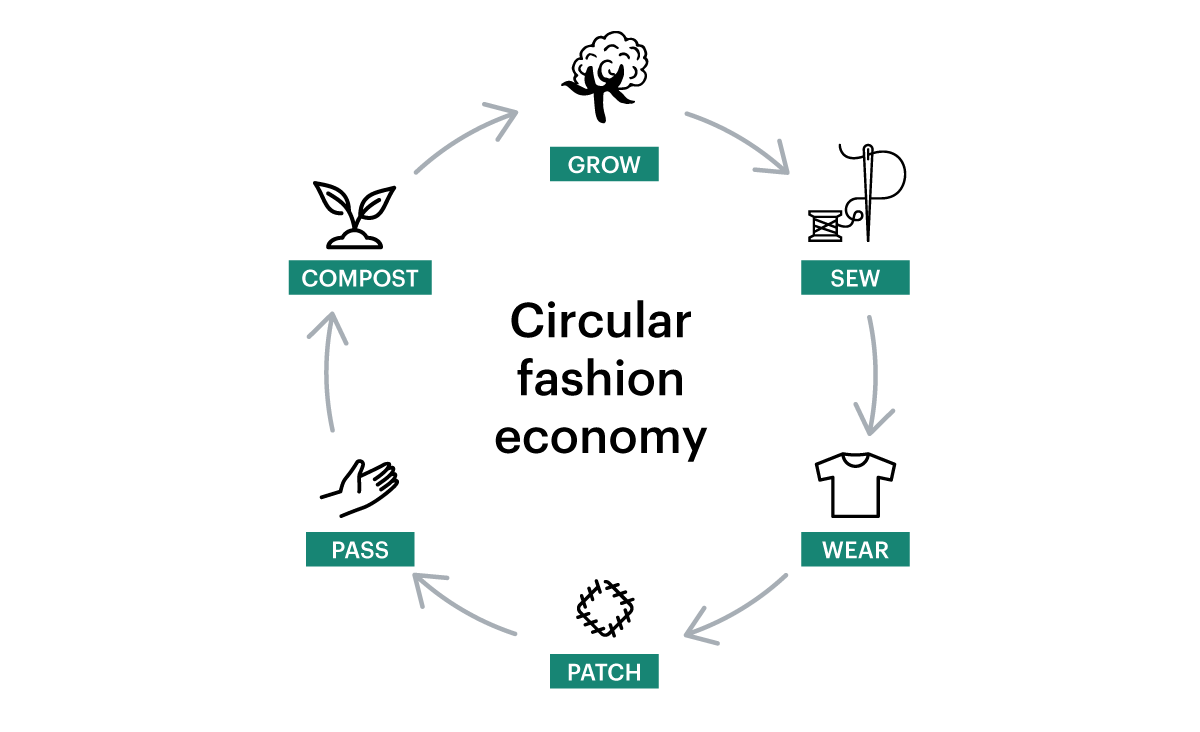
The EU-funded New Cotton Project has successfully concluded its three-and-a-half-year mission of exploring the possibilities of fibre-to-fibre recycling in the textile industry. Here's a breakdown of the project's concept, goals, progress, and potential impact:
Concept and initiative
The project aimed to establish a circular value chain for garment production. Discarded textiles were collected, sorted, and transformed into Infinna fibers, a regenerated cellulose material developed by Infinited Fiber Company. These fibers were then used to create new fabrics for clothing lines.
• Collection and sorting: Used clothing was collected and sorted.
• Regeneration: The sorted textiles were transformed into new, high-quality Infinna fibers using Infinited Fiber Company's technology.
• Manufacturing: The regenerated fibers were spun into yarns and woven into fabrics.
• Production and sales: Leading brands like Adidas and H&M used these fabrics to create garments like the adidas by Stella McCartney tracksuit and an H&M printed jacket and jeans.
Scalability and circularity impact
While the project utilized Infinited Fiber Company's technology, the learnings and established collaborations emphasize open knowledge sharing and new forms of partnership across the textile industry. This suggests a future where the core concept of fibre-to-fibre recycling can be adapted with advancements from various players.
Collaboration: Different industry players need to work together, with design incorporating end-of-life considerations from the start.
Infrastructure development: Improved systems for used textile collection, sorting, and pre-processing are crucial.
Data availability: Better data collection on textile waste quantities and types is essential for informed decision-making.
The project's success suggests Infinna-like regenerated fibers can significantly reduce the environmental impact compared to traditional materials like cotton and viscose. However, widespread adoption requires ongoing research across the entire textile value chain, particularly in sorting technology. The impact on overall circularity is difficult to quantify at this stage. However, the project has demonstrated the potential of regenerated fibers to significantly reduce the environmental footprint compared to traditional materials.
The consortium emphasizes the importance of clear and unified EU legislation to drive sustainable practices in the textile sector. Aligning Extended Producer Responsibility schemes with Ecodesign regulations will help companies prepare for a more circular future.
Looking ahead
The New Cotton Project serves as a stepping stone for a more circular textile industry. Key takeaways include:
• The importance of collaboration across the value chain.
• The need for innovation in sorting and recycling infrastructure.
• The significance of clear consumer communication regarding circularity.
• The potential of legislation to drive sustainable practices.
The project paves the way for commercially viable circular textile production. However, some aspects need addressing. Chemical recycling optimization, ensuring high chemical recovery rates is necessary to minimize the process' environmental footprint. Educating consumers about circularity in textiles is crucial for wider acceptance. Supportive policies like ‘Extended Producer Responsibility’ can incentivize sustainable practices.
While challenges remain, the project has shown that regenerated fibers like Infinna can be a game-changer for sustainable fashion. With continued research and development, this technology has the potential to revolutionize the way we produce and consume clothing.
US Polo Assn targets $3 billion sales in coming years
A brand associated with the United States Polo Association, US Polo Assn aims to reach $3 billion in sales besides expanding its storecount to over 1,500 in coming years.
The brand’s sales increased to $2.4 billion in 2023 as it continued to expand its operations across the world. It currently operates in around190 countries has over 1,100 retail stores besides numerous wholesale outlets including department stores, sporting goods channels and independent retailers alongwith an extensive e-commerce presence.
US Polo Assn currently focuses on both established markets like North America and Western Europe and emerging markets including Asia, Latin America, the Middle East, and India, The brand is recognised among the top five global licensed sports brands, alongside major entities like the NFL, MLB, and NBA.
US Polo Assn has also bolstered its digital presence, boasting 50 brand sites in 20 languages and engaging with 8 million followers on social media.
J Michael Prince, President & CEO of USPA Global, attributes the brand's achievements to the dedication of its global team and strategic partners. Despite challenges in the retail sector, US Polo Assn. surpassed its goal of reaching $2 billion in sales ahead of schedule.
US Polo Assn has also signed a landmark multi-year deal with ESPN to broadcast major polo championships globally. The brand also features in the lists of Forbes, Fortune, Modern Retail, and GQ as well as on Yahoo Finance and Bloomberg, among many other noteworthy media sources around the world.











