


FW
LVMH to strengthen partnership with Alibaba
To capitalise on the firm’s cloud and artificial intelligence capabilities and enhance its presence in China, French luxury group LVMH aims to strengthen its partnership with Alibaba. The partnership will help the group accelerate its omni-channel business growth and integrate both in-store and shopping experiences for customers, says Stephane Bianchi, Group Managing Director, LVMH.
The world's largest luxury group, LVMH initially partnered with the Chinese e-commerce giant Alibaba in 2019. The strengthened collaboration enables the group to attract Chinese consumers, amid challenges such as a property crisis and high youth unemployment affecting demand in the region.
Yarn & Jari Expo 2024: Surat's global showcase
Surat recently hosted the fourth edition of the Yarn & Jari Textile Expo 2024, a two-day event organized by the Secure Embroidery Thread & Jari Association (SETJA) on May 19 and 20. Over 100 exhibitors from various Indian states participated, showcasing a wide array of imitation jari and yarn products, underscoring the sector's innovation and craftsmanship.
The expo was inaugurated by Textile and Railway Minister Darshanaben Jardosh, who emphasized the imperative of positioning Indian jari in the global market. She pledged governmental support to address industry challenges and encouraged exploration of new applications for jari.
Renowned saint and corporate guide Gyanvatsal Swami graced the event's second day, advocating for unity in business, stating, "Unity is Prosperity." Other notable attendees included local dignitaries, industry leaders, and representatives from various trade associations.
The event attracted approximately 37,000 buyers, reflecting substantial interest in the showcased products. Special highlights included innovative offerings like Babboo yarn jari, crafted from bamboo by Mahendra Zadafiya, and the launch of Multi Jari by K-TEX Jari.
SETJA President Dipakbhai Kukadiya reiterated the association's dedication to business growth and global outreach, aiming to position Surat as a primary destination for high-quality jari and yarn products. The exhibition's success was attributed to sponsor support, including Pareshbhai Lathiya of Aaradhana Jari, Vikas Sharaf of Vplus, and Kapil Goyani of Shiv Hari Processors Pvt Ltd.
With an annual market size of approximately Rs. 1,500 crore, Surat's imitation jari industry showcased its current prowess and future potential at the Yarn & Jari Textile Expo-2024, signaling a resurgence in the city's historical prominence in the global jari market.
Denim Titans Conference to be held on June 05, 2024 in Milan
On June 05, 2024, the Denim Talk area at the Superstudio Più in Milan will organise the Denim Titans Conference. To be held as a part of the Denim Premiere Vision show, the conference will convene major figures including Adriano Goldschmied, François Girbaud, Marithé Bachellerie, and Jimmy Taverniti. These four denim industry icons will share their perspectives on creativity and discuss how each has contributed to the evolution of the sector.
This year, the Denim Premiere Vision will feature around 80 exhibitors including weavers, component and accessory manufacturers, garment manufacturers, fabric washers, and finishers.Indigo enthusiasts will discuss sector issues, explore trends for autumn-winter 2025-26, and preview new developments from the PV Fashion District.
A platform for addressing various denim-related topics, the Denim Première Vision will host the ‘Project Tomorrow’ initiative featuring students from Milan's fashion design institutions IED (Istituto Europeo di Design) and NABA (Nuova Accademia di Belle Arti). The two-day event will also host a series of conferences including a session focusing on the integration of innovation in the denim industry, and another exploring the use of generative artificial intelligence in the sector.
Gujarat CM inaugurates Fabexa 2024, boosting Ahmedabad's textile industry
Gujarat Chief Minister Bhupendra Patel inaugurated the Fabexa Fabric Sourcing Expo 2024 in Gandhinagar. The event aims to bolster Ahmedabad's status as a key manufacturer of cotton and natural fabrics for both national and international markets.
Sanjeev Chaturvedi, Vice President of Domestic Marketing at Reliance Industries Ltd's textiles division, highlighted Gujarat's strong foundation in the textile industry. He emphasized the need to increase the organized sector's share in India's textile industry, noting that while Bangladesh excels in garment manufacturing, India leads in fashion, offering substantial opportunities for Indian manufacturers globally.
Gaurang Bhagat, President of Maskati Cloth Market Mahajan, the organizer of Fabexa, stated that the ninth edition of the four-day expo features over 100 exhibitors and expects to attract 10,000 buyers nationwide. All national textile associations have been invited.
Naresh Sharma, Secretary of Maskati Mahajan, mentioned that Ahmedabad has solidified its position in shirtings, dress materials, and bedsheets. He anticipates that the expo will generate significant fabric orders for the upcoming festival season. The city's adoption of digital printing machines is expected to further boost local industry orders across the country.
BGMEA delegation seeks government aid to diversify in the RMG sector
Led by SM Mannan (Kochi), a delegation from the Bangladesh Garment Manufacturers and Exporters Association (BGMEA), met Foreign Minister Dr Hasan Mahmud at the ministry in Dhaka to seek his cooperation in product, market diversification for RMG sector.
The BGMEA delegation included Khandoker Rafiqul Islam, Senior Vice President; Arshad Jamal (Dipu), Abdullah Hil Rakib and Miran Ali, Vice Presidents; Md. Imranur Rahman, Mohammad Sohel Sadat, Shams Mahmud, Rajiv Chowdhury, Md. Mohiuddin Rubel, Barrister Shehrin Salam Oishee, Md. Nurul Islam, and Saifuddin Siddiquie Sagar, Directors. They discussed product diversification and strategies to enhance ready-made garment exports to new markets.
During the meeting, Mannan emphasised on the market significance and product diversification to reach the goal of achieving $100 billion from garment exports by 2030. Garment exports to new markets have increased from $847 million to $8,370 million with government policy support over the past 15 years, he noted.
BGMEA sought the cooperation of Bangladesh’s relevant embassies to organise roadshows, network with buyers, and participate in key fairs to increase exports to new markets, particularly to Brazil, Argentina, Russia, South Africa, Turkey, and ASEAN countries.
He also highlighted the importance of bilateral and regional free trade agreements with these potential markets.
During the meeting, Mannan also sought the Foreign Ministry’s support in addressing the potential impact of LDC graduation on the country’s export trade and continuing duty-free facilities in major export markets.
The Foreign Minister emphasised on the need to diversify into new products and explore new markets, especially in Africa, South America, and ASEAN countries.
He assured the delegation of the Foreign Ministry’s full cooperation in this regard, mentioning ongoing discussions with various countries to remove tariff barriers in these potential markets.
Africa’s cotton industry to grow to $7.7 billion by 2029: Report
From $6 billion in 2024, Africa's cotton industry is projected to grow to $7.7 billion by 2029, indicates a report by the global market analysis firm, Mordor Intelligence.
Along with other development institutions, the World Bank is aiding the production of key African cotton producers who produce 50 per cent of their cotton in wetter regions of the continent, including Benin, Burkina Faso, Côte d'Ivoire, and Mali.
However, production levels across certain regions such as Ghana have stagnated despite having favorable conditions for cotton cultivation. This contrasts with the rapid growth seen in other areas.
In 2021, Burkina Faso recorded the highest value of $460 million of cotton exports in the region. This provided a significant boost to the country's impoverished and sanction-affected economy.
Scoop brings fresh talent to London's fashion show
Scoop, a leading UK fashion and lifestyle trade show, is back at Olympia West, Kensington from July 14th to 16th. This season, founder Karen Radley promises an exciting lineup of new designers waiting to be discovered.
Sustainability is a focus, with newcomer Nanig offering timeless elegance reminiscent of 1940s and 50s Europe. Inspired by Parisian charm, Nanig merges vintage aesthetics with contemporary style for a unique look.
Seema, designed by Seema Kahai, showcases intricate embroidery and a passion for ethical fashion. Inspired by her Indian heritage and travels, Seema sources fabrics and craftsmanship from remote Indian villages.
Yavi utilizes ancient textile techniques with contemporary and classical art influences. Their flowy dresses and elegant coats are handcrafted by skilled artisans using luxurious fabrics like silk and velvet.
Jewelry brand Bocanegra offers a vibrant collection of bracelets, earrings, and necklaces featuring unique color combinations, sizes, and textures. Their signature element: hexagon silhouettes crafted with special glass beads.
Sans-Arcidet Paris, known for their raffia accessories, takes us on a journey from Paris to Madagascar. Founded by three sisters, their collections offer a blend of elegance, from simple totes to statement hats, all infused with their childhood memories.
Loie Istanbul, a family-run footwear company with 49 years of experience, creates luxurious shoes using top-grade leathers and a blend of handcrafting and technology.
Scoop founder Karen Radley emphasizes the show's commitment to finding new talent. This season's additions impress with unique collections, ensuring a thrilling experience for visitors.
A must-see on the international trade show circuit, Scoop will feature around 250 new and established designers offering a range of women's fashion, luxury homeware, beauty products, lifestyle goods, and menswear.
DTY takes center stage, a shift in the global nylon filament yarn market
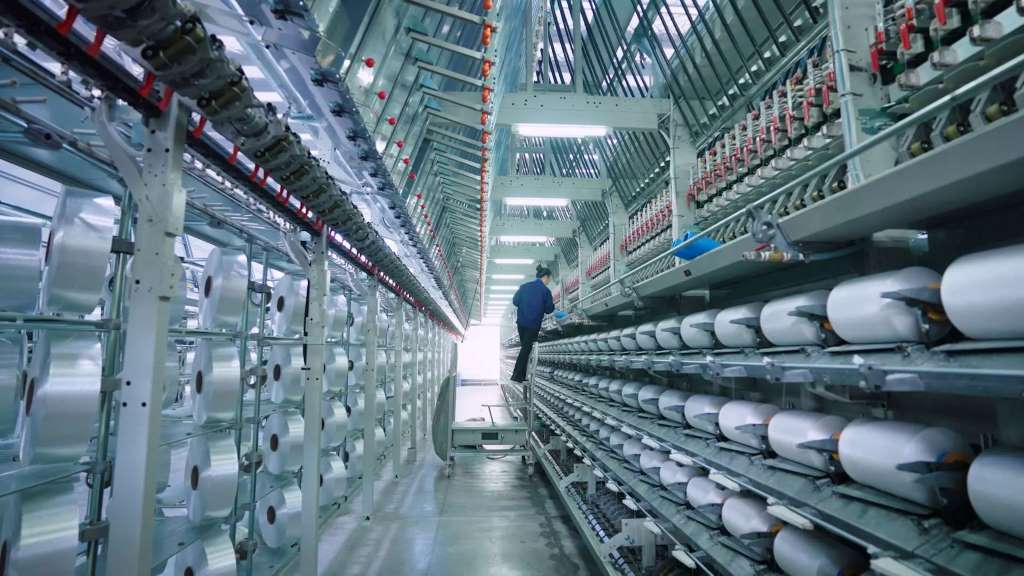
The traditional peak season of 2024 for the nylon filament yarn (NFY) market has brought a surprising twist. Unlike last year, where Fully Drawn Yarn (FDY) reigned supreme, Textured Yarn (DTY) has emerged as the hot commodity. This shift can be attributed to a combination of factors impacting global supply and demand.
Rising DTY demand
DTY's fortunes have been closely tied to price trends and consumption patterns. The pandemic's impact in 2022 led to significant overcapacity and a slump in demand, particularly for standard specifications. However, resurgence in travel and outdoor activities in 2023 spurred demand for sun protection products, a key application for DTY. This trend continued into 2024, with DTY finding wider usage in various sectors like leisurewear, underwear, and activewear (including popular styles like shark pants and Barbie pants). The shift in demand from FDY to DTY is a clear sign of changing consumer preferences, say experts. The focus on functionality and comfort in apparel is driving the growth of DTY applications.
Data from industry reports highlights this growth. DTY exports saw a significant jump of 23 per cent year-on-year in 2023, reaching 113,000 tons. The first quarter of 2024 maintained this momentum with a 13 per cent increase in exports. Notably, the demand for DTY specifications has expanded beyond the popular choices of 2021, indicating a broader market acceptance.
Supply chain lags behind
While DTY demand flourishes, the supply side presents a different picture. Unlike DTY, FDY experienced a surge in demand for sun protection products in 2023. This led filament factories to prioritize new capacity additions for FDY, alleviating the tight supply situation in 2024.
In contrast, DTY witnessed its last major capacity expansion in 2021-2022. While demand improved in 2023, it didn't match the fervor for FDY. This limited the incentive for significant new capacity additions for DTY in the following period. As a result, current DTY production is running at full capacity, struggling to keep pace with the rising demand. This supply-demand imbalance is expected to persist in the near future, with backlogs for high-end DTY products becoming a norm. As an expert points out current DTY equipment is already running at full capacity. This means that supply will be difficult to fully match demand in the short term.
Impact on the broader NFY market
The tight supply of DTY also affects upstream segments of the NFY market. The limited availability of mid-to-high-end Partially Oriented Yarn (POY) further complicates the situation. This has led to increased demand for low-end POY, keeping low-end filament factories busy throughout 2024. “The current supply-demand pattern for DTY will likely persist for some time, and backlogging of high-end products will continue to be the norm this year,” says a market analyst specializing in the NFY sector.
Furthermore, nylon filament factories in South China have shifted their production lines from HOY (Heat-Set Oriented Yarn) to POY, leading to a scarcity of HOY. This has pushed processing fees for HOY upwards, with some mid-to-low-end POY filament factories resorting to processing HOY to meet the demand.
The global NFY market is experiencing a shift with DTY taking center stage. While DTY demand flourishes, supply struggles to keep pace. This situation creates opportunities for manufacturers who can adapt and fulfill DTY orders despite the current limitations. The coming months will be crucial to see how the industry responds to this evolving landscape.
Indian Textiles: Weaving a path to $100 bn exports by 2030
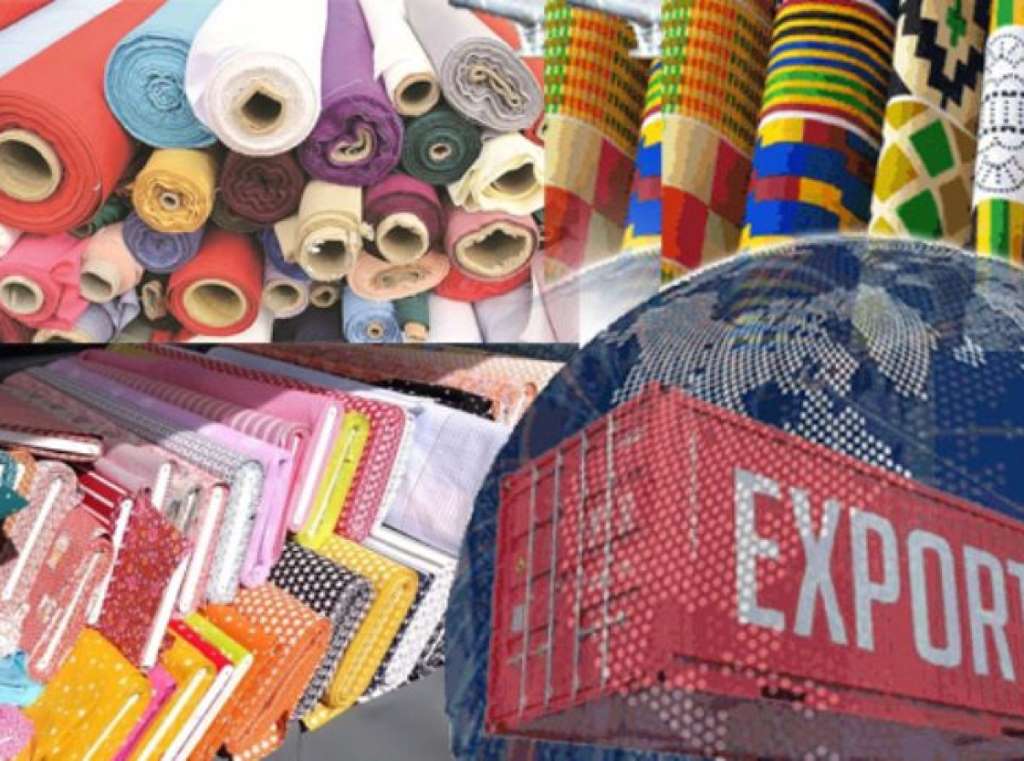
The Indian textile industry, a cornerstone of the nation's economy, has set its sights on an ambitious goal: achieving $100 billion in exports by 2030. This target marks a significant leap from the current figures. According to the Directorate General of Commercial Intelligence and Statistics (DGCIS), India's textile and apparel exports witnessed a decline in 2023-24, registering $34.4 billion compared to 35.5billion the previous year. In fact, textiles secretary, Rachna Shah, acknowledged the recent decline in exports but is confident as she opines, "The government will accord focused attention to promote India's textiles exports...We are confident about achieving the $100 billion target by 2030." Indeed the government is undeterred, outlining a roadmap packed with strategic plans and initiatives to navigate the challenges that lie ahead.
The roadmap to textile triumph
The minister for textiles, Piyush Goyal, is confident about achieving the target and the government has a strategic plan to achieve this.
Boosting manufacturing: The Production Linked Incentive (PLI) scheme, launched in 2021, offers financial incentives to attract investments in textile manufacturing, particularly in man-made fibers and technical textiles. This scheme aims to create a more robust domestic manufacturing base and reduce dependence on imports.
Focus on exports: The government is actively pursuing Free Trade Agreements (FTAs) with key markets like the European Union and the Gulf Cooperation Council (GCC) to secure better duty access for Indian textiles. This will make Indian exports more competitive in the global market.
Skilling & upgradation: Recognizing the need for a skilled workforce, the government is investing in skilling initiatives and modernization programs. The government is investing in skilling initiatives through programs like the Textile Sector Skill Council (TSC) this will enhance productivity and quality, allowing Indian textiles to compete with international players.
Brand India textiles: Initiatives like ‘Virasaat, a unique exhibition showcasing India's diverse handloom heritage, and ‘My Sari - My Pride’, a campaign promoting traditional saris, aim to strengthen the brand image of Indian textiles globally. India boasts a rich textile heritage with renowned regional specialties like Kanchipuram silks and Patola saris. Leveraging this heritage by promoting geographically-indicated (GI) tagged products and building a strong brand identity for Indian textiles can be a game-changer.
Challenges and counter-measures
The road to textile supremacy isn't without hurdles. Here are some key challenges and how the government plans to address them.
Competition: Competition from countries like Vietnam and Bangladesh, with lower labor costs, poses a significant challenge. Upgrading technology and focusing on value-added products can help India differentiate itself.
Infrastructure bottlenecks: Streamlining logistics and infrastructure is crucial for faster turnaround times and cost reduction. Initiatives like developing textile parks with improved infrastructure are underway.
Technological adaptation: Embracing technological advancements in areas like automation and artificial intelligence will be essential for efficiency and productivity gains.
Sustainability concerns: Growing environmental consciousness requires the industry to embrace sustainable practices throughout the textile value chain.
The Indian government's roadmap for textile exports is ambitious. While challenges abound, strategic initiatives, combined with industry efforts and innovation, can pave the way for achieving the $100 billion target. Whether India successfully threads its way to textile triumph remains to be seen, but the journey itself promises to be a fascinating one.
17th IATF leaves an indelible mark on the fashion industry
Setting new benchmarks, the 17th International Apparel and Textile Fair (IATF), held in Dubai, left an indelible mark on the fashion industry.
Commencing magnificently with an air of grandeur, the 17th IATF was attended by esteemed dignitaries such as Butti Saeed Al Ghandi and Mahir Julfar, Executive Vice-President, Dubai World Trade Centre.
Exceeding expectations, the 17th IATF attracted attendees not only from the Middle East but from around the globe. Over 400 participants from more than 24 countries attended the event this year with pavilions from Italy, Kyrgyzstan, China, Turkey, India, etc., setting a record for the number of exhibitors.
Showcasing extraordinary organisation and seamless execution, the 17th IATF served as a melting pot of diverse cultures and designs with representatives from around the world presenting their most innovative products. Every detail of the event from exhibitor arrangements to networking sessions was meticulously planned, ensuring a flawless experience for participants and visitors.
Reflecting on the fair’s remarkable journey, Bhavna, Show Director, highlighted that the 17th IATF is a testament to Dubai’s thriving fashion landscape.
Visitors to the event were treated to a captivating display of cutting-edge design, groundbreaking innovations, and the latest trends from both established and emerging brands. IATF Dubai proved to be a true launchpad for the future of fashion, offering a glimpse into the ever-evolving world of apparel and textiles.
Beyond the impressive product displays, IATF Dubai offered unparalleled networking opportunities. Dedicated events and matchmaking services enabled industry leaders, established businesses, and aspiring entrepreneurs to connect, forge strategic partnerships, and explore new avenues for growth.











