


FW
Nanotechnology used for sustainable cotton finishing
Ultra thin coating technology offers new opportunities for cotton finishing. Researchers at the University of Georgia are exploiting nanotechnology to develop sustainable dyeing and finishing techniques for cotton textiles. The research group has come up with nanocellulose gels that can be used to dye cotton and blends.
Nanocellulose gels obtained from bleached pulp are dyed to obtain nanocellulose-dye dispersions, which are then coated on to textiles. Spray coating and screen printing methods can be used to obtain the coloration using the gels. Pretreatments such as scouring and bleaching do not affect the dyeing efficiency. The ultrathin coating technology has been used to dye cotton using reactive and indigo dyes. The gel technology uses less water and the dye fixation is higher than the exhaust method.
If cost-effective sustainable processes can be made commercially viable, that can move the textile industry into the next phase. Ultra thin films can be coated on primary fine particles without significant aggregation by atomic layer deposition in a fluidized bed reactor. Precursor doses can be delivered to the bed of particles sequentially and, in most cases, can be utilized at nearly 100 per cent efficiency without precursor breakthrough and loss, with the assistance of an inline downstream mass spectrometer.
With a revival in manufacturing, jobs go a begging in the US
Manufacturers in the United States are experiencing some of the highest levels of growth seen in decades, yet the industry seems unable to keep up with the resulting rebound in job growth. Five out of 10 open manufacturing positions in US are staying unoccupied thanks to the skills gap.
Jobs requiring digital talent, supply chain talent, skilled production, or roles for operational managers will be three times as hard to fill in the next three years. Nearly two million vacant new jobs are expected by 2028, compounded by 2.69 million vacancies from retiring workers. So the number of open positions could be greater than ever.
The problem is threefold: a negative perception of manufacturing, a shift in desired skill sets owed to the intro of advanced technologies, and baby boomers retiring. Despite renewed interest in domestic manufacturing, and an uptick in some areas, the workforce crisis is casting a bleak pallor over the industry’s future.
Over the next three years, the inability to fill open positions is expected to have the greatest impact on manufacturing companies that are maintaining or increasing production levels to satisfy growing customer demand. Thanks to technological change, the industry overall is trending toward jobs—including entry-level jobs—that are high-skilled and require irreplaceable human skills, such as creativity, critical thinking, design and innovation.
AFAM and RCFS sign MoU to promote African Fashion
Canada-based African Fashion and arts Movement (AFAM) and Rwanda Cultural Fashion Show (RCFS) have signed an MoU to promote African fashion and arts, and create public awareness about the talent and quality designs in both Canada and Africa. The partnership will explore the areas of potential collaboration across different disciplines and projects including, collaborating by exchanging skills in event management, and technical support such as training for African models and fashion designers.
Both parties also agreed to support designers to participate in the African fashion and arts movement in Vancouver, Canada, and develop opportunities for African artists, including fashion designers, runway and photogenic models, photographers, cultural and traditional dancers, and tailors.
Futurum St. Petersburg holds 15 catwalk shows
The first Futurum St.Petersburg held 15 catwalk shows and open lectures including a Fashion Global Talk about state-of-the-art technologies and materials, approaches to the international markets, as well as protection of own designs and intellectual property rights. The event also comprised shows and presentations by modern St. Petersburg-based fashion designers took place during the bar camp National Technological Revolution 20.35.
The event was organised on November 8, 2018 at TochkaKipenia (Boiling Point) in St. Petersburg (LenpoligraphmasH’s Technopole). Futurum St.Petersburg opened with a show by Vilena Timoshenko, an emerging brand. The collection featured fur coats, chains, and vinyl were the major trends that appeared at the catwalk. Other brands that showcased that collections include Primora, Polina Ignatova, ZA_ZA, Amplituda, M_U_R, Olga Chernoschekova, Esenina, Math, Sniff, С7МЬ, Snezhana NYC, Theash
Textile trade shows in Japan to address sustainability issues
"Japan Fashion Week Organisation will organise two of Japan’s biggest textile shows; ‘JFW Japan Creation 2019’ (JFW-JC) and the ‘Premium Textile Japan 2019 A/W’ (PTJ) salon, concurrently from Nov. 21-22, 2018 at the Tokyo International Forum. Exhibitors at both these trade shows will address the growing global fashion trend toward ‘sustainability.’ Some of the major exhibitors at the shows will include: Hataoka Co will showcase Tactus a two-way stretch eco-friendly fabric comprising triacetate and a processed compound yarn that uses Japan-made polyurethane alongwith Tactus BIS to expand sales for athleisure applications."
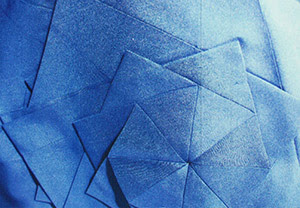 Japan Fashion Week Organisation will organise two of Japan’s biggest textile shows; ‘JFW Japan Creation 2019’ (JFW-JC) and the ‘Premium Textile Japan 2019 A/W’ (PTJ) salon, concurrently from Nov. 21-22, 2018 at the Tokyo International Forum. Exhibitors at both these trade shows will address the growing global fashion trend toward ‘sustainability.’ Some of the major exhibitors at the shows will include:
Hataoka Co./Asuwa Kogyosyo
Hataoka Co will showcase Tactus a two-way stretch eco-friendly fabric comprising triacetate and a processed compound yarn that uses Japan-made polyurethane alongwith Tactus BIS to expand sales for athleisure applications.
The range will also include Super Heritage; a compound textile combining triacetate and specific polyester. The company merges its previously reputed fabric and newly developed functional polyester fabric using the present thread axis. It will also introduce a fresh range of fabrics using recycled polyester yarns.
The company’s uses raw yarns made in Japan for manufacturing its products. Its twisting yarns and weaving are managed in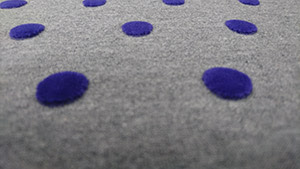 in-house factories, while dyeing and finishing are managed in two other cooperative factories. The company manages its factories through the adaptation of SDGs.
Koyaguchi Pile Fabric
Aono Pile Co., Ltd., a Koyaguchi Pile Fabric Group company will showcase Float Velour, an eco-fur as a 3D velour comprising pile and plain stitch for animal welfare and conservation and a fabric fusing fashion and high technicity
Nishino Leather Co., Ltd.
Nishino Leather Co., Ltd., representing the Tokyo Metropolitan Government, will showcase eco-leather products including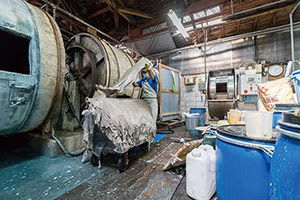 tanned pigskin, pig suede (in pure white) and pigskin nappa (unfinished leather).
The company recently acquired the ‘Japan Eco-Leather Standard’ certificate for its pigskin; enacted by the Japanese Association of Leather Technology (JALT) and the Tanners’ Council of Japan. This certification is awarded to companies that use factory-made genuine leather that handles wastewater and solid waste, and excludes substances harmful to health and the environment
Yoga pants conquer closets in the US, boosts fabric innovations
"The first pair of yoga pants for women were sold by Lululemon in 1998. A mix of nylon and Lycra, these pants were synthetic elastic fibers that provided the stretch and softness needed to manage all those sweat-inducing contortions during a lengthy session on the mat. Twenty years laters, yoga pants have conquered the closet of even those people who never see the inside of a yoga studio. This evolution began in 2014, when teenagers started wearing leggings instead of jeans. Today, yoga pants form a part of their daily officewear in the US. The popularity of yoga pants has, predictably, led to the evolution of new fabrics. Lululemon Athletica , largely credited with bringing stretchy pants to the masses."
 The first pair of yoga pants for women were sold by Lululemon in 1998. A mix of nylon and Lycra, these pants were synthetic elastic fibers that provided the stretch and softness needed to manage all those sweat-inducing contortions during a lengthy session on the mat. Twenty years laters, yoga pants have conquered the closet of even those people who never see the inside of a yoga studio.
This evolution began in 2014, when teenagers started wearing leggings instead of jeans. Today, yoga pants form a part of their daily officewear in the US. The popularity of yoga pants has, predictably, led to the evolution of new fabrics. Lululemon Athletica , largely credited with bringing stretchy pants to the masses, is developing new fabrics to fend off rivals — a pack that now includes the world’s biggest athletics companies.
Evolution of new fabrics
Lululemon’s original fabric, Luon, with a high proportion of nylon microfibre as opposed to a more typical polyester blend, was trademarked in the US in 2005. Many of its newer fabrics are branded and geared toward specific uses. Luxtreme is a moisture-wicking, four-way stretch fabric that’s meant to fit like a second skin. Nulux is a compression fabric meant for sweatier workouts. Silverescent is sold as Lululemon’s “stink-conquering technology,” using silver bonded to the surface of fibers to stop bacteria from reproducing. A T-shirt made from the material costs $68.
Leggings from market competitors use a similar strategy, promoting the versatile pants through branded fabric combinations. For Adidas, pants boast fabrics like its sweat-wicking Climalite material or the thermal-regulating Climacool and Climawarm to accommodate training conditions. Likewise, Nike’s Dri-Fit material keeps sweat at bay and trainers dry. Even Target’s C9-branded fitness collection flexes high-functioning fabrics: Freedom Fabric is a soft blend of polyester and spandex for lifestyle or fitness, while its Embrace Fabric hugs tight to the body for a cozy feel.
Tucked away in the basement of its Vancouver headquarters is a lab called Whitespace, the retailer’s research and development skunkworks. It made yoga pants with repurposed yarn combinations normally used in lingerie.
Brands invest in women’s wear lines
The biggest businesses now in the athletic wear space have invested heavily in growing their women’s wear lines — especially in developing new fabrics and features for the once-simple yoga pant. That same year, Adidas AG began directing its youth brand, Neo, toward younger women. The German sports giant even brought on former Lululemon Chief Executive Officer Christine Day as a strategic adviser.
Adidas quickly became a formidable threat to Lululemon’s dominance. Early steps turned into exclusive designs for women through the PureBoost X line, leading to an even larger emphasis on active tops and bottoms, using technology called Climachill and Techfit, both focused on women’s training. Last year, women’s sales for Adidas grew by 28 percent, making it one of the company’s strongest segments.
Active bottoms and leggings are now a $1 billion industry, according to NPD Group analyst Marshal Cohen. Their appeal to consumers has yielded rapid sales growth that shows no sign of going. Where Lululemon found success with women consumers by providing a niche product that could satisfy casual and active uses, major brands such as Adidas and Nike completed the picture, confirming just how strong the athleisure trend could be.
Intex, Sri Lanka’s apparel textile sourcing show attracts 200 suppliers
Intex is on in Sri Lanka, November 14, 15 and 16. This is the largest international textile sourcing show in South Asia. Over 200 suppliers from around 15 countries are participating.
This is a show for yarns, apparel fabrics, denim fabrics, clothing accessories and allied services. It connects the manufacturing and supply chain by bringing together the best manufacturers of apparel and accessories with buyers from South Asia and the rest of the world.
The event is beubg organized by Worldex India Exhibition and Promotion. Event partners include the Cotton Textiles Export Promotion Council, Retailers Association of India, Clothing Manufacturers Association of India, Confederation of Indian Textile Industry etc.
Understanding this, Intex strengthens intra-regional trade, helping manufacturers and buyers take advantage of opportunities developing in the South Asia region by combining their strengths and joining hands to create stronger business ties under one trading platform.
Intex’s seminars and interactive business forums deliver high quality market intelligence to support industry efforts to upgrade, move up the value chain, better understand intra-regional trade, leverage better FX practices and help manufacturers gain a competitive edge.
Events such as Intex South Asia go a long way in promoting the existing synergy between India and Sri Lanka.
Textiles recycling needs a relook
There are limitations to textile recycling. There is a need to anticipate the possibility of reusing materials from the initial design stage. Mechanical recycling of cotton is now a well-established process, but it degrades the fiber’s quality, so that new clothes can only incorporate 20 per cent of recycled fibers. The industry’s main challenge is that of blended fabrics, very widely used in fast fashion, which make recycling difficult since the various fabric components need to be separated.
Extensive investment is necessary, to develop recycling technologies enabling recycled materials to become as profitable as new ones. A new approach must be adopted right from the beginning of the process. Design choices could greatly reduce the environmental impact of clothes, and improve their circularity. Each garment is likely to generate between 20 per cent and 30 per cent of fabric offcuts.
For example, only 30 per cent of a pair of jeans can be recycled, due to the stitching and rivets. Single material fabrics would make recycling easier. Using sustainable materials right from the start of the process would also go in the same direction. Downstream marketing strategies engage end consumers, allowing them to co-design products that meet their tastes and expectations and increase their loyalty, and actually extend the life cycle of garments.
Kanopy to deploy Byproduct’s PLM solution
Kanopy Brands is implementing the Product Lifecycle Management (PLM) platform of BeProduct. The company will use platform for everything, from style creation to sourcing and follow up. The platform has allowed the brand to become faster, more agile and leaner in all operations.
In a short span of time, Kanopy has been able to fully exploit the potential of BeProduct, onboarding all close suppliers, and delivering significant efficiency savings throughout its collaborative design, development and sourcing practices.
Following the successful implementation, BeProduct and Kanopy maintain a close working relationship, with Kanopy influencing the development of BeProduct’s PLM solution, and the BeProduct team providing a support that will allow the retailer’s business to continue to grow in the future.
Craig A. Williams is the new president of Jordan
Craig A. Williams will be the president of Jordan Brand. He was earlier with Coca-Cola and McDonald’s. His experience driving global strategy and growth will help continue to build a premium brand that connects deeply with consumers.
Williams joined Coca-Cola in 2005 and was responsible for leading and growing the company’s business and strategic partnership with McDonald’s in more than 37,000 restaurants in more than 100 countries. Prior to that, Craig held positions of increasing responsibility within TMD, including senior vice president and chief operating officer, vice president US, assistant vice president of US marketing and group director of US marketing.
Larry Miller, current Jordan Brand president, will become chairman for the newly created Jordan Brand Advisory Board. Miller has served as president of Jordan Brand since 2012. He previously held the role from 1999 to 2006. In the interim, he served as president of the NBA’s Portland Trail Blazers. Prior to that, he served as VP, GM, of Nike Basketball.
As president of Jordan Brand, Miller helped build and expand the brand both domestically and around the world. His leadership has driven the Jordan Brand into new areas, including the Jordan women’s line of footwear, partnerships with college football teams, an increasing global presence with Jordan stores around the world.











