


FW
Vietnam refuses to take up environmentally hazardous projects
Llocal authorities in Vietnam have, lately, expressed strong concerns over some of the latest apparel and textile projects, especially those pertaining to dyeing. In fact, several areas and provinces in the country have vehemently refused to take up any project that has an investment of $100 million or more to avoid any kind of damage to the environment. Among the major cities that have rejected textile investments projects in recent times are Hanoi, Da Nang and Dong Nai.
Statistics show that over 90 per cent of foreign direct investment (FDI) in textile sector is today restricted to only apparel-only production projects (8.3 per cent of capital is used for textile and dyeing factories). With lack of adequate capacity and resources to handle dyeing projects, apparel-only projects are the ones that are getting green signal. If Provincial government continues refusing textile and dyeing projects, Vietnam will have to keep outsourcing dyeing projects for foreign partners, because it does not have fiber and fabric for export.
Kering ranked among top most sustainable companies
Corporate Knights has ranked Kering as the second most sustainable company across all industries in the world and the first in luxury and fashion. To achieve its leadership position, Kering was assessed against 21 key performance indicators covering resource management, employee management, financial management, clean revenue and supplier performance.
Kering, a luxury group and manages the development of a series of renowned houses in fashion, leather goods, jewelry and watches. Among these are Gucci, Saint Laurent, Bottega Veneta, Balenciaga, Alexander McQueen as well as Kering Eyewear. By placing creativity at the heart of its strategy, Kering enables its houses to set new limits in terms of their creative expression while crafting tomorrow's luxury in a sustainable and responsible way.
The Corporate Knights’ Global 100 rating index is considered one of the leading benchmarks for corporate sustainability world-wide and reflects the best performing businesses in relation to long term economic, environmental and social criteria. The index is a ranking of the world’s most sustainable corporations and is recognized as the joint best index in the world, for its relevance, insight, trustworthiness and convincing methodology. Rigorously analyzed against 21 key performance indicators, those corporations selected for inclusion represent the top two per cent in the world on sustainability performance.
Milano Unica fair to be held in Milan
Milano Unica (MU) 2020 S/S fair will be held at Rho Fieramilano, in Milan, Italy from Feb 5 to 7, 2019. The fair will feature the participation of The Japan Observatory. It will be co-organised by JFW and the Japan External Trade Organization (JETRO). The event will feature 31 companies/associations including nine new exhibitors.
“The Japan Observatory”, which made its debut at Milano Unica in September 2014, now marks the 10th anniversary of its participation. ‘Eco’ marks will be included on fabrics at the Japan Trend & Index booth to further promote Japan fabrics to visitors.
Future Fabrics Expo opens in London
The Sustainable Angle’s Future Fabrics Expo, will be held from January 24-25, 2019 in London. The two-day event will focus on circular fashion, a concept perhaps most succinctly summed up as “take, make, remake,” by Eva van der Brugge, innovation manager at global sustainable platform Fashion For Good. It will also focus on the issues of waste in fashion along with visionary solutions by presenting a selection of materials that leave a lower ecological impact. It will host seminar talks — one of which includes Lukas Fuchs, a research analyst at the aforementioned charitable foundation.
The expo, in the past eight years, has mushroomed from an up-and-coming gathering held at London College of Fashion in 2011, to a must-go industry showcase, taking place in a 22,000 sq. ft. space and featuring guests from global clothing brands like Stella McCartney.
Global knitwear market expanding at 5.3 per cent CAGR
China, Bangladesh, India, Pakistan, and other South Asian and East Asian countries are major exporters of knitwear products across the globe. Brands like Gap and Abercrombie and Fitch and major active wear brands such as Adidas and Nike continue to focus on research and development, design, logistics marketing and branding, and service to improve their position in the market.
These brands outsource their manufacturing to low-cost Asia Pacific countries such as China, Bangladesh, and India. Adidas manufactured only two per cent of its apparels in the US and only one per cent in Europe in 2017, outsourcing almost 97 per cent production to Asia Pacific. Similarly, Nike manufactures all its apparels through independent contract vendors.
India’s knitwear market is growing with a spike in in the number of organised knitwear retailers selling branded knitwear products. Demand for branded knitwear is also rising in the Middle East. With approximately 62 per cent of its population being young and middle-aged, the region imports knitwear products worth 3.5 billion dollars annually.
There is growing demand for cotton knitwear products in Brazil and other South American countries. Almost half of the knitwear imports by Brazil are from China.
New sustainable collection launched by Guatemalan designer
Guatemalan designer Juan Carlos Gordillo has launched Planet REhab, a new 15-piece women’s collection sustainably produced by Lenzing, Tejidos Royo, Officina+39 and Tonello. The collection will debut at Keyhouse at Bluezone in Munich Jan. 29-31, 2018.
The aim of this collection is to illustrate that fashion can be both responsible and beautiful given the right supply chain partnerships. The companies recognise that achieving their sustainability goal requires both working collaboratively and responsibly—seeking out more sustainable raw materials, implementing new technologies and employing processes that reduce resources and waste. The garments in this collection were designed around Tencel and Tencel x Refibra branded lyocell fabrics from Tejidos Royo. Made from renewable wood in a closed loop, energy and resource efficient manufacturing process, Tencel fibers and Tencel x Refibra fibers made with recycled cotton scraps provide the fabrics with softness, smoothness, tenacity and color intensity.
The fabrics were dyed using Officina+39’s Recycrom technology, pigment dyes that are made from recycled clothing and textile scraps that are crystalised into fine powder. Laundry specialist Tonello finished the garments with washing processes that significantly reduces the water and hazardous chemical consumption.
Coats sells crafts business to Spinrite
Coats has sold North America Crafts to Spinrite. North America Crafts is a business run by Coats. Approximately 560 North America Crafts employees will become part of Spinrite. Coats is an industrial thread manufacturer. Spinrite is a craft company and provider of craft knitting yarns in North America. Spinrite produces both branded and private label products and has a diversified presence across multiple channels with a focus on craft retailers.
The sale includes the well known Crafts brands Red Heart, Coats & Clark, Aunt Lydia and Susan Bates. Anchor, Dual Duty XP and J&P Coats will be licensed for varying terms.
Coats has had a crafts heritage in North America and a long association with crafters but decided to sell North America Crafts since the crafting market has evolved in the past decade and requires a higher degree of specialisation, scale, innovation and digital capabilities to succeed.
Coats expects with the sale of North America Crafts to focus complete attention on its high performing business-to-business global apparel and footwear, and performance materials segments. Coats will use proceeds from the sale to make further value accretive acquisitions in the strategic focus areas of high-tech performance materials and software solutions businesses.
Upcoming Munich Fabric Start to display over 1,000 fabrics
Munich Fabric Start will be held from January 29 to 31, 2019. More than 1,000 fabric, additional, denim and sportswear suppliers will exhibit their latest product and trend developments in 1,800 collections. They will be complemented by a growing number of service and sourcing providers as well as young brands and start-ups that present their philosophies and the ideology of forward-looking process solutions as well as solutions for resource-saving material sourcing and their areas of application.
Spring/summer ’20 indulges in a rich choice of fabrics, in innovative silhouettes, in philosophical wealth but also in tongue-in-cheek kitsch and – last not least – a new lightness at heart, which is never entirely uncritical.
Munich Fabric Start is a trade fair for sourcing materials and in-depth networking and, hence, for linking fashion with technology with a view to shaping the future. In terms of trend concepts for 2020 this future is characterised by emotionality, empathy and community.
The ReSource segment is Munich Fabric Start’s enhanced sourcing platform. Initiated and supported by experts the forum offers comprehensive sustainability solutions. Boasting over 500 articles ReSource showcases the latest developments in sustainable fabrics and findings as well as innovations in recycled, organic, natural and regenerated cellulosics, hybrids and bioplastics, leather and alternatives and denim.
Brand, retailers to combat overproduction with innovative strategies
"A report from retail software company ShareCloth reveals the problem of overproduction currently plagues with nearly 30 per cent of fashion goods produced going unsold. Additionally, over 50 per cent of fast fashion sold is thrown out less than a year later, with 12.8 million ton of clothing annually dumped into landfills. This chronic overproduction negatively impacts the environment, emitting 1.2 billion ton of greenhouse gases each year into the atmosphere. It also affects the fashion brands’ profits in the long run, making the industry lose out on $52 billion in revenue by 2030."
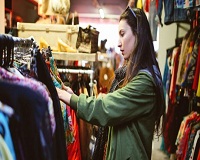 A report from retail software company ShareCloth reveals the problem of overproduction currently plagues with nearly 30 per cent of fashion goods produced going unsold. Additionally, over 50 per cent of fast fashion sold is thrown out less than a year later, with 12.8 million ton of clothing annually dumped into landfills.
This chronic overproduction negatively impacts the environment, emitting 1.2 billion ton of greenhouse gases each year into the atmosphere. It also affects the fashion brands’ profits in the long run, making the industry lose out on $52 billion in revenue by 2030.
Unpredictable fashion trends lead to overproduction
Overproduction results from longer times taken for designing and producing fashion collections as designers are often unable to predict current and future fashion trends. Additionally, brands often need to meet minimum orders that force them to produce more than they might actually need. The logistics of inventory management can lead to large overproduction. For brands that own their own factories, like footwear brand Rothy’s, this process is much easier.
Third party sellers, dead-stock, resale emerge viable options
For brands that do not have that option, there are still alternatives. For one, retailers like Blinq allow brands to sell their excess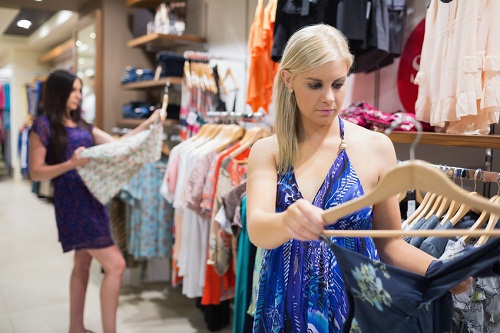 material to third parties who will handle selling it to consumers. Some brands make extensive use of dead-stock as a way to keep waste production low. This can give a new life to the products that would otherwise end up sitting in a landfill for hundreds of years, or emerging data technologies, which can help brands more accurately predict exactly what and how much they need to produce in order to meet demand without vastly overestimating what demand, can all help alleviate the problem of overproduction. Public School, for example, has also won an award from the CFDA for using dead-stock.
Designing to resell a product prevents some of the more dire environmental effects of overproduction. The RealReal’s partnership with Stella McCartney, which the two just renewed for 2019, was built explicitly to help keep McCartney’s clothes out of landfills and ensure that every piece got multiple uses in its lifetime. The brand also encourages others to embrace the circular economy model to reduce waste production. The emergence of streetwear and luxury drops that emphasise on producing less than what is in demand could also lead luxury brands to curb their overproduction problems.
Ultimately, in order to curb overproduction, brands need to make smart decisions. If they continue to adopt the same strategies, implemented over years, they are sure to lose out profits additionally also impacting the environment.
The next edition of YARNEX to be held in February 2020
More than 8,000 manufacturers related to garment and textile industry visited the 14th edition of the YARNEX exhibition, was held from January18-20, 2019 in Ludhiana. The exhibition brought together manufacturers and suppliers of Fibers, Yarns and related Services to showcase their merchandise to buyers from across the world.
The organiser, SS Textile Media announced the dates for the next exhibition in Ludhiana. The next edition of the event will take place from February 7 to 9, 2020 in Ludhiana.











