


FW
Australian brands turn against animal cruelty
Brands are moving away from using wool from mulesed sheep. By July 2023, 100 per cent of wool used by the retailer Target for clothing and bedding will be either from farms certified under the Responsible Wool Standard or equivalent standard, from farms fully traceable and verified as non-mulesed, or from recycled wool materials.
Most Australian Merinos are still mulesed. More than two billion animals end up in fashion supply chains every year. Many of them endure pain, fear and stress due to cruel mutilation practices and inadequate living conditions for the sake of clothing. Australian brands are starting to take steps toward prioritising animal welfare. Shoppers want kinder clothing and many brands are now listening. Only 55 per cent of Australians are aware of animal cruelty in the fashion industry. Of those that do know, 93 per cent are concerned about the animals used within at least one fashion category. Robust fashion policies are being aimed at reducing animal welfare risk and improving supply chain transparency. Brands want to be seen as opting to use only fabrics or textiles which do not allow for cruel animal practices or treatment while also striving for positive environmental and human welfare attributes.
Yarn Expo Spring 2020 to serve as a springboard for exhibitors and visitors
"The global textile trade in the past year has experienced recorded growth since 2012, and China was among the top three largest exporters and importers of textiles. As a result, suppliers are striving to meet robust demand with innovation and eco-friendly solutions. Yarn Expo Spring will present as an the ideal sourcing platform for the industry by attracting worldwide suppliers with the potential to explore new partnerships and markets in China and globally while offering buyers strong product diversity and updated market information"
 Yarn Expo Spring, to be held from March 11 to 13, 2020 at the National Exhibition and Convention Center in Shanghai, will serve as serves as a fast-developing springboard for exhibitors to attract Chinese and international buyers.
As per the World Trade Organisation, the global textile trade in the past year has experienced recorded growth since 2012, and China was among the top three largest exporters and importers of textiles. As a result, suppliers are striving to meet robust demand with innovation and eco-friendly solutions. Yarn Expo Spring will present as an the ideal sourcing platform for the industry by attracting worldwide suppliers with the potential to explore new partnerships and markets in China and globally while offering buyers strong product diversity and updated market information.
Multiplicity of the leading fair
Eco-friendly solutions and innovations across all product categories will continue to be a major trend at Yarn Expo Spring 2020, with highlighted domestic zones including natural cotton, quality wool, green linen, chemical fibre and specialty yarn. In particular, the Fancy and Specialty Yarn Zone will feature the Fancy Yarn Vision display area, which was first introduced at Yarn Expo Autumn 2019. Meanwhile, international pavilions and zones showcasing an increasing number of strong suppliers include India Pavilion and the Pakistan Zone.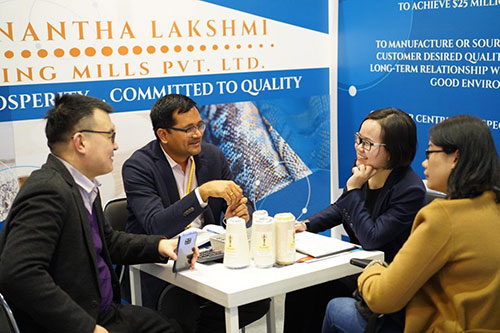
Ravindranathan Narayanasamy, Director of the Cotton Textiles Export Promotion Council (TEXPROCIL), organisers of India Pavilion describes the fair as a key place to do business face-to-face in China: “The visitors to Yarn Expo are very professional and match our exhibitors’ expectations. Some large Chinese importers visited our booths, and I’ve noticed this edition there are a lot of new importers who haven’t bought from India before.” He also acknowledges the increase and diversity in visitors: “In addition to the local market, we have seen a lot more overseas buyers, from Korea, Japan, the US, a lot from Europe and some from Russia. We’re really happy with our participation in the fair as this is a global meeting point. This is definitely the best fair in China, and one of the best in the world.”
Yarn Expo Spring and the other four concurrent fairs will bring the whole textile supply chain to one ground to enable their exhibitors and visitors to strengthen business contacts and discover new opportunities in the industry together.
Gap eyes profits with diversified sourcing, lean inventory, cost management
"One of the primary factors driving migration is the planned separation of Old Navy from Gap Inc. and its brands, which include Gap, Banana Republic and Athleta. The separation will enable each of these brands to maximise their focus, align their investments to meet unique business needs and to optimise cost structures to deliver profitable growth"
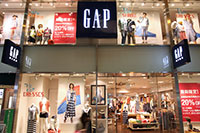 Even as it deals with problems like store traffic, sluggish retail and the complications of splitting off Old Navy into a separate company, Gap Inc plans to limit its exposure to sourcing from China. The company recently released its first quarter results that clearly stated the topic currently impacting the entire industry is US’ intent to impose more tariffs on clothing manufactured in China
Separation of Old Navy fuelling China exodus
To dodge the impact of these potential tariffs, Gap has been migrating its sourcing out of China for the last several years. Three years ago, the brand manufactured around 25 per cent of its products in China. However, now this has declined to 21 per cent. Of this, apparel manufacturing constitutes only 16 per cent which is significantly lower than the relevant portions of the industry.”
One of the primary factors driving migration is the planned separation of Old Navy from Gap Inc. and its brands, which include Gap, Banana Republic and Athleta. The separation will enable each of these brands to maximise their focus, align their investments to meet unique business needs and to optimise cost structures to deliver profitable growth. 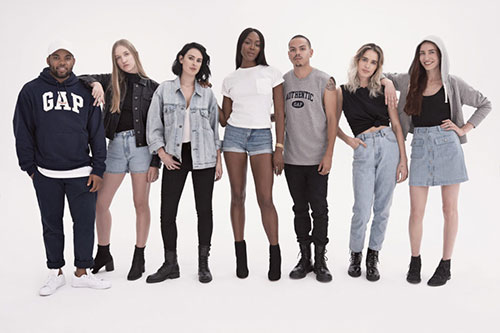
Brands adding new stores
During Q1 that ended on May 4, Old Navy recorded a flat traffic at its stores with its market share gains also being modest. The brand added six new stores during the quarter while it plans to open another 20 units in the second quarter. Besides offline operations, its e-commerce operations are also growing in double digits. The brand’s buy online pickup-in store program continues to help it to understand the intersection of offline and online shopping behavior for the Old Navy customer.
On the other hand, Gap Inc aims to regain its profitability through improvements in inventory, product assortment and cost structure. The brand closed eight stores primarily in North America in the first quarter, ending the period with 3,335 company-operated stores. It now expects to close about 230 specialty stores over the next two years.
One of North America’s fastest growing athletic brands, Athleta plans to add roughly 25 new stores in 2019 versus its historical average of 15 to 20 openings per year. Part of Athleta’s success is its brand identity and commitment to sustainability. The brand just celebrated its first year as B Corp by announcing progress against its sustainability goals, including 60 percent of materials now being made from sustainable fibers.
From product perspective, the design and merchandising teams of Gap Inc were able to significantly redesign the fall season, with even more ability to influence the holiday period. The brand focused on establishing its strength in denim, with improved quality fit and silhouettes. It now aims to focus on a better product assortment, leaner inventory and an effective cost structure.
Bangladesh sweater earnings up 15 per cent
Bangladesh’s earnings from exports of sweaters have grown 15.82 per cent over the last year. Sweater manufacturers have upgraded machinery and technology to go from manual to automated. Technological upgradation has contributed a lot to increase exports earnings. Installation of new technology has improved the quality of products as well as capacity. As a result, global buyers place more work orders, which has pushed export earnings up. Bangladesh has gained from the ongoing trade conflict between the United States of America and China. While wages in China went up, higher US tariffs, promoted buyers to shift their business to other countries, especially Bangladesh. The country offers quality products at a lucrative price, giving it an opportunity to grab a bigger share of the sweater market.
However, with rising export earnings, there has been no jump in profit margins because of the sharp rise in production costs. Buyers have become stingy in paying. The country is moving toward value addition and better productivity in order to remain competitive in global markets and sees a huge scope for expanding its export earnings as it has the production capacity to meet any rise in demand.
Indian leather exports to the US up seven per cent
India’s leather exports to the US grew about seven per cent in the last four months. The US-China trade war offers huge opportunities to Indian leather exporters to raise shipments to the United States.
India is making efforts to boost leather exports. Despite the global economic slowdown, production and employment in the leather sector have increased. Also, this is the only industry where exports of value-added products are almost five times more than the import of inputs/components/accessories and capital goods. The industry is undertaking a multi-pronged approach including product and market diversification, attracting investments, increasing capacities and also developing skills of workers so as to increase its global market share in the coming years. Currently, Europe accounts for about 70 per cent of leather exports from India. The sector employs about 42 lakh people and is labor intensive. The footwear sub-sector accounts for half of India’s leather exports. The leather garment sub-sector produces 16 million pieces a year and accounts for one-tenth of exports.
The entitlement rate for leather garment sector for duty-free imports of raw material may be increased from three to five per cent. The move would help in increasing the availability of raw materials at affordable rates.
Consumers turn away from fast fashion
Millennials and Gen Z are becoming aware of the massive ecological damage that fast fashion is having on the planet. It’s no secret that fast fashion has been responsible for a catastrophic level of environmental pollution. Overt use of raw materials, water pollution and greenhouse gas emissions are only part of the story. This circular buy, wear and toss behavior is impacting landfills and becoming a major carbon contributor. Fast fashion has also played a very dark role in contributing to black market trafficking of forced labor.
There is evidence the seemingly unstoppable growth of fast fashion giants H&M and Zara may be slowing, or at least changing. H&M plans to close 160 stores. The fashion giant was hit hard in mid-2018, after accumulating huge unsold inventory, forcing significant discounting to clear out the goods. The effect of this resulted in unexpected reductions in profits for the sixth straight quarter.
Contrary to the forces behind fast fashion, there is evidence of movement by consumers of all ages and demographics towards buying fewer but higher-quality basics that can be mixed, matched and re-worn, even with the addition of some great vintage accessories. Significant changes are underway—away from what’s trending and toward what’s stylish.
GSP benefits boosts Cambodia’s footwear, travel goods exports
Thanks to the tariff privileges received from the US under its Generalised System of Preferences (GSP), Cambodia's footwear and travel goods exports increased dramatically in the first nine months of this year. The items, which were previously taxed between 4.5 and 20 per cent, can now enter the US duty-free under the expanded program.
Approximately 5,000 products from 122 beneficiary developing countries and territories – including 43 least-developed countries – are eligible for duty-free export to the US. The US’ and the EU’s preferential trade schemes have been very beneficial to the Kingdom’s footwear and travel goods exports which reached some 4.723 billion units – worth $385 million – in the first nine months of this year, increasing by 88 per cent compared to the same period last year
The Kingdom remained among the top 10 footwear exporters, with exports valued at over $1 billion last year, a 19 per cent increase from 2017, data from the International Labour Organisation released in August revealed. It’s main export markets included EU (46 per cent), the US (17 per cent), Japan (12 per cent) and Canada (5 per cent)
Global clothing volumes fall with a cut back in consumption
The clothing industry is facing a long-term structural decline. Consumers are cutting back on the number of new outfits they buy. They were buying clothes in bigger quantities over the past 20 years as fast fashion retailers such as H&M and Zara and budget retailers including Primark and Walmart cut prices after shifting production to Asia.
But now, apparel markets in many developed countries may be entering a lengthy period of structural decline. Increasing consumer awareness about the negative impact of the clothing and textile industry on the environment is only one of the reasons volumes have started to decline. Consumers are buying so many pieces of clothing they are gaining little marginal utility or pleasure from buying more. Consumers would rather spend their money on going out for a meal than on buying a 60th item of clothing in a year.
If clothing volumes are plateauing in developed countries, the only way the apparel markets there can grow is if prices go up. But prices are falling. US clothing prices have fallen by 0.8 per cent a year since 2001, while UK prices fell for 13 consecutive years until 2010. And prices are expected to continue falling as production continues to shift from China to lower-cost countries in the region such as Vietnam and Bangladesh.
Investors in Bangladesh see dud stocks in apparel sector
Investors don’t get expected dividends from Bangladesh’s textile and garment companies. The share price of many companies is trading below their face value. Among the reasons are: high costs of production, over capacity, competition, an unfavorable exchange rate and lower prices from international buyers. Public shareholders account for over 60 per cent of the stakes in a company while sponsor shareholders have a less than 14 per cent share.
Many companies expanded their business seeing lucrative growth in the sector and their sales volume soared and so did their revenue. However, with higher costs to meet compliance after Rana Plaza, the price per unit dropped in the international market. Overall, the sector is suffering from lower profits. The cost of production of apparel items increased 30 per cent between 2014 and 2018. Further, the minimum wage of garment workers has increased 51 per cent since December last year. Between 2015-16 and 2018-19, the industry’s value addition has gone down 1.61 per cent though apparel exports have increased during the period.
At present, some 15 textile companies are ranked as junk stock due to their failure to provide dividends or hold an annual general meeting or shuttering of their factory.
Lack of credit bank hampers Tirupur’s garment units
Poor credit availability is posing serious problems for Tirupur garment manufacturers. One problem is that exports from Tirupur have been stagnant. Banks are becoming averse to risk. There has been a rise in non-performing assets (NPAs) in the country. Bank officials fear their decisions will be questioned if the loan turns into a non performing asset.
Tirupur has predominantly small and medium enterprises whose working capital requirements are huge. They are seeking an expansion in credit limits. Many apparel manufacturers feel the need for a concept change in NPA norms. Their opinion is that NPA in the present context is a wrong connotation under Basel norms, which is a banking supervision accord. They want India to take up the issue to either modify the Basel norms to suit the Indian industrial climate or shift small and medium units from Basel norms regulations.
The Index of Industrial Production contracted 4.3 per cent in September, the worst fall in eight years. The share of Tirupur knitwear exports in India’s total garment exports is 20 per cent. Exporters want a one-time long term initiative to be undertaken to uplift the skill proficiency of existing laborers in order to increase productivity at par with competing countries and at the same time reduce waste.











