


FW
Indian exporters hope to break into Japanese market
India wants to increase textile and garment exports to Japan. India’s apparel exports to the US and Europe are much higher than that to Japan. But Japan has high quality standards. They trust products tested in and certified in their labs. And to match up, India is setting up testing labs in the country in partnership with a Japanese company. The certified products will then be co-branded.
Japan is a sophisticated market, leaning towards small-lot and short cycle delivery of supply. Consumption is diversified and quality expectations are very high. High quality and expensive Indian garments are gaining popularity in Japan. Customers like selecting garments that have a different character when compared with dresses and kimono worn for occasions like weddings and parties.
Japan is the third biggest apparel importer in the world. India’s contribution among apparel exporting countries to Japan is meager. Earlier, business transactions between the two countries were negligible. Currently, trade activities between the two countries are experiencing a sweeping change. The robust growth of the Indian economy has attracted Japan’s attention. Indian firms are also focusing on developing partnerships with Japanese firms to gain access to their fabric and apparel markets. There is a profitable market for cotton apparel in Japan. India is a good manufacturing base for cotton, and cotton based knitwear, and has good chances for market penetration.
Gap sales down two per cent
Gap’s sales fell 2.2 per cent in the third quarter. The apparel retailer is focused on aggressively addressing the operational issues that are hindering the performance of its brands. Gap will not sell its Old Navy apparels in China from early 2020 and instead will focus on its North America market to boost sales. The retailer will separate its better-performing Old Navy brand, giving investors hopes that the standalone company will be able to show better results than the Gap brand. Gap’s shares have fallen 37 per cent this year.
The Old Navy brand has been spun off as a standalone company. Gap, Athleta, Banana Republic, Intermix and Hill City will continue to be operated together as part of one company, which will retain the Gap name. The company’s management structure will be slimmed down in order to speed up decision making as well as a refreshed senior compensation plan, based around performance and accountability. It is hoped that the split will allow Old Navy, a consistent bright spot at Gap, to focus on executing its growth-oriented strategic initiatives, while the other company resulting from the separation will be able to channel its resources into revitalizing struggling brands such as its flagship Gap label and Banana Republic.
EU looks to reduce textile waste
Consumption of clothing, footwear and household textiles in the European Union annually uses 1.3 tons of raw material and over 100 cubic meters of water per person.
Production and handling of clothing, footwear and household textiles that were sold in the EU in 2017 used an estimated 1.3 tons of primary raw material and 104 cubic meters of water per person. About 85 per cent of these materials and 92 per cent of the water were used in other regions of the world. The production of clothing, footwear and household textiles for Europeans caused an estimated 654 kg of carbon dioxide equivalent emissions per EU capita, making textiles the fifth largest source of carbon dioxide emissions linked to private consumption. About three quarters of these emissions took place outside the EU.
Current EU policies require member states to collect textiles separately by 2025 and ensure that waste collected separately is not incinerated or sent to landfills. Circular business models in textiles, such as leasing, sharing and take-back and resale, need to be scaled up with the support of policies addressing materials and design, production and distribution, use and reuse, collection and recycling. This can include policies such as sustainable production and product policies, eco design and durability standards, green public procurement, safe and sustainable materials, waste prevention and extended producer responsibility, and labeling and standards.
Bangladesh exports to new markets fall
Bangladesh’s garment exports to non-traditional markets fell 6.07 per cent during July to October 2019. Among these are: Chile, China, Japan, India, Australia, Brazil, Mexico, Turkey, South Africa and Russia. Presently, non-traditional markets contribute 15 per cent to Bangladesh’s export earnings. Traditional markets for Bangladesh are the US, Canada, and Europe. Breaking into new markets is something apparel makers dread because it takes a lot of effort and time and patience. However with cash incentives the country’s garment makers have started to explore new destinations and markets.
During July to October, Bangladesh’s apparel exports to China fell 18.80 per cent. However exports to India grew 12.40 per cent. One reason for this growth is that Bangladesh supplies to brands such as Zara and H&M which have established their business in India. Another reason is that the Indian domestic market has grown and the number of fashion conscious consumers has increased. In fact it’s a win-win for both countries as Bangladesh also imports raw materials for readymade garments such as cotton and machinery from India.
In general, Bangladesh’s apparel exports have suffered due to a sluggish EU economy, the trade tension between China and the US and devalued currencies in major competitor countries.
Uster launches new fabric inspection technology
Uster has launched the new the Uster EVS Fabriq Vision inspection technology that offers customised solutions to slot neatly into tightly-spaced production units at the same time ensuring light conditionsallow the best detection results and reliable data for optimal first quality yield.
The technology offers quality solutions suited to nonwovens premium segments. It is based on the know-how of EVS, a world-leading high-technology supplier of automated vision inspection, acquired by USTER in2018. The technology represents a second solution for nonwovens along with Uster Jossi fiber cleaning systems supporting the unique ‘ThinkQuality’ approach of USTER.
Uster® EVS Fabric Vision N stands for seamless integration of an inspection system into any production process and ideally into nonwovens manufacturing lines – detecting holes, irregularities, contamination and any other defect. The system may be slim and compact, but it delivers big-value benefits for the operator. The technology provides real-time alerts, showing all defects and automatically creatingroll inspection charts. All detected faults are collected in an album review. Here, the operator canquickly mark faults and select which can be deleted. Users can set their own quality standards fordifferent types of nonwovens, increasing the efficiency of the grading process and finally delightthe customers with consistent quality.
Automated in-process control consistently high rates of defect detection, to guarantee reliable quality, are required by fleece manufacturers. Uster EVS Fabriq Vision N ensures this, by using automated control during intermediate inspection. The technolgoy locates any visible faults objectively and consistently. Defects in every roll are located and recorded, at normal line running speeds.
“Uster EVS Fabriq Vision N offers manufacturers significantly improved first-quality yield for all applications,” quotes John Belew, Uster Vice-President for fabric inspection. The combination of a full map of fabric defects and the cut optimization module means more first-quality rolls can be produced and bad quality taken out.
Karl Mayer adds new dimensions to its fabrics
Karl Mayer added a new dimension to the third dimension of warp-knitted spacertextiles in the shape of new types of fabrics with a wide range of surface designs. These innovative articles are known as 4D-Knit. Their relief-like designs on both sides are rather unconventional, extravagant and diverse for warp-knitted fabrics, and are enabling the company’s customers to expand their business areas.
High/low effects make all the difference
Conventional warp-knitted spacer textiles are made from two cover faces with a pile layermade from monofilament yarns between them. The two sides of the fabric can be patterned –if the double-bar raschel machine used is equipped with a jacquard mechanism – and thedistance between them is constant and uniform. Differences in height can only be producedbetween one fabric and another. On the other hand, different fabric heights can be producedover the entire surface when producing 4D-Knit textiles, and the differences in height canbe used to create the patterns.
Three-dimensional patterns and openwork designs
The special look of 4D-KNIT textiles is based on 3D motifs, whose shape, height and locationcan all be varied. The relief-like, permanently stable elements can be combined to producecreative designs. Extensive processing trials carried out at Nippon Mayer show just what can be achieved here. The pattern developers and specialist technologists in Japan closelystudied the possibilities offered by the newly configured RDPJ 6/2 EL, and have developedmore than 50 patterns over the last two years. The designs include strict, geometricarrangements with high/low effects, as well as sweeping, three-dimensional wavy designs,bright fruit patterns and complex, imaginative designs having different height profiles.Openwork patterns can also be integrated seamlessly into the textiles. These are inespecially high demand as breathable zones in functional clothing and shoes. Contrasting, two-colour effects can also be produced by the types of yarn used. In addition to theseinteresting patterns, important elements, such as cut edges, can be integrated for further processing, and near-netshaped products can be produced.
Optimism before the sales launch
This innovative, double-bar raschel machine should go into production in the fourth quarter of 2019. Kay Hilbert, the Head of Product Portfolio Management at KARL MAYER, is optimistically looking forward to the sales launch. The newly configured RDPJ 6/2 EL and selected 4D-KNIT items were on show at the last ITMA in Barcelona, and were a highlight of KARL MAYER’s stand.
Well-thought-out machine technology
This new version of the RDPJ 6/2 EL is available in a gauge of E 24 and a working width of138". Its exceptional patterning possibilities are based on an intelligent technicalconfiguration and the well thought- out design of the knitting elements, combined with Karl Mayer’s tried-and-tested piezo jacquard technology. The machine also features themanufacturer’s new LED lighting concept. With its adjustable knock over comb bar distance,this machine is a good, all-round machine. With a distance of 1.5 to 2.5 mm, 4D-KNIT itemsand double-layered fabrics can be produced and, at a distance of between2.0 and 8.0 mm,conventional spacer textiles can be produced - and jacquard patterns can also be worked.This wide range of patterns minimises the investment risks.
Hong Kong designers increase global footprint blending innovation and design
"The February 2019 edition of New York Fashion invited three Hong Kong fashion designer labels, 112 Mountainyam, Anveglosa and Heaven Please+ to showcase their Fall/Winter 2019 collections. In addition, medium to high-priced fashion clothing bearing Hong Kong designer labels are being sold at renowned department stores and e-tailing platforms such as Bloomingdale's, Ferd.com, Net-A-Porter and Macy's. Hong Kong’s fashion designers have gained worldwide reputation for their professional expertise, sensitivity to current trends and ability to blend commercialism with innovation."
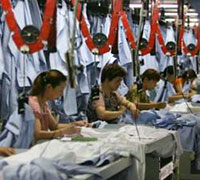 The February 2019 edition of New York Fashion invited three Hong Kong fashion designer labels, 112 Mountainyam, Anveglosa and Heaven Please+ to showcase their Fall/Winter 2019 collections. In addition, medium to high-priced fashion clothing bearing Hong Kong designer labels are being sold at renowned department stores and e-tailing platforms such as Bloomingdale's, Ferd.com, Net-A-Porter and Macy's. Hong Kong’s fashion designers have gained worldwide reputation for their professional expertise, sensitivity to current trends and ability to blend commercialism with innovation.
A global sourcing hub, Hong Kong attracts many international trading houses and retailers. Some retailers who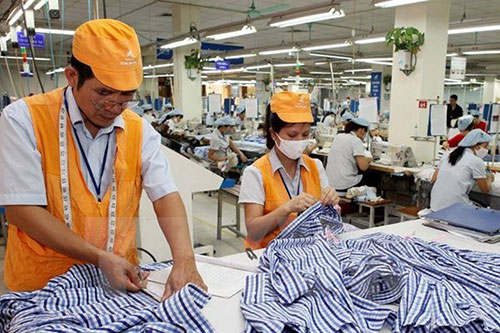 source from Hong Kong include: American and European department stores like Macy's, JCPenney, Federated, Karstadt Quelle, C&A, discount stores like Sears, Target and Carrefour, speciality chains including House of Holland, Temperley London, Willsoor, Zoot and e-tailers like Zalora.
A common meeting ground
One common avenues for Hong Kong buyers and suppliers to meet are the various trade fairs and exhibitions that manufacturers and traders involve themselves in. Some international shows, organised by the Hong Kong Trade Development Council (HKTDC), are held in Beijing, Budapest, Chengdu, Dalian, Dubai, Dusseldorf, Moscow, Mumbai, Paris, Tokyo, Warsaw, Istanbul and Jakarta. The Hong Kong Fashion Week organised twice a year is one of them. HKTDC also organises the ‘World Boutique, Hong Kong’ event which was renamed as CENTRESTAGE in 2016. It was also rescheduled from January to September.
Digital transformation, advanced production technologies such as digital and laser printing, 3D knitting, semi-automated sewing and robotics, are breeding new generations of smart factories. These technologies are helping apparel manufacturers and designers to not only identify consumer needs, but also draw inferences from data and make better and quicker response to the fast-changing demand and fashion trends. Garment retailers are also launching private or house labels for effective marketing of their clothes. Some retailers who own private labels include: H&M, Marks& Spencer, Orsay, Palmers, Pimkie, Springfield and Kookai. IKEA too has launched its first limited-edition private-label fashion accessory, the IKEA fisherman hat, which has achieved great success in the US.
New materials and modes of production
Sustainability is gaining ground with manufacturers launching new materials and innovative ways of production. The concept of circular economy is also becoming popular with suppliers committing to such ideas as end-of-life collection and closed-loop fashion products to enable the reuse and recycling of textile fibres and fabrics. They are also increasingly adopting traceability standards such as OE Blended, OE 100 standard and the Global Organic Textile Standard (GOTS).
Clothes made from easy-care fabrics are becoming popular in the Hong Kong with brands such as LXN Collections focusing on tailor-made quick-dry and stain-resistant business attire. People in the country are also embracing a healthier urban lifeystyle, leading to a rise in demand for athleisure. Many althleisure brands are expanding their product lines to include such as blouses and blazers.
Customers are expressing their creativity by making own fashion designs and clothes. This has led to reputable clothing stores like Nike, Adidas and Walmart selling personalised apparel. Smaller companies are also allowing their consumers to customise their clothes and accessories with their own designs created online.
Top retailers join viscose screening plan
High street retailers like New Look and Morrisons have signed up to a new sustainability roadmap to ensure they are sourcing sustainable viscose that doesn't contribute to environmental pollution. They have publicly committed to permanently ditch dirty viscose production methods by 2023-25.
Viscose is the third most commonly used fiber in the world and is considered more sustainable than synthetics and cotton. However, cases of viscose suppliers and producers disregarding environmental standards have led to calls for end-user retailers to act. Especially luxury brands and low-cost retailers are accused of failing to take action on supply chain standards. Often companies allow their manufacturers to deliver viscose-based products with little information on their origin or environmental impact. Several large Chinese viscose producers dump toxic wastewater into waterways and fisheries or allow it to seep into nearby agricultural land. China accounts for 63 per cent of global viscose production.
Sustainability is not just a buzzword but is leading to a fundamental shift in the way companies operate. With increasing awareness of the environmental and social impacts of the fashion industry, people expect clothing companies to take responsibility for their supply chains. So brands and retailers are opening their supply chains up to external scrutiny.
With demand growing for sustainability, prices of products to dip
The global market is increasingly being saturated with misleading messages about sustainability. It is becoming increasingly difficult to cut through the noise. It’s pressuring companies to create fabricated messaging. And it’s not just mills feeling the effects. Some customers are in a holding pattern and are opting to stick with what has historically worked than experiment with sustainable alternatives.
While many companies want to be sustainable, getting to that point is an investment. Different brands have different needs and price is most commonly the top priority, as many consumers want inexpensive clothing. There’s an altruistic part of the business that works on ideals but at the end of the day customers need products that fit in with their budgets. In order for sustainability to be more accessible, demand for alternative products needs to increase. And that responsibility falls on the shoulder of the customer. There needs to be a level of demand for sustainability. As more customers ask for a sustainable products, prices will go down. Though it’s a simple concept, it’s also a long game. It needs to start with denim leaders and famous brands who are able to place large orders. And then everyone needs to get on board.
Milan hosts sixth edition of CEO Roundtable
Milan recently hosted the sixth edition of the CEO Roundtable, a gathering organised by fashion and e-business trade magazines published by DFV, the publisher of Sportswear International. The main theme of the event was "Commerce Innovation" and explored different aspects of the present fashion market's evolution in terms of sustainability, digital business and multichannel expansion. It involved key players of the fashion, finance, e-commerce and digital worlds, while also presenting start-ups and up-and-coming talents.











