


FW
Pahwa Group: Ensuring comfort for garment workers since the last 30 years
 A well-entrenched global group known to offer “End-to-End Solutions in Air Treatment”. One of the fastest growing adsorption technology groups in the world today, the Pahwa Group focuses on energy smart and green technologies. Operating within a broad framework of 'environment and energy', the group offers advanced environmental control solutions to a wide array of companies. It plans to display some of these most advanced technologies at ACREX India 200- South Asia's largest exhibition on air conditioning, heating ventilation and intelligent building. At this exhibition, the group will display Arctic Coolers, Treated Fresh Air Units (TFA), Energy Recovery Wheels (HRWs), Energy Recovery Ventilators (ERV), Active Chilled Beams (ECB) and Evaporative Cooling Pads. Varun Pahwa, President, DRI-Pahwa Group, "With Desiccant at its core, in relation to air" elaborates Pahwa.
Present in India since the last 30 years, the Pahwa Group offers air treatment solutions and products. “Our products offer a comfortable ambience to garment workers who constantly toil in high temperatures. We offer an air draft close to the worker, which ensures constant supply of fresh air and reduces chances of transmitting infections. This creates a wholesome environment in the factory,” notes Pahwa.
According to him, since air-conditioning a factory may not be viable for the owner, he can opt for evaporative cooling. “This ensures deliverance of cool air through ducts at one-tenth cost of air-conditioning as the only inputs used are a water source and a motor,” he says.
The garment industry in India employs workers on contract basis. “Providing these workers with a clean environment will reduce attrition rates in the garment industry. It will also enable the factory owner to save time and money,” adds Pahwa
The Pahwa Group caters to all shopfloors. “Exporters can assure buyers of the congeniality of their products by using our services. Our services also help domestic manufacturers retain their contract laborers,” he affirms.
Pacific Textiles bounces back with nearly full capacity production
Pacific Textiles Limited, a big name in China knitting textile industry, announced a production bouncing back up to more than 80 percent of its capacity as of February 25, from its 40 percent production level on February 14. It restarted its operations on February 12, reflecting a gradual job return amid on-going tightened efforts to prevent and control the Coronavirus epidemic.
Pacific Textiles Ltd. is a leading manufacturer of customized knitted fabrics in textile industry with its headquarters based in Hong Kong and its production base in Panyu District of Guangzhou, capital city of Guangdong Province, South China, the city is the top GDP producer of China.
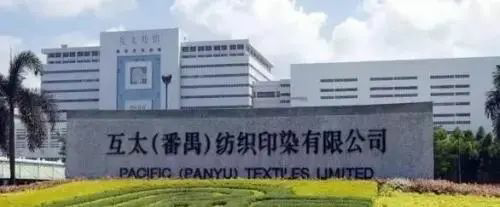
Even though government has called for resuming production wherever the conditions are improving in terms of the disease control, lot of efforts are still being done both inside and outside the factories to keep a safe and clean workplace as workers have to travel from various place back to work. The production is resuming, but still full flow would take time, which impacts the company’s performance temporarily. The three-week long pause in production prior to the restart of on-site operation for normal leave during Spring Festival and the shortfall in full-capacity running, together with other uncertain factors in this special period, will roughly cut off 400 -450 million Hong Kong dollars in business income on estimated basis as against the previous production schedule.
It is noticed that in many places, the initial returning rate of operators is somewhere at 20-40 percent, leaving more than half of the job position short of hands due to quarantine measures and traffic flow control. Even if the process of restarting the work has started and reaching up to 80 percent of installed capacities at few places, yet for full-fledged operations , there is still sometime, it seems, that too if the epidemic is fully in control.
Pacific Textiles Ltd. is has an integrated services of knitting, dyeing, printing and finishing with scalable water treatment facility and cogeneration power plant, with annual production capacity of approximately 87million kg and work force of 6500 in production area, covering its production and workforces in Vietnam, Bangladesh and Sri Lanka etc. The company has the full conviction that the plant in Panyu District in Guangzhou will run full throttle soon and its clients orders will be fulfilled, as the situation improves.
Contributed by Mr. ZHAO Hong
He is working for CHINA TEXTILE magazine as Editor-in-Chief in addition to being involved in a plethora of activities for the textile industry. He has worked for the Engineering Institute of Ministry of Textile Industry, and for China National Textile Council and continues to serve the industry in the capacity of Deputy Director of China Textile International Exchange Centre, V. President of China Knitting Industry Association, V. President of China Textile Magazine and its Editor-in-Chief for the English Version, Deputy Director of News Centre of China National Textile and Apparel Council (CNTAC), Deputy Director of International Trade Office, CNTAC, Deputy Director of China Textile Economic Research Centre. He was also elected once ACT Chair of Private Sector Consulting Committee of International Textile and Clothing Bureau (ITCB)
India could exploit the opportunity presented by Coronavirus
 The Coronavirus (COVID 19) outbreak in China is likely to affect Indian textile and apparel industry, in many positive ways. A recent press release by the Clothing Manufacturers Association of India (CMAI) reveals, the prevailing situation along with uncertainty over the commencement of production is posing a major issue for Indian manufacturers who are dependent on raw material supplies from China. However, it is also compelling global apparel brands to look at India as an alternate manufacturing destination.
On an average, India exports 20-25 million kg of cotton yarn a month to China. Prices of cotton yarns declined 3-4 per cent in domestic market as traders are anticipating a decline in demand from China on account of the prevailing situation. Any further prolonging of the virus will result in a decline in China’s imports of cotton yarn, impacting India’s exports. India will have to divert its surplus cotton yarn to the domestic market, further reducing the price of cotton yarn.
Diversification to increase lead times and costs
India imports synthetic yarns worth $460 million and $360 million worth synthetic fabrics from China annually. It also imports over $140 million worth accessories like buttons, zippers, hangers and needles. With the outbreak of this epidemic, textile factories in India have halted operations since the Chinese New Year. If this situation prevails, Indian garment manufacturers will have to look for alternate sourcing modes including local sourcing, which in turn may increase the cost of their finished goods by 3-5 per cent. Moreover, identifying vendors in such a short time can take a toll on lead times, quality and cost.
China imports large quantities of medical protective gears such as surgical masks and protective clothing from across the globe. This has raised sales of such products in other South East and Western nations to such an extent that its supply is not able to keep up with the demand.
Indian manufacturers fail to emerge as perfect alternative
On January 31, 2020, the Indian government banned exports of all personal protection equipment, including clothing and masks to avoid any shortage in India. However, it soon lifted this ban to help China battle the disease. The government also provided a major relief to Chinese synthetic yarn manufacturers by abolishing the 2.5 per cent of anti-dumping duty levied on Purified Tephthalic Acid (PTA) in order to strengthen the country’s synthetic textiles industry. However, as most of central China and Hubei is at a virtual standstill, importing PTA from China is not a viable option at the moment.
This situation can be advantageous for India as buyers who travel to China from Europe and USA to negotiate with garment exporters can be diverted to the country. One factor that plays in China’s favor is that a number of companies have already produced garment for the Spring/Summer season.
However, if the situation prevails for next couple of months and China fails to control the virus epidemic, buyers will be left with no option but to explore other sourcing destinations. In such a situation, Bangladesh and India stand more than Vietnam, Cambodia or any other South East Asian supplier. On its part, India scores on account of its robust supply chain. However, manufacturers neither have the scale nor the cost competitiveness to present themselves as credible alternate.
Global luxury and fashion brands brace up for tough quarter
 One of the biggest threats to the Chinese luxury industry since the 2008 financial crisis is the ongoing Coronavirus (COVID 19) outbreak that has prevented as many as 1,000 Chinese fashion buyers from attending Europe’s top fashion shows this month. Besides, the outbreak is also disrupting supply chains for more mid-market apparel, with retailers and fashion brands expressing concern about the ability of Chinese factories to deliver autumn-winter collections as planned. As Luca Solca, a luxury goods analyst at Bernstein, luxury sales in China during the first quarter of the current financial year could be heavily impacted with revenues falling by low to mid-teens digits.
Lack of Chinese buyers effect luxe brands
Many US-listed luxury companies also depend on China for their sales. For instance, Tapestry-a US-based modern luxury lifestyle brand has been increasing revenues in China by three times faster than the overall group. Chinese factories can churn out everything from coats to swimsuits for fashion brands from H&M and Next of the UK to higher-end designers such as Tory Burch.
However, due to the outbreak five Chinese designers have cancelled their fashion shows scheduled for the Paris Fashion Week next week. Chanel and Prada have also postponed separate events planned for May in China. As per an estimate by the National Chamber of Italian Fashion, Italian exports are likely to fall by a minimum of €100 million in the first quarter and €230 million if the crisis prolongs further for the first half of the year.
To attract Chinese buyers back to the market, Kering’s Gucci brand live streamed the catwalk show for Autumn/Winter women’s collection in Milan, using Weibo, one of China’s biggest social media platforms. Similarly, other luxury groups activated contingency plans that include closing stores and offices in China, scaling back product launches and advertising, and clamping down on staff expenses globally. Some have instituted hiring freezes.
Mid-market fashion brands in China are more exposed to the contingencies in supply chains than their luxury peers. Rising labor costs do not affect luxe players much as they easily diversify their manufacturing to other cheaper countries. However, China still remains a major source of fabrics for garment makers in places such as Bangladesh and Vietnam. These brands are likely to face delays in manufacturing and dispatch of their autumn winter collections. For instance, brand Next has about £20 million inventory at risk in China. This is leading to increased insecurity for both Chinese factory owners and its brands.
Volume of EU apparel imports falls
The European Union’s volume-wise apparel imports fell 1.42 per cent from January to November 2019. However, in the same period, the value of imports increased by 4.29 per cent.
Europe’s changing retail landscape is one reason for the dip in import volumes. As consumer preferences are changing, and they are looking for more personalised clothing, many companies are now producing garments within Europe, which further results in lower imports. The European Union as a whole remains a leading producer of both textile and apparel.
China’s apparel exports to the EU fell in both value and volume by 6.51 per cent and 0.20 per cent respectively in the 11 months. Bangladesh, the second top garment exporter to EU after China, managed to rake in growth marginally in volumes, while growth was significant in value terms. Vietnam, on the other hand, dipped by 5.84 per cent in its quantity-wise exports and got a boost of 10 per cent in values of apparel exports to the EU. India’s exports to the EU from January to November ’19 dipped 0.92 per cent in volume, while value surged marginally by 2.20 per cent.
Quantum Materials invests in manufacturing equipment
US-based Quantum Materials is investing in new manufacturing equipment to meet the increased demand for domestic production capabilities. Quantum, founded in 1985, is fully vertically integrated with expertise in mono- and multi-filament extrusion, texturing, twisting and weaving. The company is known for creating suspension fabrics for office seating, including one of the best-selling and most iconic office chairs in the world. In developing high performance mono-filament elastomeric yarns, now known as the original 5280 yarn technology, Quantum has built a reputation for innovation and quality among leading contract furniture manufacturers and other manufacturing industries.
The company is diversifying its business with customized state-of-the-art manufacturing equipment to support research, development and manufacturing for non-traditional and high-performance woven textile solutions. The company supplies a range of specialized, custom fabrics to companies with needs in an array of industries, including filtration fabrics, woven tire cord, tubular belting, transparent window screens and other confidential government associated projects.
Quantum has a vertically integrated structure to manufacture a wide range of high-performance yarns and fabrics offering advanced textile solutions to its diverse customer base. Its team has been working on proprietary, custom equipment designed to give it the flexibility to work in any textile-related industry needing specialized yarns and/or fabrics.
PVH appoints new global strategy manager for Calvin Klein
PVH has just appointed Kelly Chu as the new global strategy manager for Calvin Klein. The American group, owner of other brands such as Tommy Hilfiger, Arrow, Izod, Van Heusen, among others, is strengthening Calvin Klein’s force with this new naming.
Kelly Chu took over her position at Calvin Klein this February. Prior to joining the PVH family, the manager operated at Coach, the latter being one of the major brands of the American luxury fashion holding, Tapestry. Chu first joined Coach in February 2018 as senior analyst of global finance, a post she occupied for a year and seven months before being promoted as senior analyst for North America’s retail finance of Coach, a role she maintained for seven months up until her transfer to Calvin Klein.
The now manager, who obtained her bachelor’s degree in Economics, Minor in Entrepreneurship & Management at The Johns Hopkins University in Maryland also worked for J.P Morgan for almost two years as an investment banking analyst. The American company that has been focusing on strengthening its team, recently the group also appointed Tom Chu as regional president of Asia Pacific, who took office on February 1. The holding company is coursing a fluid path, after completing the payment of the acquisition of Tommy Hilfiger, Calvin Klein, and Warnaco at the end of last year. “We are looking to make another acquisition, we’re looking at a brand, or portfolio of brands, that we can layer on to our operating platform,” said Emanuel Chirico, chairman and chief executive officer of PVH.
The American group that counts over 38,000 associates operating in over 40 countries, recorded a revenue of 9.7 billion dollars in its last fiscal year. PVH’s latest financial report corresponds to its third quarter of 2019 in which the group registered a net income of 208.9 million dollars, down 13.9% year-on-year and reached sales of 2.4 billion dollars, up 2.38% than the previous year. Specifically, Calvin Klein’s revenue increased by 1%, to 969 million for the third quarter.
Primark to open two new stores in America
Irish brand Primark plans to open two new stores in the American market. These stores will opene at American Dream, New Jersey, Sawgrass Mills, Florida.
The low-cost company expects its sales to grow by 4.2 per cent ahead of last year in the first half. In the UK, the company expects a growth of 3.0 per cent in clothing, footwear, and accessories, which will be driven by new selling space and partially offset by a 1.3 per cent decline in like-for-like sales. Primark saw positive results in the UK market over November and December. However, this growth has come to fall in January and February in comparison to the prior year.
The market with the biggest forecasts is that of the Eurozone, it is expected to grow by 5.3 per cent ahead of last year at constant currency with particularly strong sales growth in France, Belgium, and Italy. The recently opened store in Milan exceeded expectations along with the store in Ljubljana that also kept a constant solid trade.
Mumbai to host Gartex Texprocess in March
Gartex Texprocess will be held in Mumbai from, March 19 to 21, 2020. This is a textile and garment machinery exhibition. The show will include: garment machinery that will provide insights into technological developments in the garment manufacturing sector. Innovative products and technologies, defining latest trends in the industry, will be showcased. The intent is to reach out to the leading textile hubs of South and West India.
Gartex Texprocess is a platform that has been instrumental in unifying various stakeholders within the garment and textile manufacturing supply chain. Now the show is being held for the first time in Mumbai. Exhibitors will present the latest innovations, machines, plants, processes and services to various stakeholders in the industry, including manufacturers and suppliers. The event is aimed at providing business opportunities to international and national suppliers as well as trade visitors through networking sessions with industry experts and engaging in investment opportunities.
Gartex unifies various stakeholders within the garment and textile manufacturing supply chain and provides stakeholders greater accessibility to their buyers in the western and southern regions. This edition will complement the existing New Delhi edition while also increasing the expanse of the show by reaching out to smaller-sized companies and start-ups in the region.
Latest Oerlikon Barmag promises superior speed
The new Oerlikon Barmag eAFK Evo promises superior speeds, greater productivity and consistently high product quality, along with lower energy consumption and simpler operation vis-à-vis comparable market solutions. In particular, the machine has two new value-added features, the optimized, innovative EvoHeater and the EvoCooler, a completely newly developed active cooling unit.
Using Oerlikon polycondensation and extrusion systems, the Indian manmade fiber companies manufacture polyester, nylon and polypropylene. Oerlikon offers the entire process chain, from the melt to the textured yarn or the fibers and including the necessary semi and fully automated logistics process, from a single source. Oerlikon is known for its brands Barmag, Neumag and Nonwoven.
The 24-end WINGS FDY PA makes the efficient production of FDY PA6 yarns a reality. The enclosed draw unit ensures low spin finish emissions, offering a safe working environment. Offering swift string-up, the optimized yarn path of the tried-and-tested WINGS FDY PET system is united with the high relaxing performance of conventional polyamide systems to create a completely new concept. The result is outstanding yarn properties, superlative dyeability, optimum process performance and high full package rate. Perfect package build guarantees excellent further processing properties in the downstream processes. With a 116-mm stroke, this winder makes high package weights possible, therefore delivering added-value yarns for further processing. As a consequence, yarn manufacturers can give themselves a competitive advantage in the marketplace.











