


FW
Spending on new techniques is worth it
Eco-friendly denim manufacturing techniques require upfront costs from the mills that employ them. Sustainability is linked to research and innovation. If the company doesn’t invest, there is no innovation and, as a consequence, there is no sustainability. Organic cotton fibers, nontoxic dyes and other sustainable components are all more expensive than their conventional counterparts. Even machinery upgrades that allow for water, energy and chemical efficiencies require constant investment. Mills may have to incur additional costs to have their processes and products audited and certified by third parties to verify claims.
There are three main areas of investment for eco-friendly denim production--dyeing, recycling fibers and finishing. Sustainability is one of the biggest expenditures for mills because it requires a lot of R&D, new technologies, innovations and education. The more sustainable innovation a fabric includes, the higher the price point is going to be. Because there is always room for improvement, there is no way any business can be 100 per cent sustainable. Mills must therefore stay nimble, both in terms of their strategies and plans for financing.
But because sustainability measures often improve efficiency, many, if not most, initial investments are eventually recouped through cost savings. These savings are in terms of energy, water and chemicals.
Philippines expects flat export earnings from garment and textile sector
Garment manufacturers in the Philippines expect their export earnings to be flat this year. Apparel production has almost halted due to delayed raw material deliveries from China, Korea, Taiwan and other Asian countries. The Philippines has to rely on imports of fabrics, textiles and accessories. Coronavirus (COVID-19) which originated in China has also affected several countries, including Korea, Taiwan and other Asian countries.
The Philippines has prepared a roadmap for the garment and textile industry. The plan covers the period 2020 to 2029. In the short term, the hope is to be among the top 20 garment exporters with an annual growth of 12.3 per cent in garment exports and a three per cent to five per cent increase in textile exports. This will be made possible with the increase in the utilization of natural and synthetic textile fibers by five per cent to ten per cent. In the medium term, the roadmap forecasts the Philippines to improve its world ranking in garment exports into the top 15 largest globally. It is expected to increase its garment exports by 21.7 per cent annually and natural and synthetic textile fiber exports by ten per cent. Infrastructure gaps and logistical bottlenecks will be addressed.
Itema appoints Ugo Ghilardi new CEO
Ugo Ghilardi is chief executive officer of Itema. He has been with leading companies in the mechanical and automation industries. He has an extraordinary mastery of operations activities and a customer-oriented attitude. Ghilardi is expected to dedicate his extensive global leadership experience and proven track record in the industry to consolidating Itema’s current position and conquering new market shares, as well as developing the Itema industrial capacity and prowess that has always played a role of primary importance for the company and its shareholders. He will focus on reinforcing Itema’s strong positions in many important markets for the future and on serving Itema’s customers to deliver long-term growth and value creation. With Ugo Ghilardi at the head, Itema hopes to face with renewed enthusiasm new challenges and targets.
Itema is part of Radici and manufactures advanced weaving solutions including weaving machines. Its mission is to deliver to customers not only advanced and innovative products but an all-inclusive assistance as an integral part of the process. Innovations presented by Itema, tailored and customized for denim production, attract great interest from denim mills, impressed by the considerable cost-saving, user-friendliness and unparalleled innovative content of the Itema looms. Itema has developed rapier, airjet and projectile weaving innovations exclusively for denim fabrics.
Latin America’s retail value up 38 per cent
The overall brand value of Latin American retail sector has risen 38 per cent. Investment in digital transformation was key. The most valuable retailers are driving customer engagement and business value with innovative business models, including omni-channel solutions, online and mobile platforms and digital payment systems.
Chile’s Falabella has developed an integrated digital retail platform to maximise its diverse portfolio and to leverage its omni-channel strategy. E-commerce company MercadoLibre has a presence in around 20 Latin American countries and has introduced new digital payment methods including QR codes and virtual wallets. Mexico's discount store Bodega Aurrera has aggressive expansion plans and opened new stores to help strengthen its distribution capabilities and physical presence in the region. Supermarket chain Magazine Luiza and fast fashion retailer Renner are from Brazil.
The Latin American region is one of the world’s leading producers of apparel and textiles. Mexico is the second largest exporter of blue jeans to the US; it is also the third largest exporter of knits and the fourth exporter in cotton pants. Worldwide, Mexico is the 13th largest exporter of textile products, and in the footwear sector, it ranks in the top ten. Latin America produces 15 per cent of all apparel purchased in the US.
Bestseller refutes forced labor allegations against Jack & Jones
Danish fashion giant Bestseller has responded to a report that implicated its brand Jack & Jones for the use of factories that are linked to forced labour. The brand refuted allegations of having any dealings with one company with which its name was linked and that another has well-established ethical and diversity practices.
A report from the Australian Strategic Policy Institute had said the brand and 82 other fashion labels were possibly profiting from forced labor, as Jack & Jones works with two Chinese suppliers, Youngor and Esquel.
But Jack & Jones and Bestseller do not have a cooperation with Youngor. However, [the label’ does have a strong and close cooperation with Esquel, which is one of the largest textile suppliers in the world and who are known for their focus on sustainability and strong business ethics.
Gap appoints India born Sonia Syngal new CEO
Sonia Syngal is the CEO of Gap. Syngal has earlier been with Sun Microsystems and Ford. She joined Gap in 2004. She went on to become CEO of Old Navy, Gap’s value chain, after leading the portfolio’s global supply chain and product-to-market model, and serving as managing director of Gap in Europe.
Gap is currently the largest specialty retailer in the United States, with 1,35,000 employees and 3,727 stores worldwide, including 2400 in the US. The company’s management structure will be slimmed down in order to speed up decision making as well as a refreshed senior compensation plan, based around performance and accountability. Gap owns brands like Old Navy, Banana Republic, Athleta, and Hill City. Syngal is expected to deliver value from the portfolio of brands over the long term.
India-born Syngal, moved to Canada and later to the US with her family when she was a child. She is the highest ranked Indian-American female CEO of a Fortune 500 company after Indra Nooyi stepped down as Pepsi head in 2018. Although the number of women heading Fortune 500 companies is now at a record high at 33, they constitute only around six per cent of female CEOs.
Coats revenue down two per cent
Coats’ revenue has fallen two per cent in fiscal 2019. However, operating profit jumped 30 per cent. Sales in Asia grew one per cent. Growth across key non-China markets (Indonesia and Vietnam) continued to benefit from incremental volumes moving out of China (a dynamic that was exacerbated by US-China trade war uncertainty in 2019). Americas and EMEA (Europe, Middle East and Africa) reported decline in sales by seven per cent and three per cent.
The industrial thread manufacturer enters 2020 as a lean and agile organisation, having delivered significant positive strategic change through 2019. This was a year of continued growth in profits and cash, despite a market backdrop which saw lower than normal growth in retail sales of apparel and footwear, and temporary softness in some of the industrial end-markets. In apparel and footwear, this meant taking a bigger market share by delivering high quality products with world class levels of speed, customer service and support. However growth was impacted by slower demand for zips and trims due to certain in-year fashion trends and conscious low margin product rationalization as well as the impact of tail market exits and other customer/product portfolio rationalisation actions.
Coats is well placed to take advantage of the fast-paced and rapidly changing modern world by capturing the many opportunities.
Australian wool in a rough spot
The wool market in Australia has been hit by a rash of unforeseen disturbances. Auction sales were cancelled due to a cyberattack on a software provider. Other factors include lower wool supply and low stocks of wool in the processing pipeline, slower economic conditions in key consuming markets and in recent weeks the onset of COVID-19. Since China is Australia’s biggest market for wool apparel products Coronavirus COVID-19) is expected to have some effects on the wool industry and the fashion industry in general. Despite the drought biting hard throughout 2019, many woolgrowers were clearly not willing to sell their wool at lower prices.
Meanwhile, the industry has continued its multi-season marketing push with mills and designers. Anlaby Station, Australia’s oldest merino wool sheep farm, created a six-piece travel collection using luxuriously soft 19 micron Australian merino wool. Pieces include a sweater, T-shirt, leisure pant, eye mask, travel poncho and a shawl that can double as a blanket on flights.
Naturally biodegradable and renewable, wool represents the natural choice to respect the planet while wearing a comfortable and luxury garment. Merino wool is the perfect natural and precious fiber to create a product that carries within itself the values of comfort and well-being, sustainability and excellence.
In line with global trends, Indian manufacturers warm up to manmade fabrics
"Though cotton continues to be in demand among apparel manufacturers, manmade fibers (MMF) like polyester are also finding favor with brands, retailers and consumers as they are light weight and available in multiple categories. Classified as organic and inorganic, man-made fibers are produced by combining polymers or small molecules of raw materials, mainly of petroleum-based chemicals. Organic MMFs are made either by transforming natural polymers or from synthetic polymers."
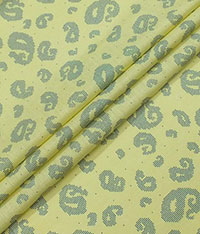 Though cotton continues to be in demand among apparel manufacturers, manmade fibers (MMF) like polyester are also finding favor with brands, retailers and consumers as they are light weight and available in multiple categories. Classified as organic and inorganic, man-made fibers are produced by combining polymers or small molecules of raw materials, mainly of petroleum-based chemicals. Organic MMFs are made either by transforming natural polymers or from synthetic polymers. On the other hand, inorganic fibers are produced by bi/multi-component fibers etc.
Polyester driving demand for MMF
A large part of the growth in MMF like polyester comes from China followed by India and Southeast Asia. China has a strong demand for polyester and accounts for 69 per cent of all polyester fiber production globally, and if India and Southeast Asia are added, these three regions represent 86 per cent of global production. In global apparel trade, share of polyester-based apparel has increased 9 percentage points (pp) since 2007.
However, India is still behind other countries in the production of manmade fibers as it still focuses on cotton.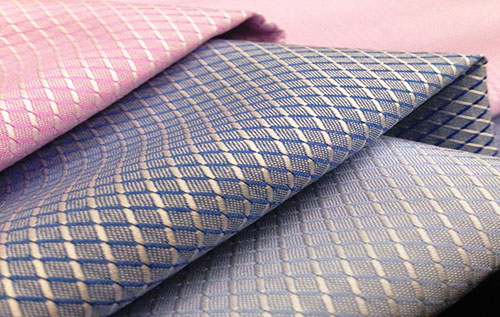 Its MMF textile and apparel exports and raw-materials are still much lower than China, Bangladesh, Vietnam, and Turkey statistically.
Tech innovations boost MMF demand
However, the MMF industry in India is quite progressive as it makes heavy investments in world-class manufacturing plants, continuous innovation, new product mix and strategic market expansion. Indian MMF fabrics are renowned across the world for their excellent workmanship, colors and durability. Innovations in technology with wider variety and faster turnaround has further boosted the MMF market as consumers are increasingly looking for product attributes in garments like wrinkle-free, breathable, water proofing fabric properties etc. The European regulations require flame retardant finish on kids garments and such norms are finding their way into India as well.
An organised sector, the manmade fiber industry is also the largest export earning segment for India. The country ranks sixth in exports of MMF textiles. However, the sector is troubled by dumping of imported MMF textiles from countries like Vietnam, China and Bangladesh. During April-July in 2019, the import of MMF textiles increased almost 26 per cent in value terms at $869 million compared to $711 million in the previous year.
Surat in India contributes 40 per cent to MMF demand
The country’s largest MMF hub, Surat produces around 3.5 crore meters of MMF annually, contributing 40 per cent of the country’s man-made fabric demand. Earlier this year, the Union government launched a support and outreach program to boost the MMF industry in India. It also revised the basic duty charges for MMF which not only relaxed the industry leaders but also resulted in a positive spike in sales for the winter season. The industry was happy as they finally could compete with the pricing offered by imported China or Bangladesh products.
Increased demand for MMFs from Ludhiana cluster
Though Ludhiana is one of the principal producers of woolen and acrylic knitwear, it also manufactures polyester based products. The city is also witnessing increased demand for nylon and functional yarns which can be used to make t-shirts, shirts, pullovers, cardigans, track suits, socks, jersey, sweat shirts, gloves, shawls, inner garments, etc. This year the market has reportedly been good with winter coming on right schedule. Lots of old stock has been cleared and some also are relaxed with the GST troubles.
Intertextile Shanghai Home Textiles-Autumn edition sees good registrations
"Exhibitor registration for the autumn edition of Intertextile Shanghai Home Textiles has been strong since December last year. Renowned global players such as D Décor Home Fabrics (India), G M Syntex (India), Naturtex (Hungary) and SIC Global Textiles (Poland) are amongst those who have already confirmed their participation. To be held from August 24-26 2020, the fair is the largest trade platform in China for international buyers to meet potential supply partners."
 Exhibitor registration for the autumn edition of Intertextile Shanghai Home Textiles has been strong since December last year. Renowned global players such as D Décor Home Fabrics (India), G M Syntex (India), Naturtex (Hungary) and SIC Global Textiles (Poland) are amongst those who have already confirmed their participation. To be held from August 24-26 2020, the fair is the largest trade platform in China for international buyers to meet potential supply partners.
“We are planning for all our trade fairs in the second half of the year to go ahead as scheduled following the disruptions from the COVID-19 virus to our events earlier in the year,” says Wendy Wen, Senior General Manager of Messe Frankfurt (HK) Ltd said. “Although the virus outbreak will no doubt have an effect on the Chinese economy, there were strong economic figures in the Chinese home textiles industry last year, so we expect the economy and this sector to rebound strongly once the virus is brought under control. We look forward to the upcoming autumn edition and our teams will leave no stone unturned to ensure a successful trade fair for domestic and international exhibitors and visitors alike.” She explained.
As the leading business platform for home and contract textile industry in the Asia Pacific region, participants can always find latest innovations and trends of the textile and interior design industry. This year, the fair continues to cover the entire spectrum of home and contract textile products including: Decorative Fabrics (Upholstery & Curtains); Bedding, Bath, Kitchen & Table; Carpets & Rugs; Sun-Protection; Wall coverings; Textile Editors; Whole Home Products; Digital Print & Technics; Fibres, Yarns & Chemicals; Textile Designs.
Intertextile has tied up with renowned international forecasting agency France-based NellyRodi once more to present the latest international home furnishing trends. A trend committee led by NellyRodi comprising top forecasters including Carlotta Montaldo, Juliette Lamarca, Shen Lei and Studio NOCC will be for determining major design trends which will be demonstrated in the three-day fair through a series of events and displays.
Intertextile Shanghai Home Textiles-Autumn edition is organised by Messe Frankfurt (HK); the Sub-Council of Textile Industry, CCPIT; and the China Home Textile Association (CHTA).











