


FW
CMC to introduce virtual event series at LA Fashion Market
Los Angeles–based California Market Center (CMC) will introduce virtual-event series CMC Uploaded for its August edition of LA Fashion Market. The virtual show will run August 3–5 on Zoom. Matthew Mathiasen, Manager-Buyer and Community Relations, CMC will host live chat sessions featuring showrooms, salespeople and brand representatives. The package also will include features on the CMC’s social media, blogs and e-blasts.
CMC Uploaded’s participation package offers a one-hour time slot where sales representatives will be able to talk about a product they represent. The program is open to CMC showrooms in addition to businesses that are not located in the building but would like to participate.
The CMC plans to be open for the upcoming LA Fashion Market, scheduled to run August 02–05. Event organizers noted that individual showrooms would be open at their discretion.
A mix of new, established brands to help retailers adapt post-pandemic world
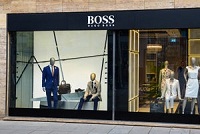 The shifting of wholesale brands to direct-to-consumer channels during the COVID-19 pandemic has opened up space for smaller independent labels in large department stores and multi-brand boutiques. A department store group adapting to this change is French retailer Galeries Lafayette, which counts mass-market brands like Sandro, Maje, Claudie Pierlot and Comptoir des Cotonniers among its list of longstanding partners. They now plan to replace these three to four smaller, digital brands to target specific customers at specific stores. The retailer plans to grow the share of smaller labels at its Galeries Lafayette stores from 30 to 40 per cent over the next few years.
Galeries Lafayette isn’t the only retailer opening doors to a wider cohort of new fashion talent. UK-based retailer Selfridges too has been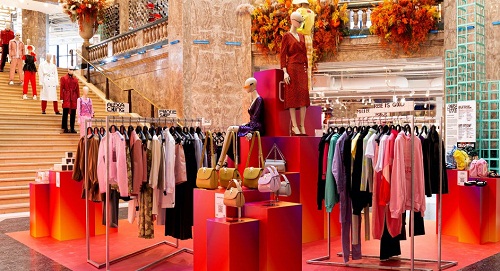 bringing in platforms like Fashion East and independent designers such as Rejina Pyo and Charlotte Knowles. The retailer has also launched pop-up stores to feature curations by Instagram, Highsnobiety and artist Daniel Arsham.
An opportunity for brand experimentation
According to Ida Petersson, Buying Director, Browns, it is difficult to predict how this shift will ultimately affect retailers. One of the disadvantages for retailers is that it makes their merchandise niche. However, Petersson believes it is important to support new and emerging brands.
Giacomo Piazza, Founder of Milan-based multi-brand showroom 247, believes reconfiguration will continue as the pressure to connect directly with consumers weighs on established labels. This gives retailers more opportunities to fill the gap left by bigger brands. This approach has enabled Selfridges to defy the industry-wide decline by adopting a youth-centric strategy and stocking labels of new and upcoming designers. Similarly, it has helped Galeries Lafayette to attract a new clientele. Working with independent designers has also made the group’s business model more flexible besides allowing it to test newer brands to roll out across its wider store network.
Be experiential
Though this trend of box retailers adapting their offerings to that of independent designers is welcome, it is replete with several challenges. The foremost amongst them is fear and apprehension about the unknown amongst shoppers. Though shoppers expect retailers to introduce them to new brands, they still look for their tried and tested names which boost financial capabilities, says Steve Dennis, Founder and President, SageBerry Consulting.
Hence, retailers need to find a mid-way by stocking both established and new brands, says Dennis. He recommends stores to adopt an aggressively experimental mindset to test out new business models and brand curations but refrain from shifting their offerings completely. On their part, younger designers should work on improving their operational efficiencies, building sustainable production relationships and negotiating workable deposits.
COVID-19 hits cost cutting plans of Arvind Ltd
The ongoing Corona pandemic has hit the Rs 440 crore cost cutting plan of textile firm, Arvind Ltd, as the company expects a sharp fall in the demand for its products and sagging sales in the first quarter of the current fiscal, say bankers. Both Lalbhai group companies, Arvind and Arvind Fashions however, are taking several steps including asset sale to cut costs and reduce debt in the current financial year.
The Ahmedabad-based Arvind Ltd had promised banks that it would reduce its fixed costs by around Rs 440 crore during FY21 by reducing salaries, cutting its IT budget, foreign travel and advertisements, and by selling its loss-making units.
Apart from cutting its capital expenditure, the Lalbhai group firm has also decided to take the debt moratorium on its outstanding loans and working capital limits. Bankers iexpect the company to go ahead with more asset sales to cut debt by Rs 400 crore in the coming months from it total debt of Rs 2,500 crore as on March this year. Its debt was Rs 2,950 crore as on March 2019. In the current year, the company plans to develop its land parcels near Ahmedabad and sell villas to customers. But with a slowdown expected in the real estate sector, the demand from customers may not pick up, bankers fear.
Separately, another Lalbhai group firm, Arvind Fashions sold 27 per cent stake in its subsidiary, Arvind Youth Brands, for Rs 260 crore to Flipkart. Arvind Youth Brands retails well-known denim brand, Flying Machine on the online retail platform. The firm is also raising Rs 400 crore via a rights issue this week.
2020 Circular Fashion Pledge pushes for industry-wide change
The 2020 Circular Fashion Pledge, an initiative launched by sustainability consultant Adam Siegel on April 23 this year during Fashion Revolution Week is pushing for industry-wide commitment to circularity.
Around 117 small and medium-sized enterprises (SMEs) have signed the pledge, recognising fashion’s significant contribution to climate change and environmental pollution and committing to take action to substantially reduce waste generation to achieve UN Sustainable Development Goal target 12.5 by 2030.
Of these, 62 per cent are launching take-back/resale initiatives, 60 per cent will increase recycled content, and 50 per cent will focus on designing for durability. Nearly half of the cohort have committed to two circular actions.
But the Pledge isn’t just for fashion businesses, the service industry and individual customers can also pledge to help drive a circular economy by offering support services and shopping from fashion brands committed to circularity.
Myanmar’s garment factories struggle on lack of orders: MGMA
Myanmar’s CMP (cut, make and pack) garment factories are struggling due to the lack of orders from the European Union, says Myanmar Garment Manufacturers’Association (MGMA).
In January, the majority of clothing factories were forced to stop running overtime due to dwindling stocks. Around 90 percent of supplies came from China, which were blocked because of coronavirus, and the rest came from Indonesia, Vietnam, Thailand and South Korea.
Many factories have reduced working hours and cut jobs, while some have permanently or temporarily shut down. Some factories have not received orders or even price enquiries since March.
Many clothing shops across Europe have closed and the demand from Japan has declined by almost half, he said. Without new orders, many factories will be forced to reduce their workforce and working hours, and close either temporarily or permanently.
International closures have removed 50 percent of market demand for Myanmar’s clothing, handbags and footwear, according to the MGMA. Garment exports are mainly shipped to the EU, Japan and South Korea and the country earned over $4.5 billion (6.2 trillion kyats) from the sector from Oct 1 to July, according to the Commerce Ministry.
Export revenues are down $65 million (90 billion kyats) compared to the same period a year earlier, mainly due to COVID-19.
US Cotton launches new system for responsibly grown cotton
Brands and retailers can join the US Cotton Trust Protocol, a new system for responsibly grown cotton that will provide annual data for six areas of sustainability in line with the U.N. Sustainability Goals.
This year-over-year data, available for the first time, will allow brands and retailers to better measure progress towards meeting sustainability commitments.
The Trust Protocol verifies sustainability progress through sophisticated data collection and independent third-party verification. By working with Field to Market: The Alliance for Sustainable Agriculture and Control Union Certifications North America, the Trust Protocol enables brands and retailers to better track the cotton entering their supply chain. Brands who become members of the Trust Protocol will have access to aggregate year-over-year data on water use, greenhouse gas emissions, energy use, soil carbon and land use efficiency.
The Trust Protocol complements existing sustainability programs and is designed to fit the unique cotton mass-growing environment of the United States. Last month, the Trust Protocol was added to Textile Exchange’s list of 36 preferred fibers and materials that more than 170 participating brands and retailers can select from as part of Textile Exchange’s Material Change Index program.
PETA’s expose leads to Uniqlo’s ban on alpaca wool
PETA’s highlighting of gross misconduct at the world’s largest privately-owned alpaca farm in Peru, has led Japanese fashion titan Uniqlo to ban the use of alpaca wool from its collections. Undercover work by animal rights group PETA showed how workers at the Mallkini site slammed alpacas onto tables and tied them to stretching devices as their legs were all but torn from their sockets.
PETA continues to work relentlessly within the fashion and textile industries, enforcing its will in a bid to banish animal-based product from apparel and accessories. The organisation has minimal shares in leading brands including Ralph Lauren, Burberry, Urban Outfitters and Guess, and does so with the sole purpose of gaining a seat at annual meetings. The campaign group spotlights on the fashion’s need to clamp down on animal mistreatment within their supply chains, as culpable sites only exist due to the continued backing and custom of brands.
Jordan textiles and apparel syndicate urges for defense laws to minimize financial burdens
Munir Deyyeh, President, Jordan’s Textile and Readymade Clothes Syndicate urged the government to issue defense laws to minimize the financial burdens on the industry. The syndicate also urged the government to waive three months rent that each merchant had to pay to their landlords. It also sought a reduction in sales tax from 16 to 8 per cent to encourage people to buy clothes ahead of the upcoming Eid Al Adha holiday.
In April, the government announced its decision to reopen garment and footwear shops with the condition of sales through delivery only, but after complaints from the sector, direct sales were allowed with conditions such as sterilizing stores, requiring shoppers and workers to wear masks and gloves and prohibiting the use of fitting rooms.
The syndicate expects the clothing and footwear sector to benefit from the next Eid holiday and the government's positive interference will further boost the industry.
Pakistan denim mills uniting to chart a course forward: Experts
During the pandemic, denim mills in Pakistan are coming together as colleagues rather than competitors to chart a course forward, noted A Carved in Blue panel of Pakistani denim mills.
The panel noted in these challenging times, mills are investing heavily in both environmental and social initiatives. They are cutting back on their environmental footprints through reduced water and energy consumption and sustainable materials and dyes. According to Rashid Iqbal, Naveena Denim Mills, in future, their agility and speed to market will help Pakistan secure more orders. However, these mills need to make more investments in marketing, said Max Del Lago from Artistic Fabric Mills.
Manufacturers will also have to be more transparent and demand ore accountability from their suppliers, opined Hasan Javed from Artistic Garment Industries.
Italian fashion brands hike prices to mitigate COVID-19 impact
Italian fashion brands like Salvatore Ferragamo, Prada, Gucci, Louis Vuitton and Chanel have raised prices for their apparels to stem a fall in revenues and profits due to a slump in demand during the coronavirus crisis. Ferragamo has raised prices of its luxury goods by around 5 per cent Through this move, the brand aims to mitigate the contraction in store traffic and the increase in logistics and retail management costs caused by the pandemic.
Similarly, Prada has also hiked prices by a single-digit percentage two weeks ago. These Italian brands were further joined by rivals such as Gucci, Louis Vuitton and Chanel, which also increased its price lists to limit the impact of the lockdown measures and of the slowdown in tourist traffic caused by the epidemic, which are severely affecting results of the whole industry.











