


FW
Boyish Jeans launches transparency widget
Los Angeles based Boyish Jeans, a sustainable women’s denim brand, has launched the Retraced GmbH transparency widget on its online store to spotlights the sustainability efforts and achievements.
Boyish joined the Retraced transparency platform ‘retraced’ in March 2020. Since then, the brand has worked diligently with the tool to onboard and connect its selected network of sustainable supply chain partners, such as Bossa Mills, Strom Denim, and Lenzing AG. This included onboarding the respective suppliers into the system, collecting information on their ethical production methods and standards, and verifying their certifications and claims.
As a result, the brand was able to obtain eight badges with regards to transparency, fairness, and environmental sustainability. Visitors on Boyish’s website can now click on the retraced plugin and learn more about the product’s journey, the production processes, and the environmental implications.
Since its foundation in 2018, Boyish Jeans has been committed to making the planet and people-friendly women’s denim and sharing the process along the way. The brand aims to have its entire supply chain mapped and communicated by the end of 2020.
Fabric Days to offer creative work environment
Munich Fabric Start Exhibitions GmbH promises to offer creative work environment this season at the Fabric Days that will be held from September 1-3, 2020 at the MOC in Munich. In four fully booked halls on the ground floor of the MOC, around 300 German and European exhibitors will attend the event.
The organisers also stated that the exhibitors will present new developments in 5 segments for Autumn/Winter 21/22 in around 700 collections.
Among the list of confirmed international exhibitors are many high quality premium suppliers, who will showcase a broad product range. Thanks to established partnerships with leading textile agencies such as Berner & Sohn, Max Müller, LOOMseven and Püttmann, many collections from European manufacturers will be shown exclusively at Fabric Days this season.
The participating Fabric manufacturers include for example Lisa, Yünsa, Henitex and Davaris. In the Additionals area, Peter Büdel, Shindo and Varcotex will present their latest developments alongside others. Lica Design Studio, Circleline and Design Studio Fluxus are three of the exhibiting Design Studios. Lagoon, United 3 Fashion and Dimis Fashion Group are part of the Sourcing area. For Denim & Sportswear, Tejidos Royo, Verlcorex, Van Delden and Bossa showcase their latest developments. Trend setting innovations are presented by Blue RenTec one, House of U and Smart Fiber.
Visitors will get the chance to meet their suppliers and partners in person again at Fabric Days and use the three fair days in Munich for their collection design, exchange and inspiration. As well as the select, trend setting portfolio, Fabric Days will also offer a meaningful trend forum following the seasonal theme “Hopetimism”.
CFDA unveils new digital platform
The Council of Fashion Designers of America (CFDA) is unveiling Runway360, a digital platform that will serve as a centralized hub and business tool for the U.S. fashion community. The platform will enable designers to connect directly to industry stakeholders and consumers.
The portal incorporates key aspects of the designer business, from fashion shows to press, sales and consumer activations in an effort to help drive sales and showcase American fashion creativity.
The CFDA held virtual meetings with its members and press on Thursday to demonstrate how the platform works. It will be introduced right before New York Fashion Week in September, and both CFDA and non-CFDA members can participate. The abbreviated NYFW is slated from Sept. 14 to 16.
The platform is seasonless and serves as a permanent fixture and main designation for retailers, trade, press and consumers worldwide. The portal will support AR/VR, 360-degree capabilities, livestreams, e-commerce extensions, consumer shopping features and social media integration. The hub will also allow designers to host virtual press conferences and present press kits and fashion show and product images. Brands will be able to activate the integrated shopping elements on their pages to directly target consumers.
LVMH awards winners of its 2020 Inclusion Index
Luxury goods group LVMH awarded the winners of its Inclusion Index for 2020 at a virtual event on June 26. The brand recognised seven brand initiatives that promoted gender equality and inclusion, with each initiative corresponding to at least one of the seven United Nations Women’s Empowerment Principles (WEP).
Some of the initiatives honoured include Hennessy’s ‘Vignoble au Féminin’ programme, which showcased the important role of women in viticulture. LVMH US was also recognised for the ‘All LVMH Pride,’ an LGBTQIA+ affinity community for US-based LVMH employees.
The LVMH Inclusion Index was designed to promote gender equality and LGBTQI inclusion across all LVMH brands and regions
Sephora Poland’s ‘FUN.TECH.FUTURE’ campaign was awarded for helping women in low-income housing rejoin the workforce; while Sephora USA’s ‘Classes for Confidence’ project, which offered makeup classes for transsexual and non-binary communities, was also recognised.
LVMH Japan received an award for its ‘Balance for Better’ project, which has helped over 6,500 beneficiaries. Louis Vuitton Asia was honoured for making sure that partners of LGBTQI employees were eligible for coverage and health insurance, especially in countries where same sex marriages are not recognised.
Order intake for Italian textile machinery drops by 47%
As compiled by the Association of Italian Textile Machinery Manufacturers (ACIMIT), the index of orders intake for Italian textile machinery fell by 47 per cent for the period April-June 2020, compared to the same period in 2019, with orders falling both abroad and in Italy, mainly due to lockdown of production units, particularly in the month of April.
A 44 per cent decrease in orders was recorded on foreign markets, whereas the domestic market showed a 62 per cent drop compared to the second quarter of the previous year. The lockdown of production units in April heavily influenced the orders intake, and a deep concern remains for the upcoming months. ACIMIT noted that the current total extent of assured work amounts to just two and a half months.
Pakistan’s textile exports to Italy grow despite COVID-19
Despite the COVID-19-fuelled lockdown and supply chain disruption, Pakistan has fared quite well by registering a visible growth in textile exports to the Italian market in FY20, said Ambassador of Pakistan to Italy Jauhar Saleem.
Saleem said Italy was the eighth largest economy of the world with gross domestic product (GDP) of $2 trillion. It is the third largest economy in the European Union (EU) after Germany and France and the ninth top export destination for Pakistan as it hosts the largest Pakistani diaspora in the EU.
Italy is facing tough times due to the widespread impact of the coronavirus pandemic on its economy and the International Monetary Fund (IMF) has projected a 9-11 per cent contraction in the Italian economy whereas the Italian central bank is anticipating a decline of 9-13 per cent in its GDP this year.
The ambassador pointed out that in FY19 Pakistan had a trade deficit of $164 million with Italy. However, in fiscal year 2019-20, despite the coronavirus outbreak and lockdown in the country, Pakistan managed to record a trade surplus of $210 million.
Tukatech introduces 'feel factor value' to fabrics
Los Angeles-based Tukatech recently introduced the ‘feel factor value’ to fabrics based on a mathematical calculation using bend and surface friction values in all warp, weft and shear directions. The feature helps in 3D product design as customers can quickly relate fabric feel without having to wait for a physical sample that can delay the development process.
A ‘fabric feel factor’ is a number that someone may be able to learn and associate in their mind when imagining what the fabric will feel like. The relational value comparison is based on many fabrics familiar to users.
For example, most apparel people know from experience how soft a fine silk scarf feels and know that raw denim or burlap is rough. A number can be assigned to fabrics that will convey to the mind the feel factor of the fabric. If the softest fabric was a 10 on a scale of 1 to 10 and the roughest was a 1, then other fabrics fall in between.
This determination from most used fabrics now can be classified with reference number for each and a feel factor for new fabric will help the design community to ‘digitally feel’ the fabric while they can see the drape and movement of fabric in TUKA3D. These values can then be tabulated and the mean for each fabric taken and assigned to that fabric.
Vietnam organizes fair to promote exports
Vietnam will organize a fair to promote exports at the Vietnam-Soviet Union Cultural Friendship Palace in Hanoi on July 30, the city’s Department of Industry and Trade announced on July 24.
According to Tran Thi Lan Phuong, head of the department, in the first half of this year, the COVID-19 pandemic took a heavy toll on local businesses, particularly exporters. As such, the fair is being held to help companies promote their products and reduce their inventories. It is also a chance for local customers to take a look at high-quality export goods from the city and Vietnam as a whole.
Lasting until August 2, the fair is expected to attract more than 300 stalls from over 200 companies. It will feature products ranging from farm produce, food, apparel, footwear, and household items to electronic devices, ceramics, and wooden products, which are already exported to the EU, the US, Russia, Japan, ASEAN, and elsewhere.
The department will invite distribution units such as shopping malls and retail outlets to the fair, to help boost sales, and will increase communications campaigns to attract visitors.
Innovators can help garment industry break the shackles of low productivity
 As majority of cotton farming and global textile and garment production happens in the developing countries, the textile and apparel industry is beset with issues such as inhuman working hours, lack of proper sanitation and drinking water, dreadful work environment and disregard for workers’ health and safety.
Though there has been a significant increase in awareness about these issues since the last years, nothing much has changed. Fast fashion industry survives on its offerings of cheap and disposable, trendy clothing as consumers’ expenditure on clothes has more than halved from 5 per cent in 1987, says the US Bureau of Labor Statistics.
Brands often pressurize factories to produce faster and cheaper clothes as they do not want to pay a higher price for clothing labeled as sustainable. Latest ‘Better Buying’ index reveals many suppliers in the lowest cost locations are pressured to lower prices as manufacturing has become a very thin margin and low profitability operation. These factories then try to save costs by under-investing in health and safety of their workers. An ideal solution for this could be increasing investments in these factories.
Investments to fuel productivity, reduce costs
Increased investments will help manufacturers improve efficiency and reduce their per garment manufacturing cost. However, these efforts need to be supplemented with increased transparency and openness to ensure that their benefits reach all parties.
Some of the root causes of low productivity in garment manufacturing are: poor managerial skills, non-adherence to data-driven methods for process planning and poor wage structure. Often, these factories do not upgrade to new methods of timekeeping and training due to upfront investments and uncertainty of outcomes. Hence, benefits achieved by efficiency improvements are directed towards the payments of these up-front costs. Therefore, the industry must support innovators who are willing to break these shackles and help the industry to grow.
Circularity and sustainability in focus at 1st digital Global Apparel Sourcing Expo
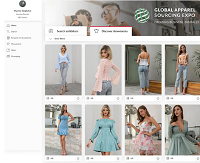 Believing that unprecedented times call for unprecedented measures, the International Apparel Federation launched its first digital Global Apparel Sourcing Expo on July 16 in partnership with Foursource and Sourcing Journal. Featuring over 10,000 products by more than 200 exhibitors, the expo was launched on July 15 and runs for 30 days till August.14. Day 1, focused on sustainability and corporate social responsibility (CSR) in the wake of the COVID-19 pandemic.
The event was kick started with an insightful address by Christian Ewert, President, Amfori, who urged industry leaders to engage in open and sustainable trading. Ewert stated the apparel industry is currently responsible for 10 per cent of global carbon emissions and hoped that COVID-19 could help the industry become more resilient, carbon-neutral and circular.
Interactions, responsibility to be the drivers
To achieve this, brands and retailers would need to increase their interactions with local producers, Ewert said. This will make them aware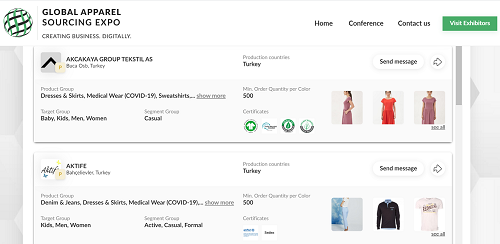 of the challenges that these producers face, and encourage them to improve their involvement with trade unions and local stakeholders. Brands and retailers should assume the responsibility of women employees and other vulnerable groups and ensure their safety during the crisis.
As sustainability initiatives by these businesses would need government’s help, they should first improve their interactions with trade unions and set up grievance mechanisms in factories.
Benefits of symphonization
Symphonization sets equal audit rules for brands, factories retailer manufacturers and factories can also reset their supply chains through the concept o symphonization. In this concept, instead of operating their own set of rules and internal factory audits, brands and retailers can collaborate with specialized independent organizations that would provide them with multiple options for their supply chains.
Traditionally, brands and retailers created their own social compliance standards that often resulted in audit fatigue as factories required multiple audits each year. Attempts to harmonize these standards failed despite many attempts from retailers, brands and manufacturers.
Symphonization of these standards can help brands and retailers realize that all the parties involved in apparel manufacturing are responsible for following sourcing rules. These brands and retailers can also replace the existing proprietary programs with a third-party organization that has its own existing supply chain audit rules in place.
Quality rather than quantity
In order to build a resilient supply chain, apparel companies should adapt to the concept of a circular economy, views Markus Weiser, Gore Fabrics. According to Weiser, most companies get the concept of circularity wrong because it keeps all those mini-seasons going without any further adjustments. Weiser advises these manufacturers to make fewer high-quality products that last longer. His company Gore Fabrics uses alternative technologies that allow its manufacturers to add colored pigments to fibers from which yarns and fabrics are made. Known as solution dyeing, this process helps manufacturers save up to 50 percent of the water used for conventional dyeing methods. By 2030, Gore aims to reduce its absolute carbon emissions originating from manufacturing sites and offices by 60 percent, besides reducing its absolute product-related carbon emissions by 35 percent.











