


FW
India: Amazon, Reliance need to collaborate for a better future
 Indian e-commerce battle has heated up with Seattle-based Amazon and Reliance Industries fighting over a $3.3 billion deal signed by the Mukesh Ambani-owned firm with the Future Group. The deal, which gives Reliance access to Future’s grocery stores and retail shops in India, is being challenged by Amazon in the Singapore International Arbitration Center.
Deal failure to force Future into liquidation
One reason for the feud is the 4.8 per cent stake that Amazon already owns in Future Retail since September 2020. The Future-Reliance deal doesn’t mention what happens to the Amazon stake if the deal materializes. Amazon argues that the deal debars Future Group from doing business with 30 companies including Reliance. The deal has been temporarily halted by SIAC.
Responding to Amazon’s allegations, Future Group says, its failure to go through with this deal may force their retail unit into liquidation besides causing a loss of 29,000 jobs. On its part, Reliance Retail Ventures believes the Future Retail deal is ‘fully enforceable’ under Indian law. The company aims to complete the transaction in terms of the scheme and agreement with Future group without any delay. Though it already has 11,000 stores across India, its aims to consolidate industry position through this acquisition.
Future growth calls for more collaboration
To realize its e-commerce ambitions, Reliance has already being expanding presence through JioMart, The company has expanded JioMart services to over 100 cities across India and plans to branch into electronics, fashion, pharmaceutical and healthcare soon. The company also plans to tap into Reliance Retail's network of physical stores across the country to fulfill online orders, say analysts.
As both Amazon and Reliance need each other’s expertise, the industry expects both companies to forge some kind of a deal in future. While Amazon needs to expand retail space by setting up more stores and delivery hubs, Reliance needs to upgrade its e-commerce experience. However, any kind of deal between them would be possible only if they let go of their individual egos and collaborate for the industry’s future growth.
Capital-intensive model can curb labor exploitation in Sri Lanka’s garment industry
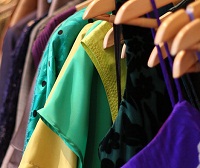 With contracts violating labor laws and human, civil and constitutional rights, labor exploitation was a norm in Sri Lanka till 2018. Salaries of apparel workers were dismally low. They were graded according to skills and experience and did not cover even their basic needs. Also, these workers were poorly treated by their supervisors who often used foul language and physical force while dealing them. Nearly two-thirds workers were subjected to verbal abuse and 14 per cent complained of physical abuse. They also had to work overtime to complete their targets.
Failure to meet targets met with either public humiliation or the allocation of menial tasks such as cleaning toilets. Women workers lived in poor accommodation. They also faced gender based violence on public transport.
A move to ‘ethical’ marketing
All this changed in early 2000s, when the combined pressure from trade unions and international consumers pushed Sri Lanka to adopt an ‘ethical’ marketing strategy. In 2002, the Joint Apparel Association Forum launched ‘Garments Without Guilt’ campaign to promote Sri Lanka as an ‘ethical’ destination. Though Sri Lanka has high health indices, they fail to account for workers poor health or chronic conditions borne out of an exploitative environment. Many workers in the country suffer from work-related illnesses or injuries. Though recent campaigns such as the ‘Green Garment Factory’ take environmental impact into account, they do not focus on workers health.
As a recent study by researcher Kanachana Ruwanpura indicated, around 30 per cent workers reported their bodies were sore from long working hours while 14 per cent suffered minor injuries and 10 per cent had chronic respiratory conditions. Majority of factory workers in Sri Lanka are women who have completed only eight to 12 years of education.
Lack of clarity over factory ethics
Sri Lanka also does not have a clear terminology for marketing ethical products. Though companies such as MAS describe their factories as ‘ethical’, the details on their ethical standards are not clear. Though Fidelity Manufacturing lists its ‘ethical’ policies, these policies are not enforced as per law. Sri Lanka does not have a national audit to analyze the ‘ethical’ label which makes it impossible to quantify or check the quality of the label. According to Ruwanpura, Sri Lanka’s ‘ethical’ promise is a façade that lacks transparency, accuracy and reliability. Factories use ethical campaigns to be competitive without being accountable for their actions.
Need for greater automation
Experts point out, the Sri Lanka apparel industry has failed to transform with time. It is still a ’70s relic that is being cleverly rebranded to be marketable. As Vidura Munasinghe writes in his article for Groundviews, South Korea and Taiwan were able to move away from enclave manufacturing because they saw the labor exploitation in their factories. From 1960 to 1990s, both countries converted their Free Trade Zones into capital-intensive industries, taking a step further towards becoming high-tech industries.
Taiwan converted its zones into storage and logistic hubs in late 1990s, whereas Korea set up Free Economic Zones in 2000s. These zones boasted of public services such as airports, ports, and office facilities as well as first-rate schools, hospitals, financial services, malls, leisure services, and tourist facilities. Though both South Korea and Taiwan used the FTZ model, they also incorporated other industries that offered better returns. Their multipurpose hubs offered a range of services and evolved with the global economy.
Levi’s hopes for 70% sales recovery
This festive quarter, Levi’s hopes to achieve 70-80 per cent of its pre-COVID level sales.
When fashion retail reopened through ecommerce channel in May, Levi’s reallocated its stock to online partners. This allowed it to refresh inventory and move it to where the consumers were. It allowed the brand to improve cash flow because ecommerce sold very well and they pay fast.
Henceforth, the brand aims to reduce its store count by 5 per cent but will increase the location, sales density and the size of its stores. It plans to double down on its Work from Home category. It also plans to increase the share of its performance denims to 60 per cent.
The brand plans to expand store-on-wheels concept from residential complexes to new consumer hotspots such as college festivals and bikers rally events and offer on-premise customization. It will also introduce luxury global lines such as Levis-Made in Japan and Made in USA.
Bangladesh apparel exports plummet by 4%
Bangladesh’s exports plummeted over 4 per cent in October while its export earnings declined by 4.08 per cent year-on-year to $2.95 billion as shipments of apparel products took a hit due to the COVID-19 pandemic.
However, the country’s overall export earnings in July-October of FY21 grew by 0.97 per cent to $12.84 billion from $12.72 billion in the same period of FY20, says data from the Export Promotion Bureau.
Its shipments of readymade garments declined by 7.78 per cent exports declined by1.2 per cent to $10.45 billion in FY21 from $10.58 billion in the same period of FY20.
Shipments of woven items declined by 7.76 per cent to $4.64 billion even as knitwear exports in the four months of this fiscal year registered 4.76 growth to fetch $ 5.80 billion from $5.54 billion in the corresponding period of last fiscal year.
Export of woven items in October fell by 14.43 per cent, while knitwear marked a decline of 2.19 per cent.
Meanwhile, earnings from leather and leather products in July-October of FY21 fell by 10.63 per cent to $283.2 million from $316.9 million in the same period of last fiscal year while earnings from the home textile export increased by 47.86 per cent to $354.25 million from $239.59 million and earnings from export of jute and jute products also increased by 39.52 per cent to $438.78 million from $314.49 million, as per the data.
Textile Exchange makes leadership changes
As part of the essential foundation needed to deliver the organizations 2030 Climate+ Vision, Textile Exchange has made certain changes to its company’s leadership. The organization has appointed La Rhea Pepper, Co-founder, Textile Exchange, as CEO and Claire Bergkamp as COO from November 1.
Bergkamp joins Textile Exchange from Stella McCartney, where she was the position of Worldwide Sustainability and Innovation Director for more than eight years. In this role, she led the global environmental, human rights, and innovation strategy for the brand. During her time at the brand, she built a qualified, high-functioning sustainability department and team, a purposeful strategy, and an ambitious project portfolio. She helped to develop and cement the brand’s reputation as a leader in sustainability and innovation.
Bergkamp and Pepper will co-lead the organization as it enters an important phase of growth, not only for Textile Exchange, but for the industry as a whole. Pepper will maintain a focus on industry engagement and standards while continuing to provide visionary leadership for the organization. Bergkamp will oversee the implementation of the 2030 Climate+ Vision, the acceleration and fiber centers, as well as the Shared Measurement Systems and digitalization needs, and operations.
Almost 60% Americans ready to pay more for locally made products: Survey
In the Reshoring Institute’s survey of 500 people, 59.83 percent respondents were willing to pay more for a product made in the US, while 21.53 percent were not. Around 69.42 percent respondents preferred US made products while 14.5 percent did not.
Nearly half the respondents were willing to pay 20 percent or more for US-made products: 32.83 percent said they’d pay 20 percent more, 10.1 percent said 25 percent more, 2.78 percent said 30 percent more and 3.79 percent said 50 percent more. Around 46.28 percent of respondents thought products made in the US were of better quality, while 21.9 percent did not and 31.61 percent were unsure; 57.35 percent said the origin of the product affected their purchase decision, 26.92 said it did not and 14.91 percent were unsure; and 59.83 percent believed the “Made in” information on product labels, 10.97 percent did not and 29.19 were unsure.
The Reshoring Institute data comes amid an emerging negative consumer sentiment toward Chinese products. A Coresight Research survey conducted in early June found as many as 47.8 percent of respondents said they either agree or strongly agree that US retailers should source fewer products from China. In light of the pandemic and the sentiments that have emerged surrounding it, 39.7 percent said they are now less willing to buy Made in China products
Munich Fabric start cancels View Premium Selection Fair
Munich Fabric Start Exhibitions GmbH has cancelled the View Premium Selection fair that was scheduled to be held from December 1-2, 2020. Instead, the team is concentrating on organizing the second edition of Fabric Days from January 26-28, 2021. It is confident of offering the textile industry the usual date to present Spring collections.
The condensed, business focused format of Fabric Days offers the required flexibility to be able to adapt quickly to any changes in the coming months. The main objective of the fair is to offer the industry the necessary planning security and a physical textile fair for personal exchange. In this way, the organizers can rely on the support of the textile industry and the confidence placed in them during this extraordinary time.
The organizers expect a high-quality collection portfolio from around 400 international suppliers who will present their new products for the Spring.Summer 22 season in Munich.
CCI assures Telangana of purchasing entire cotton crop at MSP
Cotton Corporation of India (CCI) has assured the government it will purchase all the cotton produced in Telangana at the Minimum Support Price of Rs 5,825 per quintal. The CCI also assured of taking all issues raised by the state into consideration. It appreciated the government’s move of increasing the number of ginning and pressing mills.
The Telangana government had urged CCI to increase the permitted moisture content in cotton considering the recent heavy rains in the State. At present, the CCI allows only 12 per cent of humidity in cotton fiber. While the CCI has procured and stored 49.56 lakh bales of cotton from Telangana during 2019-20, it has only lifted 9.28 lakh bales so far.
The government impressed upon the CCI that Telangana was known for its high quality cotton and the software developed by the State for procurement of the fiber crop was one-of-its-kind in the country. It also requested CCI to cooperate with the government in setting up a Cotton Research Centre in Adilabad.
Fiber Fragmentation Summit to focus on development of textile fibers
To be held online from March 23 to 26, 2021, the inaugural Fiber Fragmentation Summit 2021 in partnership with Planet Textiles will focus on three areas: measurement, science: and development of textile fibers. The four day period of the summit will convene global apparel and textiles brands, supply chain partners, legislators, NGOs, academics and other thought leaders for the next round of cross discipline presentations, discussions and planning ahead.
Senior research scientist Andy Booth from SINTEF, one of Europe’s largest independent research organization will look at the UV degradation of synthetic textile fibers in aqueous environments, while Heidi Sanborn, Executive Director of the National Stewardship Action Council will talk about the current state of play with regard to US policy and legislation on this issue.
On behalf of the AATCC, Heather Elliot will examine testing methodology for fiber fragmentation and shedding, and Dr Jan Berenger from the Hohenstein Institute will outline the current understanding around the size and characterisation of fiber loss from textiles.
Coats Group expects $100 million operating profit
Industrial thread maker Coats Group expects its adjusted operating profit for 2020 to be above expectations and in the range of $100 million - $110 million. The group’s sales in the four months upto October 31 fell by 9 per cent year-on-year on a constant currency basis, which reflected a 15 per cent fall in apparel and footwear and a 6 per cent contribution from the acquisition of Pharr High Performance Yarns, which Coats acquired in February.
The company’s manufacturing facilities are effectively fully operational and it has seen an encouraging improvement in its brand and manufacturer order confidence into the peak trading season of September-November where production is primarily for the spring/summer 2021 season. The company’s inventory is also being cleared as expected.











