FW
India revives trade dialogues with EU and UK
Weeks after the formal Brexit agreement, India has revived dialogues with the EU and the UK to expedite trade deals and aid economic growth in the post-COVID era. EU trade commissioner Valdis Dombrovskis held a virtual meeting with India’s commerce and industry minister Piyush Goyal on February 5, where he urged for a quick early-harvest deal followed by a time-bound and balanced free trade agreement (FTA).
Goyal also urged EU to support India’s joint proposal with South Africa at the WTO, to get a temporary waiver of the restrictive TRIPS agreement to ensure adequate supply of COVID-19 vaccines in developing countries. These dialogues are being held at a time when India’s planned FTA with the EU has lost its importance thanks to Brexit. Britain constituted 26 per cent of India’s apparel exports in FY20 to the EU. It also accounted for 16 per cent of India’s $53.7-billion exports to the EU in FY20. Apart from garments, India ships gems and jewellery, pharma products, footwear and organic chemicals, among others, to the UK in large volumes.
Indian exporters believe, India-UK trade talks won’t have the same level of complication that exists between India and the EU, and a deal can be easily signed between the two countries.
India’s silk exports reach $246.67 million in FY20
India’s silk and silk products exports touched $246.67 million in FY20. As per India Brand Equity Foundation report, total silk and silk products export accounted for $101.82 million from April 2020 to October 2020 and for October 2020 it was $22.98 million.
The silk products exported include natural silk yarns, fabrics, made-ups, readymade garments, silk carpets and silk waste. Readymade garments formed the largest share in export from April 2020 to October 2020 at $ 43.75 million, followed by fabrics & made-ups at $31.73 million and silk carpet at $13.58 million. Fabrics & made-ups formed the largest share in export between FY20 at $138.95 million, followed by readymade garments at $ 71.18 million and silk carpet at $20.3 million. Other products made up for rest of the export earnings.
Second largest producer of silk in the world, India makes all commercially useful varieties of silk. The industry is one of the largest generators of employment and foreign exchange for India. Its sericulture activities are spread across 52,360 villages and provided employment to over 9.1 million people in India during FY19.
H&M collaborates with Lee for recycled cotton denims collection
H&M has collaborated with American denim legend Lee to launch first ever 100 per cent recycled cotton jeans collection. The Lee x H&M range features collections for women, men and kids. It is available online as well as select H&M stores.
Focusing on sustainability, the collection features H&M’s first 100 per cent recycled cotton jeans, made from 80 per cent post-industrial waste and 20 per cent post-consumer waste. It also contains a cotton-free denim made from renewable man-made fibers besides water-saving dyes and lower impact denim washes that are 3rd party verified for their lower water usage, chemical, and energy consumption.
The women’s collection comprises wide and loose jeans that have a 90s throwback feel and Lee’s classic Rider jacket in an oversized cocoon shape. Its denim corsets add a feminine edge, while dungarees and overshirts bring the functional workwear vibe, alongside Texloop™ RCOT™ Recycled Cotton jersey pieces for the full Lee x H&M look.
The men’s collection offers workwear jackets and relaxed fit five pocket jeans made from 100 per cent recycled cotton. The relaxed carpenter jeans are made with water-saving dyes and 100 per cent Tencel™ Lyocell cellulosic sewing threads.
The collection also offers workwear dungarees, denim bucket hats and tote bags, as well as heavyweight jersey pieces to complete the sustainably mad collection. The kids’ collection features Lee’s classic Rider jacket and jersey pieces including t-shirts and hoodies.
Need to embed size inclusivity into brands’ DNA: Honore
Mass and luxury brands like Erdem, which recently launched its pre-spring 2021 collection is adopting size-inclusivity in collections. Luxury retailer Honore has been leading the size-inclusive space in luxury for the past four years. Katie Murphy, Vice President-Client Services advises luxury retailers to adopt a strategic and transparent approach for selling their plus-size apparels.
Retailers producing own standalone diffusion line need to maintain exclusivity and novelty of offerings, says Murphy. They need to embed size-inclusivity into the DNA of their brand and represent their community and customer base, she adds. Jewelry brands also need to expand their range to suit plus-size consumers and offer jewelry for bigger necks, wrists and fingers. They should engage social media influencers like Nicolette Mason, Kelly Brown and Gabi Gregg to advertise their plus-size brn.
Bangladesh records double digit drop in apparel exports to the US
Falling consumption in the world largest economy amid the pandemic has led to 11.73 per cent decline in Bangladesh’s apparel exports to the United States in 2020. The US Department of Commerce’s Office of Textiles and Apparel data reveals, Bangladesh’s RMG exports to the US decreased by $695 million in value and 120 million sq mt in quantity compared with that in 2019. Bangladesh’s RMG exports to the US in 2020 fell by 5.98 per cent to 1.89 billion sq mt. Apparel import by the US from the world dropped 23.46 per cent in 2020 to $64.07 billion from $83.70 billion in the previous year.
According to BGMEA data, Bangladesh’s RMG exports to the US grew 5.5 per cent in volume in December 2020. However, their value declined by 13 per cent compared with that in the same month of 2019. US apparel imports from Bangladesh decreased by $56.17 million in December 2020 to $361.88 million from $418.057 million in the same month in 2019.Bangladesh’s apparel exports to the US grew by 8.09 million sq mt to 155.33 million sq mt in December 2020 from 147.30 million sq mt in the same month of 2019.
In July-December 2020, the US apparel imports from Bangladesh declined by 3.19 per cent year-on-year, BGMEA said.
Even though US global apparel imports dropped by 17.25 per cent, the imports from Cambodia and Pakistan grew by 6.89 per cent and 8.16 per cent respectively during the period.
US apparel imports from Vietnam decreased by 7.25 per cent but with 11.73 per cent negative growth, Bangladesh was holding a very shaky position compared with its fellow opponents.
Customs duty on cotton to impact India’s premium garment exports
Cotton stakeholders believe, increasing customs duty on cotton may impact India’s advantage in premium/ high-end garment exports to the world. Stakeholders also fear losing international market, especially US and Europe, to neighboring competitors Bangladesh and Pakistan as well as Vietnam.
The Cotton Textiles Export Promotion Council says a hike in customs duty will lead to a higher cost for value-added products including fabrics, made-ups and garments. The Southern India Mills’ Association (SIMA) had also demanded a roll-back of the decision soon after the Budget.
As per Cotton Association of India (CAI), India’s cotton imports for the year 2019-20 (October to September) were projected at 15.50 lakh bales, whereas for the year 2020-21 it is estimated to be around 14 lakh bales, of which 4.5 lakh bales of cotton was imported as on December 31, 2020.
As per the trade insiders, the cotton textiles/garments using 51 per cent or more Pima cotton can qualify for Supima label, which commands higher price and premium in the US market as well as other prominent garment markets.
US’ apparel imports decline 23.46 per cent in 2020
As per official data, apparel imports by the United States declined by 23.46 per cent in 2020. The country imported apparels worth $64.07 billion during the 2020, recording a decline of $17.60 billion from 2019, reports Apparel Resources. This affected its partner countries whose exports declined by double-digits, except Vietnam which recorded a single-digit export decline.
In volume terms, US’ apparel imports plunged 16.37 per cent to 23,132.80 million SME in 2020. The unit prices of these imports also nosedived by 8.28 per cent in 2020 as compared to 2019 when UVR remained US $ 3.02 per SME. Particularly in December ’20, the volume of US’ apparel imports declined by 1.40 per cent on Y-o-Y basis. Imports shrunk 16 per cent to $4.83 billion in the last month of 2020.
One third British retailers to close stores in 2021: Brightpearl survey
As per a research by e-commerce firm Brightpearl, nearly a quarter of British retailers plan to close their physical stores in 2021. The survey polled 1,000 brands and 2,000 consumers from across the UK.
Almost 18 per cent plan to move stores out of city centres and into local high streets within the next 12 months, while 4 per cent are undecided on whether to follow suit.
Brightpearl CEO Derek O’Carroll said, the study shows some big shifts as its work-at-home patterns intensify. Though customers have relocated online, they’ve also relocated to the suburbs and the rural towns as reflected in emerging shopping habits. Retailers need to respond to these changes and our data suggests many are already making plans to move stores to high street locations that have increasingly strong foot traffic.
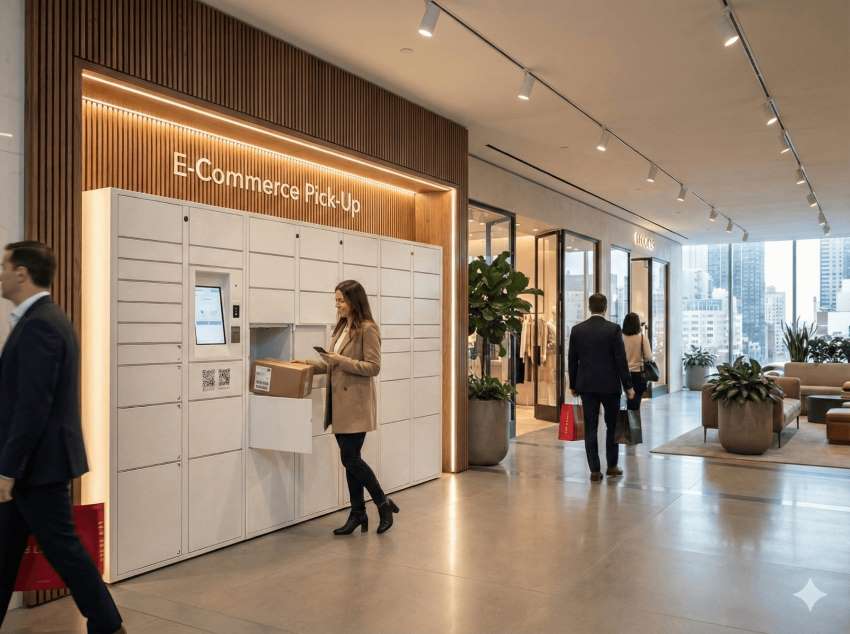
Over the next year, retailers are also going to have to up their digital game to meet growing online demand, and the expectations shaped by our new buying patterns. Some companies are planning to add local collection points to their online delivery offering to capitalize on customers’ increased preference for local shopping.
Canopy founder to receive $3 million grant
One of the two recipients of this year’s Climate Breakthrough Awards for her organization’s work to protect ancient and endangered forests, Nicole Rycroff, Founder and Executive Director, NGO Canopy will subsequently receive a $3 million grant.
Over the next three years, Rycroft – along with the award’s other recipient, Mohamed Adow of Kenyan sustainability think tank, Power Shift Africa – will leverage the grant to further accelerate the ambition of Canopy.
Since its inception, the Vancouver-based NGO has engaged industries including fashion in better protecting critically endangered forests by promoting the benefits of sustainable forestry management and adopting alternative fibres to conventional man-made cellulosic textiles.
Its latest Hot Button rankings – which assess the efforts of fibre suppliers to safeguard endangered forests, including their conservation work – is representative of the changing tides in man-made cellulosic supply chains, as it highlighted that more than 50 per cent of global supplies are now sourced by ‘green’ or ‘dark green’ shirt recipients.
In fact, fibre suppliers Lenzing and Aditya Birla attained the ranking’s first ever ‘dark green’ shirts in recognition of their exemplary efforts to protecting forestry.
The Climate Breakthrough Project will work with the pair to bring visionary new strategies from idea to fruition. For Rycroft, the $3m will be used to help develop and scale low-carbon, commercially viable fibre alternatives that reduce the industry’s reliance on high carbon forests.
Apparel trade group plans insolvency policy for COVID-19 battered units
The apparel trade group plans to develop insolvency or exit policy framework to salvage the industry battered by the pandemic.
As per Financial Express, the framework will detect early and resolve the financial distress in entities, including the current provisions of corporate debt restructuring mechanism.
It will resolve bankruptcy and insolvency through a considered balance between reorganization and liquidation according to the Terms of Reference prepared by BGMEA.
The framework will be prepared by forming a working group with the participation from both in the public and private sectors, garment entrepreneurs, international buyers, legal professionals, chartered accountants, retired senior policy makers, retired high court officials, experienced liquidators, economic policy experts and bankers.
A technical exercise will be conducted by the group to facilitate improvements and reforms in Bangladesh's business exit regime and practices. The BGMEA has initiated the formal exercise to assess the current exit or insolvency regime and practices, and identify necessary improvement measures, reflecting pertinent improvements relevant to the garment sector, she said.
It would support the government for enacting the necessary reforms or improvements in the legal and regulatory framework for business exit, she added.
Through the exercise, the group will identify necessary improvement measures.