


FW
KPR Mill’s Q3 profits up 21 per cent
Coimbatore-based vertically integrated company KPR Mill’s Q3 results are robust driven by strong demand for textile products. Revenue during the period grew 21 per cent in year-over-year basis to Rs 929.6 crore, with textile division (87 per cent of sales) posting 19 per cent Y-o-Y growth. With healthy order book and sustained demand for casual wear, apparel volumes went up 12 per cent Y-o-Y to 22.6 million pieces.
The average realisation/piece also firmed up 9 per cent to 163 per piece, translating to value growth of 22 per cent Y-o-Y to Rs. 369 crore (40 per cent of sales). Export order book at the end of Q3 was healthy at Rs 600 crore and revenue from yarn and fabric division (44 per cent of sales) grew 16 per cent Y-o-Y to Rs. 412 crore. It plans to expand its garment division. As on Q3, FY21, it has outstanding debt worth Rs. 556 crore and cash balance worth Rs. 350 crore.
STAR Network becomes stronger as four apparel associations join the group
Four apparel manufacturers associations from Turkey, Indonesia and Morocco have now joined the Sustainable Textile of the Asian Region (STAR) Network. STAR is a platform for Asian RMG manufacturers that drives better purchasing practices in the global textile and garment industry.
The four associations are: Indonesian Textile Association (API), Turkish Clothing Manufacturers Association (TCMA), Istanbul Ready-Made Garments Exporters’ Association (IHKIB) and Moroccan Association of Textile & Clothing Industries (AMITH). They have joined the initiative on ‘Manufacturers Payment and Delivery Terms’. The platform formed in 2016 with nine member associations from six Asian countries. They include: Bangladesh Garment Manufacturers and Exporters Association, Bangladesh Knitwear Manufacturers and Exporters Association, China National Textile and Apparel Council, Garment Manufacturers Association in Cambodia, Myanmar Garment Manufacturers Association, Pakistan Hosiery Manufacturers and Exporters Association, Pakistan Textile Exporters Association, Towel Manufacturers Association of Pakistan and Vietnam Textile and Garment Association.
The initiative, started by the STAR Network, supported by GIZ FABRIC, the International Apparel Federation and the Better Buying Institute, highlighted their plans at the recent OECD Forum on due diligence in the garment and footwear sectors on February 3, the release said. This marks a joint global effort led by manufacturers to establish a common position on payment and delivery conditions in the industry.
The STAR Network, GIZ FABRIC, IAF and Better Buying have come together to create the safe space for manufacturers to jointly draft a set of minimum expectations and outline recommendations and the best practices related to payment and delivery conditions. ‘This includes establishing certain red lines and core principles that they deem essential for fair legitimate business,’ said a press release.
IAF, ITMF, ITC come together to launch Standards Convergence Initiative
The International Apparel Federation (IAF) and the International Textile Manufacturers Federation (ITMF) together unveiled Standards Convergence Initiative (SCI), an initiative to accelerate reduction of audit and standard fatigue. The forum was launched at the side session of OECD Forum on Due Diligence in the Garment and Footwear Sector held online from February 1 to 5. The SCI will be a wide platform to discuss and develop a strategy and tools to accelerate reduction of audit and standard fatigue in the global clothing and textile industries.
The auditing conduct of standard holders, along with brands, retailers and other buyers’ decisions determines if the industry is are moving in right direction of less unnecessary overlap of audits and standards. Therefore, one of SCI’s first steps, in collaboration with the International Trade Centre will be to create transparency in the conduct of the main standard holders, brands and retailers and 3rd party standard holders, measuring to what extent they are contributing to the reduction of audit and standard fatigue.
The SCI has identified four yardsticks to judge standard holders’ commitment to reduce audit and standard fatigue. These include: willingness to harmonize standards; compliance with OECD and ILO guidelines; use of existing platform to avoid audit duplication; global certification of auditors.
These criteria will provide a foundation for a structural monitoring of standard holders’ efforts to reduce audit and standard fatigue that will be carried out by ITC. During the session at the OECD Forum, the ITC explained how its unique Standards Map Database will be used to measure and monitor standard convergence in the industry. First results of the monitoring are expected in the third quarter of 2021.
Besides monitoring exercise, the SCI will foster collaboration between different stakeholders each working on a partial solution. And, because large brands and retailers sticking to their own standards block the reduction of standard fatigue, the SCI will continuously call on these brands and retailers to either drop their proprietary standards in favour of 3rd party standards or to collaborate in other ways that observably reduce audit and standard fatigue.
Government to launch schemes to promote MMF apparel, technical textiles
Indian textiles ministry is coming up with a scheme to promote identified man-made fibre apparel and technical textile products to increase its share in global market. Smiriti Irani, Textiles Minister told Parliament the textile sector is the sixth largest exporter of textiles and apparels in the world. The share of the country's textiles and apparel exports in mercantile shipments was 11 per cent in 2019-20.
She said, the government has decided to extend the benefit of the Scheme for Remission of Duties and Taxes on Exported Products (RoDTEP) to all export goods with effect from January 1, 2021. The Cabinet has approved Production-Linked Incentive (PLI) scheme in the 10 key sectors to enhance India's manufacturing capabilities and exports. MMF (man-made fibre) segment and technical textiles are included among the 10 key sectors with approved financial outlay of Rs 10,683 crore over a five-year period.
She also said during crop year (2020-21), cotton production stood at 371 lakh bales. Till February 3, 2020-21, the government procured 90.39 lakh bales worth Rs 26,432 crore at minimum support price (MSP), benefitting 18.67 lakh farmers.
China’s fashion etailer Shein is ready for mainstream market, plans stores
 Though relatively unknown, Nanjing based e-commerce platform Shein is ready to enter the mainstream fashion market. The Pearl River-based company, which recently bid for the ailing UK fashion group Arcadia, exports to almost 220 countries, reveals a Forbes report. It has websites across Europe, the Middle East, Australia and the US and reportedly generates revenues of $10 billion annually. With customers across Asia and Europe, the company recently completed a Series E financing round.
Making a mark across the globe
Analytics platform App Annie says, Shien was one of the most downloaded shopping app globally on iPhone. It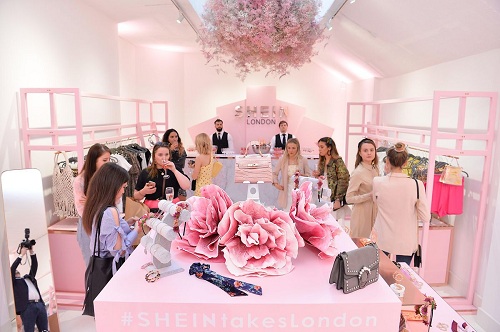 particularly topped in the US, Brazil, Australia, the UK and Saudi Arabia markets. In the US, Shein has a warehouse near Los Angels which processes products received from warehouse in Foshan, Guangdong province. Though, this process takes over 10 days, it is very affordable and therefore attracts a huge customer base.
Obsessed with predicting trends, Shein often promotes popular fabrics, colors and styles on the Instagram and Weibo platform. The brand’s image has often been elevated by various celebrities and fashion influencers although it has also been criticized for using the Swastika pendant for its advantage.
Future goals
Before 2014, Shein purchased products directly from Guangzhou’s Shisanhang Garment Wholesale Market. However, soaring demand forced the company to create an in-house design team. Within just two years, the company assembled an 800-strong design and production team. Its emphasis on timely payments helped retain all clients even when it relocated its supply chain operations center from Guangzhou to Panyu in 2015.
Shein has now merged all factories into a production centre similar to o A Coruña in Northeast Spain. The company also has four R&D facilities in Nanjing, Shenzhen, Guangzhou, and Hangzhou besides six logistics centers in Foshan, Nansha, Belgium, India, and on the East and West Coasts of the US. Its seven customer service centers are based out of Los Angeles, Liege, Manila, Yiwu, and Nanjing, and have over 10,000 employees.
Ready to face the future head-on, Shein plans to develop business in mobile payments, supply chain finance, advertising. It also plans to open brick-and-mortar stores.
Myanmar faces bleak future as garment orders dry up, factories remain closed
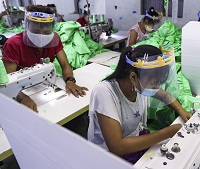 Before COVID-19, the Myanmar apparel sector employed over 700,000 workers in over 700 apparel factories. The sector created jobs faster than any other part of the economy, reports, International Labor Organization. However, pandemic-induced slowdown forced many factories to shut down and the recent military coup added more uncertainty to the sector. Thousands of workers employed in Myanmar’s garment factories are currently demonstrating against the military coup, reports Clean Clothes Campaign. Hundreds of protestors are engaged in a standoff with riot police as they march to Yangon University.
In a quandary
This has driven brands operating in the country into dilemma about whether to continue operating in the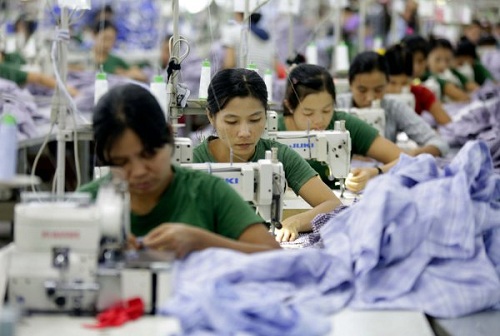 country or cut all ties with it. A representative for British multinational Marks & Spencer, The Fair Wear Foundation has urged member brands to ensure workers get due payments and have a safe work environment.
Swedish giant H&M is urging suppliers to ensure the safety of employees. The brand is also collaborating with UN agencies, humanitarian organizations, diplomatic representatives, human rights experts and other multinational companies to support positive developments in Myanmar. Myanmar fashion companies are also rethinking their expansion plans. Adopting a wait and watch policy, so far, they have exported over half of their apparels under the Everything But Arms framework. However, they are unlikely to review Myanmar’s eligibility under this act, says Politico
Political instability and strict visa norms discourage US investors
Meanwhile, Myanmar is focusing on the US market which benefits from some preferences under the US GSP or Generalized System of Preferences, program. The country has approved some of Myanmar’s individual and military-controlled companies for investments. One of these is Myanmar Economic Holdings which owns the Pyin Oo Lwin garment factory.
Peter Kucik, Sanctions Expert, Ferrari & Associates, believes Myanmar's garment industry holds great importance for Western policymakers and expects the US to adopt a more surgical approach towards the country this time. He says, policymakers should avoid taking any complex measures such as changing trade preferences. The political instability also prevents foreign high skilled and technical workers from entering the country. Further tightening of visa procedures threaten garment operations. The next few months are likely to be bleak for Myanmar as the country may fail to attract new investments. Its current projects may also face approval problems and the country may not bag new orders.
Surat textile traders support CAIT strike against irregularities in GST law
Surat Textile traders have supported Confederation of All India Traders’(CAIT) strike against irregular rules in the GST law on February 26.
According to these textile traders, with each passing day, GST laws are becoming more complicated. The GST Council is distorting the basic form of the GST law and made it into a failed tax system for the taxpayers in general. Instead of doing business, the traders are busy all day to resolve the GST issues arising out of the distorted system.
Devkishan Manghani, Advisor, Southern Gujarat Chamber of Commerce and Industry’s (SGCCI) textile trade committee said, the GST infrastructure has been revised more than 937 times in the last four years since it was first implemented in the country. The one nation, one tax slogan has completely failed. Every day, there are new notifications issued by the GST Council, which is confusing the entire trade.
PT Ban Brothers’ financial distress fuels concerns about Indonesia’s apparel sector
Indonesian clothing firm PT Pan Brothers distress is fuelling broader concerns about the nation’s apparel sector, which has been particularly vulnerable to faltering global demand during the pandemic. Supplier to brands like Ralph Lauren, Prada and Adidas, PT Pan Brothers’ dollar bonds slid to record lows of about 36.7 cents on the dollar after it postponed a new global debt offering and had to extend its loan in US currency. As per a Bloomsberg report, the company and its subsidiaries need to repay or refinance $310 million of offshore debt this year and next, consisting of the loan and a $171 million bond that will mature in January 2022
Constituting over 80 per cent of sales, the company’s exports stagnated in the first nine months of last year as the pandemic shut retail stores. The firm’s net profit rose 0.4 per cent in that period to $19.2 million, the slowest pace in three years, according to its latest financial report. To solve refinancing issues, Pan Brothers plans to sell a global bond in the second quarter. It will provide a corporate guarantee for the new notes and also use its own and the units’ assets as collateral, according to the offering prospectus.
Founded in 1980, the company which is based near Jakarta, produces clothes mainly for export. It said at the December meeting that it had 25 factories across three provinces in Indonesia that make 117 million clothing articles annually.
PETA launches new video exposing cruelties in fashion factories
PETA has launched a new video exposing the atrocities in animals in factories making garments from cashmere, leather, down and silk. The video exposes the cruelties of fashion factories across the world. It depicts animals being abused by hard-pressed workers in the interest of supplying demands for a lucrative industry. It portrays society’s treatment of animals as inherently antifeminist.
The hard-to-watch footage takes the viewer through farms and factories across the world, where animals are often hit, kicked, prodded and maimed into submission, and ultimately killed for their furs, skins and feathers. The video portrays no differentiation between conventional animal products and those which are purported to be ‘humanely’ sourced.
It targets Urban Outfitters, Inc., whose brands include the titular UO as well as Anthropologie and Free People. Animal advocates claim the group already sells luxurious, animal-free textiles, particularly their woolen knitwear, and thus have no need for the animal-derived products they continue to retail.
JD Sports Fashion to build distribution centre in EU
To avoid paying post-Brexit tariffs, British sportswear retailer JD Sports Fashion plans to build a distribution centre within the European Union. The centre would also help the retailer create around 1,000 jobs, says a report by Business of Fashion.
The end of Brexit transition on December 31 has affected many UK retailers like Marks & Spencer and ASOS who faced tariffs on items not made in the UK. They had to pay tariffs for sourcing products from the Far East and exporting them to Europe. JD needs to build an additional distribution centre in Europe to complement its existing complex in Rochdale, northern England. It also needs to 1,000 people in Europe. This alongwith post-Brexit tariffs, additional paperworks and red tape is costing the group millions of pounds.
JD Sports Fashion is a sports-fashion retail company based in Bury, England with shops throughout the United Kingdom. It is listed on the London Stock Exchange and is a constituent of the FTSE 1000 Index











