


FW
UN Committee recommends Bangladesh’s graduation from LDC
Last week, the United Nations’ Committee for Development Policy recommended Bangladesh graduation from least-developed-country category that it has held for most of the 50 years since it became independent. The UN Committee said, Bangladesh’s exports have risen by around 80 per cent in dollar terms in the past decade, driven by its booming garment industry. It has a young demographic structure, a continued competitive edge in terms of wage levels, strong and rising female labor-force participation especially relative to the rest of South Asia.
However, the growth in Bangladesh’s exports is below Vietnam’s and Cambodia. Hence, Bangladesh needs to move towards exporting higher-value items. Its export industry is still overwhelmingly focused on garment manufacturing. The country’s economic complexity, ranked by Harvard University’s Growth Lab, is 108 out of the 133 countries measured. That is actually lower than it was in 1995.
Bangladesh also isn’t a member of the Association of Southeast Asian Nations, or the Regional Comprehensive Economic Partnership or the Comprehensive and Progressive Trans-Pacific Partnership. Diversifying its manufacturing exports would require greater participation in intra-Asian supply chains—and probably a closer economic relationship with its neighbors to the east.
Peru terminates anti-dumping investigations against Chinese fabric
On February 28, 2021, the Peruvian National Competition and Intellectual Property Protection Agency’s Committee on Dumping, Subsidies and Non-tariff trade barriers issued a notice stating that since the 100 per cent polyester fabric originating in China did not cause material damage to Peru's domestic industry, the anti-dumping investigation against Chinese polyester fabric would be terminated and anti-dumping duties would not be imposed on it.
The products involved are 100 per cent polyester fabrics of taffeta, white or dyed with a width of less than 1.8 meters and a unit weight of between 80g/sq m and 200g/ sq m..
On February 6, 2020, Peru issued notice No. 010-2020/CDB-INDECOPI in response to the Peruvian company TecnologaTextil S.A. and decided to launch an anti-dumping investigation into 100% polyester fabrics originating in China. The dumping investigation period was from January 2019 to December 2019, and the injury investigation period was from January 2016 to December 2019.
Uniqlo’s same-store sales rise by 0.4% in February 2021
In February, Uniqlo’ssame-store sales rose by 0.4 per cent year-on-year while its total sales rose by 1.3 per cent.
As per Fashion Network, the company’s same-store sales rose on the back of strong sales of products designed to satisfy stay-at-home demand and buoyant sales of Spring outerwear and items manufactured using our Cut and Sew process.
The company is still battling against some pandemic headwinds and by the end of the month, a total of five stores remained temporarily closed and 172 stores were operating shorter working hours. Meanwhile, following its signing of Roger Federer as a global ambassador several years ago and other initiatives, Uniqlo is continuing to deepen its tennis links and has just announced that it has included a sponsorship deal with The Japan Tennis Association.
The retailer will supply Japan's players at this year's premier men's and women's international team tennis events. The teamwear provision starts with the World Group I for the Davis Cup on March 5 and 6, in Islamabad, Pakistan. The women's team will wear Uniqlo in a Billie Jean King Cup playoff in Miki, Hyogo Prefecture, Japan, on April 16 and 17.
Shima Seiki launches first remote system for shifting work patterns
Shima Seiki has launched its first remote system, Apex Fiz- a platform created in response to the shifting work patterns induced by the global pandemic.
Shima Seiki’s high-tech flat knitting machines are programmed via the company’s ‘SDS-ONE Apex Series’ software, which designers also use to design and develop knitwear. Until now designers had to have access to an actual SDS-ONE Apex design system – accessing the design element of the software remotely just wasn’t possible.
Without the ability to travel, and with trade shows and yarn fairs cancelled, designers have been unable to make the necessary trips to view yarn innovations and collections with the tactility they so crucially need.
Whilst shade cards can still be requested from spinners, the waste produced by ordering shade cards that end up being surplus to requirement – not to mention the vast amounts of space needed to store them whilst working from home- means designers have far less access to yarn and trend inspiration. Combine this with the delays many factories are facing in sampling lead times, and the result is a severe lack of access to yarn and fabrics to integrate into designed collections.
Techtextil North America, Texprocess Americas to return in May
After a 2020 postponement, co-located trade shows Techtextil North America and Texprocess Americas will return in-person May 17-19, 2022 in Atlanta, but will shift their cycle permanently going forward.
Beginning in 2023, this major North American event for sewn products and technology will pivot to an odd-year cycle with the next shows taking place from May 10-13, 2023. The change is in response to moves made by parent shows Techtextil and Texprocess Frankfurt, which switched their sequence to an even-year schedule starting in 2022.
To keep the industry connected and informed between shows, the organizers have been producing a monthly virtual webinar series that runs through April 2021, with speakers and subjects addressing current industry topics across technical textiles, nonwoven and sewn products. The next sessions include Smart Textiles (March 25) and High Performance Fibers (April 29). Attendees who missed the earlier sessions—including talks on 3D printing, sewing technologies, sustainability and “The Factory of the Future”—can register to view the recordings.
ICAC revises cotton consumption forecast to 249.5 million tonne
International Cotton Advisory Committee (ICAC) has revised the 2020/21 cotton consumption forecast upward this month from 24.2 million tonne to 24.5 million tonne. While the projected 7 per cent year-over-year increase isn’t nearly enough to offset the losses caused by the pandemic, it’s expected to outpace production, thus drawing stocks down by the end of the season. Stock levels are expected to drop to 21.1 million tonne by the end of 2020/21, which would represent a 1 per cent decrease from the previous season.
The Secretariat is projecting an increase in global trade. Both China and Pakistan are forecast to increase imports, the former benefitting from the price gap between domestic and foreign cotton and the latter due to a decrease in domestic production. This month, the Secretariat’s price projection for the year-end 2020/21 average of the A Index is 75.7 cents per pound.
Cambodia’s garment exports to EAEU drop by 36.6%
Cambodian garment exports to the EAEU (Eurasian Economic Union) dropped by 36.6 percent year on year between April and June of 2020.
As per reports, the garment industry is a backbone of Cambodia’s export industry with the Kingdom contributing more than half of the nation’s total merchandise exports, said Fibre2Fashion.
It noted that most of the garment manufacturers of Cambodia still follow the cut-make-trim technique because of underdeveloped manufacturing technologies and lower capital availability. The US and the EU are Cambodia’s major apparel export destinations and account for more than three-quarters of the sector’s total apparel exports.
Bilateral trade between Cambodia and the EAEU reached $67.36 million in 2020. Exports from the Kingdom were $52.19 million. EAEU imports from Cambodia reached $15.17 million.
Products exported to the EAEU were primarily clothes, footwear and rice. Imports include gems, fertilizers, animal feed, tractors, paper and pharmaceuticals.
36th Spinexpo postponed to April 2021
The 36th edition of Spinexpo has been postponed to April 27-29, 2021 in Shanghai. As per Knitting Industry, the leading international industry sourcing exhibition is dedicated to innovation in yarns, fibers and knitwear.
Hosting leading high-quality international exhibitors, the show welcomes a globally diverse range of international visitors including; couture, ready to wear, knitwear, hosiery, activewear and homeware.
The show attracts senior decision makers, sourcing professionals, designers and buyers, who come to source new, innovative and directional products, make new connections, strengthen long-term relationships and be inspired. Spinexpo provides a series of complementary learning and networking
opportunities, through seminars, presentations and catwalk shows. Focusing on presentations that encourage open industry dialogue, the Spinexpo team, in collaboration with Fashion Snoops, brings together professionals that include leading international spinners and machine manufactures to discuss seasonal subjects openly.
Spinexpotalso hosts seminars by leading exhibitors such as Woolmark, offering a unique and diverse vision allowing for both professional and creative development.
Bangladesh: Rising global cotton prices, lockdown in EU, US push up yarn costs
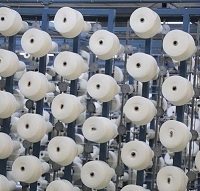 The yet to recover apparel business and fresh lockdowns in EU and US has led to a 40 per cent increase in Bangladesh’ yarn prices, says Md Fazlul Hoque, Managing Director, Plummy Fashions. As per Textile Today, prices are expected to stabilize in coming months with an increase in production. Demand is likely to rebound on recovery from the pandemic leading to a decline in cotton stocks, says an ICRA report. However, absolute cotton stocks, as well as cotton stock-to-use ratio, are expected to remain high.
The rise in local yarn prices can be attributed to growing international cotton prices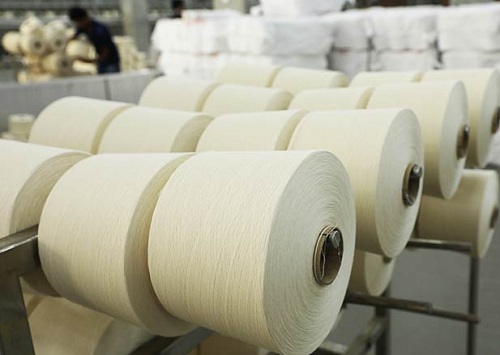 that also affected Bangladesh’s garment shipments, especially of knitwear, during the ongoing pandemic, says Monsoor Ahmed, Secretary, Bangladesh Textile Mills Association (BTMA).
Yarn production gathers momentum
Another reason for the rise in yarn price was an increase in transport costs to cotton mills which adds to importer’s costs. The rise in cotton prices in international markets could be attributed to increased imports by China, the largest consumer worldwide. This year, China aims to import an additional five lakh bales to take the total to 1,000 lakh bales to tame its local market.
Despite being major cotton producers, China and Pakistan have increased their import targets as the price of cotton manufactured in China is high. On the other hand, Pakistan does not produce the required quantity, hence it plans to import an additional four lakh bales, indicates United States Department of Agriculture (USDA) report. However, Bangladesh may reduce its import by five lakh bales in the cotton marketing year (August to July) of 2020-21 as cotton prices now exceed pre-pandemic levels for factors including a recovery in use by mills, says the USDA report.
The ICRA report shows, cotton yarn production increased 4 per cent between September to October 2020 and 35 per cent in the seven months of current financial year. As per Ashwin Chandra, Chairman, SIMA, production has picked up and is expected to continue rising in the next two-three months, stabilizing prices.
Mills reopening cool off prices
The reopening of spinning mills is also expected to cool off increased prices as all old stock is expected to be used. Shahid Alam, Vice-Chairman of Shah Fatehullah Textile Mills and Jalal Ahmed Spinning Mills, says, over the last two months, old stock has been reducing gradually and demand for yarn was improving in local market, though it is yet to reach pre-pandemic levels. The exorbitant rise in yarn prices is affecting the handloom sector. In the last 3-4 months, cotton yarn and artificial yarn prices have surged 50-60 per cent and currently prices are 20-30 per cent higher than in the pre-COVID-19 era.
China, a treasure house for luxury sportswear collaborations
 China is waking up to a new trend of luxury sportswear collaborations. This can be seen from the recent influx of collections for example, Dior x Descente collection, AK Skis, POC men’s collection for skiing, Prada and Adidas’ new collection for sailors and Jil Sander x Arc’teryx collection for outdoor lifestyle.
Fashion with function
As per Jing Daily, consumers are looking for a blend of fashion and functionality from such sportswear collaborations. They have fewer expectations about high-tech features and are reluctant to buy luxury sportswear due to performance issues.
Besides, product design and production, innovative marketing strategies are also the major requirements of such sportswear collaborations. If done well, these collaborations benefit both luxury and sportswear brands, says Cyril Drouin, Chief e-commerce Officer, Publicis China and North Asia. Sports brands can tap into the luxury and exclusive brand image, while luxury brands can have added lifestyle feel. Rogier Bikker, Founder and CEO, Tomorrow rates the Gucci x The North Face collaboration to be one of the best as it combined the logos of both brands.
Return of fitness trend a big boost
The rise of sportswear collaborations can also be attributed the return of fitness trend in China. Growing popularity of sports is boosting demand for sportswear in the country. As per the country’s four-year National Fitness Initiative by the State Council in 2016, China aims to boost fitness awareness and encourage people to practice sports at least once a week.
The country saw sports trend grow during 2020-end as people returned to their active lifestyles after the lockdown. As a recent article ‘No Fitness, No Life’ states, places like Shanghai, Tianjin, and Jiangsu Province are attracting residents to work out at local stadiums and gyms. Travel ban hasn’t stopped Chinese from exploring sporting activities within their borders. This has led to China’s sportswear sales more than doubling from $22.9 billion (148.3 billion yuan) in 2014 to $48.9 billion (316.6 yuan) in 2019, reported Statista last December.
Big brands can therefore experiment with more such collaborations without causing any damage to existing customer base and gathering new ones, says Patrick Gottelier, Founder and Professor, Shanghai DeTao Master of Apparel and Product Design.











