


FW
India’s technical textiles market to grow by 7.6%: KPMG-FICCI
Indian technical textiles market is expected to grow at a rapid 7.6 per cent in the Asia Pacific region to reach $23.3 billion in 2027, says a report by KPMG-FICCI. As per the Hindu Business Line, this growth will be supported by increasing awareness about the products, higher disposable incomes, changing consumer trends besides some sector-specific growth drivers.
Numerous factors such as developing end-user sectors, rising awareness, government initiatives, regulations, standardisations, technology upgradation among others are expected to drive considerable growth of domestic technical textiles in coming years.
The domestic technical textile market for synthetic polymer was valued at $7.1 billion in 2020 and is projected to reach $11.6 billion by 2027, growing at a CAGR of 7.2 per cent, while technical textile market for wovens is expected to grow at a CAGR of 7.4 per cent to $15.7 billion by 2027, up from $9.5 billion in 2020.
Technical textile market for MobilTech (automotive textiles) is expected to grow to $3.7 billion by 2027 from $2.4 billion in 2020. Similarly, the market for InduTech (industrial textiles) would grow at a CAGR of 8 per cent from $2 billion in 2020 to reach $3.3 billion by 2027.
Several government initiatives are supporting the growth of the segment. National Technical Textiles Mission (NTTM), from 2020-21 and 2023-24 at an outlay of ₹1,480 crore is expected to help Indian players compete with international players.
Production Linked Incentive (PLI) scheme in textiles sector with focus on MMF segment and technical textiles, will augment scale/capacities in technical textiles sector.
Also, the proposal to set up seven mega investment textiles parks over the next three years to give domestic manufacturers a level-playing field in the international textiles market.
Jeanologia launches H2Zero, first circular water treatment system
Jeanologiahas been a leader in the way that jeans are designed and produced with the integration of its technologies from the material to finishings and the software EIM achieves a true revolution by completely changing the operating model.
The company is rewriting the future of the industry and jean finishing with one of the key technologies: H2Zero, the first circular water treatment system which allows the same amount of water used in the process to be reused, creating the perfect circle.
The main objective of the company is its MissionZero: to dehydrate and detoxify the industry of denim finishings by 2025. All of the technologies they have developed over the years have been focused on this goal.
H2Zero is able to recycle 100 per cent of the water used and guarantees Zero discharge. This is how it reduces water consumption, energy use and eliminates discharge, saving more than 10m3 of water per hour. In 2020 Jeanologia saved about 15.5 million cubic meters of water, the amount needed for the annual human consumption of a city like Amsterdam
Bangladesh home textiles export grow by 15%
As per Export Promotion Bureau, Bangladesh’s home textile exports grew by 15 per cent and reached $936 million by 2020. The home culture job in western countries has proved a mini-blessing for home textile exporters in Bangladesh.
The second most important exporter of clothing, Bangladesh, has benefited from the increased demand for home textiles as it has a variety of items of high quality at fair prices. Bangladesh Home textiles include bed sheets, towel and other textiles, towels, tapestries and toppers, sheets, linen for the kitchen, curtains, pillows and coat coverings and quilts coverings.
In comparison, revenues plummeted by 17 percent to $27.5 billion in the same year. During the fiscal year 2020-201, however, domestic textile shipments rose by 48 per cent to $547.48 million in July-December.
Stella McCartney launches garments made from Mylo
Stella McCartney has launched garments made from Mylo-a leather alternative grown from mushroom. The designer is known for never using any animal skin or furs as part of her collection in her 20-year-long career. She recently launched her first ever Mylo garments- a black bustier and utility pants.
These garments embody Stella’s effortless sensuality and signature dichotomy of feminine and masculine attitudes. Entirely unique and cruelty-free, they symbolize a future where style will not be compromised for sustainability. The garments have been designed to have minimal environmental impact and save water, reduce carbon footprint and protect vital ecosystems like the Amazon from deforestation.
The first product ever created with the mycelium-based material was a prototype of Stella McCartney's iconic Falabella bag, which debuted as part of the V&A’s Fashioned from Nature exhibition in 2018.
Port congestion delaying shipment of finished goods: Panjiva
A report by Panjiva states, clothes, shoes and accessories are lying idle in warehouses across the world as freight forwarders scramble to secure shipping containers. Boxes are being held up at US ports and air terminals, which have too few berths and healthy workers to process surging cargo volumes. As per the report, container shipping rates have more than quadrupled since early March with port congestion leading to lower than expected revenue from North America for brand Nike.
The struggle faced by manufacturers to keep up with demand for essential items like plastic fasteners and semiconductor chips is also delaying the production of finished goods, says the report. A licensor of brands like Calvin Klein and Dockers, G-III re-routed shipments from congested West Coast ports to the East Coast, where traffic is lighter.
Wholesale retailers have similarly borne the brunt of Nike’s shipping woes, as most of the brand’s delayed inventory was destined for multi-brand partners. Fast fashion and luxury brands that rely more on air freight might get some relief as international travel picks up.
Indo Count to expand capacity
Indo Count Industries plans to expand and modernize existing capacities with capital expenditure (capex) of Rs 200 crore. The project will be funded by a mix of internal accruals and debt and is expected to be operational in H2 (October-March) of FY2022. The company’s bed linen capacity will be expanded by around 20 per cent from existing annual capacity of 90 million meter to 108 million meter by debottlenecking and balancing its facilities.
The company also plans to add cut and sew facilities besides enhancing the capacity for Top of the Bed (TOB) products. It will also modernize the existing spinning unit of the company with compact spinning technology. Post modernization, this capacity will also be used for captive consumption in the home textiles unit.
The company’s home textiles plant currently operates at full capacity. The expansion is expected to increase the company’s revenues by Rs 600 crore over the next two-years.
Suppliers engage in illegal sale to rid of unsold stock
To rid themselves of the excess stock created by cancelled orders over the past 12 months, suppliers are selling branded clothes illegally across Asian markets. As per Asian Insider, these merchants usually pay in cash and take the delivery directly from the factories.
An investigation in a secondary market reveals, buyers buy the stocks from manufacturers and sell it to countries where there are likely to be no patent problems or they can change the label to a desired one to sell it to any country. They are doing it basically to get cash in hand to keep the factory running for the present. However, their trade is deemed illegal as the merchandises were meant for export and thus executed under Tax free bonded facility.
India refuses to withdraw anti-dumping duty on Bangladesh jute imports
India has refused to withdraw anti-dumping duties on Bangladesh jute imports. India imposed anti-dumping duties on Bangladeshi and Nepali jute goods on January 2017. The duties imposed ranged from $19 to $351.72 per ton on import of jute products, including jute yarn, twine, hessian fabric and jute sacking bags from Bangladesh for five years. They aim to provide guidelines and tools to discipline anti-dumping actions. The core idea behind the imposition of anti-dumping duty was to protect local Indian jute industry from cheaper Bangladeshi imports. Usually, if a firm exports a product 'at a price lower than the price it normally charges on its own home market,' it is termed as 'dumping' the product. India refused to withdraw duty as it is a quasi-judicial measure and cannot be resolved through discussion.
Brands need to prioritize Aral Sea restoration in Uzbekistan, says researcher
In the latest issue of Apparel Insider, researcher Veronica Bates Kassatly, urges apparel brands in Uzbekistan to prioritize restoration of the Aral sea. She refuses to believe that the country’s cotton sector is responsible for the destruction of Aral Sea. According to Kassatly’s analysis, cotton is not the thirstiest crop in the Aral region. Moreover, the Aral Sea has continued to shrink since the end of the Soviet era – during which an aggressive policy of agricultural expansion was pursued.
She urges brands to support the development of Uzbekistan’s infrastructure as this would be a more powerful and effective message of sustainability and intent to make amends for the global impact of fast fashion, than anything that the present system can provide.
Garment manufacturers gear up to tackle rising yarn prices
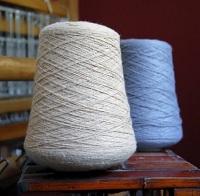 Tiruppur’s over 8,000 garment manufacturing units shut down recently to protest against rising yarn prices. Low supplies have pushed up yarn prices by almost 50 per cent to Rs 300-320 per kg in the last four months. Members of the Tirupur Exporters Association and the South India Hosieries Manufacturers Association are worried this may lead to finished goods’ exporters losing their competitiveness in foreign markets.
Rising yarn prices are also impacting the capital inflow of MSMEs, delaying revival plans, says Vinod Kumar Gupta, Managing Director of Dollar Industries, who has factories in garment clusters of Tiruppur, Ludhiana and West Bengal. Kolkata-based Federation of Hosiery Manufacturers Association has urged finance minister Nirmala Sitharaman, the Union textiles and state textile ministers in Tamil Nadu and West Bengal to ban yarn exports till prices stabilize.
Focus on exports, global shortage fuel yarn prices
Yarn manufacturers including K B, Agarwala, Managing Director, Rupa & Company and President, Federation of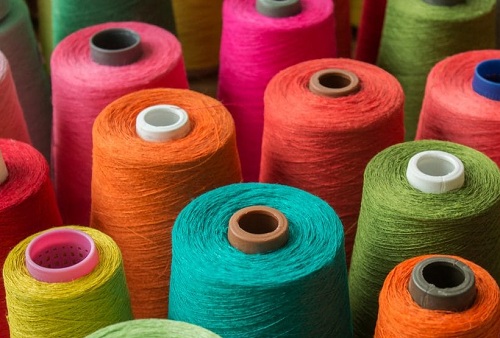 Hosiery Manufacturers Association (FOHMA) also attribute the rise in prices to mill owners’ excessive focus on export markets, causing domestic supply squeeze.
Vinod Kumar Gupta, Managing Director, Dollar Industries agrees, spinning mills are taking advantage of the demand-supply gap and increasing prices by 60 per cent whereas raw material prices have increased only by about 30 per cent. However, Sudarshan Jain, President, Knitwear and Apparel Manufacturers Association of Ludhiana, blames global shortage of basic raw materials such as fibers and chemicals, for the supply squeeze. While Sandeep Jain, Executive Director, Oswal Woollen Mills points out, yarn shortage and upsurge in prices is due to production cut in April-July of 2020.
Seeking government intervention
The hike in yarn prices is being passed on to consumers as brands like Dollar have hiked garment prices by around 10 per cent in the past few months. The brand plans to hike prices by another 5-7 percent from April 1, 2021. Innerwear brand Rupa too has hiked prices by 10 percent. Both companies fear further increase in prices may impact demand for their garments amongst consumers.
The one-day strike in Tirrupur was the first step taken by garment associations to attract government’s attention to this issue. They plan to hold several meetings over the week to urge spinning mills to streamline supply and ease prices of yarn domestically.











