FW
E-com new way of life for shoppers amidst lockdowns
 A sector that has benefitted immensely from the pandemic-induced lockdown and movement curbs in India is the e-commerce sector. Convenience of online shopping is encouraging many to move to digital platforms not just in metros but also in Tier II cities and beyond. As per a Live Mint report, consumers are fast adapting to changing e-commerce trends as more kirana stores and offline stores launch online retail. Amongst new users on the Grofers platform last year, 64 per cent were first-time online grocery shoppers while 20 per cent were new e-commerce users, says it spokesperson.
Adding new features to expand consumer base
Flipkart’s new e-commerce user base also grew 50 per cent during the first lockdown. Among them, Tier III and smaller city users registered the highest growth from July to September. The e-commerce firm introduced new features like a voice assistant and vernacular interfaces to enhance the shopping experience of its consumers. This helped it expand customer-base during the pandemic, observes Saurav Chachan, Engagement Manager, RedSeer Consulting.
Consumer demands for online goods during the lockdown reflected their lives under the influence of the pandemic. They mainly shopped for essentials like groceries, home office essentials like laptops and headphones, furniture, consumer electronics products, health and fitness products, household products, personal grooming products, apparel, toys and books. Demand for laptops and desktops tripled in 2020 compared to pre-COVID levels, says Flipkart,
Initial hiccups
However, opportunities also brought along challenges for e-commerce companies as they had to struggle with product deliveries initially as the lockdown halted goods transport and movement of personnel in the country. The first two phases of the lockdown allowed e-commerce companies to sell only essential items like grocery, healthcare and pharmaceutical products. The complete ban on sale of non-essentials resulted in a low gross merchandise value for online retailers, says Chanchan. They also had to reorganize their systems and explore cross-industry tieups to deliver products to customers residing in containment and red zones, he adds.
For fashion e-commerce, the initial phases of lockdown were a complete nightmare as they led to zero business, says Amar Nagaram, CEO, Myntra. The e-commerce company had to introduce a new gameplan to overcome the grave situation. It collaborated with over 80 brands to procure and deliver masks across the country. It also launched the Myntra Studio to keep fashion-related content to its customers.
Market experts including Sachin Taparia, Founder and Chairman, LocalCircles, believe, changes triggered by the pandemic are likely to persist and shape the future growth of e-commerce market. According to them, online shopping is slowly being a way of life for Indian consumers.
Localization, speed can help fast fashion brands capture the Chinese market
 All’s not well with the Chinese fashion industry. While sales of luxury brands like Dior, Chanel and Louis Vuitton are surging rapidly, fast fashion brands like Gap are being compelled to shut shop due to lack of business. As per a Bloomsberg report, Old Navy has decided to pull out of Chinese market due to lack of business. The brand debuted with a prominent flagship in Shanghai in 2014.
Brands like Inditex-owned Bershka, Pull & Bear, and Stradivarius also decided to shut down all physical stores in January. Together, these brands own 100 physical stores in the country. Inditex’s flagship brand plans to keep stores open as it has very few outlets in the country compared to local brands like Peacebird, Metersbonwe, Semir, and La Chapelle. Swedish rival H&M with over 500 stores in China registered 17 per cent decline in sales till November 30 last year, and had to close around 23 stores. It now plans to introduce Arket and & Other Stories later this year.
Penchant for local designs and products
Though China is a developing country with a young population, tastes in fashion are completely different. The Chinese favor local designs and products,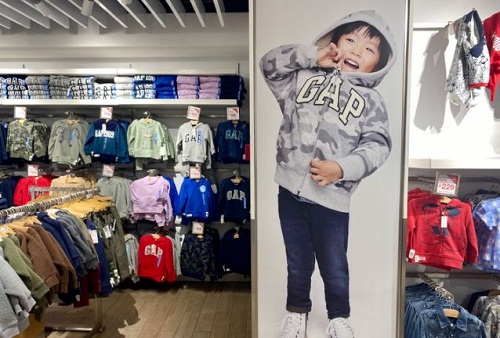 resulting in growing popularity of Taobao brands, says Eddie Lim, a China veteran of fast-fashion brands including Bestseller, Etam and Beaumanoir.
One fast fashion giant that managed to make a mark in China market is the Bestseller Group. Established in 1996, the company has multiple brands — including Jack & Jones, Vero Moda, Only and Selected — and operates more than 7,000 stores across China. Its Chinese business is run as an independent 50:50 venture and creates own localized collections. For instance, a spaghetti-strap, long maxi dress is sold alongwith a T-shirt and a jacket in China while in Europe it may be sold as a standalone piece.
Brands also have to contend with China’s’ approach to COVID-19 recovery. While Western consumers are still stuck with loungewear, Chinese have returned to pre-pandemic styles with dining and social activities open at full capacity since April 2020.
Overall, fast fashion has not having a smooth ride for the past few years. Many brands are facing problems even in their home markets says Jane Du, General Manager, China World Exhibitions. For instance, once a popular domestic brand La Chapelle clocked in heavy losses and plans to delist from the Shanghai Stock Exchange.
Influencers, live streams to boost collections
To survive, brands need proper marketing, opines Du. They need to create freshness by roping in influencers and live streaming their products. A brand that is doing well in China is Uniqlo which retails basic wardrobe staples besides introducing crossover collection to attract customers. Another aspect, fast fashion brands need to consider while entering the Chinese market is the turbo-charged speed with which fashion market keeps changing, especially with the rise of e-commerce brands on Taobao. A Guangzho-based online brand creates design samples in half a day, beating brands based in Beijing or Hangzhou that require at least a week to cut and fit new samples.
Therefore, new fast fashion brands quicken their pace of launching new products. The market is still dominated by price rather than other factors like sustainability, though there is a slow shift to sustainable fashion in the country.
Local garment manufacturers expect good gains as COVID-19 hits imports
The local garment manufacturers are expecting good gains during the summer season as the import of garment from China and Vietnam have been hit owing to the COVID-19 pandemic.
Expressing their satisfaction, the local garment manufacturers believe that if the trend continues for some more time, the local garment industry will benefit hugely and buyers will start reposing confidence in ‘Make in India’ products.
During winters, the local garment industry gained profit because the import of readymade garments from China, Vietnam and Bangladesh was hit. Sudershan Jain, president, Knitwear and Apparel Manufacturers’ Association, said owing to the pandemic, the imports from Red Dragon had been hit hard.
Local garment dealers believe that not only garments but accessories as well were difficult to obtain China, owing to which, innovation on garmenthas taken a blow and the demand is hit.
Chinese internet users lambast H&M for banning Xinjiang Cotton
Sweden’s H&M, the world’s second-biggest fashion retailer, is facing a furious backlash from Chinese internet users who just learned that the company had stopped sourcing cotton from Xinjiang since last year over allegations of forced labor in the region.
The online furor erupted when the Communist Youth League of China (CYLC), the youth division of China’s ruling party, lambasted H&M for issuing a letter saying it was deeply concerned by reports on “forced labor and discrimination of ethnoreligious minorities in Xinjiang.A vast number of Weibo users have called for a boycott of the Swedish fast-fashion chain, which operates over 400 stores in China.
Topics, hashtags, and posts related to the controversy have been dominating Weibo all of today. The main hashtag associated with the issue, Snow-white cotton in Xinjiang, has been viewed more than 200 million times, with thousands of comments calling for the retailer to shutter its Chinese stores and leave the country entirely.
Other international apparel brands, including Nike and Adidas, are also under attack due to their affiliation with the Better Cotton Initiative (BCI), a major international cotton sustainability organization, which suspended licensing of farms in Xinjiang last year due to concerns about the use of forced labor in the region.
Yarn manufacturers to maintain operating profit rates: Crisil
A Crisil study of 75 spinners indicates, despite the pandemic, yarn manufacturers will maintain operating profit rates at 10 per cent this year on account of a sharp rebound in demand in the second half of the current fiscal leading to improved yarn prices.
Prices of polyester yarn and its key input, purified terephthalic acid (PTA) rebounded in September 2020-January 2021. On the other side, prices of viscose yarn and its raw material input have remained largely steady, supporting spreads. Although the prices of polyester spreads are expected to soften over the next two quarters, they would still remain higher than that in the corresponding periods of last fiscal. This will support operating profitability next fiscal, too.
Dinesh Jain, Director, Crisil Ratings says, operating rates for synthetic yarn spinners are expected to be in the range of 65-70 per cent this fiscal, even with strong order flows in the second half. But the spreads are attractive this fiscal. In fact, the low rates provide spinners enough headroom to absorb additional demand next fiscal, without immediate need to increase capacities.
Overall the industry is expected to see contraction in volume to 5.5 million tonne this fiscal from 6 million tonne last fiscal. Spinners are expected to mitigate this impact by tightening working capital cycles, with faster collections and better inventory management, adds Jain.
Vietnam exports 1.2 billion masks till December 2020
Till December 2020, Vietnam’s manufacturers exported around 1.2 billion masks to North America, Europe and around Asia, according to statistics from the General Department of Vietnam Customs. The pandemic triggered a surge in demand for personal protective equipment (PPE) from the manufacturing sector in Vietnam. The country had 6,000 garment factories and textile mills employing some three million workers in 2020.
One of the prominent manufacturers is Vietnam Goods and Exports (VGE) which excels in garment manufacturing and low-tech products like personal protective equipment, such as face masks, gowns, hand sanitizers, wipes, etc. Vietnam’s Ministry of Industry and Trade is bullish on the possibilities of the garment and textile industry producing PPE, particularly in the anti-bacterial cloth mask segment. Trans Thanh Hai, Deputy Director-Export and Import Department of the Ministry said, Vietnam is capable of becoming one of the world’s major cloth face mask producers. Coupled with the fact that anti-bacterial fabric was now being produced locally, he believed production capacity could be increased significantly.
SIMA to develop ELS organic cotton
SIMA Cotton Development & Research Association has submitted a proposal to develop ELS cotton, organic cotton and naturally colored cotton to the. The association has designed and developed a Kapas Plucker that enables farmers to double their net income apart from producing contamination free and least trashy cotton. Cotton Corporation of India, Ministry of Textiles and Government of Tamil Nadu have been extending subsidies to SIMA CD & RA and the farmers during the last two years both for ELS cotton promotion and also for the free distribution of SIMA Kapas Plucker machines to the farmers.
Last year, the government of Tamil Nadu provided subsidy to distribute 200 metric tons of SIMA ELS seeds to farmers free of cost through Cotton Corporation of India (CCI). CCI and Tamilnadu government have also distributed around 9000 Kapas Plucker Machines at free of cost to the farmers.
Coimbatore has signed an MoU with SIMA CD & RA for the production of ELS organic cotton cultivation by supplying all the inputs at free of cost to the farmers and also guaranteeing to procure cotton at market price. The MoU has been signed for the production of ELS organic cotton on a pilot basis in an area of 500 acres at Semmandipatti Village, Namakkal District. The organic ELS cotton will have staple length of over 33 mm and would be suitable to produce organic yarn of counts upto 80s. The crop duration is around 160 days and expected to give the productivity of 10 quintals per acre.
US Cotton Trust Protocol adds over 300 members
The US Cotton Trust Protocol has added over 300 brands, retailers, mills and manufacturers since it opened enrollment six months ago. These include Gap Inc and its lifestyle brands Old Navy, Gap, Banana Republic and Athleta as well as UK retailers Next and Byford. The Trust Protocol also added the first US mills, the first members in Latin America, and Advance Denim, as its members.
The Trust Protocol is a system for more responsibly grown cotton that has committed to six areas of sustainability in line with the U.N. Sustainability Development Goals. It underpins and verifies sustainability progress through sophisticated data collection and independent third-party verification, enabling members to better track the cotton entering their supply chain. Members also get an access aggregate year-over-year data on water use, greenhouse gas emissions, energy use, soil carbon and land use efficiency.
As per Dr Gary Adams, President, the Trust Protocol was designed to fit the unique growing environment in the United States. Members will avail of the critical assurances needed to verify that the cotton fiber element of their supply chain is more sustainably grown.
ORTA’s new collection focuses on climate change
ORTA Denim’s new Deeply Rooted collection focuses on issues of climate action and biodiversity stress, and antiviral protection. The collection includes the Gen H range that features 100 per cent plant based fibers and fabrics, from forest and field to jeans. The range includes a breakthrough denim fabric made with up to 30 per cent hemp, an important net-positive biodiversity crop, sustainably sourced from the leading hemp farm in France that certifies all the stages of production. With Gen H, ORTA perfects the authentic look and feel with the most resilient, soft and bio-positive ecofibers. The organic cotton used in the range are socially and environmentally certified by the Global Organic Textile Standard (GOTS), the world’s leading textile standard for organic fibers. With GEN H, you can wear your denim with an eco-conscience.
ORTA is continually innovating game-changing technologies that are antibacterial, anti-odor, moisture blocking, temperature-balancing, and UV protecting that are redefining denim performance, endurance and safety. Infused with sheltering technology, Denim Guard’s protective antibacterial and antiviral technology disrupts the contagious forces and inhibits its ability to adhere or inhabit your skin. While the Fresh Guard range offers triple benefits of balancing, UV protecting and 100 per cent odor managing, encapsulated with silver to eliminate bacteria.
NCTO’s 14TH AGM presents an overview of the textile industry
At its 17th Annual General Meeting, David Roberts, Chairman, National Council of Textile Organizations (NCTO), presented an overview of the US textile industry. Roberts outlined the industry’s efforts in producing PPE in the face of a once-in-a-life time pandemic. He also presented the US textile supply chain, economic, trade data, and NCTO’s 2020 policy priorities for domestic textile manufacturers. NCTO is Washington, DC-based trade association that represents domestic textile manufacturers
Roberts is CEO of Cap Yarns Inc, a South Carolina specialty yarn manufacturer and a leader in developing unique yarns for the knitting and weaving industry. NCTO’s annual meeting was held virtually on March 23-24.
The meeting also highlighted the US employs around 530,000 people in the textile industry in 2020. The country exported apparels and textiles worth $64.4 billion in 2020. Its exports of fiber, textiles and apparel were $25.4 billion in 2020. Capital expenditures for textiles and apparel production totaled $2.38 billion in 2019, the last year for which data is available.