


FW
UNDP, BGMEA, SDG launch report on sustainability in Bangladesh RMG sector
United Nations Development Programme (UNDP) and the Bangladesh Garment Manufacturers and Exporters Association (BGMEA) in association with Principal Coordinator, Sustainable Development Goals (SDG) Affairs, Prime Minister’s Office and Global reporting Initiative (GRI) launched a report on Bangladesh National Priority Indicators & Sustainable Development Goals. The report highlights the sustainability initiatives of 47 BGMEA member factories. These factories were awarded with a certificate of appreciation for their contribution to NPIs and SDGs through sustainability reporting in the presence of Chief Guest Zuena Aziz, Principal Coordinator, Sustainable Development Goals (SDG) Affairs, Prime Minister’s Office, and Special Guest Dr. Nihad Rashid, Additional Secretary Economic Relations Division, Ministry of Finance.
Aziz highlighted the role of private sector for attaining SDGs by 2030. Only the inclusive participation of government, private sectors and civil society will ensure the timely implementation of SDGs, he said’. Rubana Huq, BGMEA said, the report measures RMG industry’s impact on SDGs to communicate with key stakeholders, such as the government, buyers, trade partners, and communities. It aims to inspire more RMG factories and other industries to undertake sustainability reporting in future.
Swiss textile machinery industry targeted for links with China
Swiss textile machinery firms Rieter and Uster are being targeted for their reliance on China amid allegations of forced labor involving Uyghur and other minorities in the garment supply chain.
As per reports by the Swiss Info, it’s difficult to know how many Swiss textile machines wind up in Xinjiang. As per customs data, in 2019, Xinjiang imported $6.4 million (CHF6 million) worth of machines of all sorts from Switzerland making it the 37th-largest exporter of machinery to the region. Customs data from the Observatory of Economic Complexity (OEC) shows that Xinjiang imports most of its machinery from three countries: Germany ($26.8 million), Japan ($23.4 million) and Italy ($7.4 million).
Switzerland, however, is a major exporter of knitting machine accessories such as spindles, dobbies, and automatic stop motions used in big spinning, weaving or knitting machines. Over the last three years, Switzerland exported knitting machine accessories to the autonomous region worth around $2 million per year.
BGMEA elects Faruque Hassan new President
Faruque Hassan has been appointed as the new president of Bangladesh Garment Manufacturers and Exporters Association (BGMEA). Hassan’s party Sammilita Parishad won BGMEA’s biennial election securing 24 posts of directors while the other panel, Forum, led by ABM Shamsuddin won 11 posts. The voters elected 35 directors. A president and seven vice-presidents will be picked from the elected directors.
Managing director of Giant Group, Hassan promised to address COVID-19-related challenges and unite BGMEA to help the sector grow. The BGMEA election is an important event as the industry is the single largest export earning sector and employs 4.2 million workers directly.
In fiscal 2018-19, Bangladesh exported garment items worth more than $34.13 billion. Its earnings had declined to $27.94 billion last fiscal year as sales collapsed in Western markets because of the fallouts of the pandemic. The sector contributes 15 per cent to Bangladesh’s gross domestic product annually.
Textile Ministry to resolve crisis over yarn prices
Tiruppur Exporter’s Association ‘s(TEA) sincere efforts have resulted in the Ministry of Textiles examining and working to resolve the crisis emerging from the frequent increase in yarn prices and disruptions in regular supply of yarn, says, Raja M Shanmugham, President, TEA. As per him international cotton prices are declining and domestic prices have also gradually reduced; normal price range is expected to in near future.
He believes exporters will have a better run in the new fiscal with strong business confidence. Tirupur Exporters’ Association popularly known as TEA was set up in 1990 in Tirupur under the leadership of A. Sakthivel and strived for the development of exports. TEA has always been quick in taking up issues and stand in forefront to get them addressed. A. Sakthivel was the president of association till September 27, 2016.
Virtual Intex South Asia concludes successfully
Virtual expo, Intex South Asia – Bangladesh edition concluded successfully on March 25, 2021 on Bee2bee.asia. The trade show was visited by over 2,000 trade buyers from Bangladesh and overseas including Sri Lanka, Spain, Mauritius, Finland, Italy, Peru and Algeria. The expo attracted over 70 global suppliers from India, Bangladesh, Sri Lanka, China, Korea, Thailand, Malaysia, Indonesia and the UK through pre-arranged B2B meetings over Zoom and the Bee2Bee platform.
The expo was inaugurated virtually by Golam Dastagir Gazi, Minister for Textiles and Jute and Jogiranjan Panigrahi, Jt. Secretary, Ministry of Textiles, Government of India in the presence of Mohammad Hatem, First Vice-President, Bangladesh Knitwear Manufacturers & Exporters Association (BKMEA), Abdul Matlub Ahmad, President, India-Bangladesh Chamber of Commerce and Industry (IBCCI) and former President, FBCCI and Dilip Chenoy, Secretary General, Federation of Indian Chambers of Commerce and Industry (FICCI). The VIP Opening Ceremony of Intex South Asia Bangladesh was broadcasted live on Bee2Bee, YouTube and Facebook simultaneously.
India was the partner country of Intex South Asia Bangladesh. The Federation of Indian Chambers of Commerce and Industry (FICCI) jointly with Ministry of Commerce & Industry, organised the Indian Textiles Pavilion with 51 participating companies.
Fashion houses to launch NFT collections
As per Vogue Business, several premium fashion houses are planning to launch their own nonfungible tokens (NFTs). As per reports, some retailers are also creating digital versions of real-life clothing items for sale on NFT platforms. Purchasing these fashion NFTs often grants the buyer access to the corresponding real-life apparel.
Marjorie Hernández, Founder, Lukso, says high-end fashion brands are keen to go with the curve on NFTs. For brands like Louis Vuitton and Christian Dior, creating NFTs will be an extension of the already-emerging blockchain utilization in the fashion industry. Back in March 2019, both luxury brands teamed up with Microsoft and blockchain infrastructure builder ConsenSys to utilize the novel tech in authenticating luxury goods.
Besides creating digital twins, these luxury fashion brands also plan to release their own digital collectibles beyond tokenized garments and apparel. Several actors and musicians have launched NFT collections recently inspiring giants to create their line of digital collectibles.
Converse teams up with Kim Jones for a luxury sneakers range
Sneaker brand Converse has teamed up with Dior Men’s artistic director Kim Jones to launch a new range of luxury sneakers known as the Chuck 70. The range has a streetwear feel and features a transparent TPU cage and a trompe-l'oeil sole, which looks like a platform. It also has Kim Jones name printed on the tongue and sockliner.
The limited-edition sneakers will be sold from April 8 on Converse.com and will reportedly be joined by accompanying apparel. Lately, Converse has been teaming up with major fashion houses and renowned designers. Its latest collaborations with Comme des Garçons and Rick Owens –helped it transform the Chuck 70 with a punk-inspired version.
Converse is an American shoe company that designs, distributes, and licenses sneakers, skating shoes, lifestyle brand footwear, apparel, and accessories. Founded in 1908, it has been a subsidiary of Nike, Inc. since 2003.
Indonesia needs to focus on trade promotions to boost falling T&A exports
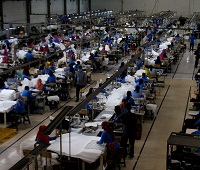 COVID-19 changed public consumption patterns across the world last year. As per Indonesia’s industry ministry, consumption of textile and apparel products (T&A) declined to -8.8 per cent on an annual basis during the year. And as Redma Wirawasta, Secretary General, Association of Indonesian Fiber and Filament Yarn Producers (APSyFI) says, sale of yarn declined to less than 5 per cent before Eid. T&A exports declined to -17 per cent Y-o-Y in 2020, reports Indo Textiles. This further led to a 13 per cent decline in employment rates last year.
PPEs can lead exports
However, the Indonesian textile and apparel industry has the ability to rise from this low by encouraging PPE exports, points out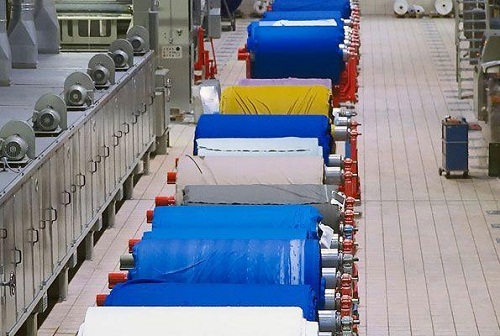 Agus Gumiwang, Minister of Industry. Ministry of Industry's Medical Device Monitoring Dashboard (DMA) informs, Indonesia has a capacity to manufacture 39.6 million pieces of PPEs per month or 356.4 million per year. The country can produce 24.9 million pieces of surgical gowns per month or 224.4 million pieces per year. Its capacity to produce medical masks has reached 405.9 million pieces per month or 3.7 billion per year. It currently produces 360,000 pieces of N95 masks per month or 3.2 million pieces per year.
Against this, Indonesia requires only 14.9 million pieces of PPE, 7.5 million pieces of surgical clothes and 176.6 million pieces of surgical masks. Hence, the country has a surplus of 341.5 million pieces of PPE, 216.8 million pieces of surgical clothing, and 3.4 billion surgical masks by the end of 2021. It can export medical devices worth $ 4.54 billion. Of this, it can export PPE worth $3.16 billion, surgical clothing worth $618.03 million, and surgical masks worth $764.69 million.
Demand to boost domestic production capacity
However, Indonesia has been unable to fully optimize its export potential. In 2020, it exported new medical devices worth only $197.6 million. This included PPEs worth $2.47 million, surgical clothing worth $20.29 million, different masks worth $75.19 million, and N95 respirator masks worth $74.09 million. Elis Masitoh, Director-Textile, Leather and Footwear Industry, Ministry of Industry, attributes this to lack of demand for medical devices from abroad. He believes, an increase in demand can boost domestic production capacity of medical devices. Rizal Tanzil Rakhman, Secretary General, Indonesian Textile Association (API) opines, lack of demand for masks and PPE made in Indonesia is due to its inability to compete with other exporters. He advises the government to encourage trade promotion by Indonesian trade ambassadors in various countries.
As per Ministry of Trade, in 2020 most of Indonesia’s trade attaches and even the Indonesian Trade Promotion Center (ITPC) underperformed in exports. Exports to only 11 out of 33 countries increased. This included China, with an increase of 15.59 per cent, United States, Netherlands, Switzerland, Germany, Australia, Belgium, Brazil, Egypt, Russia and Chile The country, therefore, needs to promote trade with ambassadors in other countries, emphasizes Rizal.
China needs to drive up use of lyocell fibers in textile industry
 Despite being known as the green fiber of the 21st century, prices of lyocell’s prices increased only 6 per cent in January-February 2021 period, while prices of most other fibers increased over 30 per cent. As per a CCF Group report, one reason for this is the slackness in demand due to China’s Lunar New Year holiday. Prices of other fibers grew rapidly in the first two months with easy liquidity in world market. However, prices of most chemical fibers fell after the COVID-19 outbreak last year. For instance, prices of VSF fell to 8.300 yuan/mt in mid- 2020, which was significantly lower than 2015 price levels. Even though prices increased slightly in October, they reached the two low points by mid-December
Low scale, lack of standardization hinders demand
A chemical fiber, VSF is easy to store and circulate. It is used for asset appreciation, controlling raw material costs, or for preserving assets. This encourages downstream companies to buy the fiber in large quantities at the time. The introduction of ‘stay-put’ measures during Spring Festival as well as continuous improvement in supply chain has further strengthened demand for these fibers.
On the other hand, lyocell fiber is still in initial stages of development in China. The standardization of this fiber is low and industrial chain is also not fully developed. The fiber is made on a small scale by domestic enterprises and is not circulated properly.
Immature application squeezing profit margins
Lyocell fiber’s capacity in China is said to have exceeded 200kt/yr by 2020-end. However, its actual utilization rate is less than 50 per cent. This imbalance is a result of immature applications while supplies are growing, this blocks price hike besides squeezing profits.
Stakeholders need to take a serious view of these challenges and boost the use of lyocell fibers. The first Lyocell Fiber Industry Forum to be held simultaneously with the 15th China Hanghzou Cellulose Fiber (Viscose) Industry Forum aims to tackles such issues plaguing the industry.
Pandemic leaves a permanent mark on fashion retail
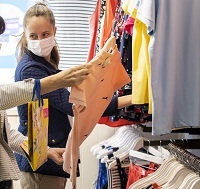 The pandemic caused a seismic shift in fashion retail last year and retailers expect this change continue in future. Figures from UK’s Office of National Statistics show, fashion sales plunged 75.7 per cent and 49.3 per cent in March and April last year. By the end of the year, clothing sales declined almost 25.1 per cent, says a Drapers Online report.
Lockdown restrictions compelled shoppers to shop online, giving a boost to sales of digital fashion retailers. From September to December last year, Boohoo Group’s sale rose 40 per cent while those of Asos rose 35 per cent. Independent retailer Wolfe & Badger also recorded an increase in online sales during the period.
Digital platforms record high sales
Online sales became the common theme for fashion retailers in 2020 with sales of John Lewis growing 70 per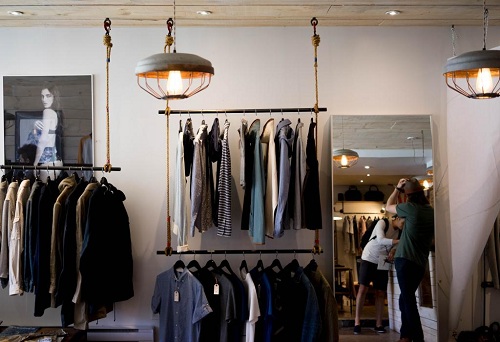 cent by December 2020. The retailer also noted consumers’ growing preferences for shopping during the day rather than evening. Another retailer, Joules also witnessed a shift in consumers’ shopping habits as its digital sales increased from 20 to 70 per cent of its total sales.
Joules improved its digital platform by adding more relevant product listing, enhancing its products filtering, enabling a more seamless search of products and improving website’s navigation. It also added new payment options such as Klarna, Apple Pay and Google Pay.
New technologies to attract shoppers
The rise in online sales also encouraged fashion retailers to use new technologies to interact with shoppers. Wolf & Badger moved events, panels and workshops to Instagram, which enables it to reach a much wider audience, says George Graham, Co-founder and CEO. Similarly, John Lewis launched online personal styling appointments via Instagram. It’s first virtual personal styling appointment was launched via Instagram within three weeks of the first national lockdown. The group now plans to expand these sessions via Zoom from March this year.
While stores have reopened with restrictions and safety precautions, shoppers still do not feel confident enough to venture out and shop. David Dalziel, Creative Director, Dalziel & Pow expects shoppers to again start flocking to stores once restrictions loosen. They would want to reconnect with things they missed during the pandemic besides feeling safe.
Dalziel advises retailers to adapt their in-store experience and range presentations to suit new consumer attitude. He recommends retailers to emphasize on storytelling from the shop window to the fitting room. He also suggests investing in pay-points at the fitting room to create a more seamless journey for consumers.
A toll on retailers’ mental health
The pandemic has also taken a toll on mental health of fashion retail employees. Charity organization for the UK retail industry, Retail Trust has reported an 81 per cent rise in requests for mental health support from people working in fashion retail since the start of the pandemic. The charity noted over a half of them are suffering from anxiety, depression and stress and, has launched nearly 1,000 counseling sessions.
Retailers are also supporting their staff by introducing new safety measures in stores. For instance, high street retailers Matalan and JD Sports installed body cameras to deter and record aggressive customers in store. Marks & Spencer has partnered Unmind – an app designed to encourage staff to regularly take time for their mental health. The retailer also organized a staff Well-being Fair in January 2021. The buying teams of retailer Next have developed new ranges by using digital technologies that enable them to handle diverse tasks from amending garment fit to checking color continuity. The pandemic has changed fashion retail forever. It is unlikely the industry will ever go back to its original mode of functioning.











