


FW
Highlighting achievements will help remove stigma around Bangladesh apparel industry
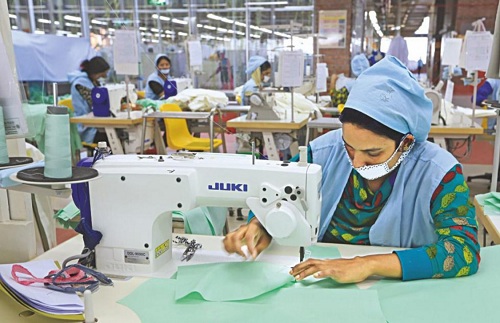
Bangladesh is regularly criticized for poor working conditions in its apparel factories, rising pollution, water wastage, etc. However, for several years, Bangladesh has supported apparel factories through the Accord and Alliance for Bangladesh Worker Safety agreement. The country has also carried out major remediation works costing tens of millions of US dollars, and also rolled out key safety features across the industry, reports Daily Star. It has been ranked second in the recent ‘Ethical Manufacturing Survey’ by QIMA and Just Style. Bangladesh scored 7.7 points in this survey while winner Taiwan scored 8.0. Vietnam ranked third followed by Thailand, Pakistan, Turkey, China, India and Brazil, respectively.
Labor issues in apparel factories
Bangladesh is also perpetually in the eye of storm due to labor issues in its garment factories. However, most of these issues are blown out of proportion and the industry has made significant improvements over the past few years. Bangladesh successfully eliminated child labor from apparel industry with ILO’s help. It increased workers’ wages and ensured their rights protection. However, mis-portrayal in the social media demeans the concerted efforts made by the manufacturers, buyers and the government to transform it.
Media’s responsibility
The Daily Star report states, media needs to refrain from making sweeping comments and publishing fake news that defame the country. On the contrary, it needs to highlight the country’s achievements in promoting safety and sustainability in its apparel sector. This will help it attract more investors in future.
Slow apparel, textile recovery calls for patience from industry leaders
 The first quarter of this year is proving to be a boom for China’s textile and apparel industry with exports increasing 43.8 per cent to reach $65.1 billion, reveals China Customs Statistics Express statistics. As per China Textile, though China reduced its export projection for the year due to the pandemic, apparel exports have registered strong growth owning to robust demand in markets such as the United States.
Apparel exports grow 42.1 per cent
Compared to March 2020, China’s apparel exports grew by 42.1 per cent to reach $9.25 billion in March 2021. However,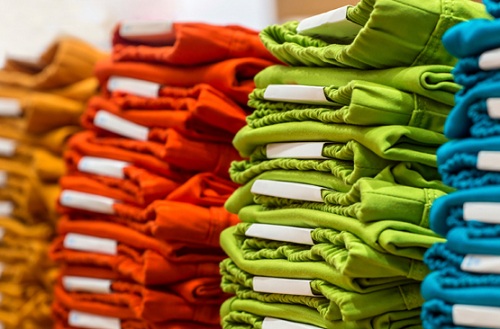 compared to March 2019, this growth was restricted to 6.8 per cent. In the first two months of this year, China’s apparel exports to the US surged 35.3 per cent. Its market share rose nearly 7 percentage points year-on-year to 29.8 percent. Similarly, China’s apparel exports to Japan also increased by 22.3 per cent.
Textile export growth rate declines
Since March last year, China’s textile exports too have increased significantly; though the growth rate is lower than apparel exports. Textile exports have increased by 40.3 per cent year-on-year, however, their growth rate has declined to 8.4 per cent due to a decrease in international demand. These exports are expected to register larger year-on-year decline in the second quarter of this year. Apparel and textile capacities of developing countries are slowly being restored, though full recovery may take some time. The industry needs to be patient and explore new opportunities being presented to it.
Vietnam’s clothing imports rise by 18.2%
Vietnam’s clothing imports rose by 18,2 per cent year-on-year in the first four months of this year to over $4.2 billion, according to the country's General Statistics Office.
Between January and April, Vietnam’s clothing imports increased by 6.5 per cent to over 571,000 tonne of cotton. Their value increased by 11.7 per cent to $984 million.
Over the period, the country also imported 414,000 tonne of yarn worth $ 880 million, an increase of 23.9 percent volume wise and 19.8 percent according to value.
Last year, Vietnam imported clothing items worth $11.8 billion and exported garments and textiles worth $29.5 billion. China was Vietnam's largest supplier of cloth, followed by South Korea and Japan.
Kelheim Fibers collaborates with ZDHC on its Roadmap to Zero program
Bavarian viscose specialty fiber manufacturer Kelheim Fibers has joined ZDHC’s ‘Roadmap to Zero’ program
The non-profit organization, with more than 160 contributors worldwide, aims to eliminate harmful substances from the textile value chain. The ZDHC guidelines will provide the MMF producer uniform criteria for measuring indicators such as wastewater, air emissions and other process-related parameters. The measured data is independently monitored and published.
The collaboration gives Kelheim Fibers an access to range of best practices in chemical management and an opportunity to network and learn from each other. The company claims to be the world’s first EMAS-validated viscose fiber producer. The company sees its ZDHC contributorship as another building block on the road to even more sustainable fiber production.
Nike FY20 Impact Reports shows mixed progress on sustainability
Nike’sFY20 Impact Report, titled ‘Breaking Barriers,’ shows mixed progress on sustainability, with the business achieving its goal of sourcing 100 per cent of its cotton from more sustainable sources but failing to reduce its average product carbon footprint.
As per Textlle Focus, Nike has managed to divert 99.9 per cent of footwear manufacturing waste from landfill by reducing freshwater usage of textile dyeing and finishing by 30 per cent, exceeding its goal of 20 per cent. In addition, since 2015, the use of more sustainable materials in clothing has increased from 19 to 59 percent, and the use of renewable energy in owned or operated facilities in the United States and Canada has increased to 100 percent.
Nike, on the other hand, made little progress against its goal of reducing its average product carbon footprint by 10 per cent, and only managed to minimize energy usage in its main operations by 3 per cent against a 25 per cent target. Nike’s latest sustainability goals, outlined in the planet section, include a 70 per cent reduction in greenhouse gas (GHG) emissions in owned or controlled facilities, as well as fleet electrification. Despite expected business expansion, it pledges that GHG emissions from key suppliers’ manufacturing and transportation activities will remain at or below 2020 levels. It also aims to reduce carbon emissions by half a million tons by the use of environmentally preferable products to 50 per cent.
US Cotton Trust Protocol joins TextileGenesis platform
The US Cotton Trust Protocol has joined TextileGenesis™ platform to deliver unparalleled supply chain transparency through its Protocol Credit Management System (PCMS). As per Textile World, the PCMS records and verifies the movement of US cotton fiber by capturing and verifying article level transactions between the multiple participants along the complete supply chain. Upon receipt of their finished products, Trust Protocol’s brands and retailers can claim credits, digital tokens equivalent to the physical cotton produced under the program, and make corresponding claims related to the environmental metrics and sustainable practices adopted by participating Trust Protocol growers.
The collaboration will result in initial pilot trials with selected brands and mills in early June 2021, with full deployment of the PCMS envisioned for early 2022. Since its launch in 2020, the Trust Protocol has included 300 brands, retailers, mills and manufacturers as its members. The protocol is included on the Textile Exchange’s list of 36 preferred fibers and materials that more than 170 participating brands and retailers can select from as part of Textile Exchange’s Material Change Index program. The Trust Protocol also plans to align with existing standards in the cotton industry and is part of the Sustainable Apparel Coalition, the Forum for the Future Cotton 2040, and the CottonUp guide.
Pandemic compels fast fashion brands to concentrate on online sales strategies
The pandemic has compelled many fashion brands to close their physical stores and concentrate on online sales strategies. As per a Mancunion report, the pandemic has created a huge opportunity for e-commerce development as many customers now prefer online shopping. Around 53 per cent consumers have altered their buying habits which helped brands like H&M survive during the crisis.
Another change that the pandemic brought about is in demand. Consumers have become aware about sustainability and buying well-made multifunctional items, says Masha Binger, Founder, ESG Alpha. Fashion companies need to rethink their goals and adjust to the new reality in a post-coronavirus world, she adds.
Anna Gedda, Head-Sustainability, H&M foresees a shift in customer preferences and attitudes post COVID-19. The brand is focused on providing sustainable goods and clothing.
The rise in online shopping has also promoted secondhand selling on newly created apps like Vinted and Depop. The Mancunion reports expects fast fashion brands to now launch more conscious and sustainable collections in their physical and online stores. It also hopes brands will launch more affordable and accessible clothing ranges.
Shahi Exports partners ATE for machinery supply
Shahi Exports teamed up with ATE for providing the most important machines and solutions. The two companies have been associated with each other for more than 10 years. Their first association was at Sarla Fabrics’ plant where ATE supplied a majority of the machines like the Then-Airflow® dyeing machines, Fongs’ yarn dyeing machines and Monforts stenters to the knit processing plant.
Some of the ATE machines used by Shahi Exports are the Goller continuous bleaching, mercerising, pad steam and washing ranges, Osthoff singeing machine, Monforts e-control continuous dyeing ranges, Monforts stenters, Monfongs shrinkers, Zimmer rotary printing machine, a complete package of Color Service chemicals, dyes and print paste dispensing system, and also Karl Mayer sizing machine for their weaving plant.
Apart from capital machinery, ATE also offers accessories for spinning and processing plants. The company has executed many textile projects across India, including for such clients as Vardhman, Nahar, Trident, MI Industries, PC Colours, Arvind, Sintex, Birla Century, Welspun, Mafatlal, Morarjee, Indo Count, Premier and Himatsingka. One of the remarkable project executions has been at Shimoga in Karnataka for Shahi Woven, which was commissioned a year ago with a production capacity of 200,000 metres per day. The plant has been set up for processing various substrates like cotton, viscose, synthetic and its blends. The process house has been designed to process bi-stretch lycra fabrics too.
Miu Miu launches new denim upcyled collection with Levi’s
Miu Miu has collaborated with denim brand Levi’s to launch a new upcycled collection. As per Sourcing Journal, the collection features pre-owned denims revamped with new embellishments and colors. The collection focuses on vintage garments including Made in USA’ men’s 501 jeans and Trucker jackets from the 1980s and 1990s but restyled with women in mind.
Designs in the collection tap into emerging trends for regal adornments and glamour. No two pieces in the collection are the same. Denims are embellished with crystral, pearl, floral and diamante embroidery. Trucker jackets have been updated with trendy puffed sleeves while jeans have bold leather patches featuring Art Deco-inspired intarsia motifs. Other jeans are finished with ivory silk duchesse turn-ups and jackets are adorned with oversized white lace collars.
Each garment features a co-branded backpatch in Miu Miu’s signature pink. The collection also includes a specially commissioned Miu Miu carrier bag stamped with the Levi’s logo. To be launched in Mid-May, the collection will be available first at London Selfridges and Shanghai IAPM. Later, it will be available at Dover Street Market Los Angeles, 18 Miu Miu stores worldwide and on miumiu.com.
Cashmere clothing market to grow by 3.8% CAGR by 2024
As per the ‘Cashmere Clothing Market 2021 report, worldwide market for cashmere clothing is expected to grow at a CAGR of roughly 3.8 per cent over the next five years to reach $3,230 million in 2024. China is the largest supplier of raw materials for cashmere clothing as it supplies 70 per cent of cashmere in the world. China is also the largest consumption market, due to the rapid growth of the national economy as well as gradual improvement in quality of life. The market houses many famous brands such as Loro Piana and Brunello Cucinelli. However, China’s share in the world cashmere market is low which has led to a decline in value of many local enterprises.
US playes an important role in global cashmere clothing industry, Asia is the major manufacturing base with low labor and material costs. The Cashmere Clothing Market 2021 reports focuses on the key players identified by their market share. The report also provides production data, sales profit, upstream raw materials sourcing, downstream buyers, consumption, import, export, trade data, price, gross margin, analysis and forecast.











