


FW
British retailers see huge sales boost post lockdown: BRC
As per the British Retailer Consortium (BRC), British retailers reported a big boost in sales in May, after lockdown measures ended the month before and a relaxation of COVID restrictions on hospitality drew more shoppers into town centres.
Total sales among the consortium’s members, who include supermarkets and high-street chains, increased by 10 per cent last month than in May two years ago.
This was the biggest increase in sales compared with 2019 for any month since the start of the pandemic.
Compared with May 2020, when most non-food retailers were shut due to lockdown restrictions, total sales were 28.4 per cent higher.
Sales of clothes, shoes and furniture benefited from shoppers being able to view goods in person since non-essential retailers were allowed to reopen in April after months of closure, said BRC.
Relaxed restrictions on socializing also encouraged shoppers to buy new summer clothes.
Payment processor Barclaycard, which sees almost half of credit and debit card transactions, said consumer spending was 7.6 per cent higher than in May two years ago.
However, spending at restaurants declined by 54 per cent while that at pubsand bars declined by 19 per cent from two years. Foreign travel remains highly restricted. Spending with airlines was 74 per cent lower than in May 2019, little better than April.
Government permits Tirupur exporters to resume operations
The government has permitted export units in Tirupur to resume operations in compliance with COVID-19 guidelines. The government has allowed export units and their vendors to operate with 10 per cent workforce. Welcoming the decision, Raja Shanmugham, President, Tirupur Exporters Association said, exporters in the city have decided to focus on completing pending orders and preparing samples. Other industries in the garment cluster, like knitting and dying also plan to simultaneously resume operations within a few days
On the other hand, Tirupur Exporters and Manufacturers’ Association (Teama) has advised members against resuming business for a week. GR Senthilvel, Secretary said, the association can make alternative transport arrangements even if exports are delayed for a week. Meanwhile, the South India Spinners Association (Sispa) has urged chief minister MK Stalin to allow them operate spinning mills with workers staying on mill premises.
Indian manufacturers should focus on smaller orders, say experts
Industry insiders and industry watchers strongly believe Indian manufacturers, especially small and medium-size, should focus on small/emerging buyers or buyers having small orders and high stock keeping capabilities, as they are not preferred by other apparel exporting countries. Such buyers wish also to source more from India, mostly because of flexibility in order sizes and production capabilities.
As per Apparel Resources, there are thousands of buyers who source less than $1 million annually from India. There is also a segment of retailers that have their liaison offices in India but their sourcing from India is only around $1 million or even less on an annual evaluation. A case in point is Netherlands-based The Sting Company, known for its men and women products, which owns around 160 stores with a turnover of €400 million but its sourcing from India is just Rs 50 crore. Indian MSMEs should tap such companies regularly as they provide good round-the-year business for small manufacturers, say experts.
LVMH explores Canopy initiatives to transform supply chains
LVMH is partnering award-winning environmental not-for-profit Canopy to explore its Pack4Good (packaging) and CanopyStyle (fashion) initiatives to transform supply chains, save forests, and bring alternative NextGen Solutions to the mainstream. By exploring these initiatives, LVMH aims to prevent its paper, paper packaging and fabric making factories from using fibers made from world’s ancient and endangered forests by the end of 2022.
LVMH also aims to influence its supply chains to protect the world’s remaining forests and endangered species habitat and forward the Free, Prior and Informed Consent of communities and Indigenous rights and title. LVMH and its maisons will also support the development of Next Generation Solutions such as smart designs and use of agricultural residues, recycled textiles, and microbial cellulose to manufacture paper, packaging, and textiles instead of endangered forest fiber.
LVMH’s commitments will contribute significantly to the transformation of unsustainable supply chains and the development of life-affirming value chains.
ITFC, UNIDO partner for new projects
The International Islamic Trade Finance Corporation (ITFC) and the United Nations Industrial Development Organization (UNIDO) have partnered to develop new projects in the industry. One of these projects has been initiated by the Better Cotton Initiative. It aims to revive the Egyptian cotton industry by supporting growers to cultivate sustainable cotton. ITFC and UNIDO will undertake this project to ensure that Egyptian cotton sector remains resilient with increased production, easier access to finance and an enhanced safe operating environment for workers.
Through its strategic partnership with ITFC, UNIDO will also promote industrialization, trade, and sustainable development for common member countries towards achieving the Sustainable Development Goals in general and SDG 9, in particular, says Li Yong, Director General, UNIDO.
UNIDO will also participate in the development of the second phase of Aid-for-Trade Initiative for Arab States (AfTIAS 2.0). The initiative aims to enhance the environment for international trade in the Arab region by making it more efficient and inclusive, thereby creating opportunities for employment and contributing to sustainable development.
India, Australia to resume CECA talks
India and Australia plan to resume negotiations to renew the Comprehensive Economic Cooperative Agreement (CECA). As per Apparel Resources, the agreement will boost India’s apparel exports to Australia by $500 million. Besides having preferential agreements with China and Vietnam, Australia also gives GSP benefits to Bangladesh, resulting in a 5 per cent duty advantage for these countries vis-à-vis India.
In fiscal 2021, India’s exports to Australia had been priced at $4.04 billion, while imports were priced at 8.24 billion. Australia imports around $6.6 billion worth of apparels from across the globe. However, India’s share in these imports is just 1.2 per cent. The resumption of trade talks is likely to boost these figures. .
Last month, EU and India had agreed to restart the free trade agreement to strengthen the economic cooperation especially amidst the fast growing influence of China. On India’s production-linked incentive scheme geared towards strengthening manufacturing within the nation, Tim White, Commerce and Funding Commissioner, Australia, said the deal might boost India’s infrastructure sector.
US apparel companies consolidate sourcing post pandemic
As per a report by Fash465, more US apparel companies are consolidating their existing sourcing base more than they did during the pandemic. Nearly half of the top 30 US apparel companies have either sourced from fewer countries or worked with fewer vendors in 2020 than 2017-2019 before the pandemic. In comparison, only about one-third of respondents sourced from more countries in 2020 than two years.
As per the report, the consolidation strategy of these US apparel companies focus on forming a closer relationship with key vendors and ensuring social and environmental compliance. Apparel companies are leaning more heavily on suppliers that have proven to be reliable, capable, and flexible. They are working closely with these suppliers to build an efficient and trust-based supply chain, the report adds.
Companies are also cutting ties with vendors not adhering to government mandates and proprietary codes of conduct. They are also diversifying away from China to its competitors in Asia. In response to COVID-19 and the new business environments, US brands and retailers are also committing to innovations in sourcing and supply chains.
New report portrays dismal picture of labor practices in UK fashion industry
A recent ranking of UK's 18 most influential high street and online fashion retailers by the Alva Group portrays a sad picture of the labor practices and supply chain worker conditions across brands with half of them generating a negative impact. It states, the ranking contains an overall ESG score for each company based on information across 10 metrics. It covers issues such as diversity and inclusion, community relations, labor practices, product safety and quality and environmental impacts. The ranking derives the data for performance on these metrics rom a range of sources, including brands’ own reports, investor relations, government inquiries and NGOs.
As per these rankings, while brands have made strong progress on employee engagement, diversity and inclusion and community relations in recent months, most of them lag on labor practices and safety. According to the rankings reports, Primark and Boohoo Group are the worst performers with Boohoo Group being at the centre of a worker rights scandal in recent months.
Other brands scoring below the league table’s average were H&M Group, Next and TK Maxx’s parent firm TJX Companies. These firms, along with Boohoo Group and Primark, were deemed by Alva to have a net negative impact on ESG issues. Brands that failed to meet the sector average but recorded a positive score were New Look, ASOS and Frasers Group, the parent company for Sports Direct.
In the report, Alva warns that issues regarding labor practices and product quality and safety are becoming more visible to investors and consumers in the current context.
Stop using tariffs as negotiating tools, urge UK, US fashion experts
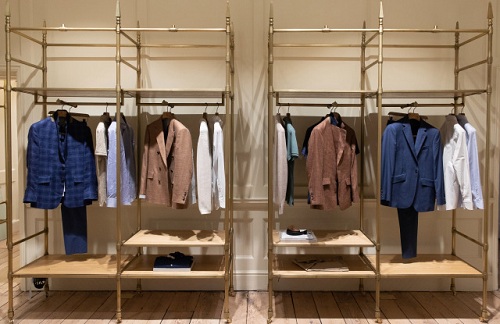
In retaliation against the digital services taxes adopted by the UK, Italy and Spain, the US had decided to impose 25 per cent tariffs on the import of British fashion and luxury goods. However, it soon suspended these tariffs for six months owing to upcoming G20 meetings and the G7 summit.
Making multinationals pay for digital services in the country
As per Women’s Wear Daily, UK will host the 47th G7 summit in Cornwall, England, from June 11 to 13. The primary agenda of this summit would be to resolve the online tech tax challenge. On its part, the British government remains committed to scrapping the new digital tax in support of tech giants such as Amazon. It introduced a new 2 per cent tax on revenues generated by UK-focused search engines, social media services and online marketplaces in April this year.
Most of these search engines and marketplaces are operated by US-based companies including Amazon, Facebook and Apple. By rectifying this misalignment, the British government aims to ensure that multinationals operating digital services in the country contribute to the nation’s development.
Tariff suspension to boost business of British SMEs
However, the US retaliated against this stance with new tariffs worth nearly $325 million. As per reports, the new tariffs cover men’s and women’s outerwear, women’s and girls’ dresses, men’s shirts and ties, beauty products, leather shoes, gold necklaces and jewelry made from base metal. Katherine Tai, Representative, USTR says, the US aims to first reach a consensus on its decision in the upcoming OECD and G20 meetings, and has therefore, suspended these tariffs for the time being.
The suspension of decision has been welcomed by most brands and industry organizations. Emmanuel Saujet, Co-Founder, International Cosmetics and Perfumes said, the suspension would boost the luxury fragrance business in North America. Millie Kendall, CEO, British Beauty Council, expressed her delight saying, the tariffs would have devastated many British SMEs considered significant trade partners by the US.
Protecting industry jobs
Adam Mansell, CEO, UK Fashion and Textile Association urged the British government to ensure tax-related disputes are included as a part of the wider negotiations with the US trade authorities. Helen Brocklebank, CEO, Walpole, noted the British luxury sector has a decades-long relationship with the US and creates around 160,000 sustainable and highly skilled jobs in both countries. Hence, trade representatives need to ensure that they do not endanger these jobs in either of these countries. Steve Lamar, President and CEO, American Apparel & Footwear Association (AAFA) is also opposed to using tariffs as negotiating tools and urged the government to remove them completely.
Budget 2021-22 fails to meet expectations: BGAPMEA
Bangladesh Garments Accessories and Packaging Manufacturers and Exporters Association (BGAPMEA) said the budget for fiscal year 2021-22 has failed to meet their demands for reducing corporate tax and source tax and providing cash incentive.
Abdul Kader Khan, President, says, though the export-import policy mentioned about providing equal facilities to both direct and deemed exporters, the sector never gets the equal facilities," he noted.
The budget has proposed reducing corporate tax to 30 per cent from existing 32.50 per cent, despite their demands of 10-12 per cent like other export-oriented sectors, he said.
Khan urged the government to consider 10 and 15 per cent corporate tax, respectively, for green and other factories to help overcome the financial crisis in the current situation.
The BGAPMEA president also demanded 0.25 per cent source tax, which is 0.50 per cent at present.
Some 1,800 small and medium accessories and packaging makers are meeting the requirements for 30 to 35 types of such items needed for the RMG exporters, while contributing to help save a huge amount of foreign currency, he explained. The government has been providing cash incentives to some 35 products for many years to increase exports, he said. But the accessories and packaging sector is yet to receive such support in spite of being the export-oriented and SME industry. He demanded 1.0 per cent cash incentive for the sector to help survive the 1,800 factories. The trade body also demanded that the government provide equal budgetary facilities to the accessories and packaging makers as given to the direct exporters, taking the sub-sector's contribution to the export trade and economy. The BGAPMEA, however, hailed the overall budget.











