


FW
Dubai to host virtual matchmaking sessions in September
Dubai plans to host virtual business matchmaking sessions in September, aimed at advancing the UAE-India collaboration in the area of retail tech.
The project is conceptualized by the Dubai Startup Hub, an initiative of the Dubai Chamber of Commerce and Industry, in collaboration with the chamber's international office in India.
The Dubai Technology Tour event will feature a virtual UAE trade mission, comprising public and private sector stakeholders, offering Indian scale-ups access to meet and pitch their business to prospective investors and business partners.
The meets will familiarize the delegates with various aspects of Dubai's economy and the business landscape. It will make them aware of the entrepreneurial ecosystem in Dubai and the legal framework of starting business. Various local business leaders are expected to address the participants on current market opportunities and key trends impacting the retail sector.
The Tour will also offer the Indian companies access to Dubai Startup Hub's 'Scaleup Dubai' program and the services of Dubai Chamber's representative offices around the world.
China’s yarn imports rise by 66.24% in May’21
China’s cotton yarn imports increased by 66.24 per cent Y-o-Y in May’21 to 168,700 tonne, reports GACC. Cumulatively, from January to May 2021, the import of cotton yarn increased by 35.82 per cent to 975,200 tonne,
As per Apparel Resources, this increase in cotton yarn import can be attributed to reviving production and sales of cotton textiles and garments in China.
However, as per cotton yarn traders in customs clearance zones in Guangdong, Jiangsu and Zhejiang markets, the quotations of cotton yarn sourced from India, Pakistan and Vietnam are in line with prices of domestic cotton yarns of the same count and quality.
Upside down prices of per tonne yarns are making the scenario even complicated. The quotations of light textile market in coastal areas are concentrated at US $ 3,937-3,984/tonne, while the price of C32 package bleached yarn of India and Pakistan reaches US $ 4,020-4,051/tonne.
A new business model can help Shein expand product and consumer base

Offering customers the trendiest looks at pocket friendly prices, has helped Shein emerge as the most downloaded shopping app in the US in recent monthly rankings. As per research company Similarlweb, Shein’s website gets more visitors than any other clothing brand or retailer in the world. A May ranking by the Kantar Group and Google ranks Shein higher than other market leaders like Tencent, DJI, Trip.com and Tsingtao beer.
The retailers’ latest financial results also speak of its stupendous success. As per the Chinese financial news publication Late Post, established in Nanjing in 2008, Shein’s revenues doubled last year to $10 billion and reached almost $2 billion last month. The company owes its success to a quick market turnaround time, says an Asia Nikkei report. It can mass-produce a new piece of clothing, right from the design process in just five to seven days whereas fast fashion brand Zara requires two to three weeks to achieve the same results.
Analyzing latest Google trends
Shein achieves this through Google Trends and competitors' websites which help it analyze latest fashion trends in individual markets. The company’s in-house designers study these trends to create their own prototypes and launch on the platform.
Once these items are launched, their demand is monitored by measuring user clicks and additions to virtual shopping charts. This helps the company manage inventory and update its suppliers about its materials needs.
Algorithms to guide users with purchases
Shein is also able to guide new users with purchases through algorithms developed by world-class big data developers and machine-learning experts. On average the company launches over 1,000 new products on its website in a day. The number of new releases per week surpasses Zara’s launches for an entire year.
Another advantage that Shein has is its cheap rates. The items are sold at cheaper than other fast fashion brands. A pair of jeans sold by Zara for $49.90 is sold on the Shein platform for just $17.
Following production ethics
Shein is known for paying its suppliers before time. The company processes suppliers’ payments within 30 to 45 days of receiving the goods. Shein also helps suppliers with financial loans and supply chain management software. The company has over 300 suppliers who can process orders as small as 30 items that helps Shein gauge consumer response.
Innovative marketing for a pleasant experience
Shein’s comprehensive marketing strategy helps the e-commerce company attract consumers. Combining social media, user-generated content, search engine optimization, short videos and livestreaming as well as pop up stores, the strategy helps Shein provide young consumers a pleasant shopping experience.
Consumers can also help Shein market products by uploading their pictures and videos wearing Shein clothes on social media platforms. They can also promote Shein’s products on TikTok, Facebook, Instagram and Pinterest. Social media influencers can also endorse Shein’s clothes in exchange for free clothes every month besides 10 to 20 per cent commissions on recommended sales. The company, which recently expanded from women’s wear to men’s and kid’s clothes, now plans to open to its platform to outside vendors.
In future, Shein can follow a TikTok like approach and launch livestream shopping. It can also introduce mobile payments besides expanding supply-chain finance services. The company has a customer base of 7 million monthly active users. Though it’s innovative supply-chain pull model have so far helped achieve great results so far. It needs more data and newer ways to monetize growing user base. In future, it will have to either build a new online model or join an existing one to expand its product and consumer base. What route it takes, only time will decide.
IWTO: Encouraging young professionals for a career in the wool industry
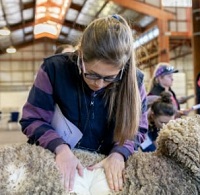 The global authority for standards in the wool textile industry, the International Wool Textile Organization has been representing the collective interests of global wool trade since 1930. Having over 33 members in 23 countries across the world, the IWTO has been running a successful Young Professionals program since 2012.
Valuable insights for young professionals
Through this program, the organization offers mentorship and networking opportunities to professionals under 35 years. The skills of these young professionals are matched with those of senior industry member to provide them with valuable insights and experience into their strengths.
The International Wool Textile Organization held its first IWTO Congress 2021 from May 17-21, 2021. The meeting focused on preparing young professionals for a career in the wool industry. Elaborating on her experience, Christa Rochford, Wool Marketing Program Manager, American Wool Council, who entered the industry seven years ago, urged the professionals to work harder to make their mark in the industry and encourage others to consider it as a career option. She emphasized on sustainability in the wool industry as being one of the key values for IWTO, and one that extends beyond the product itself.
Educational programs to upskill wool growers
Rochford’s speech was followed by a presentation by China Wool Textile Association that summed up the opportunities for young people in the wool industry. Although focusing on China, the presentation emphasized on the similarity of trends in the industry across the world. The presentation elaborated on the promising career opportunities for young professionals in the industry and opportunities for them to acquire new skill set.
Elaborating its strategic plan Wool 2030 for the national wool industry, Australian Wool Innovation (AWI) emphasized on the need to upskill wool growers to fuel future growth. The organization said, this could present a huge challenge for the industry as only a few universities offer wool specialist courses. The wool industry also faces an acute fund shortage to undertake future research and development activities. The IWTO can the industry meet these challenges highlighting career opportunities to young professionals.
Off late, several wool textile companies have been supporting the industry by funding specialized education programs. One such company is the Marzotto Group, which is supporting a two-year diploma course in Fashion Sustainability by offering space for course classes inside the group’s mills in Valdagno, Italy.
Walmart unveils project to reduce carbon emissions
Walmart has unveiled a project to use renewable power for half of its operations by 2025, and to cut its emissions by roughly 18 percent by that timeline, according to its 2020 Environmental, Social & Governance Report.
As per a Reuters report, Walmart and the retailers are undertaking the program in a tie-up with the UN group COP26 High Level Climate Action Champions, as well as the business organization the World Business Council for Sustainable Development. The retailer has also collaborated with the United Nations group, a global business organization, and other major retailers including H&M, Ikea and Kingfisher plc.
The initiative, billed the “Race to Zero Breakthroughs,” aims to cut emissions to curb the rise of global temperatures to within 1.5 degrees, according to the groups.
The retailer has previously emphasized its efforts to target its supply chains, and to nudge suppliers toward reporting their own lowered emissions. In its Project Gigaton campaign, Walmart has outlined a goal of avoiding some 1 billion metric tons of emissions by 2030. More than 2,300 suppliers have joined the effort since it began in 2017, according to Walmart’s website.
Protect garment workers from COVID-19, urges Human Rights Watch
Human Rights Watch has urged the Sri Lankan government, factory owners, and the international clothes brands sourcing from Sri Lanka to protect the safety and employment rights of garment workers during the COVID-19 pandemic.
Meenakshi Ganguli, Director-South Asia, Human Rights Watch, the Sri Lanka’s garment workers are entitled to work in safety and be properly paid even when they fall sick or need to quarantine. She urged the government and employers to fully implement existing agreements and guidelines, be transparent about COVID-19 infections in factories, and provide for workers’ welfare instead of intimidating and silencing them.”
As per the International Labor Organization, one in seven Sri Lankan women are employed in the garment sector. There have been repeated outbreaks in garment factories since April. Yet, five labor rights activists from four organizations have received complaints from workers that factory managers pressured workers to work without adequate occupational health and safety measures.
All five said that numerous workers from different factories complained to them that they lost pay when they fell sick or needed to quarantine. The activists said that the police or military personnel had intimidated them to stop them from speaking out.
Human Rights Watch urged the government and factory owners to take effective steps to isolate workers who test positive, and ensure that those receiving treatment or in isolation or quarantine receive full pay. It also urged the government to distribute relief packages to workers irrespective of which part of the country they come from, and follow ;previously agreed safety measures and guidelines.
Texprocil urges for the notification of RODTEP rates
In an interactive meeting with Piyush Goyal, Union Cabinet Minister of Textiles and Darshana Jardosh, Minister of State for Textiles, Manoj Patodia, Chairman, Texprocil urged for the notification the RODTEP rates at the earliest and also maintaining the RoSCTL rates for Made ups under the RODTEP scheme.
He also requested the minister to remove the custom duty on Cotton as the variety of extralong staple branded cotton and contamination free cotton which was mainly imported and not available as yet in India in sufficient commercial quantities.
Patodia highlighted that the Cotton textile sector is one of the few sectors that had achieved a positive growth in 2020-21 despite the pandemic situation.
Patodia pointed out, exports of Cotton textiles (including raw cotton) during this period reached $ 10723 million as against $ 9,799 million in 2019-20 registering a growth of 9.43 per cent.
Patodia also urged Goyal to include the textiles and clothing sector upfront in the ‘pre-negotiation scoping phase’ or any envisaged ‘early harvest ‘ program to overcome the disadvantage faced by the Indian exporters due to duty concessions already granted by UK to competing nations like Bangladesh , Pakistan, Vietnam , Turkey and Sri Lanka.
Similarly he also requested that the Indo- EU FTA should be expedited which will help the Indian exporters to overcome the disadvantages of tariff preferences given to competing countries and create a level playing field .
Japanese apparel companies plan to ban Xinjiang cotton
Major Japanese apparel companies are planning to stop using cotton grown in China's Xinjiang Uygur Autonomous Region. As per NHK World, the firms are reviewing their supply chains amid allegations that the material is produced with forced labor.
Apparel company World plans to stop selling items made with cotton from the Xinjiang region. The move will help the company address human-rights issues.
Sporting-goods firm Mizuno also plans to discontinue using cotton products made in Xinjiang and is reviewing its supply chain for the same. But the operator of Muji-brand household-goods stores will continue using Xinjiang cotton in its products as a recent. recent inspection found no major violations, including forced labor.
Allegations that ethnic Uyghur minorities in the Xinjiang region are being subjected to forced labor have drawn worldwide criticism. Beijing denies that the practice is taking place.
There have been boycotts in China of foreign brands that have come out against using Xinjiang cotton.
Growth in China’s garment sector stabilizes from January-May 2021
Growth in the China's garment sector stabilized in the first five months of 2021 as income, profits and production grew, reports MenaFN.
As per the Ministry of Industry and Information Technology (MIIT), from January to May, the combined operating income of 12,451 main enterprises in the sector grew by 13.20 per cent to 525.1 billion yuan.
The total proceeds of these enterprises grew by 27.87 per cent to 23.5 billion yuan in the period, while the production of the companies increased 20.89 percent over one year earlier to 9.075 billion pieces.
China's online retail sales of clothing goods increased 28.2 percent year on year in the first five months, while the country's garment and accessories exports increased by 48.3 percent year on year to $56.6 billion.
ASOS enters into a JV with Nordstorm for Topshop garments
British online fashion retailer ASOS has entered into a joint venture with department store Nordstorm to sell brand Topshop garments at its stores in an effort to reach more US and Canadian customers.
As per a Reuters report, US-based Nordstrom will buy a minority interest for an undisclosed sum in the Topshop, Topman, Miss Selfridge and HIIT brands, which ASOS bought from the administrators of the collapsed Arcadia Group for $364 million earlier this year.
ASOS, which sells fashion aimed at 20-somethings, would keep operational and creative control over the brands. The joint venture also paves the way for a broader tie-up with Nordstrom to deepen ASOS's presence in North America
Nordstrom would become the British firm's first-ever retail partner, and will look to launch its brands on Nordstrom.com and in select retail stores, ASOS said.











