


FW
Clean Clothes Campaign urges for immediate implementation of FLA’s recommendation
Clean Clothes Campaign has called for the immediate implementation of Fair Labor Association’s (FLA) recommendation with the launch of a new documentary, How to Steal Your Workers’ Future, an intimate and powerful portrayal of the long-term devastation that severance theft causes for garment workers and their families.
The film highlights the case of Jaba Garmindo, an Indonesian garment factory producing for Uniqlo, among other brands, that went bankrupt in 2015. Since then, 2,000 former Jaba Garmindo workers have been fighting for the US$5.5 million in severance pay that is legally-owed to them. Life for these workers has been extremely hard, made worse since Covid-19, and many have been surviving on mounting loans or, as shown in the film, by earning a couple of dollars a day collecting and selling trash. Uniqlo, a brand worth $9.2 billion, continues to deny any responsibility towards the workers and refuses to pay up.
The film launch comes a week after the FLA released the results of their 18-month investigation into the Jaba Garmindo case and the responsibilities of two of its member brands, Uniqlo and s.Oliver, who were both buyers from the factory. Clean Clothes Campaign welcomes the recommendation made in the report that brands give financial relief to the ex-Jaba Garmindo workers.
The 12-minute documentary, produced by Fat Rat Films, presents a window into the harsh realities of severance theft, and what it really means when big name brands such as Uniqlo turn their backs on workers. There has been an exponential rise in severance theft cases since the pandemic began, with between $500-$850 million in severance pay stolen from garment workers in the first year of the pandemic alone and How to Steal Your Workers’ Future highlights the urgent need for brand accountability.
Hightex International Fair postponed to June 2022
Scheduled to be held on June 22-26, 2021, the Hightex International Textile and Non-Inventive Trade Fair has been postponed to June 14-18, 2022 due to the impact of the ongoing COVID-19 epidemic in the world.
As per a Textile Today, Hightex 2022 will be held in Istanbul Tuyap Fair and Congress Center alongwith with the ITM 2022 Exhibition.
The trade fair will host the first and only exhibition of its field in Turkey for five days in Istanbul. It will host the world’s leading technical textile and non-woven manufacturers. Many companies from Turkey and abroad will showcase their latest technology and products at the event.
Industry leaders from those involved in textile and apparel treatments to ready-to-wear, decor to cosmetics, from automotive to defense, will visit the fair. It will showcase the latest technological innovations of the technical textiles and nonwovens industry. It will host industry professionals from the technical textiles and nonwovens sectors in Middle and Eastern Europe.
Finnish textile and fashion entrepreneurs rise to solve industry challenges
A community of entrepreneurs is trying to solve some of the greatest challenges facing the textiles and fashion industries in Finland.
As per an UNDP report, Business Finland funds innovation projects to help researchers, companies and public sector develop new technologies and business models. The organization encourages co-innovation as it accelerates the innovation process, says Markika Ollaranta, Head-Biio & Circular Finland Program.
Infinited Fiber solves the problems of textile waste and production using a unique technology that cleans and breaks down textile waste at the molecular level and then uses the remaining cellulose and regenerates it into new fibers, adds Petri Alava, CEO.”
Kristoffer Ekman, CEO, NordShield says, his firm addresses the harmful leaching of chemicals and heavy metals and bacterial resistance that derive from common antimicrobial treatments for textiles. NordShield’s solution is a unique wood-based, biodegradable technology derived from forestry side streams. It works with partners to ensure its raw materials are sourced from responsibly-managed forests which do not compete for land with food crops, are not genetically modified and do not require land-use change,
Changshin Vietnam suspends operations at three factories due to COVID-19 outbreak
A South Korean-owned shoemaker and supplier to Nike, Changshin Vietnam has suspended production at three of its factories near Ho Chi Minh City due to COVID-19 outbreak.
As per a report by the Thomson Reuters Foundation, the company has shut factories in Dong Nai province, which employ nearly 42,000 workers, until July 20.
Vietnam has until recently successfully contained its coronavirus outbreaks, with limited disruption to its crucial manufacturing sector, which produces garments, footwear and electronics goods for some of the world's biggest brands.
The outbreak since late April has been more of a challenge, however, with record cases on many days this month, most of those in the commercial hub Ho Chi Minh City and its neighbouring industrial provinces of Dong Nai and Binh Duong.
The outbreak prompted Taiwan's Pou Chen Corp, which makes footwear for companies like Nike and Adidas, to suspend operations at its Ho Chi Minh City plant from Wednesday.
Eclat Textile Co, a Taiwan-based garment and fabric supplier, has suspended production at its Dong Nai plant until July 17, it told the Taipei stock exchange.
Vietnam has recorded 38,200 infections and 138 deaths overall, the vast majority of those since May.
B Corp awards Sympatex Technologies amongst Best for the World’ companies in 2021
Sympatex Technologies has been recognized as one of ‘Best for the World™ B Corp companies of 2021.
The Munich-based functional specialist has been awarded for its initiatives including the European industry partnership wear2wear for the rapid closure of the textile cycle, offer of the world's first climate-neutral membrane, and co-designing and being the first signatory of the ‘UN Fashion Industry Charter for Climate Action.’
As a B Corp company, Sympatex Technologies has always met highest standards of social and environmental performance, public transparency and accountability in order to balance profit with purpose. The award motivates the company to continue to work successfully with the global B Corp community and positively influence all stakeholders in a sustainable way.
Since the founding of the B Corp NGO in 2006, there are now over 4,000 certified B Corporations in more than 77 countries. Their goal to reconcile profit maximisation with a social mission unites all B Corp companies in their journey towards creating a responsible, environmentally sustainable and socially fair business future. Around 800 B Corps from more than 50 countries were named to the 2021 Best for the World lists, including TOMS, Too Good To Go and Patagonia.
The B Corp certification is based on a company's verified performance in the so-called B Impact Assessment. It assesses the companies in five categories of corporate governance, employees and impact on the environment, customers and society.
As one of the worldwide leading producers, Sympatex® Technologies has been a synonym for high-tech functional materials in clothing, footwear, accessories and technical fields of application since 1986. Together with selected partners, Sympatex develops, produces and distributes membranes, laminates and functional textiles as well as finished products worldwide. The Sympatex membrane is highly breathable, 100 per cent wind- waterproof, and regulates the climate. It is 100 per cent recyclable, bluesign® and 'Oeko-Tex-Standard 100' certified. It is also PTFE-free and PFC-free.
Bangladesh RMG manufacturers fear factory shutdowns might lead to order cancellations
Bangladesh RMG manufacturers fear that the government’s decision to keep garment factories closed for 14 days amid a peak season for export and purchase orders might hit the apparel industry hard.
As per a Dhaka Tribune Report, from July 23, the Bangladesh government decided to shut all kinds of industries, including apparel factories till August 5 to contain the rising rate of COVID-19.
However, manufacturers argue, this may prevent them from completing the received orders for Spring and Summer from US and Europe. They will not be able to supply the products in accordance with the lead time as per the purchase order. Then foreign buyers will cancel the purchase orders or take advantage of the discounts, said apparel manufacturers.
They also said that the garment workers will run to the village with their families if they get two weeks off and come in contact with many people, thus increasing the risk of infections.
Shahidullah Azim, Vice President, BGMEA, says, June, July and August are the peak season for exporting apparel items — especially winter clothes and closing of factories might result in order cancellations and surge in discounts as Europe and US markets are stabilizing. Buyers might even shift their orders for spring and summer seasons to competing countries if they fail to deliver in time, he adds.
Azhar Khan, Chairman, LEED Platinum certified Mithela Textile Industries, adds, the shutdown till July 30 would have been more appropriate as it would coincide with the Eid holidays. Mostafiz Uddin, Managing Director of Chittagong-based Denim Expert urges the government to reconsider the decision to protect the lifeline of the country's economy.
Focus on booming sectors can help retailers emerge from the COVID-19 crisis
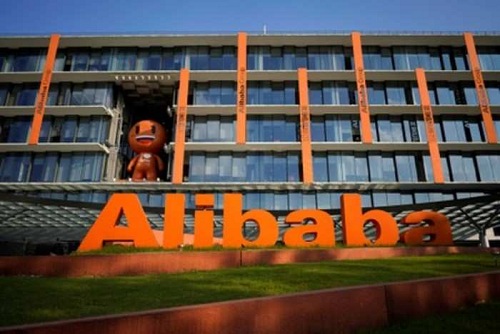
The retail industry has staged a quick recovery from the COVID-19 crisis. However, the pandemic has widened the gap between industry leaders and laggards with some companies noting a dramatic increase in their market value. As per a McKinsey & Company report, companies that adopted tech-forward business models managed to race ahead. The market capitalization of companies dealing in home décor items, new fashion styles and beauty products surged almost 35 per cent from February 2020 to April 2021. Particularly, those with strong digital capabilities registered a robust growth in their profit margins.
American and Chinese companies led growth by capturing 75 per cent of the market. The tech-forward and asset-light business models adopted by these companies led them to be clubbed under the Super 25 category by McKinsey. Overall, these companies represented over 90 per cent of the sector’s market capitalization growth with five American companies generating more than 80 per cent of all value created in US retail.
Super 25 expand market cap with diversification and expansion
The companies clubbed under the Super 25 category are 12 times bigger in size and have average market capitalization of $122 billion. They can be divided into four categories: home-economy players, value retailers, online specialists, and platform players.
In the home improvement category, companies like Home Depot and Lowe’s and furnishings provider RH (formerly Restoration Hardware) increased their market capitalization by 11 per cent while the market cap of value-oriented retailers such as Costco, Dollar General, and the TJX Companies gained 10 per cent during this period.
The combined market capitalization of leading e-commerce specialists in the Super 25 grew by 192 per cent and contributed 5 per cent to the industry’s market-cap growth. These companies included regional online retailer Zalando and niche companies such as pet products supplier Chewy and crafts marketplace Etsy.
Besides companies benefitting from the consumers’ changing demands, another group that managed to blur industry lines were Shopify and Square that added $165 billion in market capitalization since February 2020. These companies used scale and expandability of their business models to generate higher returns. They focused on diversifying and expanding their product basket beyond the traditional range.
Three Chinese companies—Alibaba, JD.com, and Pinduoduo—delivered 29 per cent of the global retail industry’s market-cap growth through the peak months of the pandemic. They were aided by digital facilities such as short videos and live streaming that helped fuel sales. These companies invested in new business models, such as community group buying to attract high-frequency grocery shoppers, particularly in smaller cities.
E-commerce platforms outside China including Reliance Industries and Mercado Libre grew their market capitalization by 11 per cent while the capitalization of Alibaba grew 6 per cent and that of Amazon added by 62 per cent
An aggressive approach needed to target specific customer needs
Consumers’ buying and consumption patterns underwent a huge transformation in the past 16 months. Retailers who managed to cater to these needs through agile working styles and fast decision making, surged ahead of their peers Platflorm players including Walmart, Home Depot, Alibaba and JD.com, were able to expand their offerings and deepen their relationships with consumers.
Retailers lagging behind need to adopt an aggressive approach to target specific customer needs and occasions. They need to increase the value and size of their product basket besides optimizing ware¬housing and delivery efficiencies, and intro¬ducing smart offers to drive customer loyalty. They also need invest in newer delivery models, exit lagging categories and focus on booming areas of growth. Such bold initiatives will help retailers emerge from present economic crisis and maintain their edge over competitors.
Fashion industry needs to operate as per highest environmental, social standards: Report
 Efforts at increasing transparency in the fashion industry seem to be failing with just 25 per cent apparel brands surveyed by Fashion Revolution in its annual ranking being honest about their carbon emissions. Less than 20 per cent disclosed the amount of carbon content in their raw materials, says an Edie report.
The 2021 edition of Transparency Index analyses the reporting and other disclosure processes of the world’s largest fashion companies. It also measures the percentage of information disclosed by these brands about carbon emissions from manufacturing operations and supply chain.
Lack of honesty in emissions and human rights disclosures
The findings show less than 62 per cent companies surveyed are honest about their carbon emissions from their facilities. Around 26 per cent disclosed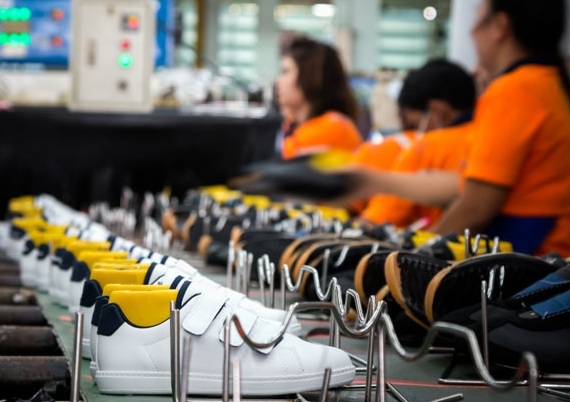 information on emissions released from processing and manufacturing and 17 per cent revealed information on emissions related to raw materials.
Many of these brands are signatories of industry coalitions working towards net-zero such as the UN Fashion Charter, WRAP’s Textiles 2030 Scheme and Kering’s Fashion Pact. Their disclosures on issues including tackling water pollution from dye-houses, increasing the use of recycled materials in garments, are particularly dissatisfactory.
Only 18 per cent of surveyed brands have elaborated on their efforts to reduce the use of virgin fossil-based synthetics in products. Around 30 per cent have highlighted permanent clothing take-back schemes while 22 per cent shed light on process after receiving clothes through these schemes.
As per the new index, 99 per cent brands fail to disclose the number of workers paid living wages in their supply chain. They also fail to disclose information about the impact of COVID-19 on their supply chain workers.
Only 3 per cent disclose the number of workers laid-off due to the pandemic. Less than 18 per cent are honest about the status of their present orders while only 10 per cent publish their payment policies.
As per Sarah Ditty, Global Policy Director, Fashion Revolution, garment workers continue to suffer from the devastating effects of the pandemic. On the other hand, brands are prospering. She urges the industry to introduce new laws to ensure transparency on human rights and environmental issues from fashion brands.
No specific mandates for fashion brands
A new research commissioned by Hubbub and published by Seahorse Environmental highlights the loopholes in the UK government’s plans to reduce the environmental impact of fast fashion. The report states, around 75 per cent of the policies introduced by the UK government are never legalized. They do not contain specific mandates on disclosure and only offer advice and support on a voluntary basis.
Further, the report highlights the policy interventions proposed by the Environmental Audit Committee after its initial ‘Fixing Fashion’ inquiry in 2018-19. As per these proposals, the committee emphasizes on the need for the fashion industry to meet climate targets and ensure fairer working standards. The industry needs to operate to highest environmental and social standards, emphasizes Trewin Restorick, CEO, Hubbub in the report.
Yarn Expo Autumn to showcase recycled yarn and fiber solutions
To be held from August 25-27, 2021 at the National Exhibition and Convention Centre in Shanghai, the Yarn Expo Autumn edition will showcase green, recycled, regenerated, and traceable yarn and fibre solutions. The show will be held in a hybrid format on both physical and digital platforms.
International and domestic exhibitors will showcase a wide array of sustainable products. The Cotton Council International USA (CCI) will promote US cotton fibre and cotton products with the new US Cotton Trust Protocol, which sets the standard for more sustainably grown cotton that is traceable and transparent.
Switzerland’s Rieter will present machinery and spinning technologies for converting natural and man-made fibres and their blends into yarns with the lowest possible consumption of energy, water and chemicals. China’s Qingdao ClusterLoft will display the EcoCluster series developed from recycled fibres made from 100 per cent recycled plastic bottles.
Jilin Chemical from China will showcase four series of products derived from bamboo; Tanboocel fibre, rayon, acrylic filament, and recycled acrylic; which all incorporate antibacterial and deodorant properties and can be completely degraded by nature. China’s Tangshan Sanyou group will introduce the environmentally friendly viscose TangCell EcoTang, made from certifiable forest trees with reduced water consumption and carbon emissions, along with TangCell ReVisco, which recycles textile cotton waste as raw materials.
Guangdong Qiu Sheng Resources from China will display recycled differentiated polyester staple fibres and dope coloured ‘green fibres’ that are used in industrial fields.
Yarn Expo Autumn also offers an online platform, E-Source, for business matching, and addressing sourcing needs without limitations of time and location. The all-in-one platform complements the physical trade fair and hybrid showcase display area by allowing buyers to sort their target suppliers with specific sourcing criteria and receive AI-driven matching recommendations. Real-time interactions will be facilitated by instant messaging and video call functions, so that buyers can submit enquiries and schedule onsite or online meetings with exhibitors during the three-day event and even after the fair.
UK cancels TAP with immediate effect
The UK’s Department for International Trade (DIT) has cancelled the popular and effective Tradeshow Access Program (TAP) with immediate effect.
As per an Innovation in Textiles report, The TAP export scheme provides financial support to smaller companies as they start their export journey. It also provides a small amount of financial support to SME companies attending major international trade shows.
The UK Fashion and Textile Association (UKFT) has worked with these companies and the government to ensure the grants are used in the most effective way and to help companies grow through international sales.
Over the years, the scheme has launched many household names in Paris, Milan, New York, Shanghai, Berlin and Florence, including: Paul Smith, Vivienne Westwood, Alex Monroe, Edward Green, Abraham Moon, Tateossian, Jenny Packham, Orla Kiely, Simon Carter, Grenfell, Harris Tweed Hebrides, Sunspel, Christopher Raeburn, People Tree, Kestin Hare, Liberty Fabrics, Folk, Melin Tregwynt, Huddersfield Fine Worsted, Tyler and Tyler, GH Hurt.
In addition, UKFT has been able to use the scheme to promote the broader industry including larger companies like Johnstons of Elgin, Begg Scotland, John Smedley, Corgi Hosiery and Dents who have worked with UKFT to support smaller companies coming through and raise the profile of UK plc at a number of international shows.











