


FW
Government to scale up India’s textile capacity 10x times
Textiles minister Piyush Goyal aims to scale up the industry’s capacity 10 times by boosting investment and employment in the sector. Goyal has mandated his team of officers in the ministry to prepare a detailed action plan for each segment — ranging from fibers and garments to handloom and handicraft — along with the deadline. He has directed them to focus on man-made fiber along with technical textiles and handlooms.
The government hopes that a series of steps, including the extension of Rebate of State and Central Taxes & Levies (RoSCTL) will provide clarity to exporters when they negotiate contracts. Similarly, integrated textiles parks with the proposed free trade agreements with the UK and the EU are expected to provide further fillip to Indian exporters. With lower duties in these crucial markets, the textiles industry hopes to compete more favorably with rivals such as Bangladesh, which enjoy wage and tariff advantages.
The ministry has proposed steps such as Mudra loans for startups to buy cotton-plucking machines for renting to farmers. Goyal hopes to replicate the strategy adopted by him in his earlier assignments, such as a massive LED bulbs scheme and steps to scale up renewable energy space and coal production. He has also asked his team to focus on improving the quality of handloom and handicrafts and standardizing it.
The Lycra Company launches new stretchable anti-viral fabric with HeiQ
The Lycra Company has launched a new stretchable, antiviral fabric in partnership with finishes developer, HeiQ of Zurich, Switzerland. Based on Lycra StretchFX antibacterial fibre, the fabric will be introduced at the Intertextile show to be held in Shanghai, China, from August 25-27 2021. The two companies plan to combine their technologies, commercial networks and global marketing channels to launch a range of new products and will initially target the Chinese markets with them. The is the first of many innovation platforms will roll out through the summer, bringing a new dimension of comfort and confidence to the consumer by delivering HeiQ freshness and antiviral benefits with the quality and comfort of stretch fabrics certified to perform with a new Lycra® freshFX® technology brand standard.
Together, HeiQ and The LYCRA Company bring trusted expertise across the global textile value-chain of yarn processors, fabric mills, garment producers, brands and retailers and demonstrate a commitment to sustainable, consumer-driven innovations, delivered through partnerships that take textile performance to unprecedented levels.
Eurofils Textile Testing teams up with Tailorlux to digitize cotton tracing
A major player in analytical testing across the world Eurofins Textile Testing Spain has signed an agreement with Tailorlux, a Germany-based full-service provider for product authenticity to digitize cotton tracing by using an enriched viscose fibre. Both have signed a contract with Kipas to enable digital transaction certifications for over 3,000 tons of recycled yarn. Through this, retailers and brands will be able to procure recycled products with an ensured ratio of recycled content based on production data.
The agreement also provides Eurofins access to the Tailorlux algorithm to quantify the recycled content in textiles to audit the technology and test its reliability. Through further data acquisition, the composition of textiles can thus be determined with increasing precision and their ecological footprint be calculated.
Tailorlux provides authentication and traceability solutions with covert markings that are inseparably linked to the product. Through its interdisciplinary expertise in light emitting materials and detection, Tailorlux contributes to making transparency, authenticity and traceability a reality in value chains of various industries. For textile applications Tailorlux provides a polymer or viscose marker fibre that can be traced throughout the supply chain.
H&M, Ikea, Walmart initiate new campaign to promote climate change
H&M, Ikea, B&Q, and Walmart have partnered with COP26 High-Level Climate Action Champions to initiate the ‘Race to Zero Breakthroughs: Retail Campaign.’ Supported by the World Business Council for Sustainable Development (WBCSD), this initiative aims to support industry-wide campaigns to promote climate action and encourage other retailers to reduce carbon emissions and keep global warming below 1.5 degrees Celsius. It aims to set science-based goals and commit to achieving net-zero emissions from vehicles by 2050 at the latest, and join the ‘zero-emission race’ initiative.
Peter Bakker, CEO, WBCSD says, the campaign urges retailers to take ambitious climate action to address risks posed by climate change across their supply chains and operations. They need to join the UNFCCC’s Race to Zero and showcase leadership and commitment, like H&M Group, Ingka Group (Ikea), Kingfisher, and Walmart, he adds.
In 2019, Amazon and the climate non-profit organization Global Optimism jointly launched a similar movement known as the Climate Pledge. The members of the climate pledge promise to achieve the Paris Agreement ten years ahead of schedule and achieve carbon neutrality by 2040. Verizon, Siemens, Microsoft, and Best Buy are among 108 signatories to the pledge.
Sewtech Fashion to set up RMG factory in Bangladesh
Indian apparel manufacturer Sewtech Fashion plans to set up a RMG factory in the Chattogram Export Processing zone in Bangladesh with an investment of $9.26 million. As per a Daily Star report, the company has signed an agreement with Bangladesh Export Processing Zones Authority (Bepza) for the initiative.
A sister concern of one of India's largest apparel manufacturer Shahi Exports, Sewtech Fashion will annually produce 3.36 million pieces of woven tops for ladies, kids and men. This will create employment opportunities for 3,393 Bangladeshi nationals. According to Bangladesh Bank data, Indian investors invested $134.59 million in Bangladesh in 2020. Of this, $10.70 million was invested in textile and weaving sector.
New report ranks Bangladesh garment industry as second most ethical in the world
A report by Hong Kong-based supply chain compliance solutions provider QIMA ranks the Bangladesh garment industry second in ethical manufacturing. The findings of this survey were revealed during the seminar on ‘Wellbeing of RMG Workers through Inclusive Business Initiative by the Dutch-Bangla Chamber of Commerce and Industries in Dhaka.
Faruque Hassan, President, BGMEA, said, the Bangladesh RMG industry has earned significant progress in workers’ safety, well-being, sustainability and industrial relations. It has responded adequately on all compliance and workers’ rights issues from child labor to safety and hygiene at workplaces. The Labor Law was amended twice in 2013 and in 2018 and Labor Rules were promulgated in 2015 to ensure workers well-being and safety at the workplace, Hassan added. Formation of a safety committee and a workers participation committee has also been made mandatory, Hassan stated.
A central fund has been created under government supervision where garment factories are contributing $10 million of their export receipts to be used for the workers’ welfare purposes, he added.
Iran’s garment exports reach $59 million
Afsaneh Mehrabi, Director-General, Weaving and Garment Industries Department estimates Iran’s garment exports to have reached $59 million in Iranian calendar year 1398. Mehrabi says, production of garments and textile products in Iran in previous year increased 25 per cent compared to the preceding year. Production of the said commodities had increased by 20 per cent in the Iranian calendar year 1398 (ended on March 19, 2020) compared to its previous year, she adds.
Iran government has decided to ban clothing imports in order to support domestic producers and provide them with an opportunity to improve the quality of their products and become more competitive in global markets. Iran currently exports garments to Iraq, Kuwait, Australia, Armenia, Azerbaijan, Uzbekistan, Russia, Afghanistan, Pakistan, Turkmenistan, Kyrgyzstan, Germany, Korea, Japan, UAE, UK, Venezuela, Ivory Coast, Italy, Turkey, Canada, Qatar, Oman, Nigeria, Switzerland, Pakistan, Georgia, Spain, and Denmark. Domestic units are supplying 70-80 percent of the Iran’s internal requirement for clothing, says Chairman of Tehran’s Union of Garments Manufacturers and Sellers,
Grasim Nagda plant to be world’s first 'Viscose Zero Liquid Discharge Unit'
Grasim’s Nagda Plant will be the first viscose unit in the world to achieve Zero Liquid Discharge.
The plant has adopted state of the art novel technologies such as membrane processes, which could clean up and recycle the wastewater. Dilip Gaur, Managing Director, Grasim Industries informs, the plant also meets water needs of the entire city, railway and irrigation needs of the farmers thru the 30 billion litres storage capacity built by Grasim. K Suresh, Unit Head, SFD Nagda adds, Grasim Nagda plant makes large range of dope-dyed fibers which are dyed at the time of manufacturing of fiber itself. This technology consumes 50 per cent less chemicals and does not require any additional water for coloring, reducing the water requirement in the post fiber stage for coloring to zero.
The newly developed fibre Livaeco by Birla Cellulose uses 40 per cent less water compared to the European Best Available Technology limits. The plant will be completed in 2021.
Singed by the pandemic, textile machinery sector sees a sharp drop

Like other sectors, the textile machinery segment has also suffered from COVID-19-induced downturn. Released by the International Textile Manufacturers Federation (ITMF), the 43rd annual International Textile Machinery Shipment Statistics (ITMSSS) show, global shipments of all types of textile machines including spinning, texturing, weaving, knitting and finishing machines decreased in 2020 as compared to 2019. Exports of spindles, both long-staple and short-staple fell 46 per and 48 per cent respectively while those of draw texturing spindles dropped by 30 per cent.
Flat knitting machines witness larger decline
In the knitting machinery segment, the flat knitting machines segment witnessed a larger decline of 52 per cent to 66,000 units in 2020. Of these, 77 per cent were exported to Asia & Oceania. China once again dominated with a 38 per cent share. However, imports by China dropped 74 per cent to 17,000 units in 2020. Global shipments of large circular knitting machines dropped 12 per cent to 30,231 units in 2020. Of this, around 81 per cent were shipped to Asia and Oceania. China was the largest importer with 62 per cent followed by India and Turkey with 2,433 and 2,381 units respectively.
Asia, Oceania emerge largest importers of spindles
Exports of short-staple spindles declined 3.3 million units in 2020. In all, 3.63 million units of short-staple spindles were exported with 88 per cent shipped to Asia and Oceania. China, India, Turkey, Pakistan, Bangladesh and Uzbekistan were the six main export destinations though shipments to Europe also increased 76 per cent. Deliveries of open-end rotors declined 27 per cent to 422,000 units during 2020. Shipments to Asia and Oceania declined 32 per cent to 351,000 units. China was the largest importer though its imports declined 30 per cent from 2019; followed by Turkey and Pakistan whose imports increased 290 per cent and 42 per cent respectively.
Driven by a 75 per cent decline in investments and falling exports to Asia and Oceania, exports of long-staple (wool) spindles declined 46 per cent to nearly 22,000 units in 2020. Almost 80 per cent of total deliveries were shipped to Iran, Turkey, and Italy.
Decline in single heater draw-texturing spindles dominates
In the texturing machinery segment, shipments of single heater draw-texturing spindles decreased 36 per cent to 16,000 units in 2020. Asia and Oceania were the largest importers with 89 per cent shipments directed to these two regions. The main importers included China, Japan and Taipei with 63 per cent, 9 per cent and 8 per cent share in global exports respectively. Shipments of double heater draw-texturing spindles declined 30 per cent to 325,000 spindles with 90 per cent shipped to Asia. China remained the largest importer with 78 per cent of global shipments.
China imports largest amount of global weaving machinery
Global exports of shutterless looms declined 16 per cent to 112,000 units in 2020. Shipments of ‘airjet’ and ‘rapier and projectile’ looms contracted 3 per cent to 29,337 units, and 15 per cent to 21,542 units respectively.
Waterjet looms witnessed a 21 per cent decline in deliveries. In total, 61,483 units of waterjet looms were exported during 2020, with Asia and Oceania constituting 94 per cent. Together, these two regions received 98 percent, 93 per cent and 81 per cent of global waterjet, airjet, and rapier/projectile looms. One major importer of all three types of looms was China with 74 per cent of total imports.
Deliveries of sanforizers / compacters in the fabrics continuous segment grew 75 per cent in 2020 while exports of jigger dyeing/beam dyeing dropped 8.5 per cent to 529 units. In this category, exports of ‘airjet dyeing’ and ‘overflow dyeing’ respectively decreased 18 per cent and 21 per cent respectively.
Trend-free styles can ensure a sustainable future for the fashion industry
 For years, fashion experts have been advocating clothing rental as an ideal solution for the rising fashion pollution. Popularized by rental platforms including Rent the Runway, Rebag and GlamCorner, the ‘sharing economy’ has become the latest trend in fashion. Brands including Levi’s and Lululemon have launched their own rental services spurring growth in online rental fashion that is expected to reach $1.96 billion by 2023.
Packaging, transportation add emissions
However, a new study published in Environmental Research Letter opines, renting clothes could prove to be more harmful than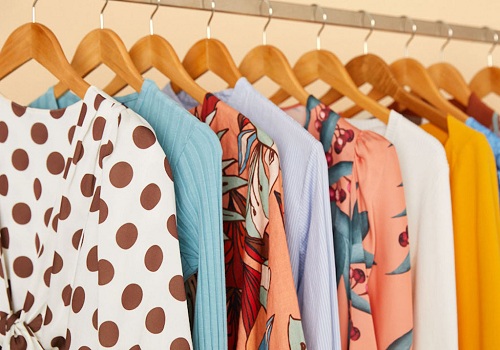 throwing them away. It states, renting clothes mandates the goods to be transported from warehouses to renters. This involves a lot of packaging from cardboard boxes to plastic bags.
Renting is an energy intensive process as clothes need to be dry cleaned and sanitized after each use. Warehouse maintenance also leads to an increase in carbon emissions. Companies can reduce this by using bikes and electric vehicles instead of fossil fuel-based cars for transporting goods. Another way to curb emissions is to lease clothes to people living nearby instead of consumers located far away.
Reducing consumption with durable purchases
Fashion companies can also make renting more eco-friendly by doubling the use of their clothes. This would help them to reach approximately the same level of global warming potential (GWP) as the Reuse scenario.
One of the best approaches to tackle fashion pollution is to buy less but better quality of clothes. Encouraging consumers to buy less and keep their clothes longer can help the sector ensure a more sustainable future.











