


FW
14th Maredamare planned in Florence from July 24-26, 2021
After almost a year, the 14th edition of international beachwear show Maredamare will be held at the Fortezza da Basso in Florence from July 24-26, 2021. As per a Knitting Industry report, the trade fair will exhibit a number of new collections from foreign exhibitors. The agency involved in the foreign promotion of Italian companies, ACE will promote the trade fair and Italian exhibitors alongwith ICEX, a public corporation that aims to promote Spanish companies
ICEX alongwith the Economic and Commercial Office of Spain in Milan will coordinate the participation of a selection of Spanish companies. ABIT, the Brazilian Textile and Apparel Industry Association, will be present at the fair with a selection of Brazilian companies. The trade fair will include several meetings between brands and customers alongwith insights and meetings among operators. Outdoors meetings will be held on July 24 and 25. The fashion shows will be animated by dancers, live music and performers.
The fair will continue online until the beginning of September when Maredamare will reopen its virtual doors for a week of live shows with new videos from the companies.
China’s dye industry sales to reach 102.9 billion yuan by 2026
Foresight Industry Research Institute forecasts, sale from China’s dye industry will reach 102.9 billion yuan by 2026. As per China Textiles, sales revenue from the industry will exceed 70 billion yuan this year. The average annual growth rate of the industry sales revenue will remain at about 8 percent in the next few years. Chinese dye industry experienced a small wave of rebound in the spring before showing a downward trend in the complex market environment.
In the first half of the year, Chinese dyeing and printing enterprises in March ushered in the peak season as the upstream enterprise demand for dyes led to 20 per cent rise in prices. The March price increase is also supported by higher upstream crude oil prices and early release of positive demand from downstream plant destocking.
The monthly average price of dyes continued to decline from April to June. The trend of the dye industry in the second half of the year will depend on the performance of the “Golden September and Silver October” of dyeing and printing factories and the textile and apparel industry, as well as the continued impact of overseas pandemic on orders.
In June, most dye manufacturers reported increased shipments and most traders reported reduced shipments. This phenomenon, to a certain extent, indicates that traders began to stock up after earlier de-stocking. The professional platform predicts that the price of disperse dyes will increase and the price of reactive dyes will decrease.
Pakistan’s textile and clothing exports rise 22.94% in FY2020-21
Pakistan’s textile and clothing exports grew by 22.94 per cent in the current financial year compared to the same period a year ago, shows data released by the Pakistan Bureau of Statistics. Pakistan’s total textile and clothing exports during 2020-21 grew to $15.4 billion against $12.526 billion of the previous year. As per a Dawn report, growth is attributed to an increase in overall exports from the sectors. One reason for growth in these sectors is because of low-base of last year when export-oriented industries remained closed due to the COVID-19 lockdown and cancellation of orders from international buyers.
RMG exports increased by18.83 per cent to $3.032 billion in FY21 against $2.552 billion over the corresponding months of previous year. Exports of knitwear increased 36.57 per cent to $3.816 billion against $2.794 billion over the corresponding months of last year. Exports of bedwear rose by 28.87 per cent to $2.771bn this year against $2.150 billion of the last year. Growth of 31.81 per cent was seen in export of towels to $937.536 million in FY21 against $711.265 million of the last year. Leather garment exports rose by 14.02 per cent while exports of raw leather declined by over 12.04 per cent.
The cotton cloth export posted a growth of 4.98pc in FY21 to $1.921bn, while the export of cotton yarn went up by 3.26pc to $1.016bn on a year on year basis. Export of raw cotton declined by 95.27 per cent this year over the last year.
Allow RMG factories to operate during COVID-19 restrictions, urges BGMEA
Faruque Hassan, President, BGMEA, has urged the Bangladesh government to allow RMG factories to operate during the strict COVID restrictions’ from July 23 to August 5. Hassan asked association members to make preparations to operate factories from August 1 amid the restrictions although the government gave no direction in this regard.
In a circular dated July 13, the Cabinet Division relaxed the restrictions on public movement and business activities from July 14 midnight to July 23 morning for Eid to be celebrated on July 21 and pre-Eid economic activities. The division imposed he fresh restrictions from July 23 to August 5 to contain the spread of COVID infections.
According to the notification, all industries and factories will remain closed from July 23 to August 5 although the factories were in operation during the restrictions enforced by the government earlier.
New report predicts 48% rise in organic cotton production in 2020-21
Textile Exchange’s 2021 Organic Cotton Market Report predicts production of organic cotton will rise 48 per cent in 2020-21. Most of this growth will stem predominantly from India and Turkey. Growth in Indian market is likely to be spurred by increased demand making organic cotton a more attractive option for farmers. It will further lead to existing producers dedicating a larger share of their certified organic land to growing cotton versus other crops. The growth in Turkey will be spurred by the entry of many new players in the market. In Turkey, increased demand is also the main driver, but the growth is more a result of new producers starting up organic cotton production.
As per the report, the largest volume of organic cotton fiber was harvested globally in 2019-20. In total, 229,280 farmers grew 249,153 ton of organic cotton fiber on 588,425 hectare of certified organic land in 21 countries. Fiber volume grew 4 per cent during the year, representing fourth consecutive annual increase in production of organic cotton. The crop accounted for almost one percent of the global cotton harvest that season.
Duke’s new collection reflects the brand’s cool and edgy style of dressing
 A pioneer in the T-shirt culture in India, Duke Fashion has constantly delivered innovative knitwear, textiles and fabrics solutions that have made style statements in the industry. The brand is known for its trendy yet casual collections inspired by the fashion culture of Southeast Asian Islands. Duke has just launched its 2021 collection a new range of denim’s, shirts and trousers.
Catering to the needs of young Indians, Duke’s new collection offers 100 per cent cotton shirts, formal trousers, denim’s, and accessories. Boasting of unique and creative designs, the collection embodies the brand’s cool and edgy style through its unique blend of function and fashion. The designs of this collection revolve around several interesting themes that make it ideal for both formal and casual occasions.
Bright colors to complement standardized fits
The standardized fittings and superior quality of the shirts in this range are complemented by their bright and effective colors. Fine detailing and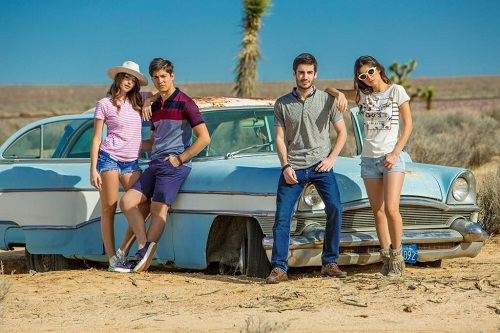 convenience of the cotton fabric make these shirts easy to maintain. The range includes button-up shirts, casual check-in slub textured shirts, woven shirts in a cavalry twill and printed shirts made in cotton or poly-cotton fabrics and breezy tones to set the mood for casual dressing.
Tapered designs for a modern look
The trousers range have elastic waistband with drawstring for a comfortable fit. Their tapered designs and flat front give these trousers a completely modernized look. Duke’s new collection also includes a range of handcrafted denims including basic jeans, straight fit jeans, comfort fit jeans, boot-cut fit jeans and ankle fit jeans. The denims are handcrafted for distressed, mended, and long preserved look. Their durability and versatility help them stand out from other denim collections launched in the market.
International styles at affordable rates
Offering young office goers a breath of freshness to make their workplaces more exciting, Duke’s new collection reflects the brand’s continued commitment to offer a complete range under one roof. The brand is known for its sophisticated and bold designs, robust features that cater to the tastes of young cosmopolitan Indians. “Each garment in this collection is like a diamond crafted according to international style trends. Offering a complete value for money, the range is available at reasonable rates at all leading stores,” says Kuntal Raj Jain, Director- Duke Fashions (I).
One of the most preferred apparel brands in India, Duke Fashions was established in Ludhiana, India in1966. The brand has over 400 EBOs across the country and is present in over 4,000 MBOs. Its product innovations and inspirational leadership helps it shape the future of Indian hosiery industry.
USFIA releases 8th Annual Fashion Industry’s Benchmarking Study
The United States Fashion Industry Association (USFIA) has released the eighth annual Fashion Industry’s Benchmarking Study, a survey of executives from over 30 leading fashion brands, retailers, importers, and wholesalers, including some of the largest brands and retailers in the country.
Conducted in conjunction with Dr. Sheng Lu, Associate Professor in the University of Delaware Department of Fashion & Apparel Studies, the survey asked respondents about the business outlook, sourcing practices, utilization of Free Trade Agreements and preference programs, and views on trade policy.
This year, thanks to the increasing vaccinations and robust economic recovery from COVID-19 in the US and globally, respondents feel much more confident about the outlook for the US fashion industry, both in 2021 and the next five years. Around 60 percent of respondents expect a full recovery of their sourcing value or volume to the pre-COVID level by 2022. However, about 20 per cent still expect 2021 to be a very challenging year financially.
Another key finding is that in 2021 surging costs are top concerns for US fashion companies. Disruptions from COVID have driven up production and sourcing costs and causing shipping delays and supply chain disruptions. In response, U.S. fashion companies have employed strategies including strengthening relationships with key vendors, emphasizing sourcing agility and flexibility, and leveraging digital technologies.
Puma appoints Prabhdeep S Bedi as Head-D2C operations in India
German sportswear brand Puma has appointed Prabhdeep S Bedi as the new director and head of it’s direct to consumer e-commerce operations in India.
Bedi was earlier employed as the COO of education-tech company Toppr Technologies. He has also worked with McKinsey & Company and Procter and Gamble India. He holds an MBA from Kellogg School of Management, Northwestern University, and an undergraduate degree from IIT Bombay.
Bedi’s appointment will accelerate Puma India’s digital transformation journey and will be responsible for leading the direct-to-consumer (D2C) e-commerce business and the entire value chain of operations, cataloguing, technology, account management and customer experience.
Bedi will report to Abhishek Ganguly, managing director, Puma India and Southeast Asia.
Joachim Kath named Schoeller Textil AG’s new CEO
Schoeller Textil AG, the Swiss textile and technology company has named Joachim Kath as its new CEO.
Kath, who comes from the chemical industry, has been working closely with Seigfried Winkelbeiner, Retiring CEO, as COO at Schoeller for the past year and a half. The team successfully pulled together and has been able to strengthen the company’s reputation as an innovation leader. On more than one occasion, exciting collaborative projects with both existing and new customers opened up previously-uptapped business fields and markets.
Under the management of Siegfried Winkelbeiner, Schoeller has successfully weathered even the enormous appreciation of the Swiss franc and the current pandemic. His primary focus has always been to create a working environment in which staff and management have the opportunity to exercise their talents and skills for the benefit of the Schoeller Group.
Joachim Kath originally comes from Flensburg (DE). His career over 30 years has incorporated engineering, production and marketing & sales in diverse management in a wide range of business segments for various industries and areas of application around the globe. Joachim Kath spent 12 years of his career dedicated to textile finishing, with a period of intensive travel in Asia and a 3-year stay in the US.
BTMA condemns criticism of fire at Narayanganj juice production plant
Mohammad Ali Khokon, President, BTMA, has alleged that some people were benefiting from a recent fire at a Narayanganj juice production plant by circulating rumors about textile mills.
As per Textile Today, Kokon believes, they are spreading these rumors at both homes and abroad in hopes of smearing the goodwill of local export-oriented industries.
Khokon added that some of the local authorities involved in setting up and observing Bangladesh’s industrial establishments have been trying to pass the buck regarding the fire.
Md Monir Hossain, Chief-Media Committee, BTMA shared Khokon’s statement that says, a section of critics are passing negative comments that are damaging the image of the local garment sector. He also displayed deep shock over the death of 52 workers at the fire at Hashem Foods factory.
After the fire incident, a domestic and foreign quarter has been trying to disrupt the prevailing peace and order of the country’s industrial sector with various unsolicited statements centering the incident, Khokon adds.











