


FW
Isko and HKRITA develop recycling technique
Top denim brand Isko has signed a licensing agreement with textile research and development company HKRITA to develop the revolutionary Green Machine. This is unique technology fully separates and recycles cotton and polyester blends at scale. With this, Isko will be able to advance and commercialize recycling technologies which will enable the company to offer a 100 per cent post-consumer recycling solution to its customers. Moreover, Isko and HKRITA will collaborate to develop related technology, firming the company’s position as a spearhead in sustainability.
The Green Machine uses an innovative and ultra-efficient hydrothermal treatment method that decomposes cotton into cellulose powders and enables the separation of polyester fibers from blended fabrics. The process is a closed-loop and uses only water, heat and less than five per cent biodegradable green chemicals. Crucially, this method maintains the quality of polyester fibers; the cellulose powders, which are clean and toxic-free, can be used in a variety of ways.
Isko is the first denim producer in the world to be recognised with the Nordic Swan and EU Ecolabel certifications. The company has a production capacity of 300 million meters of fabric a year with 2000 high-tech automated looms. Isko has a global presence with offices in 35 countries.
Guess reduces reliance on China for sourcing
Guess is relying more on suppliers from Bangladesh and India and less on China now. The group sourced 27 per cent of its apparel, jewelry and accessories from China in fiscal year 2021, a sharp drop from 42 per cent in fiscal year 2020 as the company continues reducing its reliance on China to avoid tariff risks. Suppliers from Bangladesh and India made up a larger share of the apparel company's purchases in fiscal year 2021, at about 23.5 per cent and 18 per cent, respectively. In fiscal year 2020, both were at less than 15 per cent.
Guess has made the changes to diversify its sourcing and as a result of changing economic conditions and purchasing strategy. It has reduced volumes from countries outside its top sourcing regions to consolidate its supply chain. As Guess expands its supplier base, the fashion brand will also expand its supply chain worker grievance program to factories in India and Vietnam. The program allows workers to report concerns anonymously.
Product excellence is also part of the group’s strategy. The company will extend its product offering to provide customers with a wider range of products for different occasions and lifestyles and will seek to better address local product needs.
Ghana’s textile and apparel sector hit by low cost China exports
Low-cost and high-volume apparel exports from China and other Asian countries in the global market are continuously overwhelming Ghana’s exports. Inadequate promotion of Ghanaian textiles and Afro-centric fashion in mainstream apparel channels abroad remains a bane for the sector, says the Ghana Export Promotion Authority (GEPA).
Opportunities do exist though for the industry in Ghana. These include unexplored niches in the global market like original woven Kente, diaspora market potential, proximity to global apparel markets and the existence of bilateral and regional trade agreements. Currently, the industry employs more than 6,000 Ghanaians and exports more than $30 million on an average annually. Export revenues from the sector in 2020 stood at $43 million compared to the $137.4 billion worth of apparel and accessories that China alone exported last year to the US market.
The country is reviewing financial positions of existing apparel companies to roll out a funding package to serve the funding requirements of the industry. Support in the form of capacity building and funding will be provided to the industry to help it upgrade and become a self-sustaining national industry. There are about 14 indigenous apparel manufacturers which predominantly export to the US under the African Growth Opportunity Act.
Export revenues for 2021 are projected to reach $52 million by December.
Bangladesh to increase focus on synthetic fibers
Bangladesh will invest in synthetic fibers. The country sees this as the future of the export-oriented garment sector. Reputed brands and consumers are leaning towards manmade and recycled fibers to achieve sustainability. Buyers are choosing the fabric as a substitute to cotton fiber for sustainability and environmental issues. In keeping with sustainability many well-known brands may stop buying apparels produced from non-recyclable material. According to the Bangladesh Textile Mills Association (BTMA), local spinners imported 99,345 tons of polyester staple fibre (PSF) in 2020 even amid the pandemic, up 3.4 per cent from 96,077 tons the previous year.
Currently, 40 spinning mills import PSF fiber to make yarns for producing high-end garments such as sportswear. Imports of viscose staple fiber last year went up 36 per cent. Entrepreneurs in the country’s textile sector are also investing in the production of synthetic fiber and clothes. About 80 textile mills in Bangladesh are currently producing various types of synthetic yarns and fabrics including polyester, VSF, tensile, and modal. Production of synthetic fiber-based textile and apparel is seen as realizing greater per unit values.
The use of manmade fiber in end-use categories like sportswear, leisurewear, women’s dresses, home textile, automotive, carpets and other industrial sectors also makes it an ideal fiber of the future.
Canada’s garment industry suffers as investments, skills in the sector dwindle
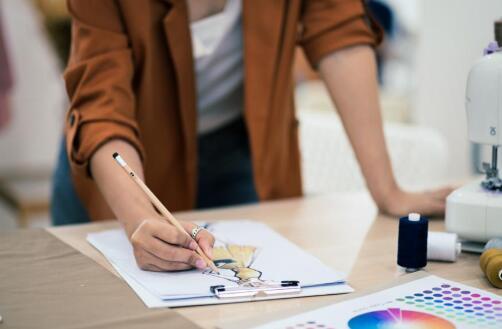
Canada is stuck in a strange predicament. As per a recent survey, post pandemic, the country has witnessed renewed demand for locally made goods. Yet, shopping for local products in the country has become more challenging, says a report by Macleans. As per a 2019 report, most clothing purchased in Canada is imported from China, Bangladesh and Vietnam. Though, brands including Roots, Lululemon and Joe Fresh design their clothing in Canada, majority is manufactured elsewhere.
Throughout the ’70s and ’80s, Canada was home to a vibrant and thriving clothing industry, with homegrown designers like Simon Chang, Leo Chevalier, Pat McDonagh and Vivian Shyu ruling the ramp. The garment and textile industries combined employed 200,000 Canadian citizens. The industry continued to flourish till 1990s, when a whopping 70 percent of the country’s local demand for textile and clothing products was satisfied by demand production.
NAFTA, quota elimination mar export growth
However, Canada’s joining of the North American Free Trade Agreement (NAFTA) in 1994, put a brake on its growing exports. The agreement eliminated tariffs on most goods circulating among Canada, the United States and Mexico, thus making it cheaper to buy many foreign-made items, including clothing.
In 2001, China joined the WTO giving consumers greater access to less expensive Chinese goods. Further in 2005, the Canadian government made apparel imports duty-free. This led to an explosion in fast fashion imports with T-shirts being available for as low as $15. Bob Kirke, Executive Director, Canadian Apparel Federation believes, elimination of these export quotas proved to be the single biggest blow to the Canadian garment industry.
Production weakens as investments decline
Canadian garment industry has also had to grapple with declining investments. Funded by Imperial Tobacco, Matinée Fashion Foundation had invested over $7 million in the industry before the federal government banned cigarette companies from advertising their products.
This fall in investment with sudden proliferation of less expensive foreign-made clothes weakened the apparel-manufacturing industry to an extent that made it unable to compete with foreign made goods. However, one area where Canada continues to flourish is production of high-quality knits, like French terry and fleece. Encouraged by this, Julie Brown and Jeremy Watt, the co-founders of Province of Canada, decided to launch their brand in 2014. They started by sourcing the logo on their made-in-Canada jogging pants and sweatshirts from a family-owned Canadian factory. They later started sending their own designs to the factory to produce. Now, they plan to produce button-down denim shirts.
Though the shop-local movement has gained momentum in Canada, it hardly signals a new era of revitalization for the Canadian garment manufacturing in the country, says Bob Kirk, Executive Director, Canadian Apparel Federation. He is aware of the fact that the better-quality, less-expensive fabric and production can again lure consumers to overseas brands.
Skill and fund shortage
The Canadian apparel industry also faces another obstacle in the form of aging workforce. The country lacks a skilled workforce to replace its aging professionals. Sewing is no longer considered a skill in the country with most youngsters opting for designing rather sewing. There are also no schools to train young Canadians in industrial production.
The only way the falling Canadian garment manufacturing industry can be uplifted is by government intervention. The Canadian fashion industry has been lobbying the federal government for more funds but has received none so far. The only recent funding received by the fashion industry from the federal government is the $600,000 to be granted through the Quebec Economic Development Program over the next three years.
Currently, there appear to be no solutions for the Canadian garment industry’s present dilemma. Yet, the limitless opportunities offered by the sector cannot be ignored.
Diversification can help Vietnam lift production amid latest COVID-19 outbreak
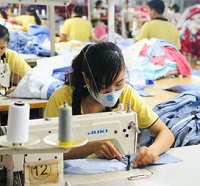 The outbreak of COVID-19’s Delta variant has paralyzed Vietnam’s garment industry. Though factories are allowed to operate they have to provide accommodation or transport for workers, leading to a sharp increase in expenses. This has disrupted manufacturing activities in Vietnam, as per a Business of Fashion report. Almost 62 per cent textile and apparel companies in the country have been compelled to suspend operations due to continued lockdowns and restrictions, as per the Vietnam Textile and Apparel Association.
This has also impacted operations of major brands in the country. For instance, Nike, which imported almost its products from Vietnam in 2020, is at the risk of running out sneakers made in Vietnam, says a Panjiva report, a division of S&P Global Market Intelligence.
American brands with operations being hit
The crisis has hit American brands the most as Vietnam accounted for roughly 40 per cent of US imports in the year till July 31, reveals Panjiva data. The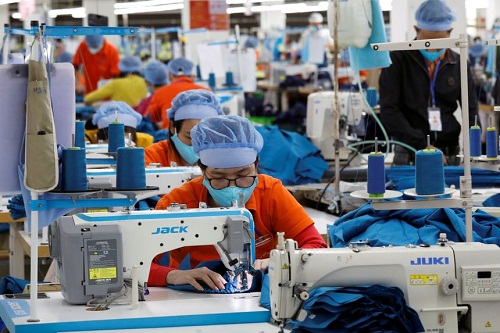 American Apparel and Footwear Association (AAFA) therefore urged President Biden to accelerate America’s supply of vaccines to Vietnam. Meanwhile, brands like On, Puma and Adidas plan to relocate their manufacturing facilities to safer countries and regions. This may increase their production costs in short-term. However, they will have to meet customer’s demand, says Winnie Leung, Professor, George Brown College, Toronto.
Inventory challenges lead to uncertainty
Puma expects Vietnam’s lockdown to be extended by another two weeks as cases continue to rise. The company also expects a delay of four to six weeks in restarting production, states Robert-Jan Bartunek, Senior Manager-Corporate Communications. Adidas also expects shutdowns to last until the end of third quarter, says Kasper Rorsted, CEO.
The latest outbreak further compounds Vietnam’s woes currently facing issues like port closures in China and shipping delays in the US. It also adds to future market uncertainty as rising freight rates are likely to make inventory acquisition a bigger challenge next year, according to investment bank Cowen.
Any Halliwell, Senior Director-Retail, Publicis Sapient, says, this may also disrupt global supply chains and reduces brands’ working capital. To survive, brands and retailers will have to diversify and adapt to the changing situation. Players with diversified manufacturing will fare better.
Armani puts up strong showing in 2021 with sales growth
Giorgio Armani is recovering from the impact of the COVID-19 pandemic. Sales of the Italian fashion group grew 34 per cent in the first half of 2021. At constant exchange rates, sales grew 38 per cent. Revenues in the directly operated retail channels, excluding wholesale and licenses, grew 59 per cent in the first half of 2021 compared to the same period in 2020. The US, China, and Europe helped boost performance.
The group expects much better profitability for 2021 barring a return to widespread retail closures in the second half of the year due to the pandemic. Last year, the decline was heavily concentrated in the first half, while the second half showed a clear recovery, despite the new waves of contagion and the intensification of the state of emergency in Europe that marked the last quarter of 2020.
In the 12 months ended December 31, the group’s net profit fell 27.4 per cent. Total revenues from Armani-branded products worldwide, including licensing revenues, in 2020 fell 21 per cent from the previous year. The goal is to return to pre-pandemic levels by 2022. In 2020, the Armani group’s earnings before interest, taxes, depreciation and amortization were down 1.8 per cent from 2019.
Crocs expects revenue to grow 60 per cent
Crocs expects full year revenue growth of between 60 to 65 per cent compared to 2020. During its third quarter, the shoemaker expects revenue growth between 60 and 70 per cent compared to last year’s third-quarter revenues. Crocs reported adjusted earnings per share of $2.23, which beat analyst expectations. The shoemaker also reported record revenue of $640.8 million.
Crocs’ sales boomed during the pandemic as consumers seek more comfortable footwear. Its stock has grown more than 90 per cent year-to-date. The shoemaker has also committed to transition to net-zero emissions by 2030 and has raised its full-year revenue guidance amid strong global demand despite supply chain disruptions caused by the Covid-19 pandemic.
Revenues in the second quarter grew 93 per cent. The company’s digital sales grew 25.4 per cent to represent 36.4 per cent of revenue, compared to 56.1 per cent a year ago. Croc’s sandals sales rose 57 per cent during the second quarter after going up 17 per cent in the first quarter. The company also saw digital sales grow 99 per cent compared to 2019. Direct-to-consumer sales grew 78.6 per cent compared to last year, and 86.4 per cent compared to 2019, representing 52 per cent of second-quarter revenues. Crocs has had an eight per cent increase in its average selling price during this quarter. This has been attributed to higher pricing and a favorable product mix.
US to buy more RMG from Bangladesh as it offers most competitive prices
Fashion brands and buyers in the United States are eager to increase sourcing from Bangladesh over the next two years. They find the prices of apparel and textile products in Bangladesh to be lower than global average prices. The ‘2021 Fashion Industry Benchmarking Study’ conducted by the United States Fashion Industry Association revealed the unit price of apparel products in Bangladesh was $2.5 in July-May of this year while the global average price was $2.6 in the period. ‘Consistent with the survey results from 2017 to 2020, respondents this year again say Bangladesh offers the most competitive price, followed by China, Vietnam, Indonesia, India, and Cambodia,’ the USFIA said.
Though China offers more competitive prices than Bangladesh, US buyers want to diversify their sourcing away from China and Vietnam to avoid placing all eggs in one basket and mitigate various sourcing risks. The US-China tariff war has exacerbated sourcing cost pressures and financial challenges facing US fashion companies during the pandemic. Because of the tariff war, US fashion companies have had to pay an average 23.4 per cent import duty rate for apparel imports from China in 2020, which was much higher than 16.5 per cent back in 2017.
Diversifying the export product structure and improving production flexibility and agility will be critical for Bangladesh to play a more significant role as an apparel sourcing base for US fashion companies in the post-Covid world. This emerging trend implies that competition among the thousands of Bangladeshi apparel suppliers will intensify. While competitive suppliers will benefit from more sourcing orders, smaller and less competitive ones could become more vulnerable. Bangladesh is believed to offer the most competitive price, followed by China, Vietnam, Indonesia, India, and Cambodia.
Virus hinders Vietnamese order intake
Vietnamese companies have not made headway with several orders due to Covid-19 related complications.
The stay-at-home mandate under the prime minister’s directive 16 has significantly affected firms’ operations. They expect a probable shift of orders to other countries. Textile-garment makers in the southern localities have had to suspend their operations due to the resurgence of the coronavirus, thus making it tough to commit to business partners and, consequently, creating concerns among business partners about the disruption of their supply chain.
Some international garment brands have also sought permission to make payments in two or three months or even six months. This is beyond the original financial plans of local textile and garment firms. If local textile makers accept the request, they would face obstacles in rotating capital, as the access to long-term loans offered by local banks is currently challenging and risky. If they refuse the request for late payments, these brands would seek new business partners in other countries.
Exports of the local textile-garment industry in the first half of this year improved 21.27 per cent compared to the same period last year and up 4.23 per cent against the 2019 figure. Of this, the number of textile-garment items shipped to the European Union rose 4.85 per cent versus last year’s figure.











