


FW
CAI estimates total cotton supply during October 2020-July 2021 at 489.50 bales
The Cotton Association of India (CAI) has estimated the total cotton supply during October 2020-July 2021 at 489.50 lakh bales, consisting of the opening stock of 125 lakh bales at the beginning of the season, cotton crop for 2020-21 at 354.50 lakh bales and imports estimated by at 10 lakh bales. The imports are lower by 5.50 lakh bales from the previous year's import of 15.50 lakh bales.
Further, the CAI has estimated cotton consumption during the season at 275 lakh bales, while the export shipment of cotton up to July 31, 2021, is estimated at 70 lakh bales.
The stock at the end of July is estimated by the CAI at 137.61 lakh bales, including 80 lakh bales with textile mills and the remaining 57.61 lakh bales with the Cotton Corporation of India (CCI), Maharashtra Federation, and others (MNCs, traders, ginners, etc).
CAI estimated the total cotton supply till the end of the cotton season (up to September 30) at 489.50 lakh bales, consisting of the opening stock of 125 lakh bales at the beginning of the season, cotton crop for 2020-21 at 354.50 lakh bales and imports estimated by at 10 lakh bales. The imports are lower by 5.50 lakh bales from the previous year's import of 15.50 lakh bales.
Domestic consumption for the crop year 2020-21 is estimated higher by 5 lakh bales to 330 lakh bales considering the brisk demand for cotton yarn despite disruptions caused by lockdown to arrest spread of the second wave of COVID-19, CAI noted.
CAI has also increased the exports estimate for the season from its previous estimate of 72 lakh bales to 77 lakh bales.
Asics’ Q2FY21 sales grow by 42.6%
The Q2FY21 sales of Japanese sports apparel and footwear producer Asics grew by 42.6 per centto ¥209.5 billion in Q2 FY21 compared to ¥146.9 billion in the same period of previous fiscal. The sales for the period were driven by Performance Running and the Onitsuka Tiger category.
The brand’s Performance Running sales increased by 54.2 per cent to ¥108.6 billion, while sales from China boosted Onitsuka Tiger’s sales 34 per cent to ¥21.0 billion. Moreover, Core Performance Sports, Sports Style, and Apparel & Equipment category sales surged ¥23.4 billion, ¥17.1 billion and ¥16.7 billion respectively.
Gross profit for Q2 FY21 was up to ¥105.4 billion, while profit improved to ¥12.3 billion against loss of ¥6.2 billion in second quarter of 2020. Operating income totalled to ¥23.9 billion.
The company’s sales in Japan in the three-month period rose by 23.0 per cent to ¥57.8 billion. Sales from North America grew by 50.6 per cent to ¥42.8 billion, whereas European region sales jumped by 55.9 per cent to ¥57.8 billion.
From greenwashing, industry needs to shift to more responsible production
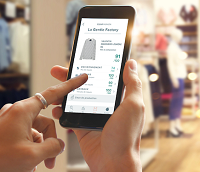 The use of fossil fuels is still quite rampant in the fashion industry, says latest study by Changing Markets Foundation. The report titled “Synthetics Anonymous,’ shows the industry uses cheap fossil fuel-based synthetic fibers in a big way. Polyester is used in over half the textiles produced across the world. This leads to greenwashing by most brands across their voluntary commitments and products. And according to UK’s Competition Markets Authority (CMA) guidelines it can create legal complications for brands in future.
Brands ignorant to rising pollution
The ‘Changing Market Foundation’ report highlights fashion brands’ ignorance on the growing plastic pollution and waste crisis stemming from increasing use of synthetic fibers. The report shows, brands often resort to greenwashing tactics such as downcycling polyethene terephthalate (PET) bottles to clothes instead of designing them to be durable and recyclable. They also lack a systematic approach to address the environmental and health risks pollution.
The report states, only 36 of the 46 surveyed brands were open about the percentage and weight of synthetic materials used in their collection. Sports brands Adidas, Asics, Nike and Reebok were using synthetic materials in almost all their collections and had no plans to stop. Only Puma assented to reducing the proportion of polyester used in its collections.
The worst-performing brands in the survey included 15 sports, high-street, luxury and department-store companies like Nike, Target and Walmart. They revealed a complete lack of engagement, commitment or even transparency on the use of fossil fuels in their collections.
Some brands plan to curb the use of fossil fuels in their collection by using ‘recycled’ polyester, made from PET bottles. Around 85 per cent companies indicated using polyester from downcycled PET bottles to make their clothes more sustainable. However, none of the companies reported using fiber-to-fiber recycling technologies to ensure a truly circular economy.
Pinning ‘responsibility’ with new laws
Despite not having any ‘takeback’ scheme or fiber recycling technology, brands were seen to be making misleading claims about their sustainability initiatives. They claimed to use ‘sustainable’, ‘preferred’, ‘sustainably sourced’ or ‘sustainably made’ materials that cannot be clearly defined. Hence, policymakers need to introduce new laws to boost sustainability in the fashion industry. They need to encourage the industry to break away from the use of cheap synthetics and move to more responsible production.
Demand for hemp booms in the US as applications rise
 A new report by ResearchandMarkets com predicts, global industrial hemp market will grow from $5.6 billion in 2020 to $17.4 billion by 2027. Experts in the US expect year 2021 to be a strong year for hemp production as more farmers will integrate the crop in their daily cultivation. Demand for hemp has been persistent in the US market. The crop is used in many different materials and products. As per a Yahoo report, it is used by fashion brands in new collections. Denim brand Levi Strauss & Co often uses hemp in jeans as it prevents the knees from wearing out.
Cheap rates and availability boosts demand
Experts claim, hemp is 10 times stronger than steel. It can be used by car and electric vehicle manufacturers to strengthen door panels and other vehicle parts. Henry Ford, Founder of Ford Motor Company often used hemp in cars designs. Hemp can also prove to be good substitute for wood as hemp-based materials are not only cheaper but also more easily available. Contractors can use hemp to make hardwood floors and wood paneling. They can use the material to create new concrete called ‘hempcrete’ from processed biomass.
Currently, flower strains of the CBD variant of hemp are in great demand. They are used by companies to create pet bedding and lining materials for animals of all sizes. Generation Hemp Inc, a Dallas/Fort Worth-based company, has set up a new company to process hemp by merging two entities, Energy Hunter Resources and Home Treasure Finders Inc.
Minimizing degradation with drying and testing
Since most hemp grown in the US is of the CBD and other cannabinoid variant, it is crucial to preserve the cannabinoid content and terpenes. Kentucky-based Halcyon Thruput offers advanced drying services to process hemp plants delicately in order to maximize quality and minimize degradation. The company’s cleaning system, removes hemp stalks, stems and seeds efficiently while the filtration system meets biomass specifications within hours of harvest.
The US Department of Agriculture (USDA) has directed all hemp farmers to have their crop tested on a regular basis. The Certificate of Analysis (COA) testing of hemp is done by extraction labs and third-party testing labs in key sectors of the business. Halcyon provides its customers with verified results in just a few minutes.
Connecting with buyers and distributors
Most of the hemp grown in the US is still dried by hand. The entire process is not only labor-intensive but also weather-sensitive. It forces farmers to deal with their buyers directly. Farmers can therefore, team up with service providers like Generation Hemp and GenH Halcyon to connect with buyers and distributors.
The waste generated from processing hemp, known as hurd or shiv, can be used to create hemp-based construction materials. It can also be used to make animal bedding. The hemp material can also be used in other industrial applications if farmers assure a consistent supply. Soon, the US may also be able to displace imports and become a self-reliant in hemp production.
Kornit Digital acquires Voxel8
Kornit Digital, a worldwide market leader in digital textile production technologies, has acquired all associated assets of Somerville, Massachusetts-based Voxel8.
Voxel8’s advanced additive manufacturing technology for textiles allows for digital fabrication of functional features with zonal control of material properties, in addition to utilizing high-performance elastomers adhering to inkjet technology.
By integrating Voxel8’s technology into Kornit’s product roadmap, the company will be able to transform numerous market segments and verticals, accelerating our collective visions and technology advancements, said Kobi Mann, Chief Technology Officer, Kornit Digital
Voxel8 offers direct 3D print-on-part capabilities, advanced design software that can be easily integrated with any production floor software workflow, and versatile chemistry enabling on-the-fly formulation of high-performance elastomers to change the material properties of the resulting printed structures by multiple orders of magnitude. This means reflective, high-density, silicone and metallics, as well as compression elements for sports and therapeutics, protection elements like cushioning and impact resistance, and functionality applications like anti-slip, waterproofing, and other qualities combining form and function that are key to Kornit’s vision of digitizing production in every conceivable manner, he added.
ThredUP reports 26.7% growth in Q2 revenues
American clothing resale platform ThredUp reported a 26.7 per cent growth in revenue in the second quarter.
As per Apparel Resources, ThredUp’s revenues touched $59.96 in the quarter that ended 30 June 2021, which was much more than $47.34 million it posted a year back.
ThredUp’s active buyers also rose to 1.34 million, with orders of 1.22 million. However, the resale platform’s net loss widened to $14.38 million, its gross margin expanded to 73.6 per cent from 69.7 per cent a year before.
ThredUp has been growing lately! Besides some impressive revenue numbers in recent times, it also recently announced its plans of buying fashion resale business Remix Global AD in its endeavour to expand to Europe.
This deal is expected to conclude in the fourth quarter of this year. Founded in 2009, ThredUp has been successfully selling secondhand clothes online.
Under Armor to cancel orders in Vietnam
Retailers across the globe are worried over the recent surge in coronavirus cases in Vietnam.
While Nike and adidas are already worried over some of their suppliers shutting down plants in Vietnam, Under Armour too, is facing product delays.
The American fashion retailer may have to cancel certain orders in the second half of 2021 owing to delays happening due to sourcing challenges in Vietnam.
Over the last few months, Vietnam has been battling the pandemic as a result of which manufacturing and logistics issues as well as lack of availability of containers have hampered the flow of goods for Under Armour and other retailers.
While the retailer is already devising strategies to source products from different parts of globe, for apparel and footwear suppliers in Vietnam, it will be a big challenge to ensure they do not lose orders and run into losses.
Notably, Vietnam and Jordan are two of the top two sourcing nations for Under Armour, accounting for 30 per cent and 20 per cent sourcing, respectively.
Textile sector reports major declines in new orders in July: ISM Report
As per latest Manufacturing Institute of Supply Management (ISM) ‘Report on Business,’ though the US manufacturing index grew in July, the textile sector reported major declines in growth, new orders and production. The July Manufacturing PMI (Purchasing Managers Index) registered a decrease of 1.1 percentage points from the June reading of 60.6 percent, said Timothy R. Fiore, Chairman, ISM Manufacturing Business Survey Committee, said. ISM’s Business Survey Committee panelists reported that their companies and suppliers continue to struggle to meet increasing demand levels.
As per a Sourcing Journal report, ISM’s New Orders Index declined to 64.9 percent in July. Of the 18 manufacturing industries, 15 reported growth in new orders in July, led by furniture and related products. The only industry reporting a decline in new orders in July was textile mills, while apparel and leather products reported flat orders.
The Production Index registered 58.4 percent in July, 2.4 percentage points lower than the June reading of 60.8 percent.. The only industry reporting decreased production in July was textile mills, with 16 industries reporting growth in production.
The delivery performance of suppliers to manufacturing organizations was slower in July, as the Supplier Deliveries Index declined to 72.5 percent from 75.1 percent in June. All 18 industries reported slower supplier deliveries in July, led by apparel, leather and allied products, and furniture and related products and including textile mills. The Inventories Index registered 48.9 percent in July, 2.2 percent lower than the 51.1 percent reported for June, reversing two months of expansion.
Casualization trend to stay post pandemic globally
Scott Baxter, President and CEO, Kontoor Brands believes the trend of global casualization is here to stay with jeans and T-shirts becoming more acceptable as workwear. The pandemic has caused a tremendous change in the way consumers dress for work shifting workplace attire norms towards more casual. A survey conducted by the company reveals, 84 per cent people plan to upgrade their wardrobes and include more casual wear items.
Casual apparel companies plan to go even more casual. For example Levi’s recently announced plans to acquire yoga apparel brand Beyond Yoga. The company expects the move to generate more than $100 million in total sales revenue for the 2022 fiscal year
Beyond T-shirts, jeans and yoga pants, companies that made formal wear mandatory to offices, now plan to allow polo shirts, half-zip fleece jackets or short-sleeve button-ups. Companies that still require employees to dress in formal attire might allow shirt meant to be worn untucked.
Bestseller collaborates with Invest FWD for sustainable investments
Since launching the innovation platform Fashion FWD Lab by the end of 2020, Bestseller’s innovation team has been working with its investment arm Invest FWD to identify right investment opportunities in sustainable fashion. Bestseller has made investments in innovators Circular Systems, Nature Coatings and Evmu. These investments will enable the company to combine access to capital with a brand perspective that will accelerate positive outcomes for innovators and the broader industry on the most critical sustainability issues,
All the three innovators, Circular Systems, Nature Coatings and Evrnu have shown great promise, addressing different aspects from sustainable feedstock to sustainable processes. Fashion FWD Lab has been working with these innovators for some time to ensure that they are the right investments with the necessary potential. These investments demonstrate Bestseller’s willingness to move backwards in its value chain and invest at the fiber level.











